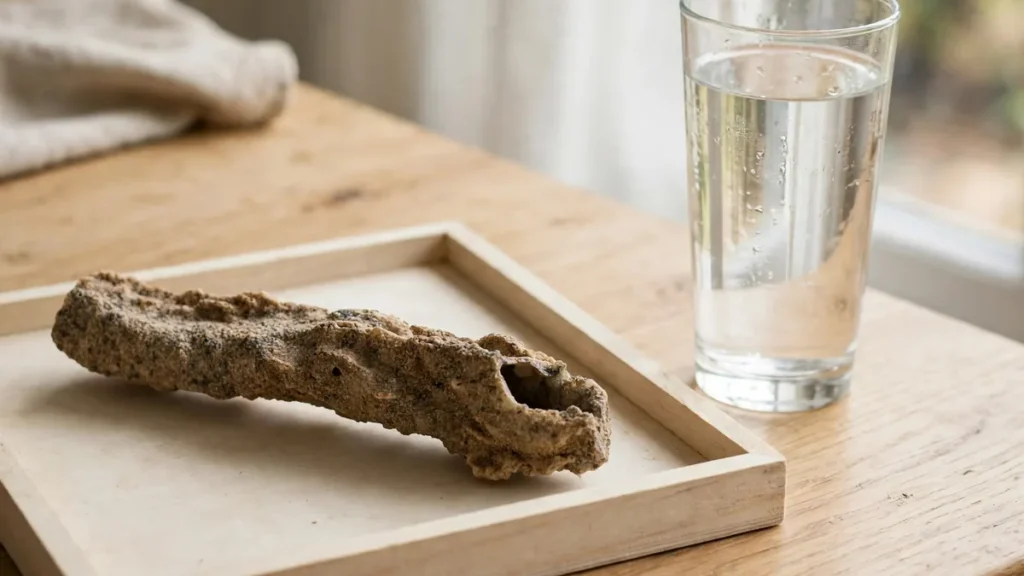
Some days ask for very little. A tender day is one of those: a day when the light feels too bright, the noise too loud, and the kindest thing is a quiet room, a glass of water and one soft colour to rest the eyes on.
Piemontite is a soft pink stone that suits those days. It is a manganese epidote, a cousin of green epidote, coloured pink by the manganese held inside it. A good piece is a gentle rose pink, sometimes with darker streaks, and it feels cool in the hand.
This guide explains what piemontite is, how to choose a piece, and how to keep it safely beside water on a tender day. This guide is gentle general information only: a soft pink stone is a comfort for tender days, and comfort is not a cure — it will not heal anything.
Key Takeaways
- Piemontite is a soft pink manganese epidote, a cousin of green epidote.
- Its gentle rose pink suits tender days, quiet rooms and slow routines.
- Keep piemontite for looking at and holding only — it mends nothing.
- Water stays in its own glass beside the stone, and the stone stays dry.
- A tender day needs very little: soft light, plain water, one stone, and rest.
What Piemontite Is
Piemontite is a pink mineral in the epidote family, coloured soft rose pink by manganese held inside its crystal shape. It grows in small needle-like crystals and in solid masses, and the best pieces show a gentle pink with darker rose streaks. It is usually sold as a small polished piece, a tumbled stone or a rough cluster on a dark rocky base.
Its name comes from Piedmont, the region in northern Italy where it was first described. The pink is natural, not dyed, and a real piece shows small variations in colour when turned in the light.
Piemontite is fairly hard, so it takes a polish well and sits flat when its base is cut true. Hold it in the palm and it feels cool at first, then warms slowly to the hand.
Why Soft Pink Suits Tender Days
A soft pink stone asks nothing of a tender day. Bright red shouts for attention, deep purple broods in the corner, but pale rose simply sits there, gentle and undemanding. On a day when everything feels too much, that quietness is the whole point.
Soft pink also suits tender days because it looks like the colour of rest: dawn light, a folded blanket, the inside of a shell. A stone in that colour gives the eye somewhere soft to land.
Piemontite and Epidote: Close Kin, Different Stones
Piemontite and epidote belong to the same mineral family, yet they are different stones for different days. Epidote is a green iron epidote, coloured deep forest green by the iron held inside it, and it suits steady days and calm shelves.
Piemontite is the pink member of the family, a manganese epidote, coloured soft rose pink by manganese instead of iron. Where epidote is dark and sharply pointed, piemontite is pale and gentle in the hand: one the colour of a pine forest, the other of a rose petal.
For green epidote in more depth, see the epidote guide.
That guide follows a deep green stone through steady days, choosing a cluster and keeping it on a calm shelf, with a simple morning routine around plain water. It never mentions piemontite or manganese, because it is a guide about green epidote alone.
The two stones share a family name and a love of quiet shelves, but piemontite is pink where epidote is green, tender where epidote is steady, and it belongs on the shelf for the days that need softness most.
Choosing a Piemontite Piece
Look at the piece yourself before money changes hands, outdoors in daylight when you can manage it. What you want is a soft, even rose pink crossed by a few darker streaks, a surface smooth under the thumb, and a bottom that rests steady on the table. Its colour should remind you of a pale rose, never of plastic, and holding it up to the light should show small natural marks inside.
Treat a flawless piece with suspicion: one flat shade all over, with nothing to catch the eye, is not how a real stone looks. A genuine piece varies as you turn it — a paler patch here, a deeper rose line there — and those small uneven marks are your proof that it grew underground, not on a factory bench.
Choose a seller who says plainly that the stone is natural piemontite, and walk away from any seller who promises it will change your health.

A Tender Day with Piemontite
Setting up a tender day is a five-minute job, done the night before: clear the shelf, wash the glass, and put the stone where the first light will reach it. In the morning, open the curtains halfway, fill the glass with fresh water, and take a seat for a little while.
If you like, pick the stone up for a short hold, then sip your water slowly and start the day with something easy. Drink first, eat a plain breakfast next, and leave everything else until the day has settled into itself.
Tender days reward a slow start and an early rest, so keep the afternoon free of errands that can wait, and let the stone sit where you can see it from your chair.
Keeping Piemontite Beside Water
Piemontite belongs next to water, not in it: never dropped into a drink, never left to soak, and never stirred into any kind of elixir. Should a piece slip into a glass by mistake, pour the water away, then wash both the glass and your hands.
Set the stone on a small tray or a folded cloth, a little back from the shelf edge, with the glass beside it, never above it.
Piemontite is a fairly hard stone, so a stray splash will not melt it, yet even a tough-looking piece must stay dry and clear of every drink. A soft dry cloth is the only cleaning it needs, with soap and sprays kept well away.
Piemontite at a Glance
| Stone soft pink | Water beside | Day slow |
|---|---|---|
| Piece fits palm | Glass full first | Light low, calm |
| Colour even, calm | Stone stays dry | Shelf clear, tidy |
| Seller speaks plainly | Hands washed after | Rest comes first |
Piemontite and Thulite
For another soft pink stone for tender days, see the thulite guide.
That guide follows a soft pink thulite through tender days of its own, a gentle colour for quiet hours on a shelf beside a glass of water. Thulite is a pink variety of zoisite, not an epidote, and its pink runs deeper and warmer than piemontite.
This guide is about piemontite alone: a manganese epidote, paler and cooler in its pink, with darker rose streaks that thulite does not show.
Piemontite and Rhodochrosite
For a rose pink stone with a bolder colour, see the rhodochrosite guide.
That guide follows a rose pink rhodochrosite through days of self-care, with bands of pink and white that catch the eye. Rhodochrosite is a manganese carbonate, softer than piemontite, and it needs gentler handling.
Piemontite is the quieter of the two pinks: paler, cooler and less showy, made for tender days when the eye wants rest, not excitement.

Nine Neighbours in This Batch
Piemontite does not stand alone in this batch. Brochantite keeps its green close, realgar keeps its red, and a meteorite carries the sky in its iron. The compass, the torch and the geode each hold a different kind of light, the doorstep and the doormat mark the way in, and the fireplace warms every one of them home.
Among nine companions, piemontite is the soft pink one, made for tender days, bringing only gentleness where the others bring direction, fire, shelter and sky.
Stones That Must Never Touch Water
Some stones need stronger warnings than piemontite, and they are worth naming here. Never let apatite near water, because it softens and flakes when wet. Lepidolite holds lithium inside its pale flakes, so it stays far from any drink.
Pyrite, angelite and amber each fail in their own way when wet: pyrite rusts and stains, angelite clouds over and never clears, and amber, old tree resin grown hard, turns milky after a soak. None of them belongs in a glass, and no stone at all belongs in drinking water.
Your Piemontite Checklist
- Choose a piece with a soft, even rose pink and a base that sits flat.
- Set it on a tray or a folded cloth, a little back from the shelf edge.
- Keep a glass of fresh water beside it, never above it and never touching it.
- Hold it briefly in the morning, then drink your water slowly.
- Wipe it with a soft dry cloth, and keep soap and sprays far away.
- If carrying the stone leaves your wrist sore for days, or a rash appears where it rests against your skin, ease off and ask a doctor; a stone is a comfort, not a cure.

Frequently Asked Questions
Is piemontite a real stone?
Yes, piemontite is a real natural mineral, a pink manganese epidote first described from Piedmont in northern Italy. Look for natural colour variation, and buy from a seller who names its origin plainly.
How can I tell piemontite from other pink stones?
Piemontite is paler and cooler than rhodochrosite, with darker rose streaks, and harder and less showy than thulite. Trust a seller who can say it is a manganese epidote, not just a pink stone.
Can piemontite go in drinking water?
No, never. Piemontite stays beside water only, never inside a glass and never in a soak. If a piece falls into a drink by accident, throw the water away and wash the glass and your hands.
How do I clean a piemontite piece?
Wipe it with a soft dry cloth and nothing else. Never use soap, sprays or water on it, and never leave it in a damp place.
Where is the best place to keep piemontite at home?
Keep it on a clear shelf or a windowsill where the morning light finds it, on a small tray, with a glass of water standing beside it.
Can piemontite help me feel calmer on a tender day?
A soft pink stone on a calm shelf can make a tender day feel steadier, because it gives the eye somewhere gentle to rest. It cannot mend health, and when low feelings stay for weeks on end, a doctor is the right person to ask.
The Bottom Line
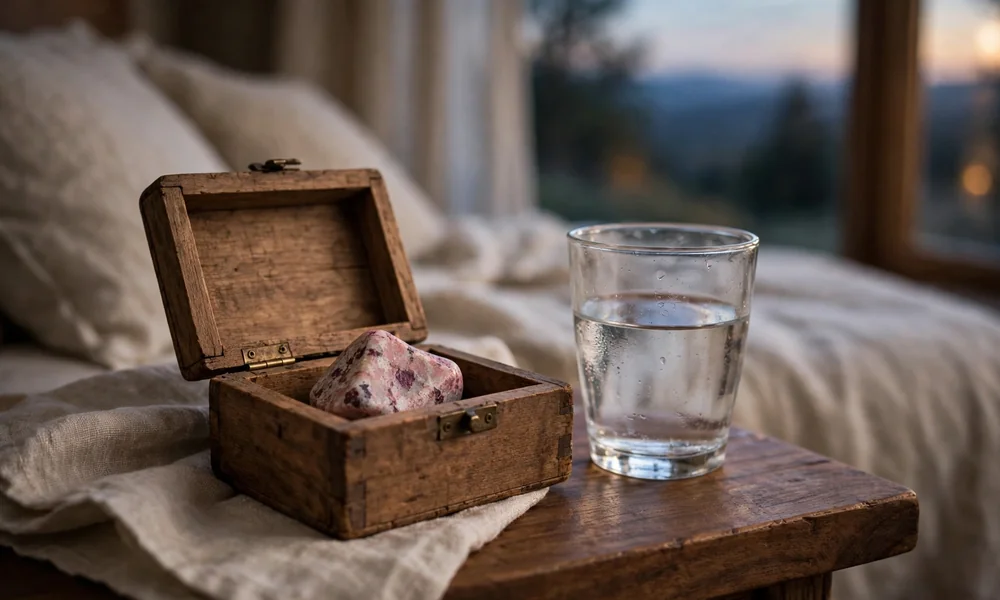
Piemontite is worth it for tender days when the piece is real, the pink is soft, and the stone stays beside the water, never in it.
A Note for Tender Days
A glass of water, a soft pink stone, and a quiet room — that is all a tender day needs.