Damaged hair is easy to recognise and hard to live with. The ends feel rough between the fingers, the lengths tangle too easily, and the hair looks dull even when it is clean.
Water is the simplest place to start with damaged hair. The temperature you wash with, how long you rinse, and how gently you dry all change how the hair feels: water touches every strand, every wash, and small changes add up over weeks.
This guide is a gentle repair guide for damaged hair, built around plain water: what damage is, how water affects it, and how to wash, rinse, dry and detangle with care. It is gentle general information only: water cannot repair damage that is already done, and scalp problems need a doctor.
Key Takeaways
- Damaged hair is dry, rough hair with a worn outer layer.
- Lukewarm water is kindest; hot water strips oils and roughens hair.
- Rinse longer, and finish cooler for smoother hair.
- Dry gently: pat with a soft towel, comb wide-tooth.
- Water cannot repair damage; only a trim removes it, and scalp problems need a doctor.
What Damaged Hair Is
Damaged hair is hair whose outer layer, the cuticle, has worn thin. Each strand is covered in tiny overlapping scales, like tiles on a roof. When those scales lie flat, the hair looks smooth and shiny; when they lift or break away, light scatters, and the hair looks dull.
Damage builds up slowly. Heat styling, rough brushing, tight bands, sun, and colour treatments all wear the cuticle down, and the ends suffer most because they are the oldest part of every strand.
Damaged hair is common, not a sign of poor care. Fine hair damages more easily, and hair often brushed when wet or dried with high heat damages sooner. Gentle habits can stop it getting worse, one wash at a time.
How Water Affects Damaged Hair
Water affects damaged hair because it changes the cuticle, the tiny scales on each strand. Warm water lifts the scales slightly, which helps shampoo clean away oil and dirt. Cool water helps them lie flat again, and flat scales reflect light, which we read as shine.
Hot water does the opposite. It strips the natural oils that protect the hair and leaves the lengths rough and dry. Hard water adds another problem: dissolved minerals leave a thin film that makes hair feel coated and dull.
The fixes are practical, and they start with temperature. Lukewarm water cleans just as well as hot water, and it leaves the hair calmer and smoother.
The Gentle Wash: Lukewarm First
The most useful water habit for damaged hair is also the simplest: wash lukewarm, never hot. Lukewarm means water around body temperature, comfortable on the inside of your wrist.
Wet the hair thoroughly first, for a full minute if it is thick. Lather the shampoo in your palms, then massage the scalp gently with your fingertips, and let the suds run down the lengths.
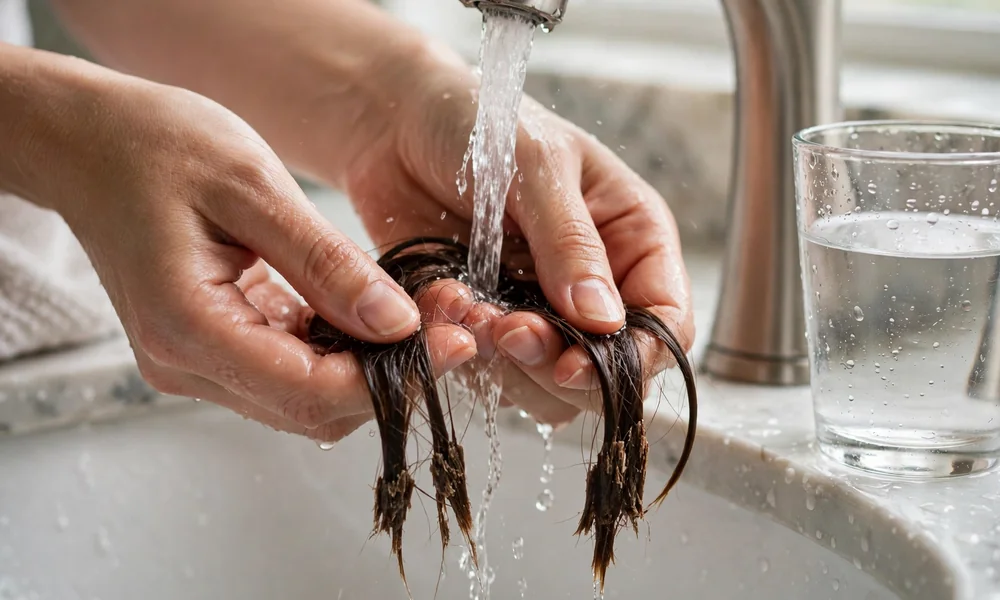
Rinse longer than you think, until the water runs clear and the hair feels clean but not squeaky. For the final rinse, turn the temperature down a notch, to cool rather than cold, and run it over the lengths for thirty seconds.
Conditioning the Lengths Gently
Conditioner is the kindest step for damaged hair, and it belongs on the lengths, not the scalp. After rinsing out the shampoo, squeeze the water gently from the hair, then smooth a little plain conditioner over the mid-lengths and ends.
Leave it for two or three minutes. Then rinse again with lukewarm water until the hair feels smooth but not slippery. Too much left behind can weigh fine hair down.
Patch-test any new product first: try a little on the inside of your arm and wait a day. If it stings or reddens, do not use it.
Drying Without More Damage
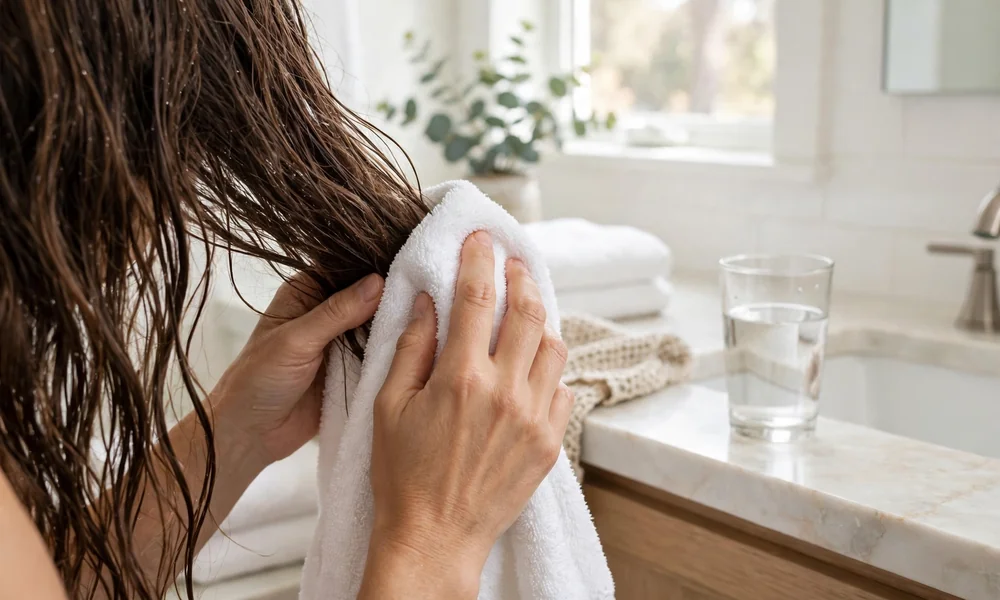
Wet hair is at its weakest, so drying is where most new damage happens. Never rub wet hair with a towel: rubbing lifts the cuticle and snaps the weakest strands. Instead, press it gently between the folds of a soft towel, a section at a time.
Let the hair air-dry when you can. If you must use a dryer, keep it on its lowest heat and keep it moving so no one spot gets too hot.
While the hair dries, leave it alone as much as you can. Touching it and pulling it into tight bands while it is damp all add small breaks that show up later as roughness.
Detangling Damaged Hair
Detangling damaged hair needs patience, not force. Start with a wide-tooth comb, never a fine brush, and begin at the ends, working upward a little at a time.
Never brush hair when it is soaking wet: wet strands stretch and snap far more easily. Wait until the hair is damp, not dripping, and comb it gently from the ends upward.
A loose braid or a soft cloth band keeps the hair tidy while it dries, without the sharp pull of a tight elastic.
Damaged Hair at a Glance
| Dry rough hair | Lukewarm wash | Gentle care |
|---|---|---|
| Worn outer layer | Rinse long, cool | Pat dry, comb wide |
| Weak frayed ends | Condition the lengths | Trim splits away |
| Dull, tangled lengths | Air-dry when possible | See a doctor |

Damaged Hair and Split Ends
Damaged hair and split ends are close cousins, and split ends are often the first sign of damage. A split end is a strand that has frayed at the tip, splitting into fine threads like the end of an old rope.
This guide covers the whole strand, from roots to tips, while the split-ends guide looks only at the tips. Water cannot repair a split end, and only a trim removes one, and that is true here as well.
Where water and split ends: a simple care guide keeps the focus on frayed tips, this guide keeps the focus on the whole head of damaged hair — the same gentle habits, applied everywhere, not just at the ends.
Damaged Hair and Frizz
Damaged hair and frizz often arrive together, and it is easy to mistake one for the other. Frizz is a lifted, rough hair surface: when the outer layer lies flat, hair looks smooth, and when the scales lift, it looks dull and frizzy.
Frizz is one symptom of damage, not the whole of it. Damaged hair can be rough, weak, tangled and dull all at once, while frizz is only about how the surface looks.
Where water and frizz: a simple smooth routine builds a routine around smoothness alone, this guide builds a routine around the whole damaged strand, with smoothness as one part of the repair.
Damaged Hair and Hard Water
Damaged hair and hard water are different problems that make each other worse. Hard water holds dissolved minerals, mostly calcium and magnesium, that settle on the hair as a thin film, so it looks dull and feels rough.
Damaged hair already has a roughened surface, so the film clings to it more, and shampoo lathers less, so people use more of it.
The fixes are practical, as explained in the hard-water guide: a filter, a longer rinse, and a clarifying wash now and then do most of the work. Where hard water hair: a practical fix guide looks only at the water from the tap, this guide looks at the hair itself.
When Damage Needs a Trim
Some damage cannot be washed away, and a trim is the honest answer. Water cannot repair a split end, and no conditioner can glue a frayed tip back together.
A small trim every few months keeps the damage from travelling upward. Ask for a dusting, just the very tips, if you are growing the hair out.
A trim is not a failure of care. It is part of care. Gentle habits protect the new growth, and the trim removes what gentle habits cannot save.
Protecting Hair Between Washes
Hair needs gentle handling between washes too. Sleep on a smooth pillowcase, and keep the hair loose or in a soft braid at night, so it does not rub and tangle.
In the sun, cover the hair with a hat or a scarf, because strong sun dries the lengths. After swimming, rinse with plain fresh water at once, so salt or pool water does not dry on the strands.
Drink a glass of fresh water through the day as well. It will not repair your hair, but steady hydration supports the skin and scalp.
Your Gentle Repair Checklist
- Wash lukewarm, never hot, and rinse longer than you think.
- Condition the lengths only, and rinse until smooth, not slippery.
- Pat wet hair dry with a soft towel; never rub it.
- Detangle with a wide-tooth comb, from the ends upward.
- Trim split ends away; water cannot repair them.
- See a doctor for scalp problems, and patch-test new products first.

Frequently Asked Questions
Can water repair damaged hair?
No. Water cannot repair damage that is already done. Gentle water habits can stop damage getting worse, and a trim removes what is already frayed.
What water temperature is best for damaged hair?
Lukewarm water is best: around body temperature, comfortable on the inside of your wrist. Hot water strips oils, while a cooler final rinse helps the surface lie flat.
How often should I wash damaged hair?
Wash only when the hair needs it, usually two or three times a week. Washing every day strips the oils that protect the lengths.
Should I brush damaged hair when it is wet?
No. Wet hair stretches and snaps far more easily than dry hair. Wait until it is damp, then detangle gently with a wide-tooth comb, starting at the ends and working upward.
Does hard water make damaged hair worse?
Yes. Hard water leaves a thin mineral film that makes hair feel coated and dull, and damaged hair holds that film more easily. A longer rinse or a filter helps.
When should I see a doctor about my hair?
See a doctor if the scalp is sore, itchy, flaking, or losing hair in patches, or if a problem does not settle after a few weeks.
The Bottom Line
Damaged hair needs gentle water, not more products: lukewarm washes, patient rinses, conditioner on the lengths, soft drying, and a trim for what cannot be saved. Keep it gentle, keep it patient.
A Note for Gentle Repair
Keep it lukewarm, keep it gentle, keep it patient. A glass of water, a soft towel, and a few kind minutes can carry damaged hair toward its best days.