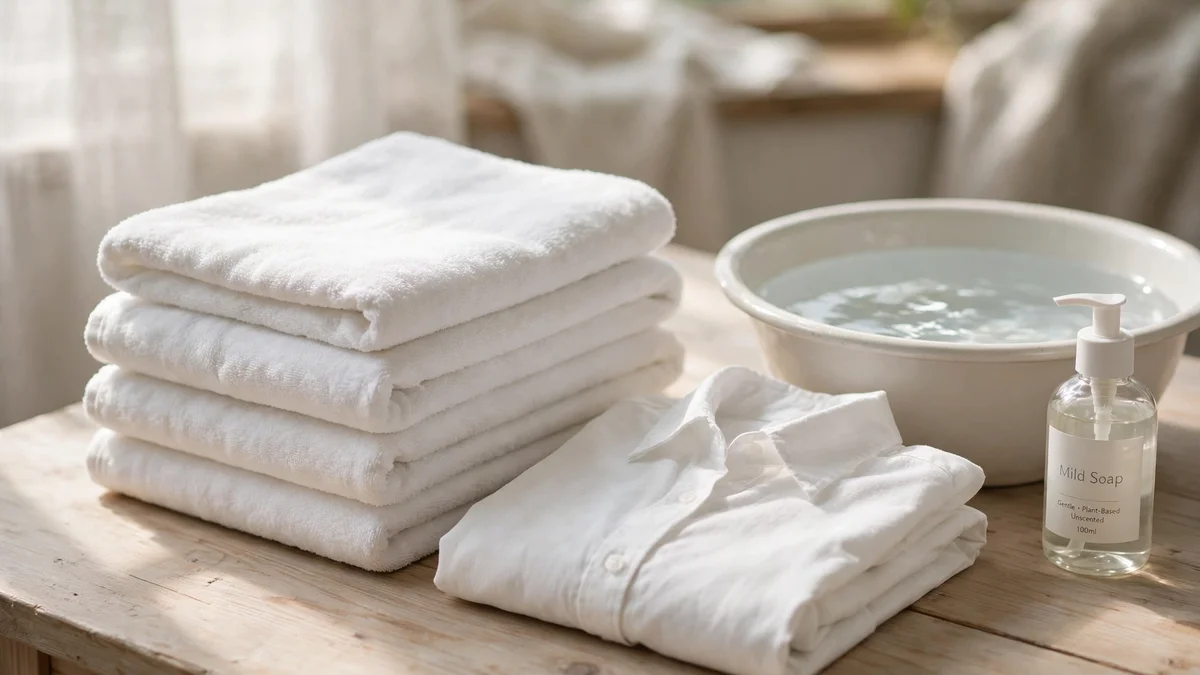
Cotton is the cloth of everyday life. It is the shirt of a warm morning, the towel that dries your hands, and the sheet you sleep under. It is soft, strong, and honest, and it asks for very little: clean water, a little mild soap, and a gentle hand.
Water and cotton care is a gentle skill, and it is simpler than most people fear. Cotton needs no harsh soaps, very hot water, or long soak: only lukewarm water, a drop of mild soap, a gentle wash, and patience while it dries. This guide explains the whole wash, step by step, for everyday cotton.
This article is a complete wash-and-care guide for everyday cotton. It covers what cotton is, reading the label, sorting, washing by hand and machine, drying, ironing and folding, removing stains, and storing cotton clean. Cotton care is comfort and habit only, never a treatment.
Key Takeaways
- Cotton is a soft, strong natural fibre that loves water and fresh air.
- Wash cotton in lukewarm water with a drop of mild soap, never harsh bleach.
- Never wring cotton hard, use very hot water, or dry it in harsh sun.
- Dry cotton in shade or fresh air, iron it warm, store it folded and clean.
- Cotton care is comfort and habit only, not a treatment for skin or sleep.
What Cotton Is
Cotton is a natural fibre grown in soft white bolls on the cotton plant, spun into threads and woven into cloth. A cotton shirt feels soft and breathable, soaks up water easily, and grows softer with every wash. It is the most common cloth in the world, worn closest to our skin.
Cotton is strong dry and a little weaker wet, which is why the whole wash is gentle: the fibres swell in water, and rough handling while wet can stretch them out of shape. Unlike silk, cotton is sturdy, and a cotton shirt can take far more washing than a silk scarf. The silk version of this guide is described in water and silk care gentle wash, where a delicate fibre needs cool water and a softer hand.
Why Cotton Needs Gentle Water
Cotton needs gentle water because water is both its friend and its risk. Lukewarm water cleans cotton well, lifting light dust and the faint marks of wear without harming the fibres. Very hot water is the risk: it can shrink cotton, fade colours, and set stains that lukewarm water would have lifted.
Harsh soap is the second risk. Strong detergents and bleach can strip cotton's softness, thin the fibres, and leave white cloth yellowed. A drop of mild soap is all cotton needs; more soap does not mean cleaner cotton, only more rinsing and a stiffer cloth.
Reading the Label First
Every cotton garment carries a small label, and reading it takes seconds. The label tells you the washing temperature, whether it can go in the machine, and whether it can be ironed hot. A shirt that says cold wash only should never meet very hot water, and a towel that says tumble dry low should never meet high heat.
The label also tells you what the cloth is made of; many cotton clothes are blends, with a little polyester or elastane mixed in. A blend usually washes like cotton but dries faster. When label and habit disagree, trust the label; the maker knows the cloth best.
Sorting Before the Wash
Sorting takes five minutes and saves a whole wash from going wrong. Wash whites with whites, colours with colours, darks with darks, so a new red shirt cannot tint a white towel pink. Wash towels and sheets apart from shirts, so heavy cloth cannot tangle and stretch light cloth.
Check the pockets first, and turn shirts inside out so the outside keeps its colour longer. Close zips and buttons so they cannot snag other cloth, and wash anything very dirty on its own.
Washing Cotton by Hand
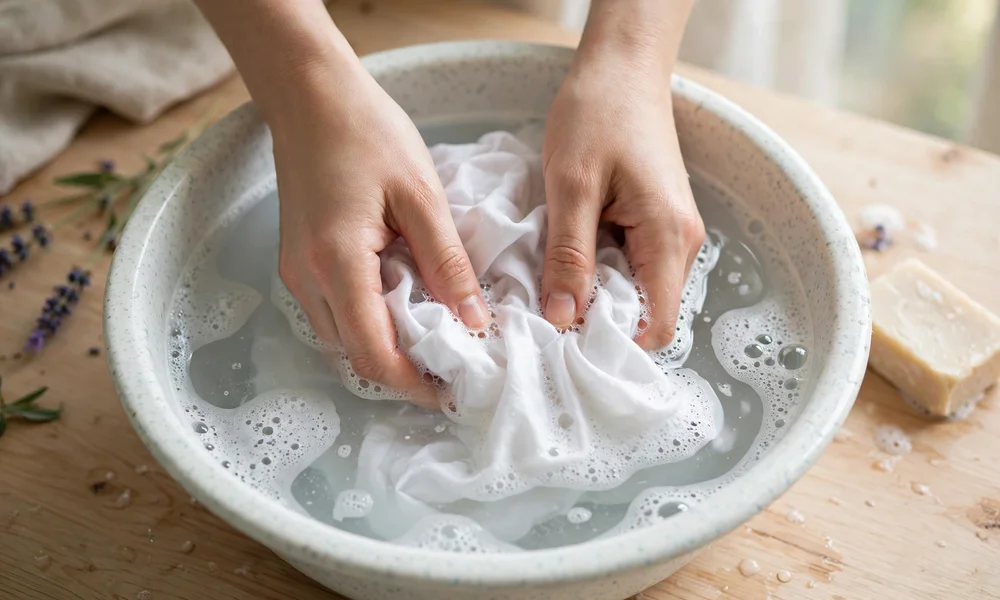
Hand washing suits a favourite shirt, a small load, or a cloth you want to keep soft for years. Fill a clean basin with lukewarm water, add a drop of mild soap, and stir until lightly foamy. Lay the cotton in gently, press it under, and let it soak for ten minutes, no longer.
Wash by pressing and lifting softly, never by scrubbing or twisting hard. Rinse twice in clean lukewarm water, pressing the water out gently. A gentle hand wash keeps cotton soft, and a favourite shirt can look new for years.
Machine Washing Cotton Gently
Machine washing suits towels, sheets, and everyday cotton, as long as the machine is set kindly. Choose a gentle cotton cycle, lukewarm water, and a little mild detergent, and never fill the drum so full the cloth cannot move. Cotton needs room to turn, rinse, and breathe.
Use a short spin, not the fastest, because a hard spin creases cotton deeply and strains its seams. When the cycle ends, take the cotton out straight away, shake each piece once, and hang it up before it sits damp and creased. A machine is a helper, not a master; a gentle setting is the whole secret.
Drying Cotton Softly
Drying is where cotton keeps its softness or loses it. Fresh air is the best dryer: hang cotton in shade or soft morning sun, with room between pieces. Shake each piece once before you hang it, and smooth it with your hands; that one shake removes half the creases.
Do not dry cotton in harsh midday sun, which can fade colours and stiffen the cloth. Do not leave it hanging for days; over-dried cotton feels rough and hard to iron. Bring it in when just dry, while still a little soft to the touch, and fold it straight away.
Ironing, Folding and Storing
Ironing cotton is simple, because cotton takes heat well. Iron while the cloth is still slightly damp, on a warm setting, with a little steam, pressing slowly, one section at a time. A hot iron on dry cotton can scorch it, so a light spray of water is kinder than more heat.
Fold cotton neatly, in the same folds each time, so stacks stay tidy and crease in no new places. Store it in a clean, dry cupboard with room to breathe, and a sprig of dried lavender if you like the scent. Clean, dry cotton stored well smells fresh for weeks.

Stains and Everyday Marks
Stains are part of everyday cotton, and most of them come out with a little patience. Treat a stain as soon as you see it, with cool water and a drop of mild soap pressed gently into the mark. Let it sit ten minutes, then wash as usual, and never rub a stain hard, because rubbing can push it deeper into the fibres.
Tea, coffee, and food marks usually lift with this method, and a second wash will often finish what the first started. Ink and grease are harder and may need a specialist cleaner. Never use bleach on coloured cotton, and never put a stained cloth in very hot water first, because heat can set it for good.
What Cotton Care Will Not Do
Be honest about what cotton care will not do. Washing cotton gently will not heal your skin, cure an allergy, or fix a health problem, and no wash routine should ever be sold as a treatment. Cotton care is comfort and habit only: clean cloth, fresh air, and a soft towel.
The comfort is the part that helps, in an ordinary way: a clean shirt feels good, a fresh towel dries well, and a tidy cupboard eases a morning. That is a real, modest pleasure, not a treatment, and enough on its own. The same honest limit runs through water and scalp gentle wash, where a gentle wash routine is comfort and habit, never a cure.
Cotton Care at a Glance
| Before the wash | During the wash | After the wash |
|---|---|---|
| Read label first | Lukewarm water only | Shade dry, fresh air |
| Sort whites, colours | Mild soap, small dose | Shake once, smooth flat |
| Check pockets, zips | Press, never wring hard | Iron warm, fold neat |
| Turn shirts inside out | Rinse twice, clean water | Store clean and dry |
Your Cotton Care Checklist
- Read the label first, and trust it over habit when they disagree.
- Sort whites, colours, and darks, and check every pocket before the wash.
- Wash in lukewarm water with a drop of mild soap, never harsh bleach.
- Press cotton gently to wash and rinse, and never wring it hard.
- Dry cotton in shade or fresh air, and bring it in just dry.
- Remember cotton care is comfort and habit only, never a treatment.

Frequently Asked Questions
What temperature should I wash cotton in?
Wash everyday cotton in lukewarm water, around thirty to forty degrees, with a drop of mild soap. Very hot water can shrink cotton, fade colours, and set stains, so cooler is kinder.
Can I machine wash all cotton?
Most everyday cotton can be machine washed on a gentle cotton cycle with lukewarm water, as long as the label allows it. Always read the label first, use a short spin, and take the cotton out straight away.
Should I wring cotton to dry it?
No. Never wring cotton hard; twisting can stretch the fibres out of shape and crease the cloth deeply. Press the water out gently instead, or let the machine's short spin do the work, then shake and hang each piece.
How do I keep white cotton bright?
Wash whites together in lukewarm water with mild soap, and dry them in fresh air and soft sunlight. Avoid regular bleach, which can thin fibres and turn white cloth yellow, and rinse twice so no soap stays behind.
How do I remove everyday stains from cotton?
Treat the stain quickly with cool water and a drop of mild soap pressed into the mark. Let it sit ten minutes, then wash as usual, and never use very hot water before the stain is out, because heat can set it for good.
Which gentle routine suits hands that garden?
Hands that garden need cool water, mild soap, and a soft towel after every session. One good example is described in water and gardening soft hands, where gentle washing keeps hard-working hands soft.
The Bottom Line
Cotton is a soft, honest cloth, and gentle water is all it ever asks for.
Wash it kindly, dry it softly, and fold it well.
A Note for Gentle Washing
Keep it lukewarm, keep it mild, keep it soft. The cotton will do the rest.