A stain arrives in a second and stays for a week. Tea tips over a white shirt, a pen leaks in a pocket, grass marks a knee after a garden afternoon. The first urge is to scrub hard, but hard scrubbing is usually what makes a small mark into a lasting one.
Water is the gentlest place to start, and often the only one you need. Plain water, a little mild soap, a clean cloth, and patience will lift most everyday marks without harming the cloth beneath them. This guide explains how stains work, why water comes first, and how to treat the common marks of daily life, gently and safely.
It is general information only, built on plain water and gentle care. For a valuable or delicate item, or a mark that will not move, a professional cleaner is the right next step, and this guide will tell you when to stop and ask one.
Key Takeaways
- Most everyday stains lift with plain water, a little mild soap, and patience.
- Always start gentle: cool water and a dab, never hard scrubbing or harsh chemicals.
- Read the care label first; it tells you what the cloth can safely take.
- Fresh stains are far easier to lift than dried ones, so act calmly and soon.
- When a mark will not move, or the item is delicate, ask a professional cleaner.
What a Stain Really Is
A stain is simply something that does not belong, sitting on or in a fibre. Tea, coffee, and juice are mostly water with colour in them, so they soak into cotton quickly and leave their colour behind as they dry. Grease is different: it coats the fibre and holds dust with it. Ink and grass are stubborn for another reason, because their colour binds to the cloth itself.
Each kind of mark asks for a different kind of patience. A watery mark wants water, a greasy mark wants a little mild soap, and a dried mark wants time to soften first. None of them wants to be scrubbed hard while dry, which only pushes the colour deeper.
Why Water Comes First
Water comes first because it is the gentlest solvent you own, and because most everyday marks are water-based. A splash of cool water will carry away tea, juice, and milk before they dry, and it will soften a dried mark so that soap can reach it. Cool water is the right choice for most marks, because hot water can set some stains, especially those with protein in them, like milk or egg. Start cool, work gently, and only warm the water a little if the mark is greasy and the label allows it.
The Gentle Kit You Need
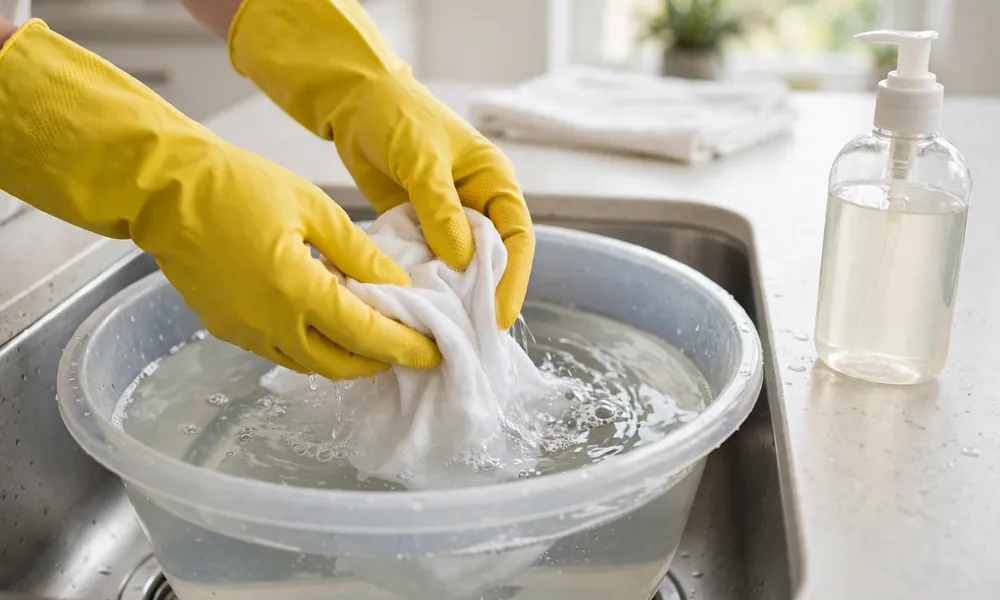
A gentle stain kit is small, and you probably own all of it already. You need a basin or a clean sink, cool water, a bottle of plain mild soap, two clean white cloths, and a soft brush, such as an old toothbrush kept for cleaning. White cloths matter, because a coloured cloth can leave its own dye behind on a pale shirt.
Keep the kit together in one place, so you can reach it quickly. A stain treated in the first minutes is a small job; left until the weekend, it is a project, and sometimes a lost shirt.
Reading the Label Before You Begin
Read the care label before you begin, because it tells you what the cloth can safely take. The label says whether the item can be washed in water at all, how warm the water may be, and whether it can be ironed or dried in the sun. Some labels say dry clean only, and those words mean it: leave those items to a professional.
The label also tells you the fibre, and the fibre changes the whole job. The full wash for everyday cotton is described in water and cotton care gentle wash, where lukewarm water and a drop of mild soap do the work. Silk and wool need a softer hand still, and a gentler touch.
Fresh Stains: Act Calmly, Act Soon
Fresh stains are the easiest to lift, and the rule is simple: act calmly, and act soon. Blot the mark with a clean white cloth, lifting the colour away, and never rub, which spreads the mark and pushes it into the fibre. Work from the outside of the mark toward the centre, so the stain shrinks instead of growing.
Then rinse the spot under cool running water, from the back of the cloth if you can. A drop of mild soap, worked in gently with your fingers, will finish most fresh marks. Wash as usual, and check before you dry.
Tea, Coffee and Food Marks
Tea, coffee, and food marks are the most common stains in any home, and they are also among the kindest. Start with cool water, blotting and rinsing, and then add a drop of mild soap. Let the soap sit for a few minutes, then rinse again and look. Most tea and coffee marks will have faded by half after one gentle round, and a second round will finish them.
For a dried food mark, soak the spot in cool water for half an hour first. Never use very hot water on a milk or egg mark, because heat can set it.

Ink, Grass and Everyday Marks
Ink, grass, and everyday marks are stubborn, but they still answer to gentle care. For a small ink mark, dab it with a clean white cloth and cool water, and do not rub, because ink spreads fast. If the mark is fresh, much of it will lift onto the cloth. A little mild soap will help, and a second dab will lift more.
Grass marks want the same calm treatment: cool water, a drop of mild soap, and a soft brush worked gently across the mark. Mud is the easiest of all: let it dry, brush it away outside, and wash as usual.
When a Stain Will Not Budge
Some stains will not budge, and knowing when to stop is part of gentle care. If a mark has survived two gentle rounds of water and mild soap, or if it is on silk, wool, leather, or a treasured garment, stop and ask a professional cleaner.
The delicate version of this care is described in water and silk care gentle wash, where a delicate fibre needs cool water and a softer hand. Never mix strong chemicals, never use bleach on coloured cloth, and never try a harsh remedy you found online without checking the label first.

Drying and Checking Your Work
Drying is the last step, and it matters as much as the wash. Always check the mark before you dry the cloth, because heat sets a stain, and a mark that survives the dryer is far harder to lift. Look at the spot in good light, and if it is still there, treat it once more and wash again.
Dry the cloth in fresh air and shade where you can, because harsh sun can fade colours. When the cloth is dry, look once more, and only then call the job done.
Water and Stains at a Glance
| Fresh mark | Gentle step | Safe rule |
|---|---|---|
| Tea coffee spill | Blot cool water | Never rub hard |
| Greasy food mark | Mild soap dab | Cool water first |
| Ink grass stain | Dab soft brush | Stop ask expert |
| Dried old mark | Soak then rinse | Check before drying |
Your Water and Stains Gentle Checklist
- Blot a fresh mark at once with a clean white cloth, never rub.
- Rinse the spot under cool running water, from the back if you can.
- Add a drop of mild soap, wait a few minutes, then rinse again.
- Read the care label first, and leave dry-clean-only items to a professional.
- Check the mark before drying, because heat sets a stain.
- When a mark will not move, stop and ask a professional cleaner.

Frequently Asked Questions
What is the first thing to do with a fresh stain?
Blot it at once with a clean white cloth, lifting the colour away, and work from the outside of the mark toward the centre. Then rinse the spot under cool running water. Never rub, because rubbing spreads the mark and pushes it deeper into the fibre.
Can I use hot water on a stain?
Usually not. Cool water is the right choice for most marks, because hot water can set some stains, especially those with protein in them, like milk or egg. Start cool, work gently, and only warm the water a little if the mark is greasy and the care label allows it.
Should I use bleach on a stain?
No, not on coloured cloth, and never mixed with anything else. Bleach is harsh, can damage fibres, and can leave its own pale mark behind. Plain water and a little mild soap will lift most everyday marks safely, and a professional cleaner is the right choice for the rest.
What about stains on delicate fabrics?
Delicate fabrics like silk and wool need a softer hand still, with cool water, very little soap, and no rubbing at all. If the item is valuable, take it to a professional cleaner instead. The travel version of gentle washing is described in water and travel laundry fresh clothes, where a little, often, keeps clothes fresh on the road.
Can an old, dried stain still be removed?
Sometimes. Soak the spot in cool water for half an hour first, so the dried colour can soften, then treat it gently with mild soap and rinse. Old marks are harder, and some will only fade rather than vanish. If two gentle rounds do not move it, ask a professional cleaner.
When should I stop and ask a professional?
Stop when a mark has survived two gentle rounds of water and mild soap, when the item says dry clean only, or when the cloth is silk, wool, leather, or treasured. A professional has tools and knowledge you do not, and a ruined garment costs far more than a cleaning bill.
The Bottom Line
Water and stains meet gently: cool water, mild soap, patience, and knowing when to stop.
Blot, rinse, check, and let the water do the work.
A Note for Gentle Homes
Keep it cool, keep it mild, keep it patient. The water will do the rest.