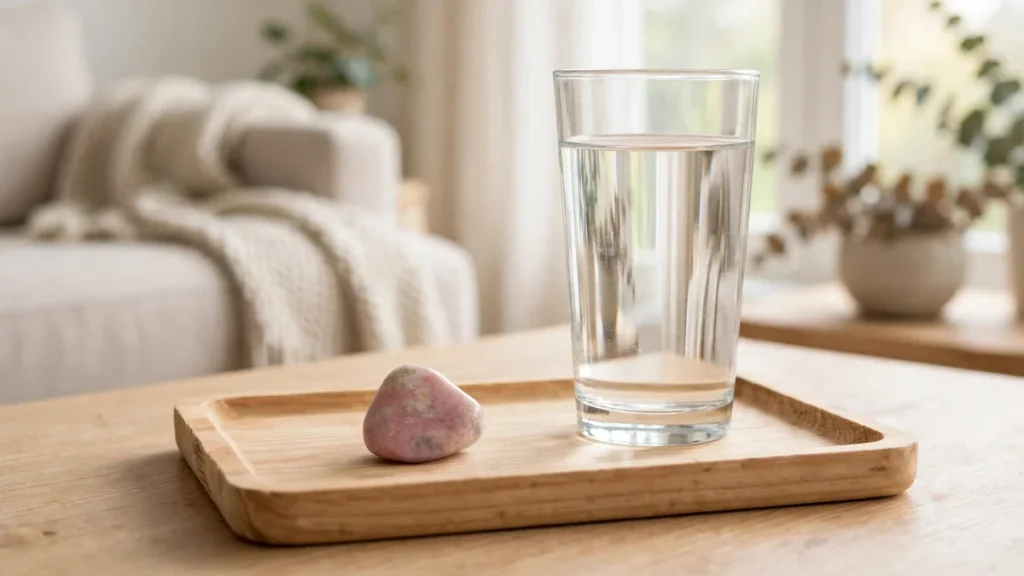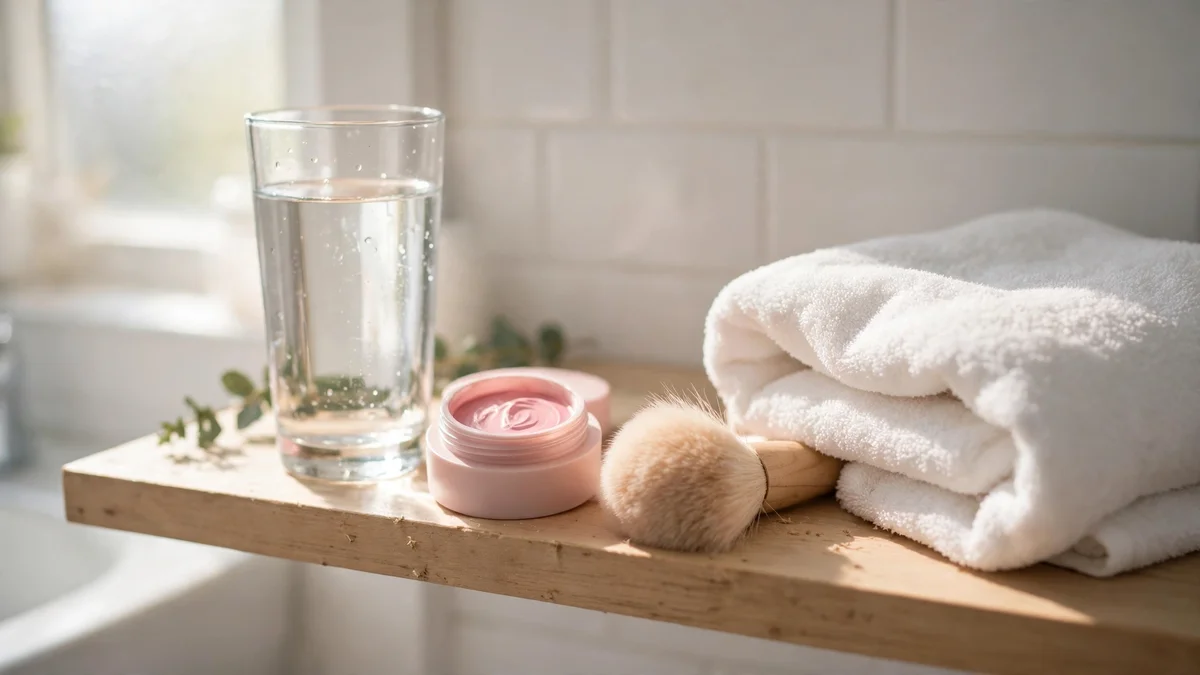
Blush has a reputation for being the risky step, the one that can turn a fresh face into a painted one in a single heavy stroke, the brush too full and the colour too strong. It does not have to feel that way.
Taken slowly, with water woven through each step, blush becomes an easy, everyday habit. Clean skin, a touch of moisture, a little soft pink, and a light mist at the end can leave your cheeks looking as if you have just stepped in from a walk, warm and rested.
Here we go through blush step by step: water first, then the colour, then a gentle finish. These are general notes, not medical guidance. When skin keeps flaring up, ask a doctor rather than reaching for a stronger product.
Key Takeaways
- Water and blush belong together: water prepares the skin and settles the colour.
- Lukewarm water is the gentlest choice; very hot water can leave skin sore.
- Blush is one soft wash of pink, not a heavy layer of colour.
- Patch-test blush on a small area first, and never use it on broken skin.
- Mist lightly, blend well, and check the finished look near a window.
What Water and Blush Means
In this guide, water and blush means letting water do its job at each stage, not only at the end. Skin holds a thin film of natural oils, and hot water washes that film away quickly, so skin feels tight before any blush reaches it. A brief wash in lukewarm water cleans while leaving that film alone.
Think of painting on dry, dusty paper: the colour sits in patches and looks harsh, while damp paper takes it softly and evenly. Skin works the same way. A short lukewarm wash, a light moisturiser, and a small amount of blush form one routine, and no step works as well without the others.
Why Water Comes First
Test water on your wrist: lukewarm feels neither hot nor cold, and that middle warmth suits blushed skin best. Hot water leaves cheeks flushed, so pink reads stronger than it truly is, while cold water firms the skin and makes blending harder.
Clean the face in lukewarm water with a mild cleanser, then press it dry with a towel. Skin should feel clean and settled, neither red nor damp, and leaving out this brief wash is the usual reason blush turns patchy rather than fresh.
Getting Ready Before Blush
A good blush starts before the brush is even picked up. Let the moisturiser sink in for two or three minutes, skip heavy creams on the day itself, because blush slides on slippery skin, and wear your hair back so the cheeks are easy to reach.
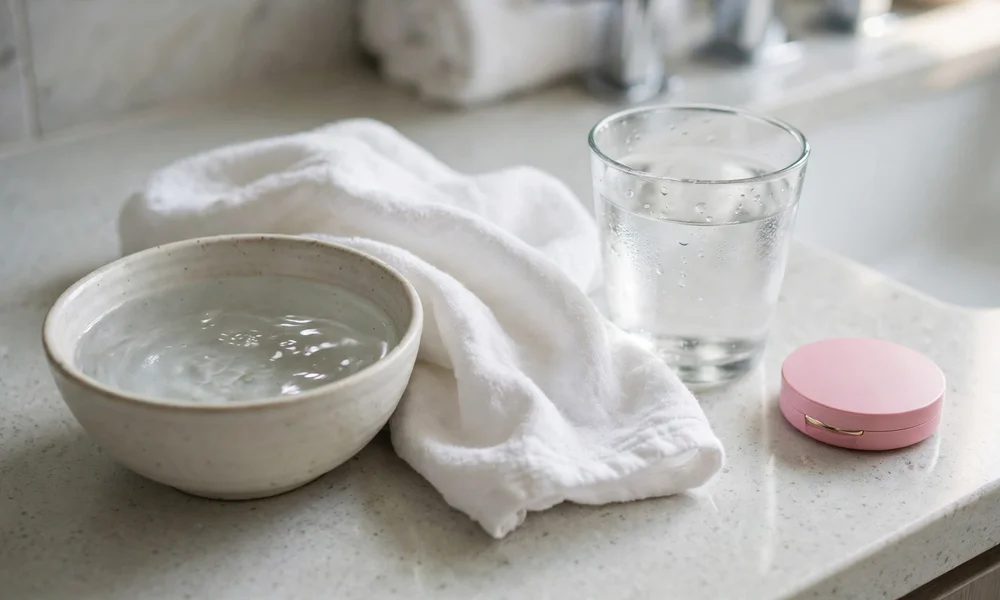
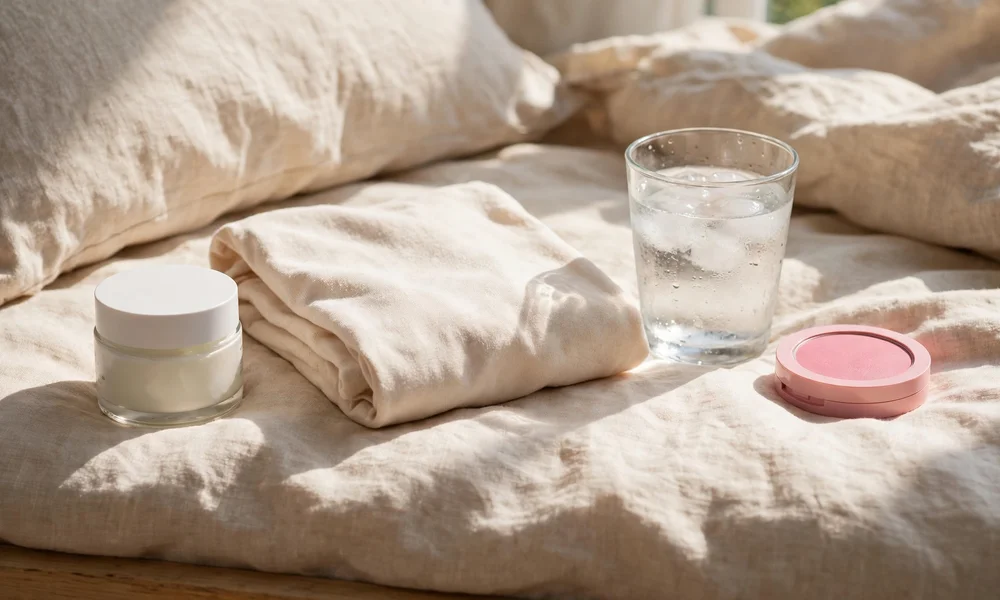
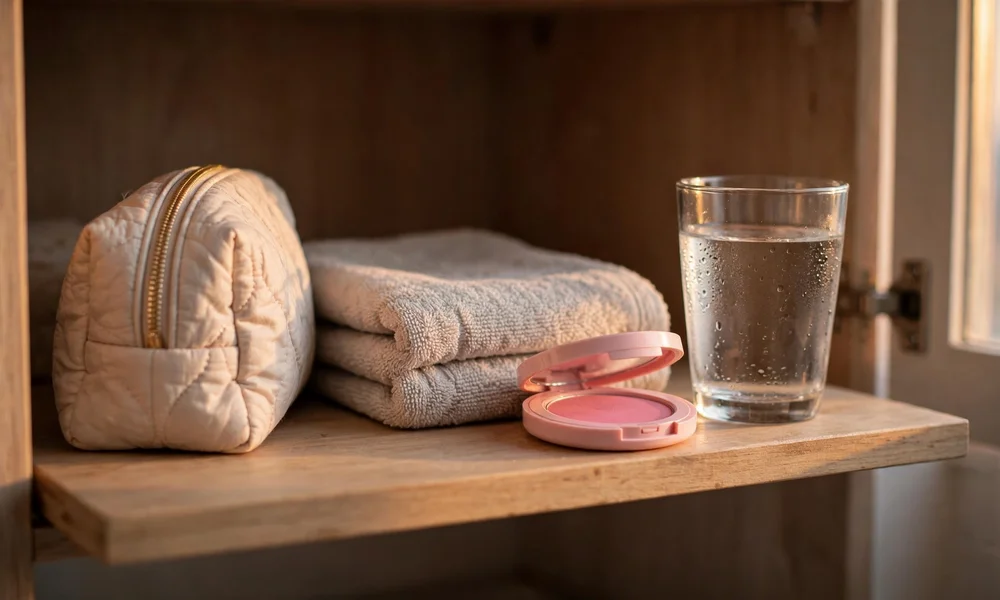
Before you start, set everything out: the blush, a fluffy brush, a bowl of lukewarm water, a clean towel, and a glass of plain water for sipping. Having it all within reach means no rushing halfway through, and unhurried blush always looks fresher.
Choosing Blush and Tools
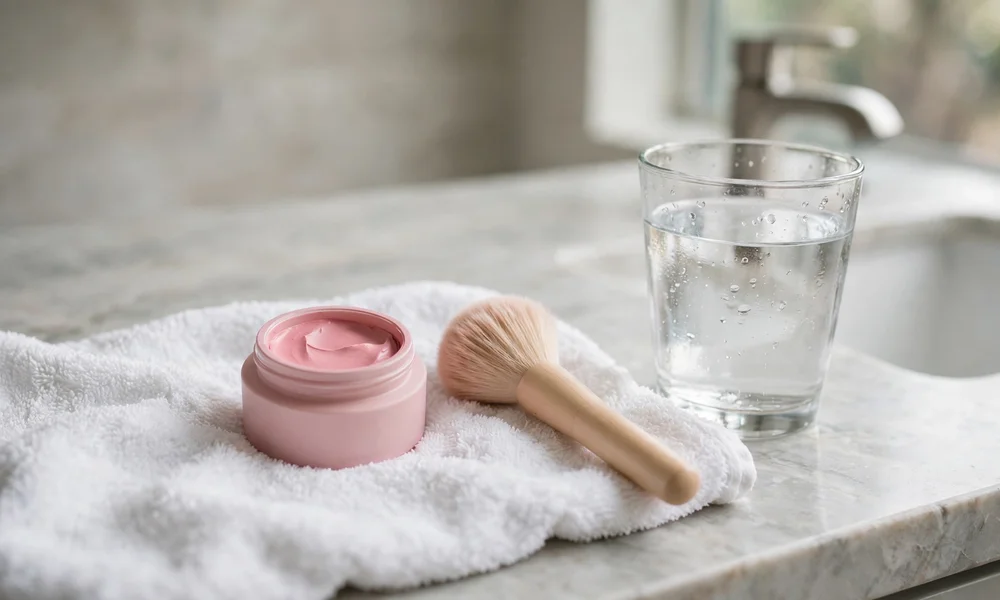
Blush comes in three broad kinds, and the choice is simpler than the shelves suggest. Powder blush dusts on lightly and suits oily skin, cream blush melts in with warmth and suits dry skin, and liquid blush spreads thin and suits a sheer, natural finish.
Pick a soft pink close to the colour your cheeks turn after a walk, with a clean fluffy brush and no added glitter. A small amount is always enough: dip the brush lightly, tap off the extra, and add more only if the first touch is too pale. A shade that disappears into the cheek in daylight is the right one.
Putting Blush On, Slowly
Work on one cheek at a time, and never rush a cheek to save time. Smile gently to find the round of the cheek, sweep the brush lightly across it, and blend the edges outward with soft, short strokes. Then do the other cheek the same way, and step back to compare them.
Breathe out as you blend, and pause between cheeks to let your eyes rest. The apples of the cheeks are the easiest place to learn, because the colour sits naturally there and the brush can move in wide, gentle sweeps. A thin layer looks fresh; a heavy layer looks painted, so build the colour slowly.
A Fine Mist to Finish
Once the blush is on, a fine mist of plain water helps the colour settle into the skin. Hold the mist at arm's length, close your eyes, and let a light spray fall over the face for a second. The mist melts powder into skin, so the blush stops looking like it sits on top and starts looking like it belongs there.
Let the mist dry on its own, and do not rub the face afterwards. If the colour still looks strong, a clean fluffy brush swept lightly over the cheek will soften it. Water and makeup to refresh with a fine mist covers how a light mist can wake up makeup through the day, and the same gentle habit serves a fresh blush well.
Aftercare and Moisture
After the mist, smooth on nothing more for a little while, and let the skin settle. A plain, unscented moisturiser applied before the blush already did its work, and adding more on top would only move the colour.
Sip water through the day, because skin cared for from within shows it on the surface. A fresh look is not only the blush: it is clean skin, enough water, and a colour so light that it looks like your own.
Blush at a Glance
| Soft pink, sheer | Lukewarm first | Fine mist after |
|---|---|---|
| One cheek, slow | Patch-test first | Blend edges well |
| Small amount, light | Clean brush, calm | Check near window |
| Looks like you | Never on broken skin | Doctor if sore |
Blush and Makeup That Lasts
Blush is one colour inside a much wider routine, and it helps to know where it sits. Water and makeup to make it last covers the whole face: clean skin, a light moisturiser, thin layers, and a fine mist, with the habits that carry makeup through a long day.
That guide explains why thin layers last longer than one heavy layer, a lesson that matters most of all for blush, because a heavy cheek is the first thing to look tired by afternoon. Build the pink slowly, in thin touches, and it will still look fresh hours later. Foundation evens the whole face first, and concealer hides one small mark, while blush only adds the pink on top.
Blush and Opal Shimmer
Blush and shimmer are neighbours on the cheek, and they work best when they do not compete. Opal shimmer for soft light makeup in daytime covers a sheer, light-catching finish, with pale champagne and pearl tones that move as you move.
Blush gives the cheek its colour, while shimmer gives it its light. Put the blush on first, blend it well, and add only a whisper of shimmer on the top of the cheekbone, where light naturally lands. Too much of both looks busy; a little of each looks like daylight itself.
Blush for Tender Skin
Tender skin and blush need each other to be handled with extra care. Stick to lukewarm water and plain products, and patch-test each new blush before it reaches your face. Try it on a small hidden spot, like the inside of your arm, and give it a full day before using it anywhere larger.
When the test spot stays settled, continue slowly; when it turns red, itchy or sore, stop and choose another product. Tender skin need not rule out blush, yet it does call for a test first and a slow hand.
When to Ask a Doctor
Most pinkness from blush settles within a few hours, yet some reactions call for a doctor instead of a home fix. Book one soon when skin stays red, swollen or sore beyond a day, when blisters or pus show up, or when the same product brings a rash back every time.
Broken, sunburned or already sore skin should get no blush at all — ask a doctor how to look after it. Keep products away from moles, warts and any area a doctor treated recently, and do not answer a bad reaction with stronger creams at home. One brief visit beats weeks of worry.
Your Simple Fresh-Look Checklist
- Clean with lukewarm water and a mild cleanser first.
- Patch-test blush inside your arm before the face.
- Use a small amount, blending softly on one cheek at a time.
- Mist lightly, then let the colour settle on its own.
- Check the finished look near a window in daylight.
- Any lasting redness or pain deserves a doctor's advice.
Frequently Asked Questions
Where should blush go on the face?
On the round of the cheek, the part that lifts when you smile gently. Sweep it lightly there and blend the edges outward, so the colour fades softly instead of stopping in a sharp line.
How much blush is enough?
A small amount is enough. Dip the brush lightly, tap off the extra, and add more only if the first touch is too pale. It is easy to add colour and hard to take it away.
Can I use blush on tender skin?
Yes, gently. Try the blush on a small hidden spot and wait a full day, keep to lukewarm water and plain products, and stop straight away when the spot turns red, itchy or sore.
Cream or powder blush: which is better?
Cream blush melts in with warmth and suits dry skin, while powder blush dusts on lightly and suits oily skin. Both can look fresh; choose the one that blends most easily on your own skin.
How do I keep blush looking fresh all day?
Build it in thin layers, mist lightly to settle it, and touch up only with a little powder after blotting, never with a whole new layer. Thin colour lasts longer than heavy colour.
When should I see a doctor about a blush reaction?
Book a doctor soon when redness, swelling or pain goes past a day, when blisters or pus appear, when a rash comes back with every use, or when blush went onto broken or sunburned skin.
The Bottom Line
Water and blush belong together: lukewarm water before, a small amount of soft pink colour, and a fine mist to finish, with a doctor for anything that stays sore.
A Note for Fresh Looks
Keep the water lukewarm, the colour light, and the morning unhurried. Clean skin, a soft pink cheek, and a fine mist are enough for a fresh look.