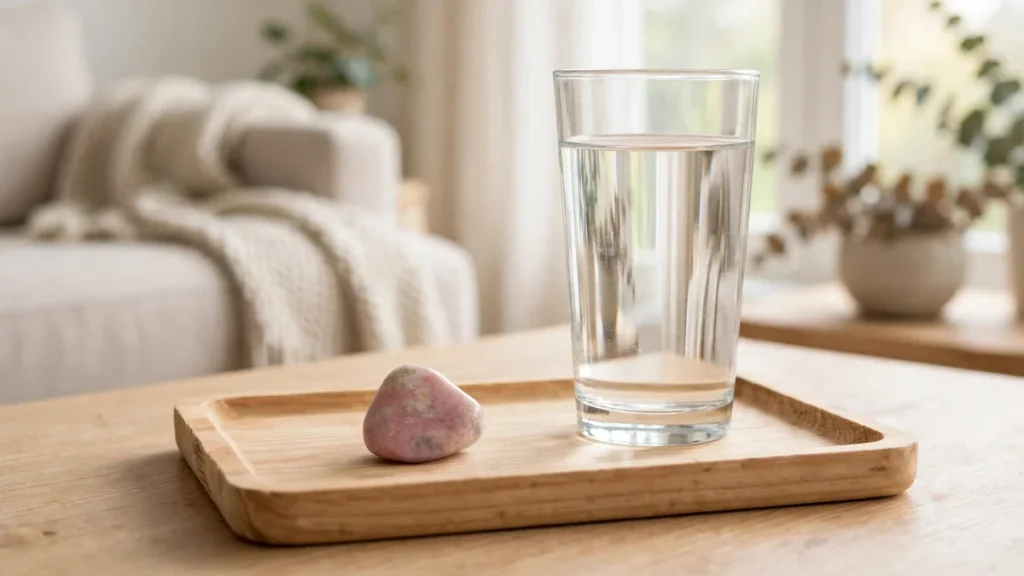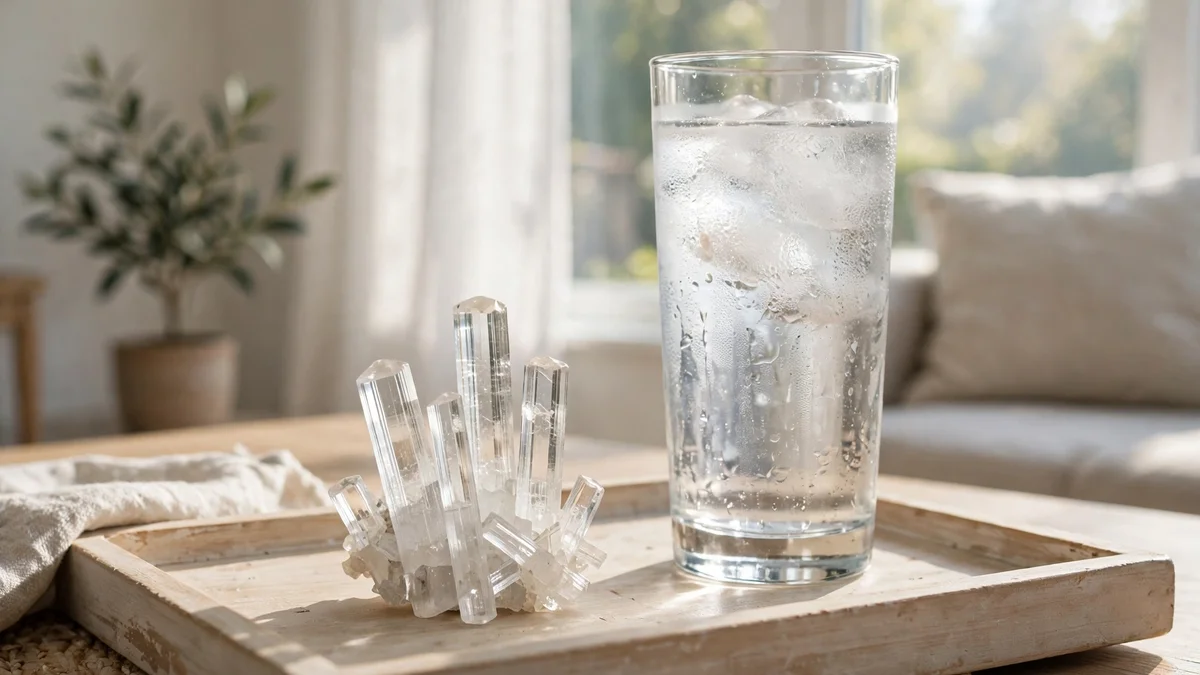
Some mornings arrive washed in white light, the kind that makes the windows shine and the whole room feel freshly aired. Nothing in the house looks heavy, and even an ordinary glass of water catches the sun and throws it back in bright sparks.
Achroite fits those mornings perfectly. It is the colourless member of the tourmaline family, a clear white stone that holds no colour of its own and instead borrows the light around it. Set on a tray, it looks like a small piece of frozen daylight.
This guide keeps achroite simple: what the white stone is, how to choose a fine piece, and how to place it safely beside a glass of water. It is a stone to admire and look at, never a cure, and it will not heal anything at all.
Key Takeaways
- Achroite is the colourless white tourmaline, clear as glass with no tint.
- Its clear white colour suits bright days, clean light and open windows.
- Achroite differs from pink, black and green tourmaline in colour and mood.
- Achroite is for display only: keep it beside water, never inside it.
- A small clear piece on a dry tray is all a bright day needs.
What Achroite Is
Achroite is tourmaline with almost no colour in it at all. Tourmaline is a mineral family that grows in many shades, and most of its colour comes from tiny traces of other elements held inside the crystal as it forms. In achroite, those traces are nearly absent, so the stone stays clear and white.
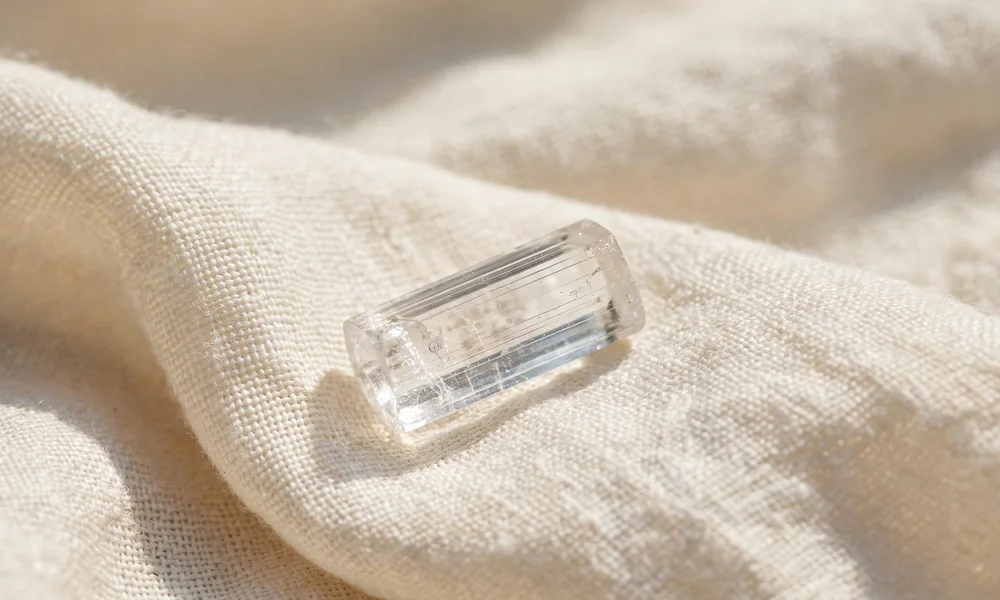
A good piece grows as a slender prism, often with fine lines running down its sides and a flat top that catches the light. Hold it up to a window and the daylight passes straight through, throwing a small bright patch onto the table below. It feels cool in the hand, smooth and solid, and it is fairly hard, so it keeps its shine with gentle care.
Why Clear White Suits Bright Days
White is the colour of a day that begins cleanly, with the curtains open and the air still cool from the night. It asks for nothing loud, and it lets the sunlight do the talking instead. A clear stone carries that feeling better than any coloured one.
Achroite adds a quiet sparkle to the morning without taking over the room. Its prisms throw the light back in small sharp flashes as you move past, and on a bright day those flashes feel like the day itself winking at you.
Choosing an Achroite Piece
Choose achroite with your eyes first, in good daylight if you can. Look for a piece that is clear through and through, with no cloudy grey patches and no yellow tinge creeping in at the edges. The sides should be straight and clean, and the top should be flat and bright.
Keep the piece small: a matchbox-sized cluster is plenty for a tray, and a single prism no longer than your thumb works just as well. Buy from a seller who can say plainly that it is tourmaline.
A Bright Day with Achroite
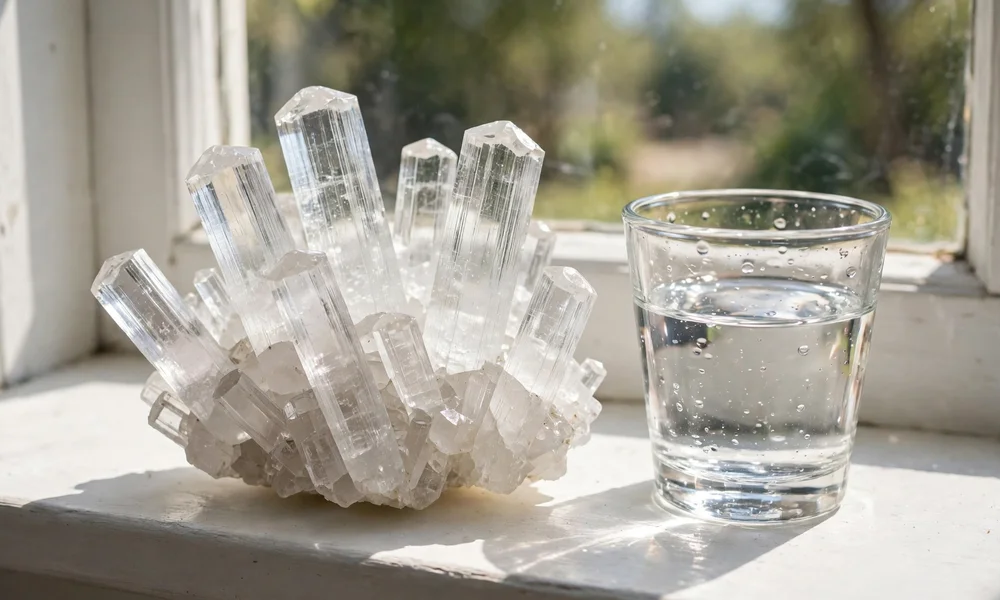
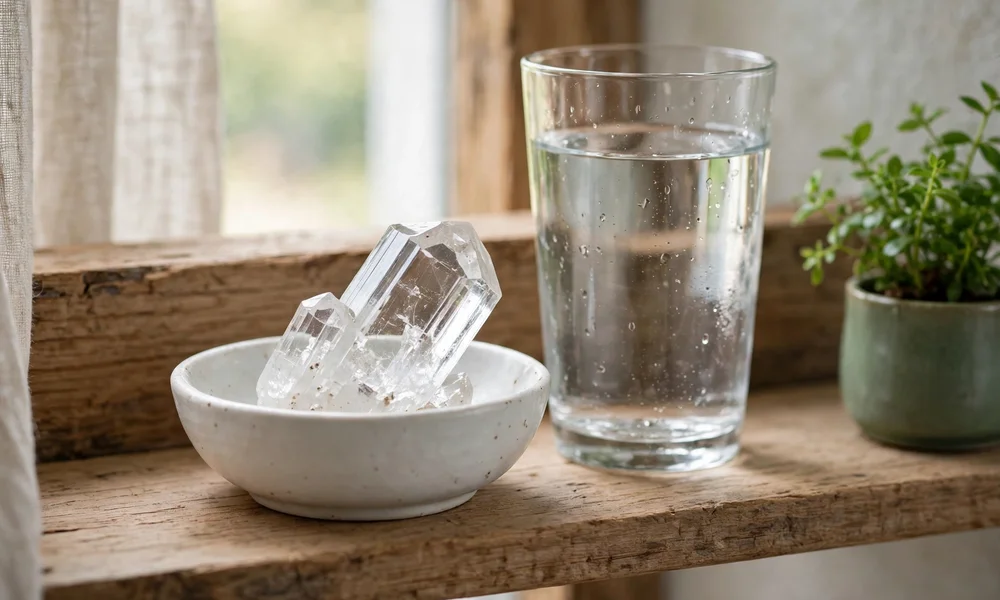
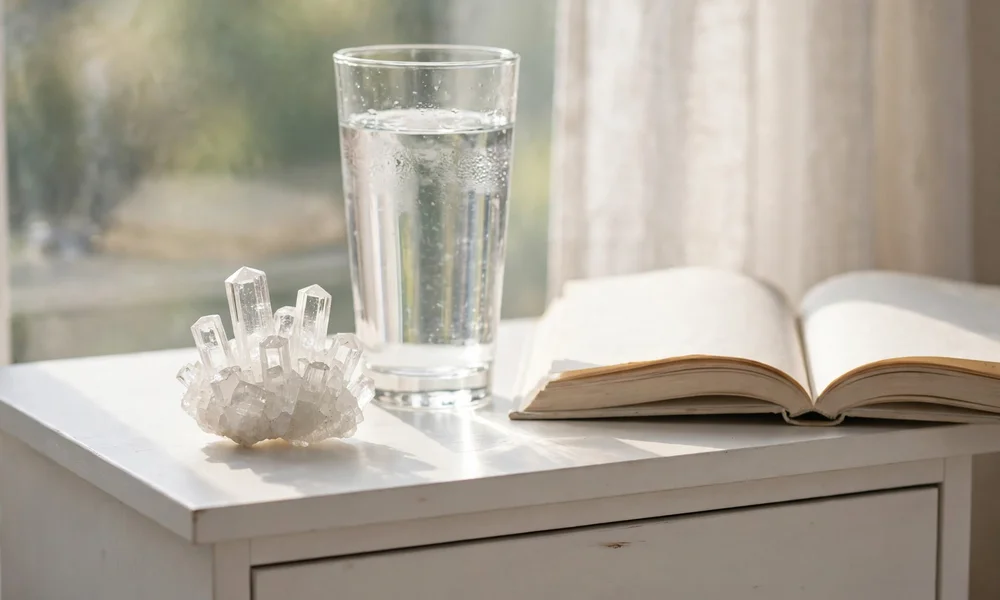
Begin the morning by setting the achroite on its tray where the sunlight falls, with a glass of cold water standing close by yet never touching the stone. Drink the water slowly, let the clear prisms catch your eye, and take one slow breath before the day gets busy.
Leave the tray where you can see it as the morning goes on, somewhere the sun reaches as it climbs. Each time you pass, the prisms catch the light a little differently, and that small change is the whole joy of it. The stone works no magic; the quiet minute is yours, and the clear white is only there to mark it.
Achroite Beside Water
Water and achroite share a tray, and that is as close as they get. Put the glass at one end and the stone at the other, because a display stone never goes into any drink. A splash wiped off straight away is fine; a soak is not.
This rule keeps the morning simple and safe. Wash your hands after handling the stone, keep it away from food and from children who might pick it up, and never drop it into a glass, a jug or a bath. The tray lets the water and the stone share the same bright picture while staying safely apart.
Achroite at a Glance
| Clear white prisms | Bright days | Display only |
|---|---|---|
| Colourless tourmaline, glassy | Tray, desk, shelf | Wash hands after |
| Cool, smooth, fairly hard | Sunlight, open windows | Never in water |
| Straight sides, flat top | Morning, midday, evening | Dry cloth wipe |
Achroite and Pink Tourmaline
Pink tourmaline is the softest-coloured cousin in the family, and the contrast with achroite is immediate. Pink tourmaline for tender days covers a rose-pink stone with a soft, kind blush, the sort of colour that suits slow, tender mornings.
Achroite holds none of that rose warmth. Where pink tourmaline glows with a soft blush from traces of manganese, achroite stays clear and cool, borrowing only the light of the room. One suits a tender, quiet morning; the other suits a bright, wide-awake one, and the tray can hold both only on separate days.
Achroite and Black Tourmaline
Black tourmaline sits at the opposite end of the family from achroite, and the pair could hardly look more different side by side. Black tourmaline for grounded days covers a deep black stone, cool and heavy, with long ridges running down its sides like lines drawn with a pencil.
Achroite is light where black tourmaline is dark, clear where it is opaque, and bright where it is still. Black tourmaline anchors a quiet room like a small dark weight; achroite lifts a bright room like a small window. Both are tourmaline, yet they ask for opposite days, and that is the pleasure of knowing the family well.
Achroite and Green Tourmaline
Green tourmaline is the freshest-coloured cousin, and it makes a lively contrast with clear achroite. Green tourmaline for new routines covers a clear fresh green stone, the colour of young leaves after rain, calm rather than loud and steady rather than bright.
Achroite carries no green at all, not even a pale hint of it. Where green tourmaline glows softly with iron and chromium inside it, achroite lets the daylight pass through untouched, colourless from edge to edge. One feels like spring arriving; the other feels like the morning light itself, and both earn their place on the shelf.
Achroite and the Other Tourmalines
Beyond the three nearest cousins, the tourmaline family holds more colour still. Watermelon tourmaline is pink inside and green outside, paraiba tourmaline glows a bright blue-green, and chrome tourmaline is a deep forest green with a quiet shine.
Achroite stands apart by having no colour to name: no other tourmaline on the shelf is clear white through and through. That is why it earns its own guide — tourmaline with the colour left out.
Caring for Achroite
Achroite asks for little. Keep it in a dry spot away from heat — a lidded box with a soft lining, or a shelf out of the sun. Do not let it rattle around loose in a pocket with keys or coins, since the prism edges can chip.
Dust it with a dry, soft brush, never with soap or sprays, and never polish it with creams. When the tray is damp, move the stone aside, wipe the tray until it is fully dry, then put the stone back.
Stones That Must Never Touch Water
A handful of minerals are best kept far from any glass you might drink from, and it helps to know them by name. Malachite is the first to remember: it should never be slipped into a jug or a cup, since it can release things that have no place in a drink. Hematite is another one to keep out of drinking water entirely, even for a short dip.
The same caution covers apatite, and lepidolite, which holds lithium inside its flakes. Pyrite, angelite and amber belong on the dry side too, so none of them should be dropped into a glass, a jug or a bowl of soaking water. Achroite is milder than these, yet the habit stays the same for it as well: the stone rests next to the glass, and the water stays untouched by it.
Your Bright Days Checklist
- Place the achroite on a dry tray with a full glass of water nearby.
- Enjoy the water at a slow pace as the morning brightens.
- Rinse your hands with soap once you have finished holding the stone.
- Choose a seller who states clearly that the stone is tourmaline.
- Store the stone somewhere dry, out of reach of children and away from food.
- A stone cannot fix health problems, so speak to a doctor about those.
Frequently Asked Questions
What is achroite?
Achroite is the colourless variety of tourmaline, a mineral that grows in many colours. It has almost no colouring traces inside it, so it stays clear and white, growing as slender glassy prisms.
Is achroite the same as clear quartz?
No, although the two can look alike at a glance. Achroite is a tourmaline, with fine lines down its prism sides and a different crystal shape, while clear quartz is a separate mineral with its own structure and feel.
Is achroite safe to touch?
Holding it for a look is fine, as long as you rinse your hands with soap after putting it down, and keep it away from children and from food. It is a display stone, not something to wear against the skin all day.
Why must achroite never go in water?
Because a display stone belongs beside the glass, not inside it. Achroite must never be dropped into a drink, left in a soak, or used to stir water, and even a splash should be wiped away at once.
Will achroite heal anything?
No. It is a beautiful clear stone to display and to look at, and any calm you feel after a quiet minute comes from the stillness itself, not from anything inside the stone.
Where should I keep achroite at home?
Set it where morning light falls and air stays dry — a wooden tray, a sunny shelf, or a bedside table — and a glass of water nearby, always separate, well beyond small children's reach.
The Bottom Line
Achroite brings clear white light to bright days: glassy prisms glowing like frozen daylight, sitting on a dry tray with a glass of water alongside, looked at and never drunk from.
A Note for Bright Days
Let the light stay clear and the stone stay dry. One small cluster, one glass of water, and a few quiet minutes are all you need.