
A cookie jar on the counter makes a quiet promise every morning: reach in, take one, and it will still snap as it did on baking day. It is not a decoration, though it often looks like one, but a small storehouse, and the cookies inside depend on the lid, the air and the spot it stands in.
The promise breaks easily. A lid left ajar lets damp kitchen air in, warm cookies sweat inside the jar, and a jar filled while still wet turns crisp edges soft by evening.
This guide sets out five plain habits that keep a cookie jar fresh: cooling the cookies right through, shutting the lid so it seals, choosing a cool dry spot, taking out only what the day needs, and washing the jar and drying it fully before refilling. It is gentle general information about keeping food at home, and any health question belongs with a doctor.
Key Takeaways
- A cookie jar keeps cookies crisp only when the lid seals and the air stays dry.
- Cool the cookies right through before they go in, or trapped steam softens them.
- Keep the jar away from kettles, sinks and sunny windows.
- Take out only the cookies the day needs, with clean dry hands.
- A jar stores food, not a treatment, and it promises nothing for health.
What a Cookie Jar Is
A cookie jar is a lidded pot for holding baked cookies at room temperature, most often ceramic or glass, with a lid heavy enough to sit flat and shut out the air. Inside it, a batch waits between bakes, safe from dust, draughts and damp, since the jar slows the air past the cookies and their crisp edges dry far more slowly than on an open plate.
Jars come in many shapes, from squat stoneware pots to tall glass canisters, and the best share one thing: a lid that fits without a visible gap. A wobbling lid is hardly a lid at all, since air slips in around the rim all day.

Way One: Let the Cookies Cool Right Through
A cookie from the oven is still giving off steam, and steam trapped under a lid turns to water inside the jar, settling on the cookies so the crisp edges go soft within hours.
Lay the cookies in a single layer on a wire rack, where air reaches both sides, and leave them until cool all the way through. A cookie cool on top and warm underneath is not ready; give it ten more minutes.
Only when every cookie is cool to the touch should the jar be filled.
Way Two: Close the Lid So It Seals
The lid is the whole point of the jar, and one that only rests on top does half the job. After filling, press the lid down until it sits flat and run a finger around the rim for a gap. If it rocks or lifts at one side, the seal is broken.
Many jars carry a rubber ring under the lid, and that ring does the sealing. Check it often: whole, springy and clean, with no cracks or crumbs caught in it. A ring gone hard with age lets air past no matter how firmly the lid is pressed.
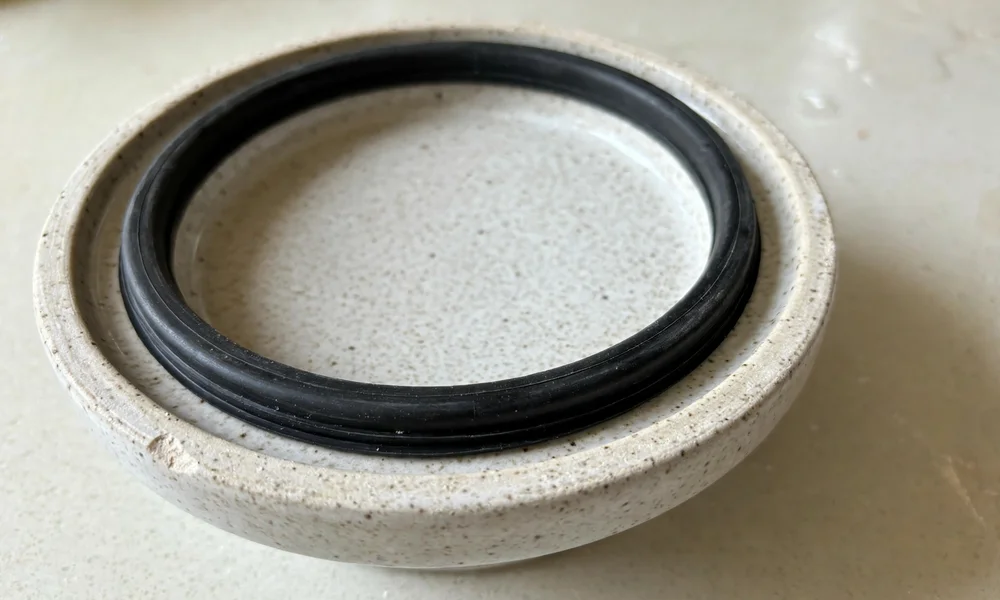
Way Three: Keep the Jar Cool and Dry
Where the jar stands matters as much as how tightly it closes. A sunny sill warms the jar through the afternoon, and warm air inside makes the cookies sweat. Beside the kettle is worse, since every boil sends steam across the counter.
The best place is a shaded shelf or a stretch of counter away from sink, stove and kettle, where the air is steady and cool. A pantry shelf suits a jar well, as does a cupboard shelf opened only at teatime. Water still belongs in the picture, as a glass drunk slowly at the table, well away from the jar.
Way Four: Take Out Only Today's Cookies
Every opening lets kitchen air into the jar, so the fewer openings the better. Take out the day's cookies in one go and shut the lid at once; a small plate holds the day's share, and the jar stays shut until tomorrow.
Clean dry hands matter here. Damp hands carry water into the jar with every reach, and crumbs on wet fingers stick to the cookies and soften them. Wash, dry well, and only then open the jar.
Way Five: Wash the Jar and Dry It Fully
An empty jar is not clean until washed, and a washed jar is not ready until dry right through. Crumbs left in the bottom go stale and carry damp into the next batch, and grease on the walls turns rancid and spoils fresh cookies.
Wash the jar in warm water with a little plain soap, scrub the rim where crumbs gather, and rinse well. Dry it upside down on a rack until the inside feels bone dry to a fingertip; a jar that still feels cool and damp inside is not ready.

Cookie Jar at a Glance
| Cool cookies first | Shut lid tight | Dry cool shelf |
|---|---|---|
| Take out few | Wash jar often | Hands clean first |
| Glass kept apart | Fresh batch weekly | No warm cookies |
Water and a Bread Box
Water and a bread box for five fresh habits follows a loaf through five habits of its own: cooling it, wrapping it in cloth, slicing only what is needed, and wiping the box dry. The box keeps a loaf fresh by holding a little of the loaf's own moisture around it, while the glass of water stands well away.
A cookie jar works the other way round: it keeps moisture out, not in. The loaf wants a little damp air to stay soft, while a cookie wants dry air to stay crisp.
Water and a Cake Stand
Water and a cake stand for serving days lifts a cake onto a raised plate where everyone can see it and the host can slice without reaching across the cloth. The stand bakes nothing and keeps nothing; it is tableware for the serving hour, suiting birthdays and slow afternoons.
The cookie jar is the opposite kind of helper: it hides the cookies away and keeps them, rather than showing them off.
Water and a Teacup
Water and a teacup for calm mornings pours a slow morning into a cup: warm water, a quiet table, and a few unhurried minutes before the day begins. The teacup guide is a ritual for the person, not a storehouse for food.
The cookie jar joins that morning rather than leading it: its job is to make sure the cookie is still crisp when the cup is poured.
Nine Neighbours in This Batch of Guides
Nine other guides stand beside the cookie jar in this batch, each minding a different corner of the house. The rainbow fluorite guide turns a banded stone in the light, the baking tray guide washes a tray after baking, and the muscovite guide studies a silvery flake for quiet days. The rolling pin guide flattens dough, the linarite guide asks whether a deep blue lead stone is safe to show at home, and the pumice guide explains a light grey stone that floats.
Also with them: the bonsai guide tends a tiny tree in a calm corner, the conch guide listens to a soft pink shell, and the terrarium guide builds a small glass garden. The cookie jar is the only one of the ten that holds something to eat.
Stones That Must Never Touch Water
Stones and food jars sometimes share a kitchen shelf, so the boundary between them matters: a stone that looks pretty has no place in a jar of food, and a few stones should never be rinsed at all. Apatite loses its polished gleam after a soak, and the shine will not come back with drying. Lepidolite holds lithium inside its flaky layers, another ground for keeping it clear of cups and jugs.
Leave pyrite in damp air and its bright faces darken to a flat grey; angelite drinks water in, puffs up and sheds its smooth skin; amber, hardened tree resin rather than rock, turns milky in a soak and stays that way. Keep all five dry, on their own shelf, far from anything you eat or drink.
Your Cookie Jar Checklist
- Cool every cookie right through on a rack before it goes in.
- Press the lid down flat and check the seal around the rim.
- Stand the jar on a cool shaded shelf, away from steam.
- Take out only the day's cookies, with hands washed and dried.
- Wash the jar when it is empty and dry it upside down until bone dry.
- If food tastes off or a stomach problem lingers, ask a doctor — a jar keeps cookies, it does not diagnose anything.

Frequently Asked Questions
How long do cookies stay crisp inside a jar?
Most home-baked cookies stay crisp for about a week in a sealed jar kept cool and dry, though thin ones fade sooner than thick chewy ones. Near steam, or opened often, expect half that time.
Can warm cookies go straight into the jar?
No, warm cookies give off steam that turns to water under the lid and softens every cookie inside. Cool them on a rack until the base feels cool, then fill the jar.
Does a glass jar keep cookies as fresh as a ceramic one?
A glass jar seals just as well when its lid fits, but it lets light in, which fades flavour over days. Keep it in a cupboard, out of direct sun.
Where should the jar stand in the kitchen?
On a shaded shelf away from the kettle, sink and stove, where the air stays steady and cool. A sunny sill or a spot by the kettle will warm the jar and soften the cookies.
How often should a cookie jar be washed?
Wash it every time it empties, before the next batch goes in, so stale crumbs never meet fresh cookies. Wash with soap, rinse well and dry it upside down.
Can different kinds of cookies share one jar?
They can, but soft cookies pass damp to crisp ones, and strong flavours travel, so a ginger cookie scents a plain one within days. Keep crisp and soft kinds apart.
The Bottom Line
Water and a cookie jar keep cookies crisp when the cookies cool first, the lid seals tight, the jar stands cool and dry, and every refill waits for a clean dry jar.
A Note for Crisp Mornings
A cool cookie, a flat lid, a shaded shelf and a glass of water at the table — that is all a cookie jar asks, and the snap on baking day is still there a week later.


