
Some mornings arrive with a task already waiting: a speech to give, a room full of strangers, a decision that cannot be put off until tomorrow. On those mornings the house feels quieter than usual, and the first hour matters more than the rest of the day put together.
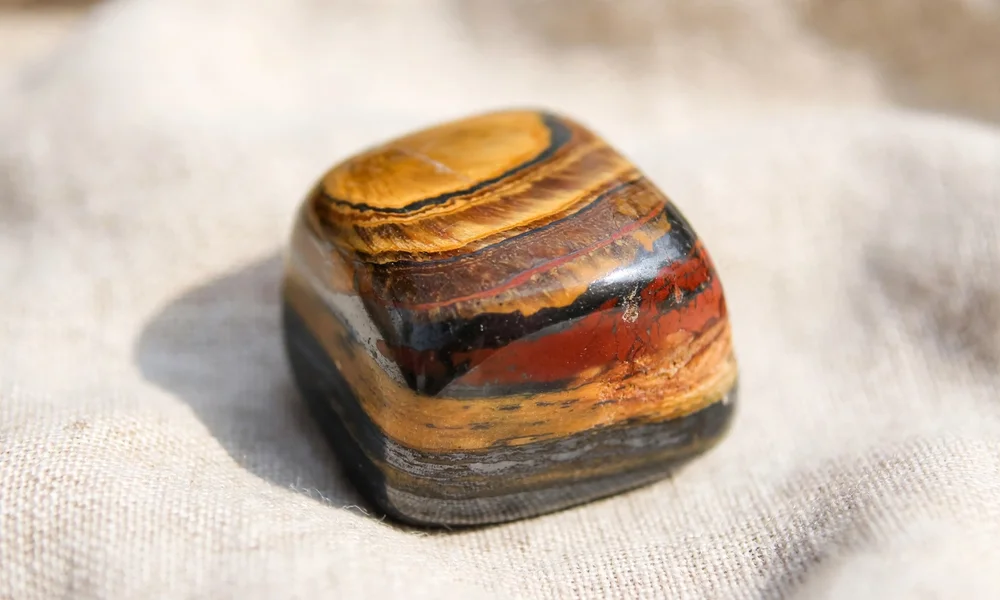
Tiger iron belongs on such a morning. Its bands run in stripes of gold, brick red and dark grey, like layers of earth pressed into one stone, and the pattern never repeats itself twice. Set it on a tray beside a glass of fresh water, and it looks like a small piece of warm ground held up to the light.
This guide looks at tiger iron in plain terms: the minerals inside it, the way its warm stripes came to be, and how to give one a place on a tray for bold days. The stone is something to show and to hold, and it stays out of the glass at all times. No stone can mend the body, and this one is no different.
Key Takeaways
- Tiger iron is three minerals in one stone: tigers eye, hematite and red jasper.
- Its warm bands of gold, red and dark grey suit bold days.
- Tiger iron is not the same stone as tigers eye, though the two are related.
- It is a stone for display and handling only; it will not heal anything.
- Keep it beside a glass of water, never in it, because its hematite must stay dry.
What Tiger Iron Is
Tiger iron is a banded ironstone, a rock built up in layers over a very long time. Inside it sit three minerals side by side: golden tigers eye, dark metallic hematite, and deep red jasper. Each one keeps its own colour, so the finished stone shows stripes of gold, red and grey running across its face.
Pick one up and the mix is clear at once: cool, smooth, a little heavier than a plain quartz pebble, polished bright in some bands and softer in others. The gold stripes carry the silky gleam of tigers eye, the red stripes hold the matte warmth of jasper, and the dark stripes flash the cool metal shine of hematite.
Why Warm Bands Suit Bold Days
A bold day is a day with something at stake, and warm colours match that feeling better than pale ones. Gold is morning sun on a table, red is a lit window in a dark street, and dark grey frames the two like a border.
The bands also give the eye somewhere to rest while the mind gathers itself, and that small pause before a hard task is often the most useful minute of the day.
Choosing a Tiger Iron Piece
Take your time over the choice, and look at the stone by a window instead of beneath a bright shop bulb. Roll it slowly between your fingers and watch for bands that stay sharp: gold with a soft glow, red that holds an even depth, and dark grey that flashes like polished steel as it turns.
A palm-sized tumbled stone is a good start, easy to hold and carry. Ask whether the piece is natural or dyed, and walk away from anyone who dodges the question or promises better health.
A Bold Day with Tiger Iron
Start the day by setting the tiger iron on its tray and filling a tall glass of water beside it, so the morning light falls on both. Sit down, drink the water unhurriedly, and hold the stone a moment to feel its cool, banded weight in your palm.
Keep the tray in view through the morning, where the light can reach it. Pick the stone up once more just before the hardest part of the day, breathe once, and then let the day run its course.
Tiger Iron Beside Water
Pour a tall glass of cool water and stand it on the tray by the tiger iron. The two sit side by side on the same wood, yet the stone never enters the water: no drink, no soak, since wetting it would dim the polish and mark the glass.
This rule matters more for tiger iron than for most stones, because the hematite inside it must never sit in drinking water. Handle tiger iron with clean, dry hands, and if the glass should tip, move the stone aside right away, dry it gently with a soft cloth, and return it only once the tray is dry again.
Tiger Iron at a Glance
| Warm gold bands | Bold days | Dry display |
|---|---|---|
| Red, grey stripes | Tray, desk, shelf | Glass apart |
| Cool, heavy, smooth | Morning, midday, evening | Soft dry wipe |
| Three minerals, one | Daylight, lamplight, pause | Never soak |
Tiger Iron and Tigers Eye
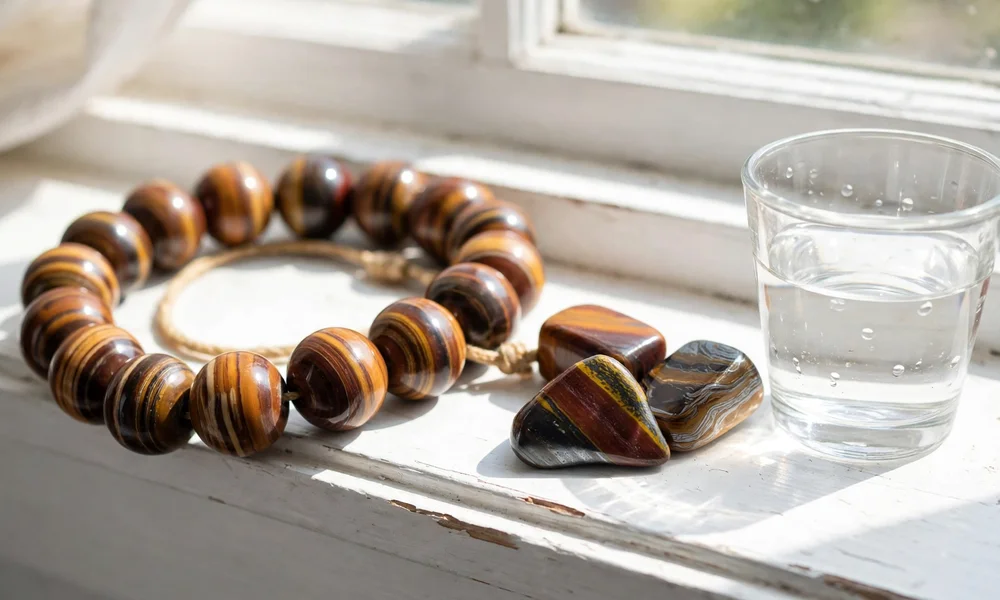
Tigers eye and tiger iron are the closest pair in this journal, and the two are easy to mix up. Tigers eye for confident days covers one warm golden-brown quartz stone, whose honey-coloured bands catch the light as the piece turns, with a bright stripe of shine that glides over the surface.
Tiger iron is a different stone that happens to contain tigers eye inside it. Where tigers eye is one mineral all the way through, tiger iron is three minerals layered together, so its face shows gold beside red beside dark grey. One is a single warm gold stone, the other is a striped stone with three colours at once.
Tiger Iron and Hematite
Hematite is one of the three minerals inside tiger iron, and it deserves a guide of its own. Hematite for a steadier day covers a dark, metallic grey stone, cool to the touch and heavier than it looks, kept as a small tumbled pebble for slow mornings.
Inside tiger iron, hematite shows up as the dark grey bands, the cool metal stripes between the gold and the red. On its own, hematite is one colour from edge to edge; inside tiger iron it is only one part of a striped pattern, and the stone as a whole looks warmer and bolder than hematite alone.
Tiger Iron and Red Jasper
Red jasper is the third mineral inside tiger iron, the one that gives the stone its warm red stripes. Red jasper for cold days covers a deep red opaque quartz, the colour of brick and autumn leaves, kept as a small counterweight to grey winter light.
Inside tiger iron, red jasper shows up as brick-red bands running between the gold and the grey. On its own, red jasper is red all the way through, smooth and matte; inside tiger iron it shares the stone with two other minerals, so the red reads as one warm stripe among several.
Caring for Tiger Iron
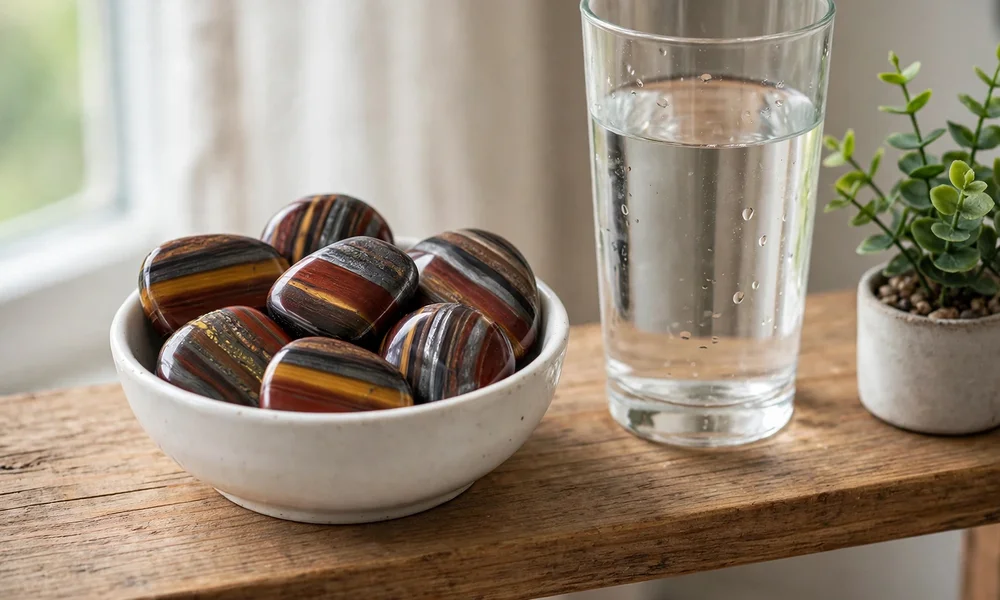
Tiger iron asks for little care, but the little it asks for is worth doing. Give it a home on a small dish or inside a cloth bag, somewhere airy and out of the sun's full glare, far from heaters, damp rooms and spray bottles. A quick wipe with a dry cloth now and then keeps the stripes vivid.
Tiger iron is a tough stone, so a bump on a table edge will rarely leave a mark, though grit rubbed across the face can still take the shine off, and water left standing on it does it no favours. Pat it dry straight away after a splash, store it away from keys and coins, and never let it sit in a puddle or a glass.
Stones That Must Never Touch Water
Some stones should stay dry always, and it helps to know them by name. Start with malachite: keep it out of every glass and jug, because it can release substances you would never want in a drink.
Then there is hematite, the one that counts most for this guide, since tiger iron carries hematite within its stripes, so the whole piece must stay out of drinking water too. Apatite and lepidolite belong on the same dry list, and lepidolite carries lithium, while pyrite, angelite and amber do as well: none of them go into a drink or a soaking bowl. Tiger iron sits next to the glass, not inside it, and the same goes for everything else named here.
Your Bold Days Checklist
- Set the tiger iron on a tray, a full glass next to it.
- Sip fresh water slowly as the bold day begins.
- Rest the tiger iron in your open hand and breathe slowly.
- Choose a seller with a good name, and hold on to the receipt.
- Keep the stone beside drinks and soaks, never inside them.
- A stone cures nothing; take health worries to a doctor.
Frequently Asked Questions
What is tiger iron?
Tiger iron is a banded ironstone, a rock built in layers of three minerals: golden tigers eye, dark metallic hematite and deep red jasper. Each mineral keeps its own colour, so the stone shows warm stripes of gold, red and dark grey across its face.
Is tiger iron the same as tigers eye?
No. Tigers eye is a single golden-brown quartz with a moving band of light, while tiger iron is three minerals in one stone, with gold, red and grey stripes. Tigers eye is one part of tiger iron, not the whole of it.
Why must tiger iron stay out of drinking water?
Because tiger iron contains hematite, and hematite must never sit in drinking water. The stone is safe to hold and to display beside a glass, but it should never be dropped into a drink or left in a soak.
Will tiger iron heal anything?
No. It is a handsome stone to hold and to admire, and if you feel calmer afterwards, that ease comes from the slow minutes you gave yourself, not from any power in the rock.
How do I choose a good tiger iron piece?
Look for clear bands in daylight: gold that glows, red that stays deep and even, and dark grey that shines like brushed metal. A palm-sized tumbled stone is a good start, bought from a seller you trust.
Where should I keep tiger iron at home?
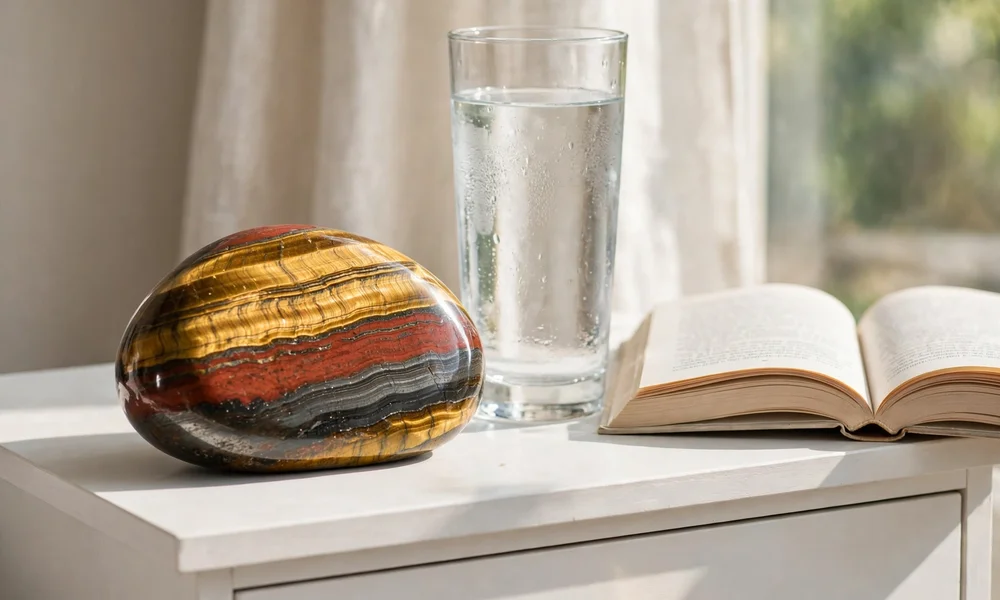
Keep it on a small tray or a shelf in a bright room, with a glass of fresh water standing beside it, never touching it. A desk, a nightstand or a windowsill all suit it well.
The Bottom Line
Tiger iron brings warm bands to bold days: gold, red and dark grey in one striped stone, set on its tray with a glass of fresh water standing alongside.
A Note for Bold Days
Let the bands stay bright, the stone stay dry, and the day stay steady. One striped stone, one glass of water, and a few quiet minutes are enough.


