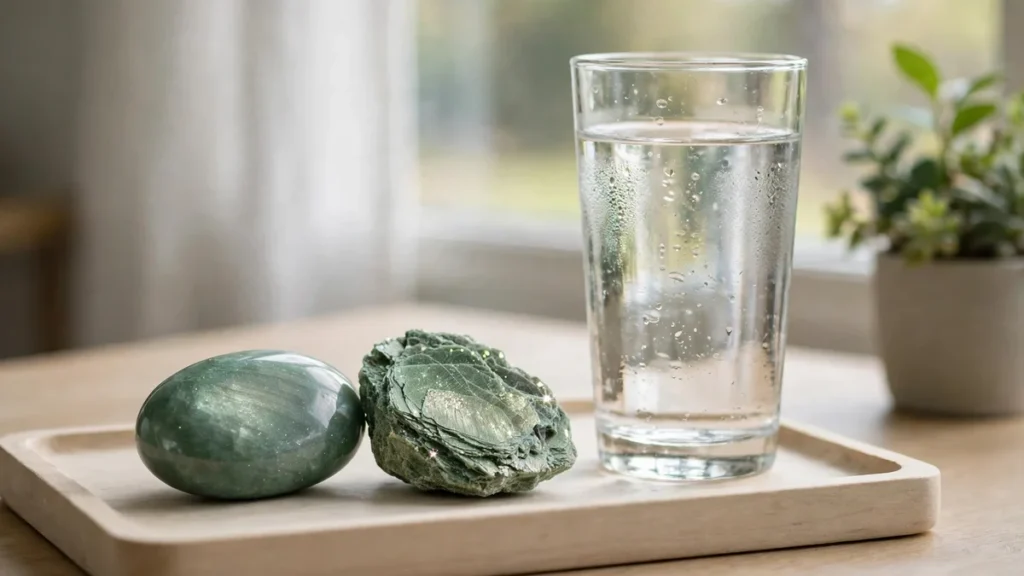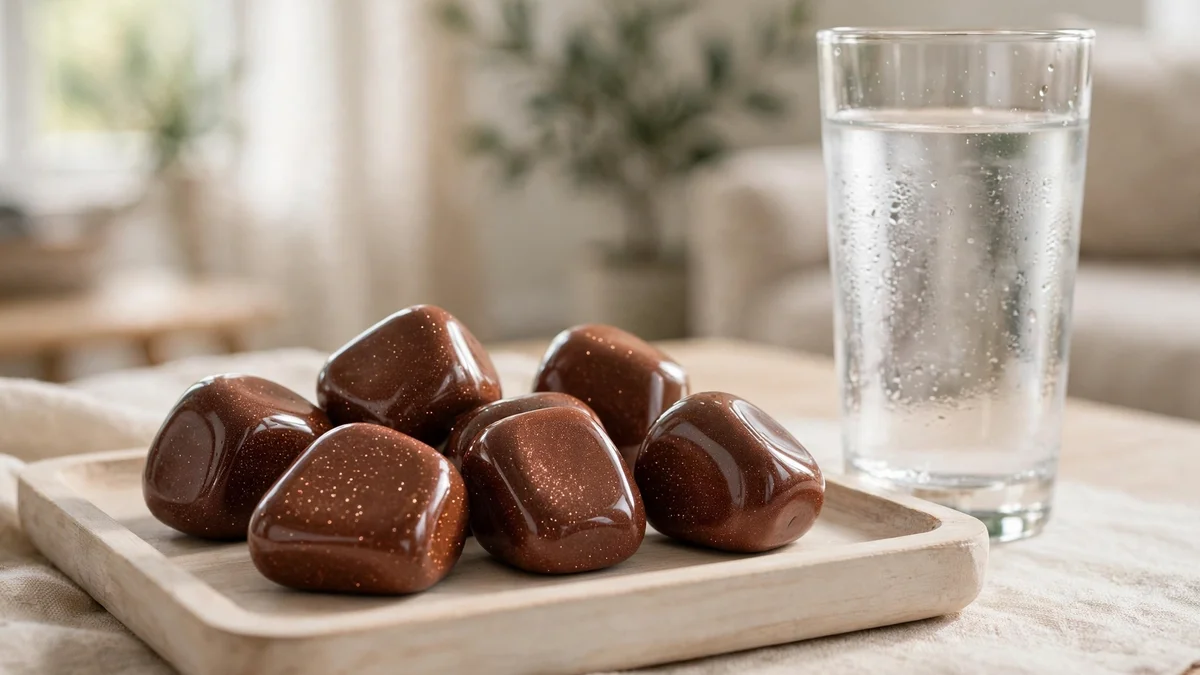
A steady day rarely announces itself. The alarm goes at the usual time, the kettle clicks on, the post lands on the mat, and the hours ahead hold nothing that cannot wait until tomorrow. There is washing to fold, a shelf to tidy, a letter to answer, and the pleasure of the day sits in doing those small jobs well rather than in doing anything grand.
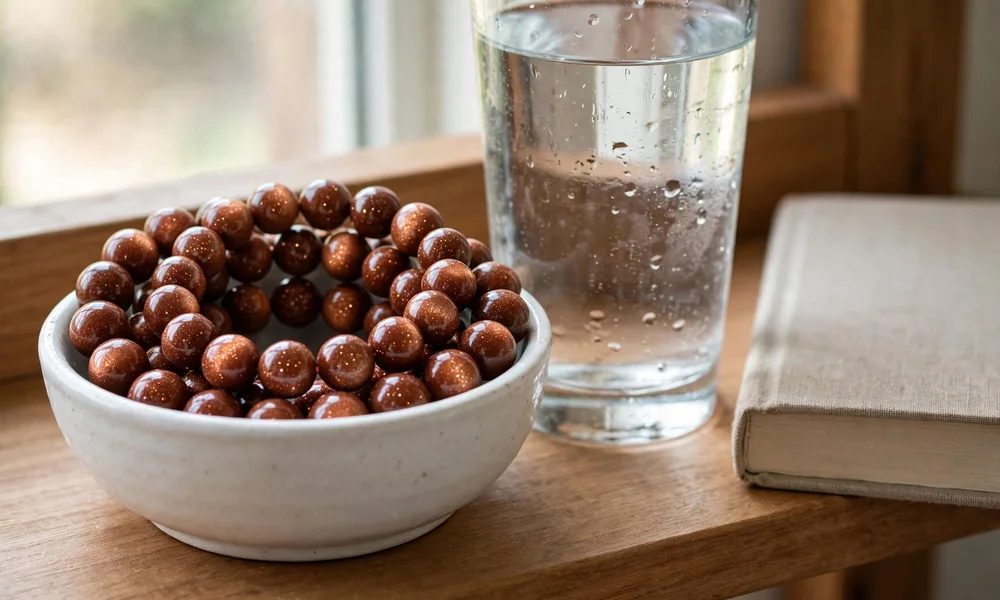
Brown goldstone suits that kind of day. Its colour is the brown of toast crusts and polished timber, of chestnuts and strong tea, and through the brown run hundreds of tiny copper flecks that catch the light whenever the stone moves.
This guide takes a plain look at brown goldstone: what it is made of, why its warm brown fits unhurried hours, and how to pick a piece you will enjoy keeping nearby. Remember first that brown goldstone is glass made by people, not a stone dug from the ground. Treat it as something pretty to look at and hold, nothing more: it cannot mend health, and it must always sit next to your drinking water, never dropped into it.
Key Takeaways
- Brown goldstone is warm brown man-made glass, flecked with tiny copper sparkles.
- It is the first brown goldstone in this journal, for steady days.
- Its warm brown suits plain routines, wooden trays and unhurried hours.
- Brown goldstone is an ornament to display and hold; it cannot mend anything.
- Let it rest next to a glass of water, never dropped in, and never left soaking.
What Brown Goldstone Is
Brown goldstone begins in a glassmaker's workshop, not in a mine. Silica sand is melted with copper and a few other minerals, and as the molten glass cools, the copper separates into thousands of tiny glittering flecks that stay frozen inside the brown. The result is a smooth, warm brown glass that sparkles gently from within, like embers banked under ash.
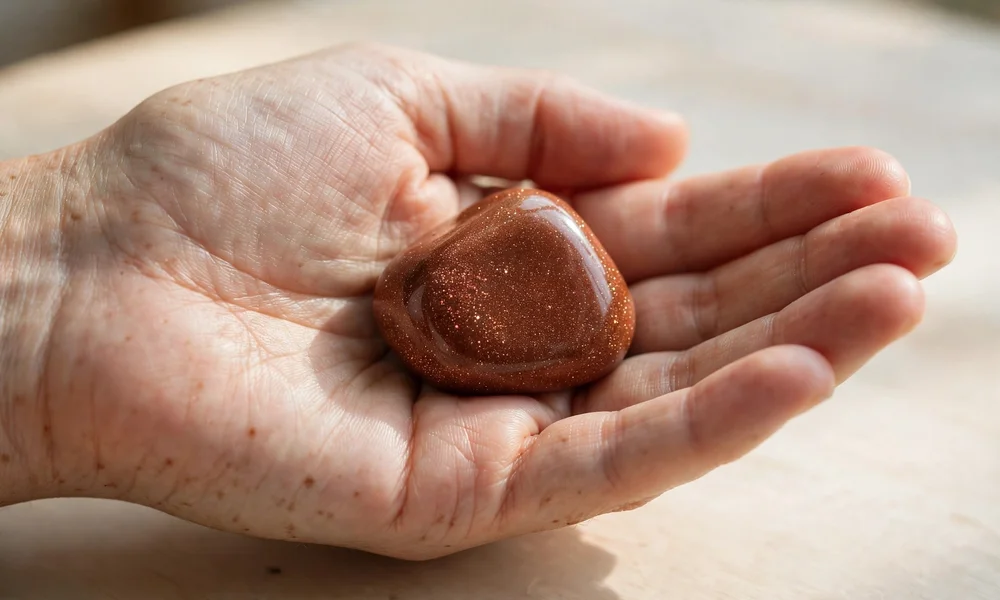
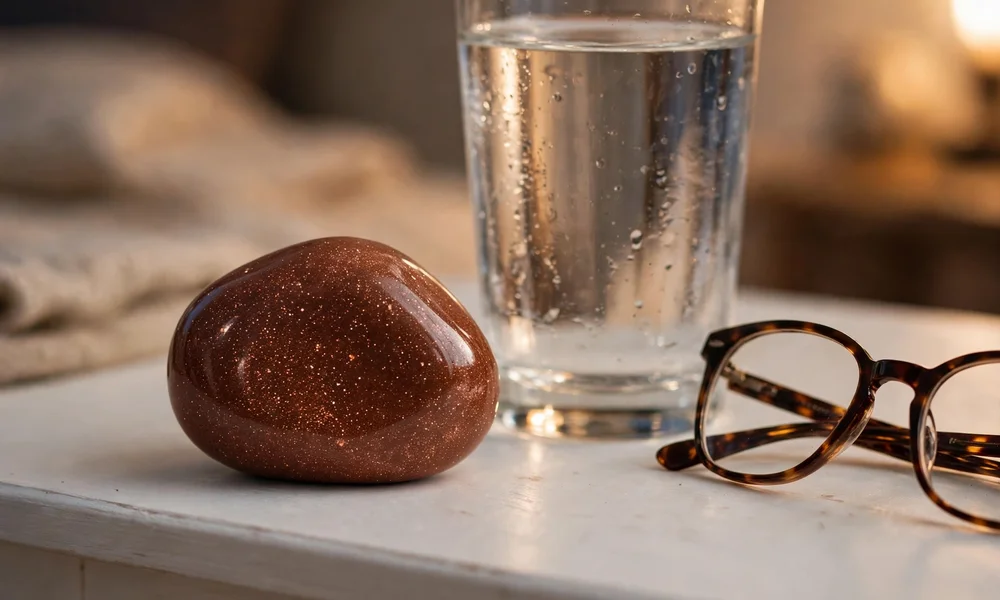
Hold a polished piece and it feels cool and solid at first, then warms quickly in your palm. The surface carries a glassy shine rather than the waxy glow of a natural stone, and the copper flecks sit scattered through the brown, never in neat rows.
Why Warm Brown Suits Steady Days
Warm brown has a settling effect on a room. Where a bright yellow shouts and a pale blue cools, brown simply stays put, like the top of an old kitchen table that has held a thousand meals. It belongs beside the ordinary jobs of an unhurried day: sorting the washing, giving the houseplants a drink, stitching a loose button, jotting down what the shops have run out of.
Morning sun makes the brown glow like honey in a jar, and lamplight in the evening turns it the shade of a well-baked loaf. Set it down among mugs, cloths and drinking glasses and it blends in happily, asking for no special notice at all.
Choosing a Brown Goldstone Piece
Choose slowly, in daylight rather than under a shop lamp, and hold the piece in your own hand before you decide. Turn it over and watch the brown stay warm and even from every angle, with copper flecks spread through the whole stone and no dull grey patches where the sparkle has thinned.
Ask the seller straight out whether the piece is workshop glass, and leave the shop if the answer is vague or if health benefits are promised.
A Steady Day with Brown Goldstone
Open a steady day by laying the brown goldstone out on its tray and pouring a clear glass to stand beside it, both where the daylight can find them. Sip the water at your own pace as the house comes awake, then pick the stone up and tilt it until the copper flecks catch the early sun.
Set the stone down again and carry on with your day, the tray left on a desk or shelf in the light. Pick it up once more when the afternoon light changes, and again at dusk, when the lamps bring out the brown and the flecks shine like tiny sparks.
Brown Goldstone Beside Water
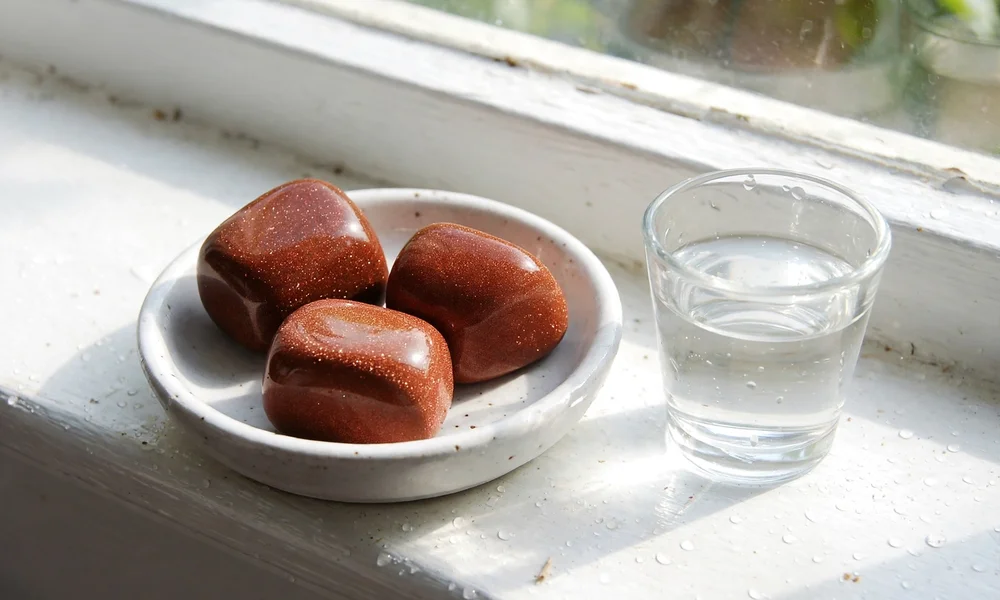
Fill a clear glass with fresh water for drinking and stand it on the tray next to the brown goldstone. The two share a tray and nothing else: the stone stays out of the glass at all times and is never left to soak, which would dim its shine and let dust drift into the water. Even hard glass can chip, and a chipped piece has no place in anything you drink.
If the glass ever tips over, move the stone out of the way straight away, pat it dry with a soft cloth, and put it back only when the tray is dry again. A quick wipe with a plain dry cloth once a week is enough, and rinse your hands after you have handled it, as with any ornament.
Brown Goldstone at a Glance
| Warm brown glass | Steady days | Dry display |
|---|---|---|
| Copper flecks, sparkle | Tray, desk, shelf | Glass apart |
| Cool, smooth, solid | Morning, evening, pause | Soft dry wipe |
| Brown, honeyed, calm | Chores, rest, routine | Never soak |
Brown Goldstone and Brown Jade
Brown jade and brown goldstone share a warm brown colour and a steady-day mood, yet they are different things altogether. Brown jade for steady days covers a natural stone, dense and hard-wearing, polished to a soft waxy shine, the colour of chestnuts and garden soil, with darker veins wandering through it like grain in oak.
Brown goldstone is man-made glass, not a natural stone, and its sparkle sets it apart at once: tiny copper flecks glitter through the brown wherever the light falls, while jade glows softly with no glitter at all. One is grown in the earth over long ages, the other is melted and cooled in a workshop, and both suit the same unhurried hours in different ways.
Brown Goldstone and Brown Zircon
Brown zircon and brown goldstone are both warm brown and both suit steady days, yet their natures differ. Brown zircon for steady days covers a natural gemstone, cocoa-brown with soft amber glints, hard and bright, that bends light strongly and throws back a lively sparkle.
Brown goldstone sparkles too, but its sparkle comes from copper flecks frozen inside brown glass, and its shine is glassy rather than gem-bright.
Brown Goldstone and Red Goldstone
Red goldstone is the nearest kin to brown goldstone in this journal, since both are man-made copper-flecked glass. Red goldstone for bold evenings covers a rich red glass, the shade of dark cherry jam, dotted with fine copper glints that flare in lamplight, kept for bold evenings and red dresses.
Brown goldstone keeps the same copper sparkle in a different colour and a different mood: warm brown instead of deep red, steady days instead of bold evenings, toast crusts instead of cherries. The glass is the same kind, the flecks are the same kind, and only the colour and the hour change.
Caring for Brown Goldstone
Looking after brown goldstone takes almost no effort, yet the few things it needs are worth doing. Keep it on a small tray or tucked in a soft pouch in a bright room, far from heaters, steamy bathrooms and spray cleaners. A gentle rub with a dry cloth once a week is enough to keep the sparkle bright.
The glass feels hard and smooth in the hand, but a hard knock on a table corner can still chip an edge, so store it away from keys and coins.
Stones That Must Never Touch Water
Some stones must stay dry always, and it helps to know them by name. Malachite tops that list: keep it away from water and from every drink, since it can release harmful substances. Hematite comes next: never let it stand in water meant for drinking.
Apatite and pyrite carry the same warning, and so do angelite and amber: none of them should be dropped into a drink or left sitting in a soak. Lepidolite joins them, because it contains lithium. Brown goldstone keeps the same habit: it rests next to the glass, never inside it, and all the stones named here stay far from taps, jugs and drinking glasses.
Your Steady Days Checklist
- Lay the brown goldstone out on its tray, with a filled glass standing beside it.
- Start the steady day with a slow glass of fresh water.
- Rest one brown goldstone stone in your palm and breathe slowly for a moment.
- Choose a seller you trust, and hold on to the receipt.
- Let the stone sit beside drinks and soaks, never dropped into any of them.
- No stone can cure anything; ask a doctor about health worries.
Frequently Asked Questions
What is brown goldstone?
Brown goldstone is warm brown glass made by people, with tiny copper flecks scattered through it. Glassmakers melt silica sand together with copper, and as the mixture cools the copper turns into small glittering flecks inside the brown. You will find it sold as smooth polished pieces or beads, to display and hold, never to treat anything with.
Is brown goldstone a natural stone?
No. Brown goldstone is man-made glass, melted and cooled in a workshop, not a mineral grown in the earth. A good seller will say so plainly, and any seller who calls it a natural crystal is not being honest with you.
How is brown goldstone different from brown jade?
Brown jade is a natural stone with a soft waxy glow and darker veins, the colour of chestnuts and garden soil. Brown goldstone is man-made brown glass with tiny copper flecks that glitter through it, and its shine is glassy rather than waxy.
How is brown goldstone different from red goldstone?
Both are copper-flecked man-made glass, but red goldstone is deep red, dark as ripe cherries, for bold evenings. Brown goldstone is warm brown, the colour of toast crusts and polished timber, for steady days.
Is brown goldstone safe beside water?
Yes, as long as glass and stone stay separate. Stand the glass beside the stone on the tray, and never drop a stone into a drink or leave one soaking, since chipped glass can cut and dust can drift into the water.
Will brown goldstone heal anything?
No. It is a handsome piece of glass to hold and admire, and if you feel calmer after a quiet moment with it, that calm comes from the pause itself, not from the glass.
The Bottom Line
Brown goldstone gives steady days a warm brown companion: copper-flecked glass made by hand, with a soft sparkle, lying on its tray as fresh water waits alongside, the two never touching.
A Note for Steady Days
Keep the brown warm, the stone dry, and the hours unhurried. A single small flecked stone, one glass of water, and a few quiet minutes will do.