Some days begin before you do. The alarm goes, the phone lights up, and the day is already asking questions before you have finished your first glass of water. On days like that, steadiness is not a grand achievement. It is a small thing: a slower first ten minutes, one task at a time, and a feeling that your feet are actually on the floor.
Hematite grounding stones belong to that small, practical world. Hematite is a dark, metallic grey stone with a soft silvery sheen, cool to the touch and heavier than it looks. People who keep one describe it as a stone that feels settled in the hand, the kind of object you pick up when you want to pause for a moment before the next thing.
This article explains what hematite is, how to choose a piece you like, a short morning ritual that takes about five minutes, and the safety rule that matters most: hematite stays beside your water, never in it. Grounding stones can support a calmer day, but they never replace rest, good food, or proper care when you need it.
Key Takeaways
- Hematite grounding stones are dark, metallic grey, cool to the touch, and heavier than they look.
- A grounding ritual is a short pause, not a cure: a few calm minutes that help the day start more slowly.
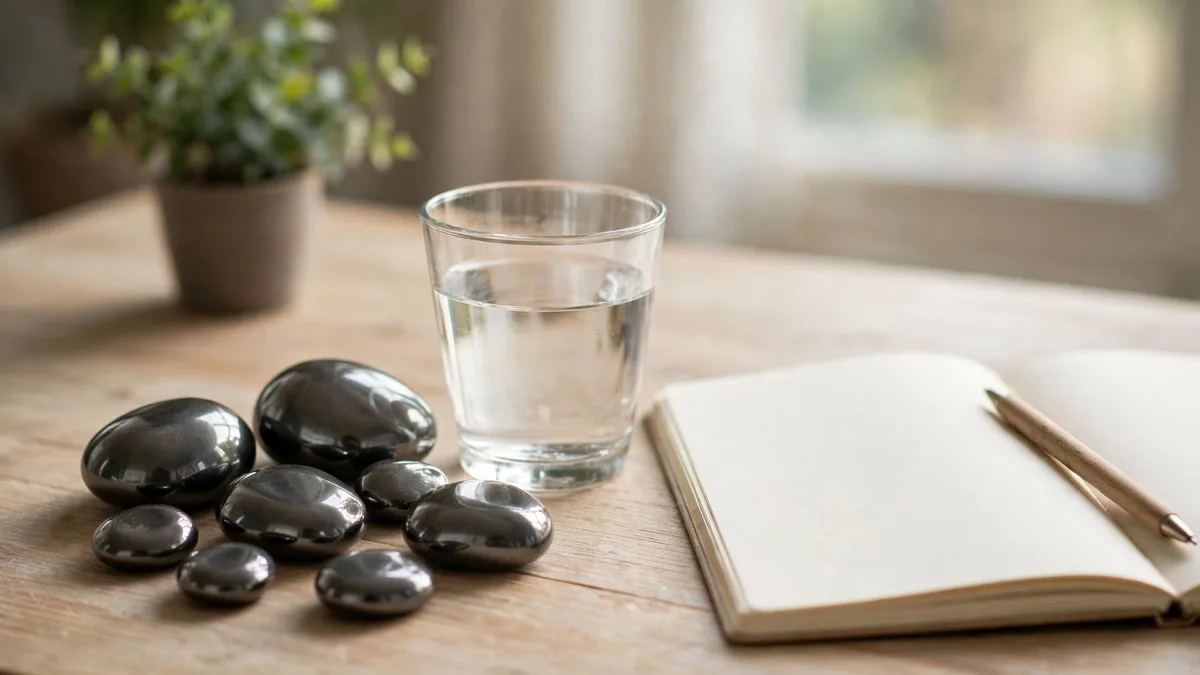
- Keep hematite beside your glass of water, never inside drinking water.
- Choose one stone you enjoy holding; a single piece is enough to begin.
- A steadier day is built from small repeats, not from one perfect morning.
What Hematite Grounding Stones Are
Hematite is an iron oxide mineral, and that chemistry explains almost everything about how it looks and feels. Its colour is a deep metallic grey, sometimes almost black, with a silvery shine that catches the light when you turn a polished piece. It is noticeably heavy for its size, and it feels cool when you first pick it up, warming slowly in your palm.
You will usually find hematite sold as tumbled stones, smooth pebbles about the size of a large marble, polished until they shine. A tumbled stone is the simplest place to start: you pick it up, hold it, and put it down again.
Tradition links hematite with grounding, the feeling of being settled and present rather than scattered. A stone cannot slow your day for you, but it can give your hands something steady to hold while you take a breath.
Why a Steadier Day Starts Small
Steadiness rarely arrives all at once. It arrives in small choices that repeat: a glass of water before the phone, five minutes without news, a list written on paper instead of carried in your head. A grounding stone fits that scale. It does not ask you to change your life. It asks for a few minutes, in one place, at the same time each day.
The morning is the kindest time for this habit, because the morning is when the day is still negotiable. A short pause before all of that sets a tone the rest of the day tends to follow, much like five minutes of clearer thinking can change the hours after it.
Choosing Your First Hematite Stone
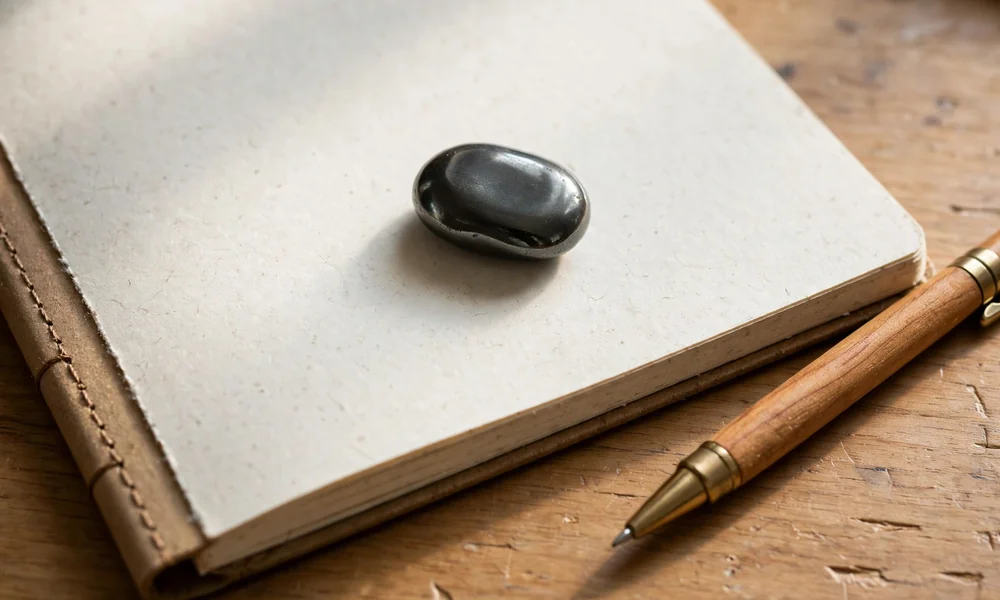
Choosing a hematite stone is simpler than choosing almost anything else you will buy this year. You need one piece that feels good in your hand and looks good to your eye. Hold a few if you can, and notice which one you keep returning to. A good piece feels smooth, without sharp edges or rough patches, and sits comfortably in your palm.
Size matters more than shape. A tumbled stone between two and four centimetres across is easy to hold, easy to carry in a pocket, and easy to keep on a desk without it getting in the way. Larger palm stones are pleasant at home but awkward to carry, and very small pieces are easy to lose.
A Simple Morning Grounding Ritual
This ritual takes about five minutes, and it is deliberately plain. You need a glass of fresh drinking water, your hematite stone, and a chair or a quiet corner. Sit down, place the stone beside the glass rather than inside it, and let both of them simply be there while you wake up properly.
Begin by drinking the water slowly. Then pick up the stone and hold it in your hand, noticing its weight and its cool surface. Breathe slowly for a minute or two, and let your attention rest on the feeling of the stone rather than on the day ahead. If your mind wanders to tasks and messages, that is ordinary; notice it, and bring your attention back.
| Step | Time | What to do |
|---|---|---|
| Sit down | 30 seconds | Sit somewhere comfortable with water and stone beside you |
| Drink water | 1 minute | Drink a glass of fresh water slowly |
| Hold the stone | 2 minutes | Hold the hematite, noticing its weight and cool surface |
| Breathe | 1 minute | Breathe slowly, letting your attention rest on the stone |
| Begin | 30 seconds | Put the stone down or in your pocket, and start the day |
Finish by deciding one thing: the first task of your day, and only the first. A steadier day is not a day with a perfect plan. It is a day that begins with one clear step instead of ten competing ones.
Keeping Hematite Beside Your Water, Never In It
This is the most important rule in this article. Hematite must never go in drinking water. Hematite is an iron oxide, and it can rust and shed particles into water, which makes the water unfit to drink. Stones that sit in drinking water can also carry dust and bacteria, and there is no benefit that makes that risk worth taking.
The safe habit is simple: the stone sits beside the glass, never inside it. Your water stays clean, your stone stays dry, and the ritual keeps exactly the same shape. If you ever find a stone has fallen into a glass, pour the water away, rinse the glass, and dry the stone thoroughly.
Do not soak hematite, and do not use it to stir drinks. A quick wipe with a damp cloth, then drying, is enough.
Hematite at Your Desk and Through the Day
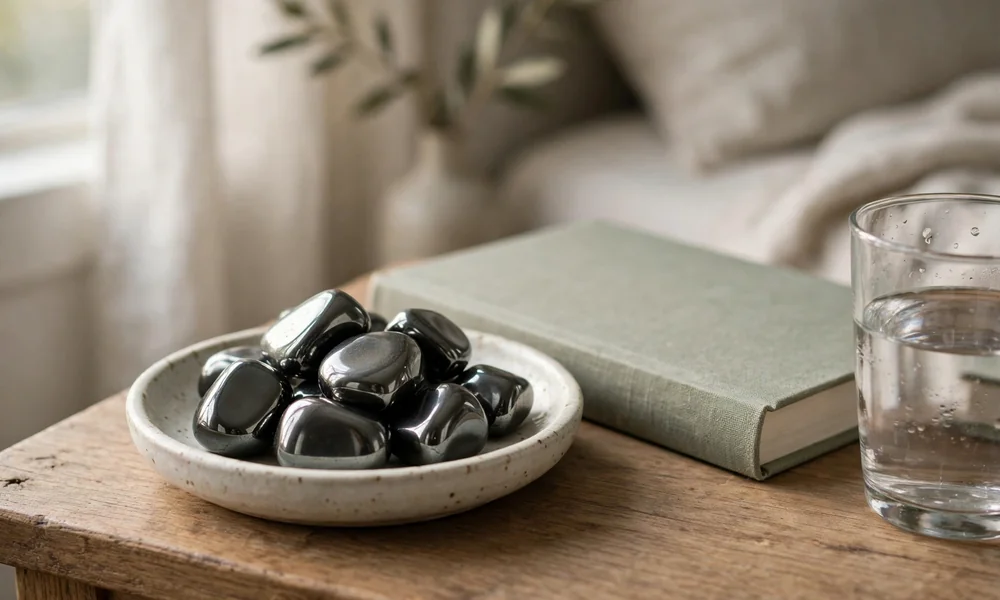
A grounding stone earns its keep after the morning, too. Keep it on your desk where you can see it, and it becomes a small reminder to pause between tasks. Small, repeatable habits are the heart of wellbeing without the overwhelm. When the afternoon feels scattered, picking the stone up for a minute can mark a boundary between one piece of work and the next. It is a quieter version of standing up and stretching: a brief reset that costs nothing.
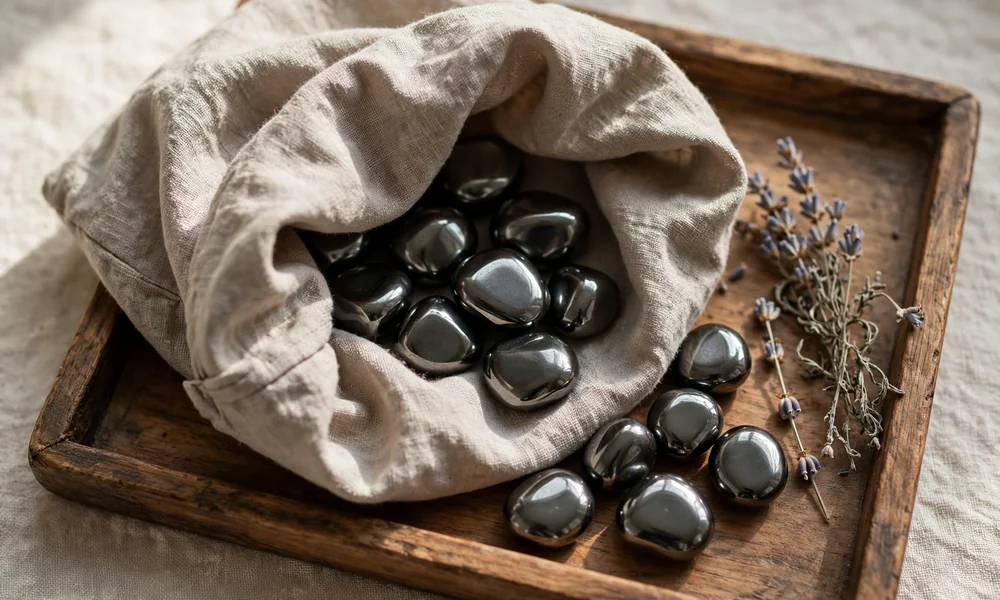
In a pocket, it works the same way while you are out: waiting for a bus, or sitting before a difficult conversation. Keep it in a small pouch so it does not scratch your phone or keys.
Caring for Your Stones
Hematite is a fairly hard stone, but it still deserves gentle care. Clean it with a soft, dry cloth most days. For a deeper clean, wipe it with a slightly damp cloth and a drop of mild soap, rinse briefly, and dry at once. Do not soak it, and do not use harsh chemicals, which can dull the polish.
Some people rest their stone in moonlight overnight or brief morning sunlight. Avoid long hours in strong sun, which can heat a dark stone, and avoid very hot water. A cool, dry shelf or soft pouch is all it needs; pieces stored separately cannot scratch each other, as with the care of a stone you use every day.
What Grounding Stones Will Not Do
Say plainly what grounding stones will not do. They will not cure anxiety, low mood, or any health condition, and they will not replace sleep, food, movement, or talking to someone you trust. They will not protect you from stress, organise your time, or make a difficult day easy. Anyone who promises that a stone can do those things is selling something, not helping you.
What a grounding stone can do is smaller and more honest. It can give you a reason to pause, something steady to hold while you breathe, and a small ritual that marks the start of the day. That modest promise holds up every morning, and it asks nothing of you except a few minutes and a little attention.
Your Grounding Checklist
- Choose one smooth hematite stone that feels comfortable in your hand.
- Keep the stone beside your glass of water, never inside drinking water.
- Sit down for five minutes each morning and hold the stone while you breathe slowly.
- Drink a glass of fresh water before you check your phone.
- Carry the stone in a small pouch, or keep it where you can see it on your desk.
- Clean it with a soft cloth and store it dry, away from harsh chemicals.
Frequently Asked Questions
Can I put hematite in my drinking water? No, never. Hematite is an iron oxide and can rust and shed particles into water, so it must stay beside the glass.
How long should a grounding ritual take? About five minutes is plenty. A short pause done every morning is worth far more than a long one done occasionally.
Do I need more than one hematite stone? No. One stone that you enjoy holding is enough to begin, and a single piece is all the ritual needs.
Can I carry hematite in my pocket? Yes. Keep it in a small soft pouch so it does not scratch your phone or keys.
How do I clean hematite? Wipe it with a soft, dry cloth most days. For a deeper clean, use a slightly damp cloth with mild soap, rinse briefly, and dry at once. Never soak it.
Will a grounding stone help with anxiety? A stone can give you a reason to pause and breathe, which many people find calming, but it will not cure anxiety or replace professional care.
The Bottom Line
Hematite grounding stones help a day feel steadier because they give you a small, physical reason to pause: a cool, heavy stone in your hand, a glass of water beside it, and five unhurried minutes before the day begins. Keep the stone beside your water and never in it, choose one piece you enjoy, and repeat the pause every morning. It costs little, needs no new skill, and takes no extra time.
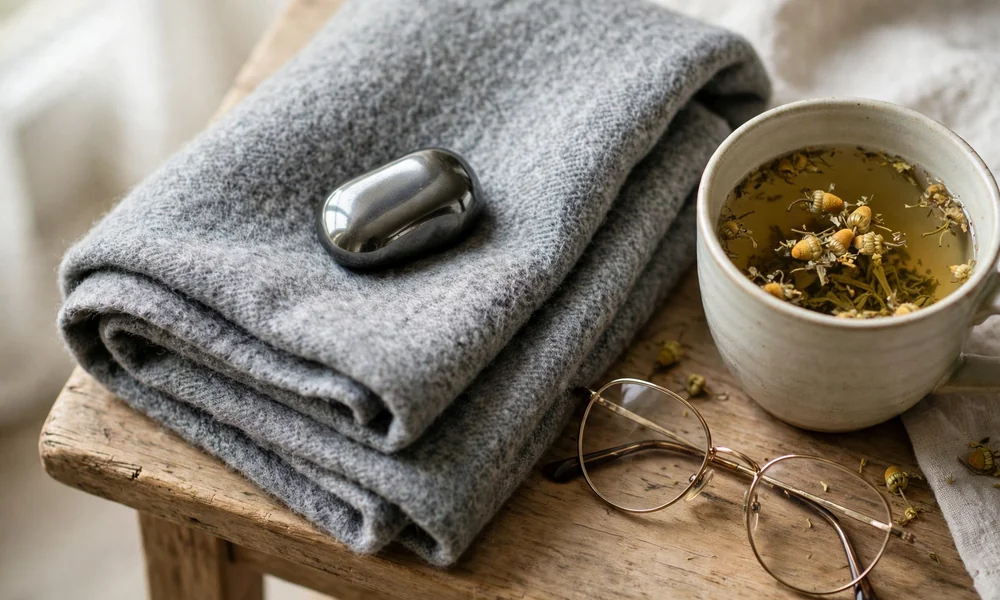
Begin tomorrow with whatever you already have: a glass of water, a stone, and a few quiet minutes. Sit down, hold the stone, breathe slowly, and choose one first task. Then start the day.
A Note for Steadier Days
Keep it simple, keep it slow, and keep it yours. The steadiest days are rarely the most organised. They are the ones where a small, calm habit repeats itself, day after day, until it becomes part of how you live. Stay curious. Stay steady. Begin well.



