
Some days are quiet from the moment they begin. No plans press forward, no noise follows you from room to room, and the hours stretch out in a slow, unhurried line.
Common opal is a stone for days like these. It is milky white and opaque, soft to look at, and it never does anything sudden: no flash of rainbow, no shift of colour as it turns, no sparkle that catches you off guard. It simply sits there, pale and still, like a cloud that has settled on a shelf.
Inside this guide you will find what common opal is, why its plain white fits a quiet day, what to look for when you pick a piece, and how to rest it safely next to water. Treat the stone as something to display and to hold. It has no power to heal.
Key Takeaways
- Common opal is a plain, opaque, milky white opal with no play-of-colour at all.
- It is a new live opal here, the eleventh, and the only one that never flashes or shifts colour.
- Its soft white suits quiet days, slow mornings, a tray and an unhurried room.
- Common opal is something to display and to hold, never something to heal with.
- Rest the stone next to drinking water, never inside it, and never soak it.
What Common Opal Is
Opal forms when tiny spheres of silica settle together in rock, and in most opals those spheres are so evenly spaced that light breaks into rainbow flashes. Common opal is the family member where that neat arrangement never happens. Its silica is jumbled, so light passes through it softly instead of splitting into colour.
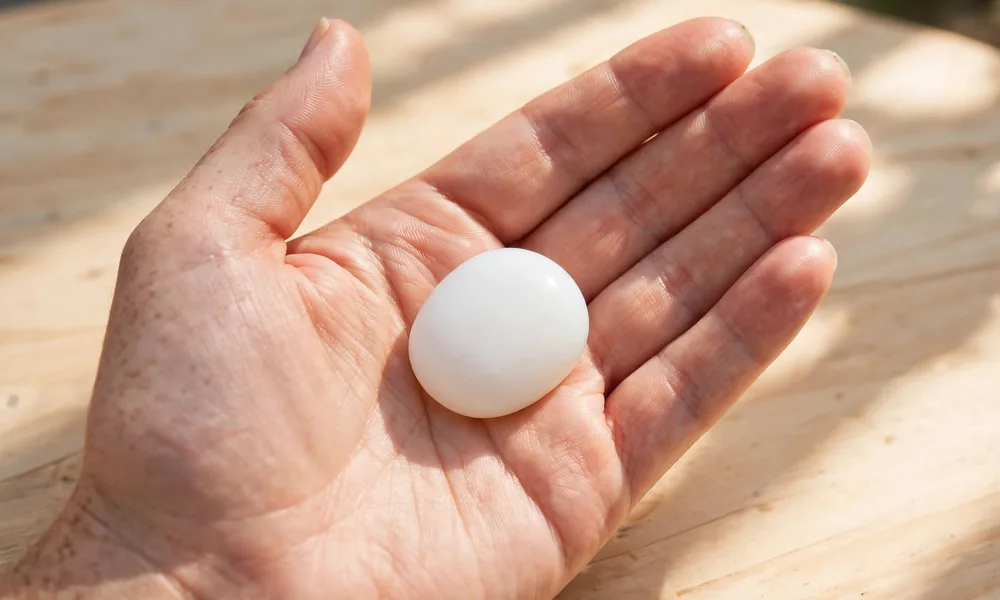
A polished piece feels smooth and cool when you first pick it up, then warms in your hand within a minute or two. It has a gentle, waxy shine rather than a sharp sparkle, and its white leans towards cream or pale ivory, sometimes with a faint hint of grey.
Why Soft White Suits Quiet Days
A quiet day has no centrepiece. The kettle boils, the light moves slowly across the floor, and nothing in the room asks to be noticed. On a day like that, a stone that flashes rainbow colours would feel out of step.
Soft white fits the mood because it blends in without disappearing. It catches the daylight gently, holds it for a moment, and lets it go again, the same way a white curtain holds the morning sun.
White is the colour of an empty page and a fresh sheet, and that gives it a rested feeling.
Choosing a Common Opal Stone
Choosing a common opal piece is mostly a matter of looking slowly. A good one shows an even milky white, with no dark patches and no yellow staining, and a surface that feels smooth under your thumb without sharp edges or rough pits.
Look for a piece that feels cool and solid for its size, and hold it up to the window: the white should stay steady as you turn it, with no sudden flash of green or blue at any angle. A small tumbled piece is the easiest first common opal. Pick a seller with a good name, and leave at once if anyone promises the stone will improve your health.
A Quiet Day with Common Opal
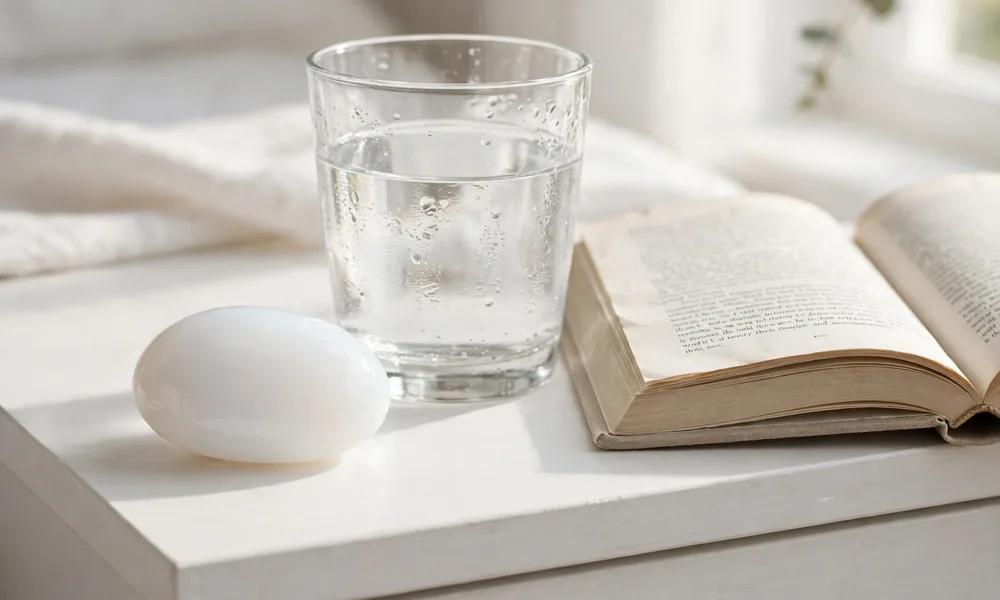
Start a quiet day with common opal by giving yourself a few slow minutes. Put the stone on its tray, fill a clear glass with fresh water, and stand the glass beside the stone. Sit down, sip the water without hurrying, then lift the opal and look at its soft white for a few breaths before putting it back down.
Common Opal Beside Water
Water and stone stay apart. Fill a clear glass with fresh drinking water and stand it beside the common opal on the tray, so the two sit side by side but never touch. Never drop the stone into a drink, and never leave it sitting in water, because opal holds water inside its structure and long soaking can change its look over time.
Common opal is a soft stone, so handle it gently and keep it away from hard knocks that could chip an edge. If the glass spills, pick the stone up and pat it dry at once with a soft cloth. Give it a weekly wipe with a soft, dry cloth, never soap or polish, and wash your hands afterwards.
Common Opal at a Glance
| Milky white opal | Quiet days | Display only |
|---|---|---|
| Plain, no flash | Tray, shelf, desk | Beside water only |
| Smooth, waxy shine | Water, light, pause | Dust with dry cloth |
| Soft, handle gently | Morning, evening, rest | Never soak it |

Common Opal and White Opal
Common opal and white opal look alike at first glance: both are milky white stones, soft to look at, and both suit calm, unhurried hours.
The difference appears in bright light. White opal holds a gentle rainbow flash that wakes up when the sun hits it, a small flicker of colour that comes and goes as the stone turns. White opal for bright days keeps a milky white stone with that quiet flash, for bright days full of sun. Common opal has no flash at all, in any light, at any angle.
Common Opal and Pink Opal
Common opal and pink opal are both milky, soft-looking opals, and both ask for gentle handling, yet their colours and their days are different. Pink opal is a soft pink stone, the colour of the inside of a shell held up to morning light, kept for gentle mornings and sensitive skin.
Common opal is white, not pink, and it belongs to quiet days in general rather than to a morning skin routine. Pink opal for sensitive skin keeps a soft pink stone for gentle mornings; this guide keeps a plain white stone for any quiet day.
Common Opal and Hyalite Opal
Common opal and hyalite opal sit at opposite ends of the opal family, though both are quiet stones. Hyalite opal is clear and glass-like, with no body colour of its own, like a drop of water held still, and it glows green under ultraviolet light.
Common opal is the reverse: opaque, milky white, and full of body colour, with no glow under any light. Hyalite opal for bright days keeps a clear stone that looks like a piece of the light itself; this guide keeps a solid white stone that looks like a small cloud.

Common Opal and Dendritic Opal
Common opal and dendritic opal share a milky white body and a quiet mood, yet one carries a picture inside it and the other carries nothing at all. Dendritic opal carries pale grey markings that spread like little branching ferns across its milky white face, and each piece shows a different pattern.
Common opal has no branches, no ferns and no frost. Its white is plain from edge to edge, and that plainness is the whole point: there is nothing to read in it, nothing to follow, nothing to puzzle over.
Common Opal and the Other Opals
The rest of the live opals each carry their own colour or their own light. Blue opal is pale milky blue with a soft glow that moves as it turns, for daytime looks, and Peruvian opal is a soft even blue from the high Andes, for quiet afternoons. Andamooka opal is pale and milky with gentle flashes of pale blue and the faintest pink moving inside it, for calm days.
Then come the flashing opals. Black opal has a dark body, almost black, and its blue, green and violet sparks only show once evening light falls on it; it belongs to bold evenings. Ethiopian opal is pale at its base with vivid rainbow flashes, for fresh days. Fire opal is warm orange, sometimes with flashes of red and gold like embers glowing low, for autumn evenings.
Stones That Must Never Touch Water
Not every stone is safe beside water. Malachite must never go in water or in elixirs, because it can release harmful substances. Hematite must never go in drinking water, and apatite, lepidolite — which contains lithium — pyrite, angelite and amber must never go in drinking water or in soaks either.
The rule stays the same for common opal: it stays beside water, never in it, and it is never soaked. Display it on a tray, keep a glass of water beside it, and never let the two meet.
Your Quiet Days Checklist
- Put the common opal in a small dish, with a full glass of water placed alongside it.
- Sip a fresh glass of water unhurriedly when the quiet day starts.
- Hold the common opal softly in your palm for a few breaths.
- Rest the common opal next to water, never inside drinking water or soaks.
- Wipe the common opal with a dry cloth once a week, then wash your hands.
- Bear in mind the stone heals nothing; a doctor is the one for health problems.
Frequently Asked Questions
What is common opal?
Common opal is a natural opal in plain milky white, opaque from edge to edge. It is the opal that never shows play-of-colour, so it stays the same soft white from every angle.
How is common opal different from white opal?
White opal shows a gentle rainbow flash in bright light, while common opal shows no flash at all. Both are milky white, but only white opal changes colour as it turns.
Does common opal show any colour play?
No. Common opal never shows play-of-colour. Its silica is jumbled rather than neatly arranged, so light passes through it softly instead of splitting into rainbow flashes.
Is common opal safe beside water?
Yes. Rest it on the tray next to the glass, or on the shelf nearby, and keep the two apart. Never drop it into a drink, and never leave it sitting in water.
Will common opal heal anything?
No. The stone cannot heal. It is simply a lovely pale object to hold and gaze at; any ease you feel comes from pausing for a while, not from the opal.
Where should I keep my common opal?
Put it on a small tray in a bright corner, a clear glass of water beside it, where the daylight can reach it.
The Bottom Line
Common opal brings soft white to quiet days: a plain milky white opal, smooth and still, with no flash and no colour play. Keep a glass of fresh water standing next to it, keep the stone dry, and handle it with care.
A Note for Quiet Days
Keep it quiet, keep it dry, keep it slow. One pale stone, a glass of water, and a few easy minutes are all a quiet day needs.


