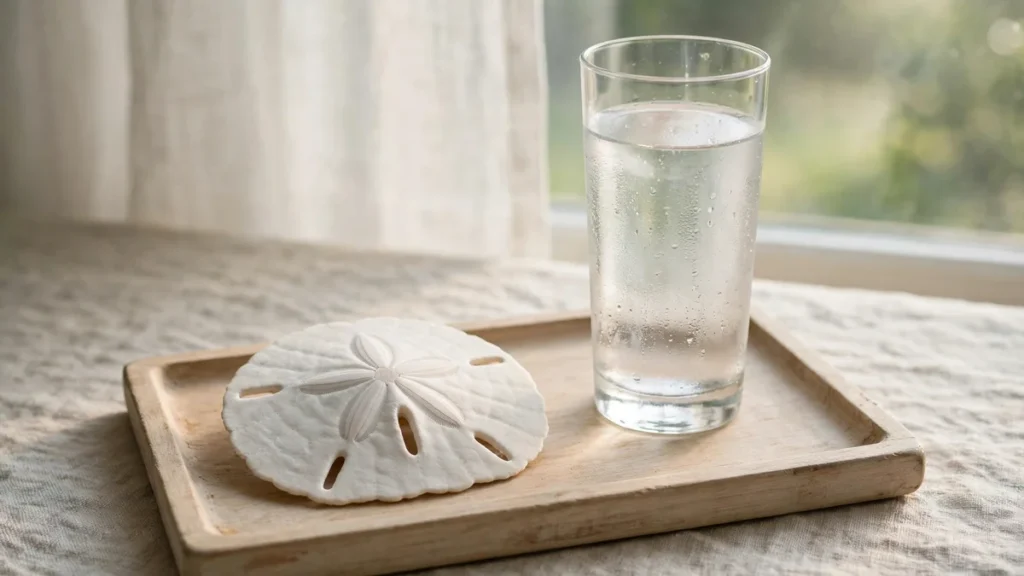
A cowrie is a small shell that fits in the palm of a hand, smooth as a pebble and pale as cream. It has one narrow opening, a slit edged with tiny teeth, and a round, glossy dome on top. People have carried cowries for thousands of years, as money and as ornament.
The shell asks for nothing: no weekly polish, no fear of sun, and no break if it slips onto a rug. What it needs is a dry place to rest, a gentle hand, and a little room on a shelf or a tray.
This guide explains what a cowrie is, how to choose one, and how to hold it and keep it. It is gentle general information about a shell, and it promises nothing for health: a cowrie will not heal anything.
Key Takeaways
- A cowrie is a small, smooth, cream-white shell with a narrow slit.
- Its dome is glossy and cool, and its underside carries tiny teeth.
- Cowrie is for holding and display only; it will not heal anything.
- Keep the shell dry and beside water, never in a glass.
- A calm day needs little: soft light, plain water, one shell, and time.
What a Cowrie Shell Is
A cowrie is the shell of a small sea snail that lives in warm, shallow water, growing its shell layer by layer. The shell is made of the same hard, pearly material as a pearl, laid down in thin coats until the dome is smooth. When the snail is gone, the empty shell remains, light and strong and cool.
Most cowries are about the length of a thumb, though some grow larger and some stay as small as a fingernail. The commonest ones are cream-white or pale gold, sometimes freckled with brown, and each carries its own pattern, so no two shells match exactly.
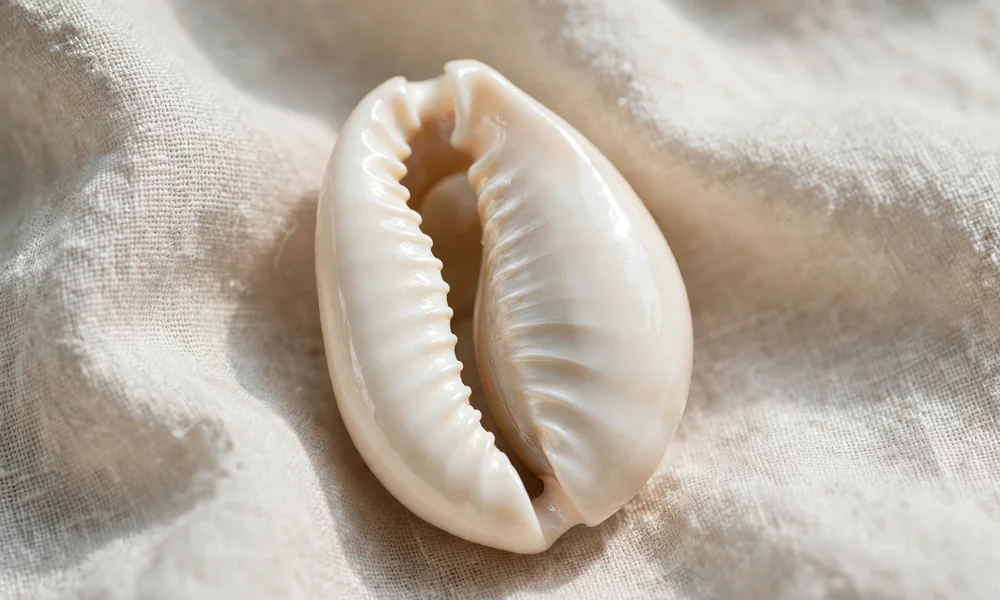
The Smooth White Dome and Its Slit
Turn a cowrie over and the first thing you notice is the slit. It runs the length of the shell's underside, narrow in the middle, with a row of fine teeth along both edges. The snail once lived behind that opening, and the teeth helped to keep it shut tight.
The dome above the slit is what makes a cowrie so pleasant to hold. It is round and unbroken, and the surface is polished by the sea itself. Run a thumb over it and there is nothing to catch on, only a slow, cool curve.
Why Cowrie Suits Calm Days
Cowrie suits calm days because it is quiet in every way: soft colour, round shape, and no shine that shouts for attention. On a bright morning it sits on a tray and catches the light gently, while the day goes on around it.
A calm day is not a grand day. It is a slow breakfast, a short walk, a clean desk and an open window, and a small shell matches that mood exactly. It does not ask to be admired, and it does not need a story to go with it.
Holding a Cowrie in the Hand
Pick a cowrie up and it settles into the palm at once, dome resting against the fingers and slit facing down. It is cool at first, then warms to the temperature of the hand. Close the fingers around it and the shell disappears, leaving only a smooth, round pressure in the palm.
When you are done, set it down gently, dome up, where it will not roll. A cowrie on a flat tray stays put; a cowrie on a sloped shelf will find the floor.

A Slow Morning with a Cowrie, Step by Step
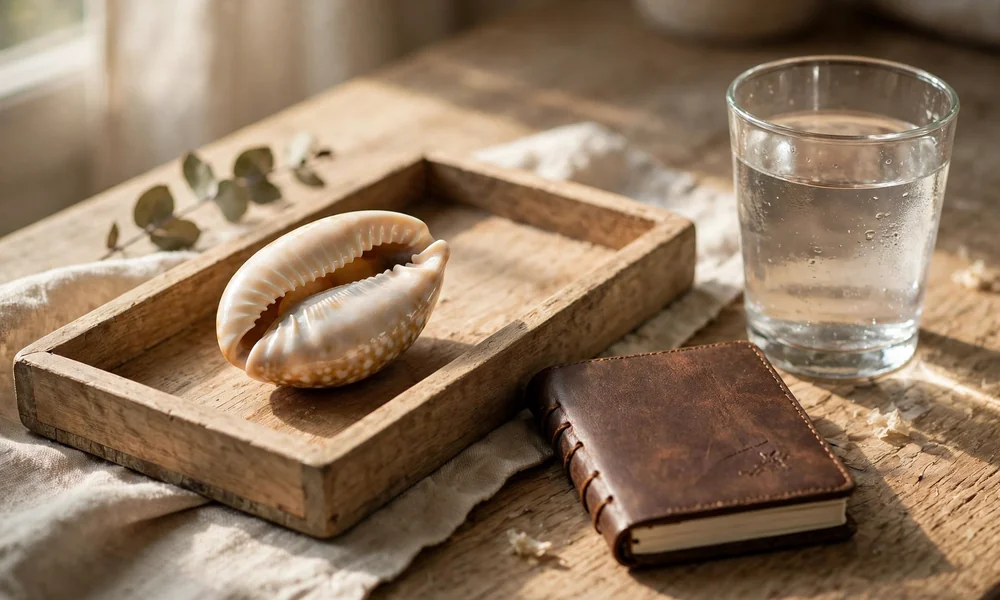
Start the morning by setting a wooden tray on the desk by the window. Put a tall glass of plain water on the tray, then lay the cowrie beside the glass, dome up. The shell stays beside the water, never in it.
Sit down with the tray and pick the shell up. Hold it for a minute, turn it over once, and set it back down. Drink the water slowly, in small sips, while the morning is still quiet.
When the morning ends, wipe the shell with a dry cloth and put it back in its box. That is the whole ritual, and it takes less than ten minutes.
Cowrie at a Glance
| Small smooth shell | Cream-white dome | Narrow slit below |
|---|---|---|
| Sea snail shell | Cool and glossy | No two alike |
| Hold in palm | Dry cloth clean | Beside water only |
| Display and hold | Never in a soak | Calm days suit it |
Abalone and Its Bright Colours
Abalone blue green shine for fresh days is about a shell that could hardly be more different from a cowrie. Abalone is the shell of a sea snail too, but it is cut and polished flat, so its inside shows vivid blue, green and violet, shifting as the light moves. It is a shell that wants to be looked at, bright and alive with colour.
A cowrie is kept whole and uncut, and its beauty is in its shape, not its colour: a smooth cream dome and a narrow slit, with no flash of blue or green at all. Abalone suits a fresh day full of light; cowrie suits a calm day that asks for less.
Freshwater Pearl and Its Soft Glow
A freshwater pearl with a soft white gentle glow grows inside a mussel, layer by layer, until it becomes a round, glowing bead. It is small and pale and quiet, and it is kept for the same kind of day as a cowrie: a slow one, with soft light and plain water.
The difference is in the hand. A pearl is a bead, round and smooth all over, with no opening at all, while a cowrie carries its slit like a signature, and its dome is flatter and wider than any bead. A pearl is worn or kept in a box; a cowrie is picked up, turned over, and set down again.
Ammonite and Its Spiral Shell
Ammonite warm brown steady days is a fossil, the coiled shell of a creature that swam in ancient seas, turned to stone over millions of years. Its face shows a spiral of chambers, brown and ridged, and it feels heavy and old in the hand.
A cowrie is a living shell, not a fossil, and its shape is a smooth dome, not a spiral. Ammonite asks to be studied, chamber by chamber, while cowrie asks only to be held. One is a record of a sea that is gone; the other is from a sea that is still there.
Nine Neighbours in This Batch
Nine other guides share this batch with the cowrie, split into two families. On the water side, the cold frame guide shelters young plants behind glass, the seedling guide helps one small plant grow, and the teacup guide pours calm into a morning. The salad spinner guide dries washed leaves, and the colander guide drains water well.
On the stone side, the tagua guide enjoys a pale seed for quiet days, the basalt guide studies a deep black stone, and the anatase guide asks whether a bright stone is worth keeping. The amblygonite guide explains what to know before buying a soft yellow stone. The cowrie is the only shell among the ten.
Shells and Stones That Must Never Touch Water
A shell belongs beside a glass of water, and some stones belong nowhere near one at all. A soak can ruin a polish, and a few minerals are unsafe near any drink. Apatite is one of them: leave it in water and its shine goes flat, and drying will not bring the gloss back. Lepidolite is another, because its flakes hold lithium, and that alone keeps it far from every cup.
Pyrite is a third, darkening and dulling when it stays damp. Angelite swells in water and turns dull, and amber, tree resin rather than stone, goes milky in a soak and never clears again. Keep all five dry, and keep every shell out of every drink.
Keeping a Cowrie Clean and Safe
A cowrie needs little cleaning, and what it needs is dry. Wipe it with a soft, dry cloth when dust settles on the dome, and never wash it under a tap. A damp cloth is enough for a smudge, but dry the shell at once, so no moisture sits in the slit.
Store the shell in a small box lined with cloth, or on a tray where it cannot roll off the edge. Keep it away from hard floors and from other shells that might scratch it. A cowrie kept dry and still will look the same for years.
Your Cowrie Checklist
- Choose a cowrie with a smooth dome and a slit without cracks.
- Hold it over a table or a tray, never over a hard tiled floor.
- Keep the shell dry and beside water, never in a glass or a soak.
- Wipe it with a soft dry cloth after any damp wipe.
- Store it in a cloth-lined box or on a flat tray.
- If the shell cracks badly or a health worry troubles you, ask a seller or a doctor.
Frequently Asked Questions
Is a cowrie a stone or a shell?
A cowrie is a shell, the home of a small sea snail, made of the same pearly material as a pearl. It is not a stone, and it is not a fossil.
Can I put my cowrie in a glass of water?
No, a cowrie should stay beside water, never in it. A shell in a drink can carry dirt into the water, so keep the glass plain.
How do I clean a cowrie shell?
Wipe it with a soft, dry cloth, and use a barely damp cloth only for a stubborn smudge, drying the shell at once. Never soak it, and never scrub the slit with anything hard.
Why does a cowrie have a slit underneath?
The slit is the opening the snail lived behind, edged with tiny teeth that helped it close the shell tight. The dome above it is the part you hold.
Are all cowrie shells the same size?
No, most are about the length of a thumb, but some kinds grow larger and some stay as small as a fingernail. Colour varies too, from plain cream-white to pale gold.
Can a cowrie help with sleep or stress?
No, a cowrie is a keepsake for calm days, not a treatment. It will not heal anything, and a real health worry belongs with a doctor, not a shell.

The Bottom Line
Cowrie suits shell days when the shell is smooth and unchipped, resting dry beside a glass of water, held gently and never soaked.
A Note for Quiet Days
One smooth shell, a dry cloth, a glass of plain water beside it, and a morning allowed to move slowly — that is all a cowrie needs.