
Some days ask for nothing grand. The kettle boils at its usual hour, the post lands on the mat, the washing dries on the line, and the hours pass in their familiar order without a single surprise. Staurolite fits that mood. It is a deep warm brown mineral, and its most famous pieces grow in a natural cross shape, two crystals meeting at an angle.
The cross is what people notice first, yet the colour is what keeps the stone on the tray. Staurolite wears the brown of turned garden soil, of chestnuts split open in autumn, and of a wooden spoon worn smooth by years of stirring.
This guide looks at staurolite in plain terms: what the mineral is, how to pick a piece worth keeping, where it sits among the other brown stones in this journal, and how to keep it dry beside your drink. It is an object to look at and to hold for a moment, and nothing more. It will not heal anything at all.
Key Takeaways
- Staurolite is a warm brown mineral whose crystals often grow twinned into a natural cross shape.
- Its deep brown fits slow days, plain routines, and hours spent at home without hurry.
- Staurolite is an ornament to look at and to hold briefly; it cures nothing and promises nothing.
- The stone sits beside the glass, never dropped into it, and stays dry at all times.
- One small piece with a clear cross is enough for a whole steady day.
What Staurolite Is
Staurolite is a mineral built from iron and aluminium, grown deep underground where heat and pressure reshaped old rocks. Its colour runs from a reddish chestnut to a dark warm brown, often with a slightly rough, matte surface that takes a soft polish rather than a bright shine.
The cross is the stone's calling card. Staurolite crystals frequently grow twinned, which means two crystals join at an angle, and the meeting often forms a clear cross or an X across the face of the piece. The shape is natural, not carved, and no two crosses meet at quite the same angle, so each piece carries its own slightly uneven mark.
Why Warm Brown Suits Steady Days
Warm brown is the colour of things that stay where they are put. A steady day works the same way, built from small repeated jobs rather than surprises, and it suits a stone that asks for nothing in return.
A vivid stone would quarrel with that mood, and a very pale one would fade into the wallpaper. Warm brown does neither. The cross adds one quiet detail to follow with the eye, a small shape to notice while the kettle boils.
Choosing a Staurolite Piece
Shop for staurolite in daylight, near a window rather than under a jeweller's lamp. Turn the piece slowly and look for a brown that holds its warmth at every angle, with no grey wash and no chalky pale patches. The cross should show clearly without squinting: two arms meeting at a plain angle, not a faint mark that only appears under one lamp.
Pick a piece that sits flat without rocking and rests easily in a closed hand. Ask the seller plainly about the stone's origin. Leave behind any piece whose brown looks painted on, any price far above what a common mineral should fetch, and any seller who promises the cross can change your health.
A Steady Day with Staurolite
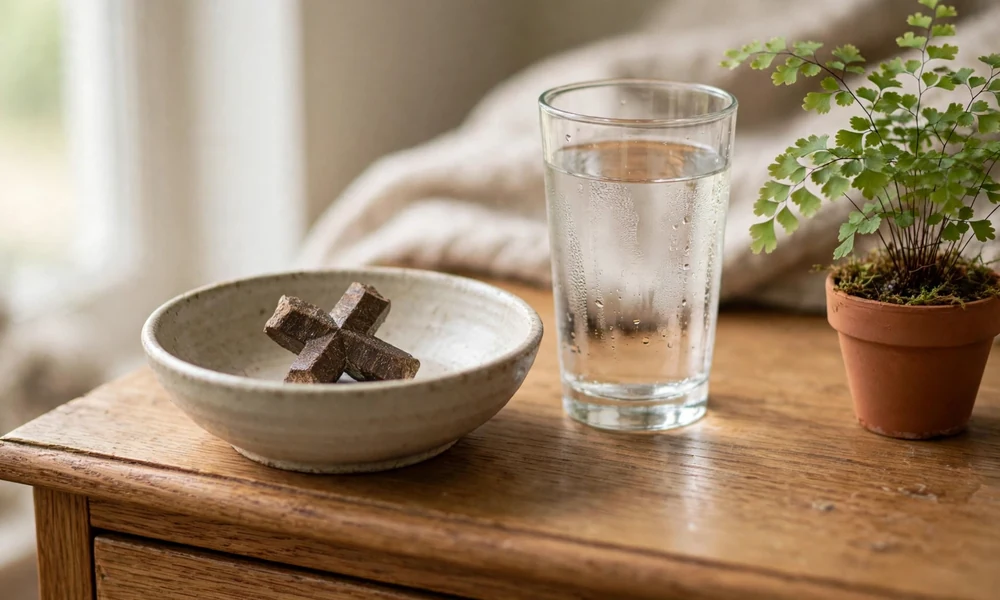
The day begins with the tray. Spread a folded beige cloth over the side table, place the staurolite at one end with its cross turned upward, and put a tall glass of water at the far end, leaving a hand's breadth of dry cloth in the middle. Take the water in slow mouthfuls as the stone gathers the window light.
There is no task to finish and no ceremony to follow. Board, glass and stone are the whole plan.
Staurolite Beside Water
Water and staurolite look companionable on one tray, yet their places must never swap. Set the tumbler on one side and the stone on the other, with bare wood or cloth in between, keeping the drink clear and the stone untouched by water. Rinse your hands with soap after setting the stone down, before lifting the glass.
Keep the stone out of every glass, jug, and bath, and never rinse it under a tap to clean it. A soft dry cloth is all it needs.

Staurolite at a Glance
| Warm brown cross | Tray, shelf, desk | Dry hands only |
|---|---|---|
| Chestnut, reddish tone | Steady days, slow hours | Glass kept apart |
| Hard, heavy mineral | One accent, plain | Never in drinks |
| Walnut-sized piece | Wood, linen, lamplight | Dust dry weekly |
Staurolite and Brown Jasper
Brown jasper for steady days is a plain warm brown jasper, even in colour, without spots, bands or pictures, the colour of turned soil after rain and toast a shade past golden.
Staurolite shares the warm brown and the steady mood, yet the two stones part ways at a glance. Brown jasper is one even brown all the way through, while staurolite carries its natural cross across the face, a shape no jasper can show. Jasper is smooth and even; staurolite is rougher, heavier, and marked.
Staurolite and Brown Onyx
Brown onyx for steady days is a warm brown banded chalcedony, its bands running in cream, caramel and deep chestnut, like a wooden table polished by years of elbows.
Staurolite has no bands at all. Its brown is one clear tone, broken only by the cross where two crystals meet, and its surface stays matte where onyx shines smooth. Onyx is calm and layered; staurolite is plain and marked. Both belong on steady days, yet they earn their place in different ways.
Staurolite and Brown Spinel
Brown spinel for steady days is a deep chestnut brown spinel, darker than caramel and softer than coffee, glowing warmest in lamplight and low sun.
Staurolite is the rougher cousin of the pair. Where brown spinel is clear and bright, lit from within, staurolite is earthy and matte, its brown sitting deeper in the stone. Spinel sparkles; staurolite does not. The cross is the difference you can spot from across the room, and it is the reason staurolite stands alone among the brown stones here.
Staurolite Among the Other Stones in This Batch
Beyond the brown stones, this batch holds four more minerals, and each one wears a different colour from staurolite. Barite is a pale, glassy stone that catches the light in clear flashes, where staurolite is dark and matte. Titanite is a warm golden mineral with a bright, almost honeyed shine, far from brown earth. Vesuvianite is a deep green stone, fresh as new leaves, while staurolite keeps the colour of soil those leaves grow in. Zincite is a warm orange-red mineral, vivid and fiery, where staurolite stays quiet and brown.
Where Staurolite Sits at Home
A good home for staurolite is a spot you pass each day without brushing against it: the far end of a desk, a waist-high shelf, or the top of a chest of drawers. Morning light suits it, and the spot should sit far from any tap or kettle, out of steamy air, and beyond the reach of small children.
Every week, sweep the dust off with a soft, dry cloth. When the stone is off its tray, keep it by itself in a small lined box, far from keys, coins, and harder gems.

Stones That Must Stay Away from Water
A few stones deserve a sterner warning than staurolite, and their names are worth knowing. Malachite keeps copper locked in its green bands, and copper must never reach a mouth, so the stone stays far from every jug and tumbler. Damp hematite rusts, and the rust can mark skin and cloth, so it stays out of drinking water as well.
Apatite crumbles when soaked, pyrite falls apart in damp air, and both belong on dry shelves. Lepidolite hides lithium in its pale flakes, which means no drink should ever touch it. Angelite turns dull and cloudy after a wetting, while amber, old tree sap grown hard, goes milky in a soak. Keep each of them far from food and drink, and treat staurolite the same way: beside the glass, never in it.
Your Steady Days Checklist
- Set the staurolite on a dry cloth, keeping the tumbler well clear of it.
- Drink the water at a slow pace, a mouthful at a time.
- Lift the stone and let the cross catch the light for a moment.
- Set the piece down on its tray, then rinse your hands with soap.
- Pick a shop that tells you plainly where the stone was dug up.
- If a health worry lingers, talk to a doctor — a brown stone cannot answer it.
A tray, a glass, a dry cloth, and one cross-marked stone: that is the whole routine, and it takes less than a minute to set up each morning.
Frequently Asked Questions
What is staurolite?
Staurolite is a warm brown mineral of iron and aluminium, grown deep underground, whose crystals often join at an angle to form a natural cross shape across the face of the stone.
How can I tell real staurolite from a fake?
Look for a clear natural cross in daylight, a warm even brown with no painted look, and a cool, heavy feel in the hand, and ask the seller where the piece was found.
Is staurolite the same as brown jasper?
No. Brown jasper is an opaque quartz, plain and even in colour, while staurolite is a different mineral altogether, rougher and heavier, and marked by its natural cross.
Can I put staurolite in water?
No. Staurolite stays out of drinking water, out of soaks, and out of baths. The stone sits beside the glass, never in it, and a soft dry cloth is all it needs.
Is staurolite safe to hold?
A short hold of a small polished piece suits most adults, as long as you wash your hands once you have put it down.
Where should I keep staurolite at home?
Pick a dry spot in soft light — the end of a desk, a shelf by the morning window, or a dish on the drawers — well away from water, steam, and small hands.

The Bottom Line
For steady days, staurolite is enough: one warm brown stone with a natural cross, a glass of water close by, and the stone dry on its tray.
A Note for Steady Days
A cross in brown stone, a full glass, a dry tray — that is all a steady day needs.


