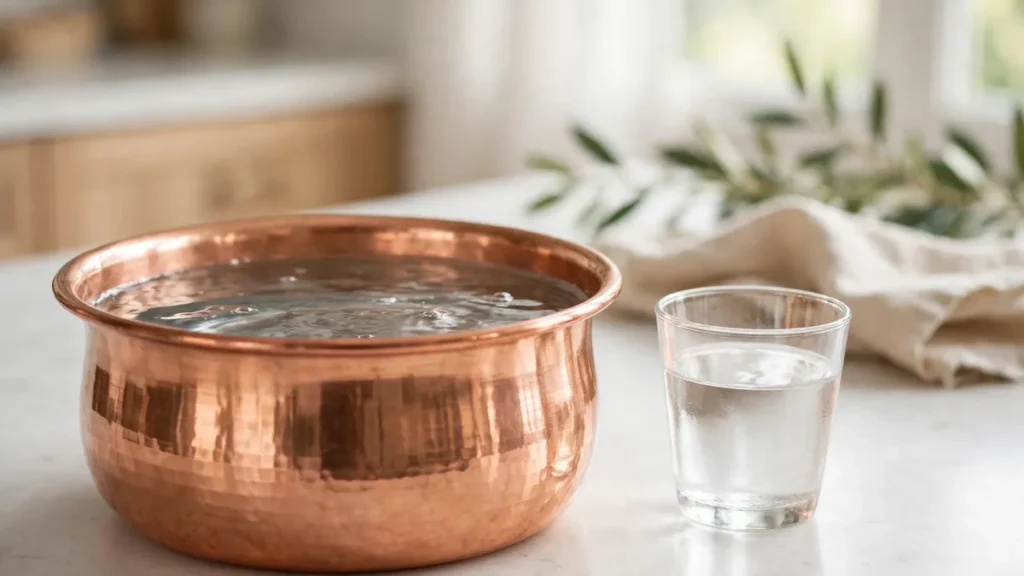
Some days run on routine rather than excitement. The kettle clicks on at the same hour, the same chair waits by the window, and the same small jobs fill the hours in the same order. Nothing in such a day asks to be celebrated.
Brown jasper belongs on days like those: a plain warm brown stone, the colour of turned soil after rain, of a wooden spoon worn smooth by years of stirring, of toast a shade past golden. It carries no picture to study and no flash to admire, only a steady brown that sits quietly beside a glass of water.
This guide looks closely at brown jasper: what the stone is, how to pick a good piece, where it fits among the other jaspers, and how to keep it dry beside your drink. It is an ornament to look at and to hold, mending nothing in the body; it simply gives an ordinary day one warm, solid thing to rest the eyes on.
Key Takeaways
- Brown jasper is plain warm brown jasper, even in colour, without spots, bands or pictures.
- Its quiet brown suits steady days, plain routines and unhurried hours at home.
- Brown jasper is an ornament to look at and pick up; it mends nothing in the body.
- The pebble sits beside the tumbler, never dropped into it, and stays dry.
- One walnut-sized brown pebble is enough for a whole steady day.
What Brown Jasper Is
Brown jasper is jasper in its plainest brown form, an opaque quartz coloured by iron held inside the stone as it formed. The colour runs from milk chocolate to deep chestnut, sometimes with faint darker mottling that shows only in strong light. A burnished piece feels cool, weighty and smooth, with a soft waxy glow rather than a bright shine.
Unlike its patterned cousins, brown jasper asks for no close inspection: no circles to trace, no stripes to follow, no landscape to find. Its charm is its evenness, one warm brown all the way through, like walnut or dark chocolate.
Why Warm Brown Suits Steady Days
Brown is the colour of the ground beneath everything. Soil, timber, bread crust, bark, a leather chair softened by years of use: brown things stay put while brighter things come and go. A steady day runs the same way, built from small repeated acts rather than surprises.
A vivid stone would quarrel with that mood, and a pale one would fade into the wallpaper. Warm brown does neither: it holds its place without shouting, and it looks as good in lamplight at dusk as in thin early light.
Choosing a Brown Jasper Piece
Look for a brown that stays even as you turn the stone slowly in daylight. The best pieces show one warm tone from edge to edge, with no chalky pale patches, no grey wash and no sharp chips along the rim. A piece about the size of a walnut does the job, and should sit flat without rocking.
Ask the shop plainly where the stone came from, and step away from any piece whose brown looks painted on, or any seller who claims it will change your health. Brown jasper is common and honest, and should be priced that way.

A Steady Day with Brown Jasper
Begin by laying a small wooden board near the window, the brown jasper at one end and a tall tumbler of drinking water at the other. Drink the water in slow mouthfuls and let your eyes rest on the warm brown while the morning settles. There is nothing to finish; board, tumbler and pebble are the whole plan.
Turn a few pages, or follow the sunlight across the floor. When the tumbler runs dry, fill it again.
Brown Jasper Beside Water
A tumbler of water and a brown jasper make a calm pair on one board, yet the board is the only thing they share. Park the tumbler at the far end and the pebble at the near end, with bare wood between them, so the drink stays clean and the pebble dry.
Rinse your hands with soap once you set the pebble down, before lifting the tumbler. Never let the stone drop into a tumbler, a jug or a bath, or stir it through water you plan to drink.
Brown Jasper at a Glance
| Plain warm brown | Tray, shelf, desk | Display only |
|---|---|---|
| Even, quiet colour | Daylight, soft lamps | Keep it dry |
| Cool, smooth, solid | Steady days, slow hours | Hands rinsed after |
| Walnut-sized piece | Water beside it | Never in a drink |

Brown Jasper and White Jasper
White jasper, the sibling numbered 774, is the bright opposite of this stone: a clear white jasper for bright days, pale and light, made for mornings that want sunshine on the sill. Where white lifts a room, brown settles it.
The difference is a matter of weight. White jasper is light first, brightness its whole character, and it suits a clear desk in strong daylight. Brown jasper is warmth first, steadiness its whole character, and it suits a tray for slow hours at home.
Brown Jasper and Black Jasper
Black jasper, the sibling numbered 776, is the dark opposite of this stone: a deep black jasper for quiet days, dark and weighty, made for hours that want gravity. Where black anchors a room, brown warms it.
Both stones are plain and unpatterned, yet their moods part ways. Black jasper is severe and still, like a slate roof at dusk. Brown jasper is softer, like turned earth in spring, and suits a day that wants calm without solemnity.
Brown Jasper and the Other Jaspers
Beyond the two siblings, the jasper family keeps many colours, and none of them is this guide's plain warm brown. Picasso jasper for bright days wears bold black, grey and cream marks like brush strokes, while fancy jasper swirls pale pink, cream and sage green. Leopardskin jasper is dotted cream, tan and dark brown, and bumblebee jasper bands warm yellow and orange with dark stripes.
Zebra jasper stripes black and white, rainforest jasper wears pale leaf shapes on green, and kambaba jasper swirls deep green. Mookaite jasper for steady days bands mustard yellow, brick red and chocolate brown in warm earth tones, yet it is banded where brown jasper is plain. Green jasper is solid deep green, and brecciated jasper joins broken rust, terracotta and cream fragments, a broken-earth look where brown jasper stays even.
Polychrome jasper swirls terracotta, ochre, teal and cream, yellow jasper glows warm mustard, and ocean jasper rings soft green, cream and blue. Dalmatian jasper spots cream with black, picture jasper paints brown, cream and rust landscapes, and red jasper for cold days glows a warm brick red. Brown jasper stands apart by being simply brown, with no bands, no spots and no picture inside it.

Where Brown Jasper Sits at Home
Give the stone one fixed spot and leave it there, so the pause becomes a habit instead of a decision. A living-room shelf, a desk corner or a bedside table all work, as long as daylight can find it and the tumbler can stand beside it.
Keep the spot away from sinks and steamy kitchens, where damp air dulls the polish, and out of reach of small children, who love to pocket a smooth pebble.
Caring for Brown Jasper
Brown jasper can take a knock, but a little care keeps its polish bright for years. Give it a dry drawer or a lined box when it is not on show, and keep it away from bathroom steam, strong sun through glass, and the clutter of jars that might tip onto it. Harder stones can mark it, so it deserves a compartment of its own.
A weekly pass with a soft dry cloth lifts the dust. Skip the soap, the sprays and the pastes, and leave the humming cleaning machines for jewellery that can take them; plain cloth and patience are all this pebble needs.
Stones That Must Never Touch Water
Some stones and water should never meet, and it helps to know which ones. Malachite comes first: behind its green ribbons sit copper salts that belong nowhere near a mouth, so it never goes into a glass, a jug or a bath. Hematite comes next, since damp can freckle it with rust and stain whatever it touches, and it stays out of drinking water too.
Apatite and lepidolite are also kept on dry shelves — lepidolite holds lithium inside its pale layers, so it is never steeped or sipped with. Pyrite, angelite and amber round out the dry-only group: no soaking, no stirring into drinks. Brown jasper follows the same rule and rests beside its tumbler, dry on the board.
Your Steady Days Checklist
- Lay the brown jasper on a dry board, a full tumbler near it.
- Drink the water unhurriedly in the morning glow.
- Rinse your hands with soap once the stone is down.
- Choose a shop that can say plainly where the pebble was found.
- Store it dry and cool, high up, away from small hands.
- For any health worry, see a doctor; a pebble treats nothing.

Frequently Asked Questions
What is brown jasper?
Brown jasper is a plain warm brown jasper, an opaque quartz coloured by iron inside the stone. Its colour runs from milk chocolate to deep chestnut, even throughout, with a smooth polish and a soft waxy glow.
How is brown jasper different from mookaite jasper?
Mookaite jasper bands mustard yellow, brick red and chocolate brown, like layers of desert ground. Brown jasper is plain and even, one warm brown throughout, with no bands at all.
How is brown jasper different from brecciated jasper?
Brecciated jasper joins broken angular fragments of rust, terracotta, cream and brown, a broken-earth look. Brown jasper stays even and unbroken, one warm brown from edge to edge.
How is brown jasper different from red jasper?
Red jasper glows a warm brick red and suits cold days. Brown jasper is a softer chestnut brown, quieter and earthier, and suits steady days.
Is brown jasper safe to hold?
A brief hold is harmless, provided you rinse your hands with soap the moment you put it down, and store it away from little children and meals.
Where should I keep brown jasper at home?
Pick a still, dry corner — a board, a ledge, a sill — the tumbler near yet separate, safe from bumps and damp.
The Bottom Line
Brown jasper lends steady days a brown friend: one plain warm pebble in gentle light, on a pale board next to a tumbler of water, looked at, never drunk from.
A Note for Steady Days
Keep the morning plain and the stone dry. One little brown jasper, one glass of water, and a few slow hours are all you need.