A crystal shop can be wonderful and confusing: shelves glitter, names are unfamiliar, and prices range from a few coins to more than a week's wages. Among real stones sit pieces of coloured glass, dyed quartz, and resin, sold at crystal prices.
Telling them apart is not about becoming a geologist. It is about slowing down, looking closely, and asking plain questions before money changes hands. A real crystal has small imperfections and a colour that is rarely perfect. A fake is often too bright, too smooth, and too cheap to be true.
This guide explains what "real" means, the fakes you will meet most often, and the simple checks — look, feel, scratch, weight, questions — that help you buy with confidence. Judge stones as beautiful objects, never as medicine, and never let a seller rush you.
Key Takeaways
- "Real" means a natural mineral, formed by geology: quartz, amethyst, rose quartz, citrine, and the rest.
- The common fakes are glass, dyed stone, resin, and heat-treated amethyst sold as citrine.
- Real quartz feels cool and warms slowly; glass warms quickly.
- Quartz, at Mohs hardness 7, scratches glass; glass, at about 5.5, does not scratch quartz.
- Buy from a seller who answers plain questions, names the stone and its treatment, and offers returns.
What "Real" Means Here
"Real" means a natural mineral, formed by geological processes. Clear quartz, amethyst, rose quartz, citrine, and smoky quartz are all varieties of quartz — silicon dioxide — each formed slowly underground.
A polished stone is still real: polishing changes the surface, not the mineral. So are tumbled stones, cut points, and raw clusters. What matters is the material, not how smooth it is.
Two things fall outside it. Glass is not a crystal, even shaped like one: melted sand, cooled too quickly to form a mineral structure. Resin is plastic, not stone. A dyed stone is real stone with added colour, and a heat-treated stone is real stone changed by heat — both should be sold with that fact stated plainly. If you are choosing a first stone, how to choose your first healing stone is a calm place to start.
The Usual Fakes
Most fakes fall into four groups. First is glass: melted, coloured, and moulded into points, spheres, and towers — the commonest fake, because it is cheap to make in any colour. Bright blue "aquamarine", deep red "ruby" for a few coins, and perfectly clear "quartz" spheres are usually glass.
Second is dyed stone: pale agate and quartz take dye well, so they are soaked in bright colours and sold as rare. The colour gathers in cracks and looks too even or too loud.
Third is resin, a light plastic used for large, flawless "crystals" that would cost a fortune if real. It feels warm and light, and a fingernail can mark it.
Fourth is the treated stone sold under the wrong name: most orange "citrine" is amethyst heated until orange-yellow — real quartz, changed by heat, which should be sold as heat-treated amethyst.
| Fake | How it looks | How to check |
|---|---|---|
| Glass | Very bright, flawless, bubbly | Warms fast; round bubbles inside |
| Dyed stone | Too even; gathers in cracks | Check cracks for dye |
| Resin | Light, warm, flawless | Warm, light; a fingernail marks it |
| Heat-treated amethyst | Orange, sold as citrine | White base, burnt-orange tips |
Look First: Colour and Clarity
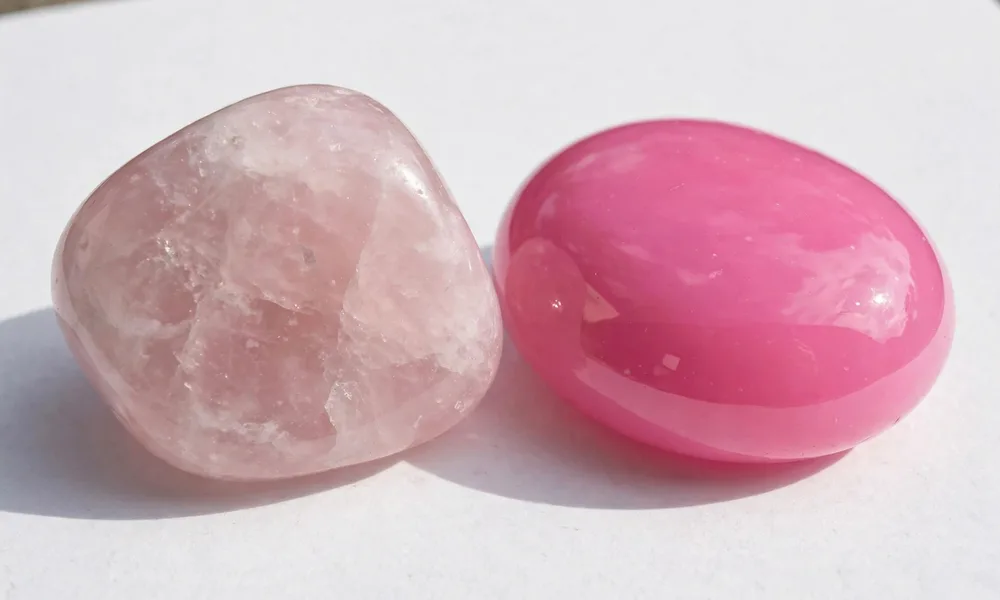
Your eyes are the first tool. Hold the stone in good daylight: real quartz is rarely perfect. Clear quartz usually holds tiny veils, cloudy patches, or fine fractures that catch the light. Amethyst colour is uneven, deeper in places, paler in others. Rose quartz is cloudy and soft pink, never hot pink, never perfectly clear.
Colour that is too even is a warning: nature does not paint in flat coats, so a stone that is the same bright blue or pink all through is usually dyed or glass. Dye gathers in cracks, so darker lines along fractures mean the stone was almost certainly dyed.
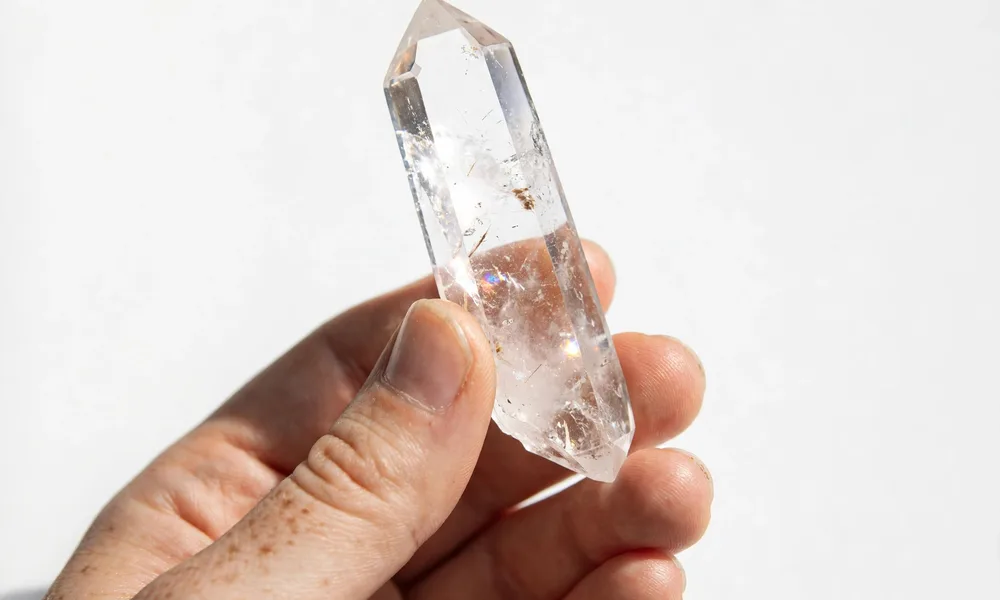
Look for bubbles: glass often holds round air bubbles, frozen in as it cooled, while natural quartz almost never does. Real polished quartz may show tiny pits; glass is often perfectly smooth and faintly waxy. Clear quartz is the best teacher: clear quartz, a study in light looks at what makes it beautiful.
Feel and Temperature
Pick the stone up. Real quartz feels cool at first and stays cool for a while, warming slowly. Glass feels cool for a moment, then warms quickly. Resin barely feels cool at all. This test is quick, free, and surprisingly reliable.
Weight tells a story too. Quartz is fairly dense, about 2.65 grams per cubic centimetre, so a real stone feels solid for its size. Glass is a little lighter, around 2.5, and resin much lighter still — a large resin "crystal" feels strangely light. Hold two stones of the same size, one in each hand, and the difference is often obvious.
Polished quartz feels smooth, hard, and cool; resin feels warm and plasticky, cheap glass faintly waxy. Trust your hands: they are better instruments than they are given credit for.
The Scratch and Weight Checks
Hardness is the most practical test, and it rests on a simple scale. The Mohs scale ranks minerals from 1, softest, to 10, hardest. Quartz sits at 7, ordinary glass around 5.5, a steel knife around 5.5 to 6, your fingernail around 2.5. A harder material scratches a softer one, never the other way round.
To test a stone you own, try scratching a spare piece of glass with a sharp edge of the stone, where it does not matter. Real quartz leaves a fine scratch; glass will not scratch glass. Never test a stone in a shop without asking — it can damage the stone.
Weight is the quieter check: real quartz feels solid, glass a touch light, resin far too light for its size. Combine the checks — cool feel, solid weight, a scratch that bites — and a fake has little room to hide.
Questions to Ask the Seller
A good seller is your best protection. Ask: what is the stone, where is it from, has it been dyed, heated, or treated? How do they know it is real? A seller who knows their stock answers plainly, in a sentence or two.
Watch for warning signs: a seller who cannot name the stone, promises results, or rushes you is selling a story, not a stone. Very low prices warn too — a large, flawless "citrine" tower for the price of lunch is glass or heat-treated amethyst.
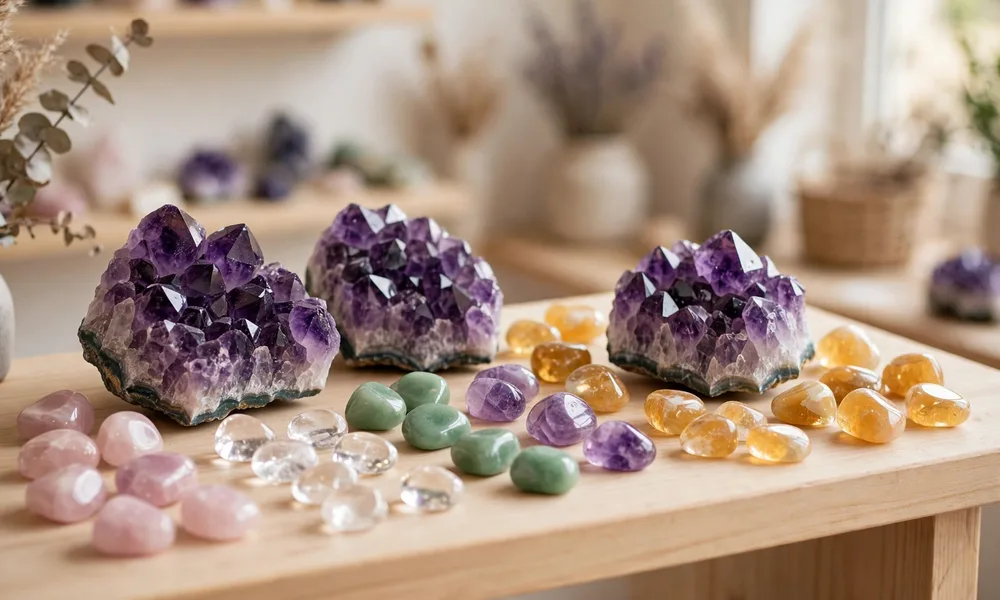
Ask about returns before you pay: a shop that stands behind its stones will let you bring one back. Take the receipt and keep the label. Online, read the listing twice, check reviews, and favour sellers who photograph the exact stone, not a stock image.
Citrine, Turquoise and the Common Traps
Some stones are faked more than others. Citrine is first: natural citrine is pale, smoky yellow, and fairly rare. The deep orange "citrine" in most shops is amethyst heated to around 470 degrees Celsius, turning orange-yellow with a white base and burnt-orange tips. It is real quartz, but not natural citrine, and should be labelled heat-treated amethyst.
Turquoise is second: real turquoise is opaque blue-green, often with a dark matrix of veins, and soft at Mohs 5 to 6. Much sold as turquoise is dyed howlite, a white stone that takes blue dye easily, or resin. Dyed howlite shows grey veins that look drawn on. If the price is low and the colour is perfect sky blue, be careful.
Opalite is third: glass made to shimmer pink and blue, honestly sold as opalite — the trap is when it is sold as opal or moonstone. Real opal flashes colour from within and feels cool; opalite glows evenly and warms fast. Ask for the name, and trust the answer more than the sparkle.
What to Do After You Buy
Buying well is only half the pleasure; caring for the stone is the rest. At home, wash a hard stone such as quartz or amethyst in lukewarm water with a drop of mild soap, then rinse and dry it with a soft cloth. For soft stones — selenite, malachite, pyrite, hematite, lapis lazuli, turquoise — skip water and wipe with a dry cloth instead.
Never put any stone in drinking water, or drink water a stone has touched. Cleaning a crystal and preparing a drink are two different things. If you like water rituals, use the indirect method: a sealed jar inside a bowl of water, so the stone stays dry. The full guide: how to cleanse crystals with water safely.
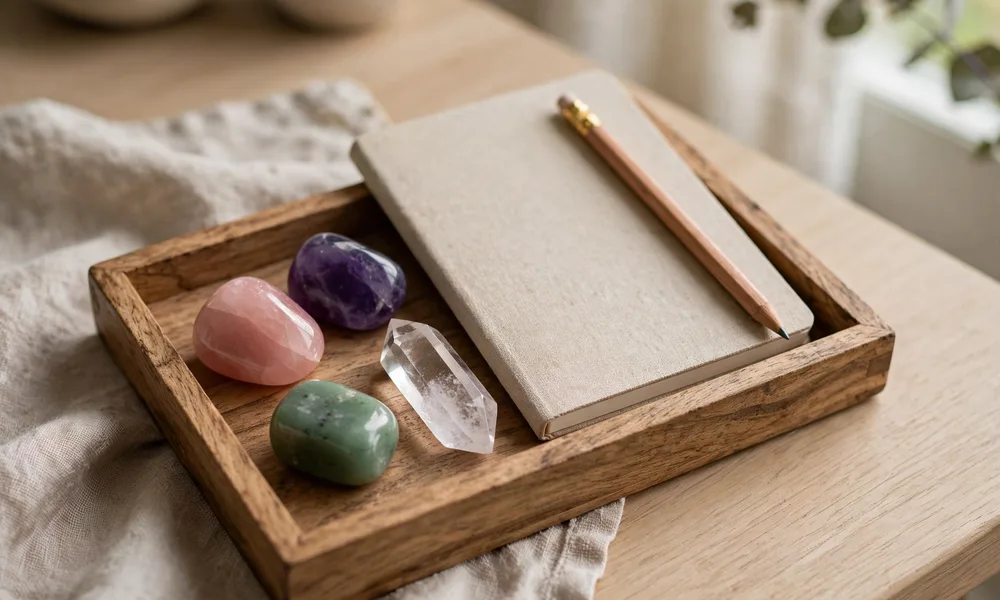
Store stones where they will not scratch each other: a cloth pouch, a lined box, or a spaced shelf. Keep amethyst and rose quartz out of harsh sun, which fades them over months in a bright window. Keep the receipt and label with the stone.
Your Real-Crystal Checklist
- Look first: uneven colour, small inclusions, no round bubbles.
- Feel it: real quartz stays cool; glass warms quickly.
- Weigh it: quartz feels solid; resin feels far too light for its size.
- Ask the seller: what is it, where is it from, has it been treated?
- Check the price: a large flawless "citrine" for very little is a warning.
- Keep the receipt and label; buy where returns are allowed.
Frequently Asked Questions
Can I trust the scratch test? Yes, with care: quartz at Mohs 7 scratches glass at about 5.5. Test only a stone you own, on glass that does not matter, never shop stock.
Do real crystals feel cold? They feel cool at first and warm slowly; glass warms quickly, resin barely feels cool. Use temperature with the other checks, not alone.
Is heat-treated amethyst fake citrine? It is real quartz, changed by heat, sold under the wrong name as natural citrine. Natural citrine is pale smoky yellow and rare; most orange "citrine" is heat-treated amethyst.
What about dyed stones — are they fake? They are real stone with added colour: a dyed agate is still agate, but should be sold as dyed, at a dyed-stone price. Bright, even colour and dye in cracks are the signs.
Should I buy crystals online? You can, if the seller photographs the exact stone, names it and its treatment, has good reviews, and accepts returns. Avoid stock photos and prices too good to be true.
Can I put my new crystal in drinking water? No. Never put any stone in drinking water, or drink water a stone has touched. Keep stones beside water, never in it.
The Bottom Line
Spotting a real crystal is looking, feeling, and asking. Uneven colour, small inclusions, a cool touch, solid weight, and a seller who answers plainly beat any certificate on a cheap stone.
Buy slowly, keep the receipt, and enjoy the stone for what it is: a beautiful piece of the earth. That is the whole skill.
A Note for Careful Collectors
Keep it slow, keep it honest, keep it yours. The best collections are built one careful purchase at a time, from sellers you trust. Stay curious. Stay clear. Buy well.