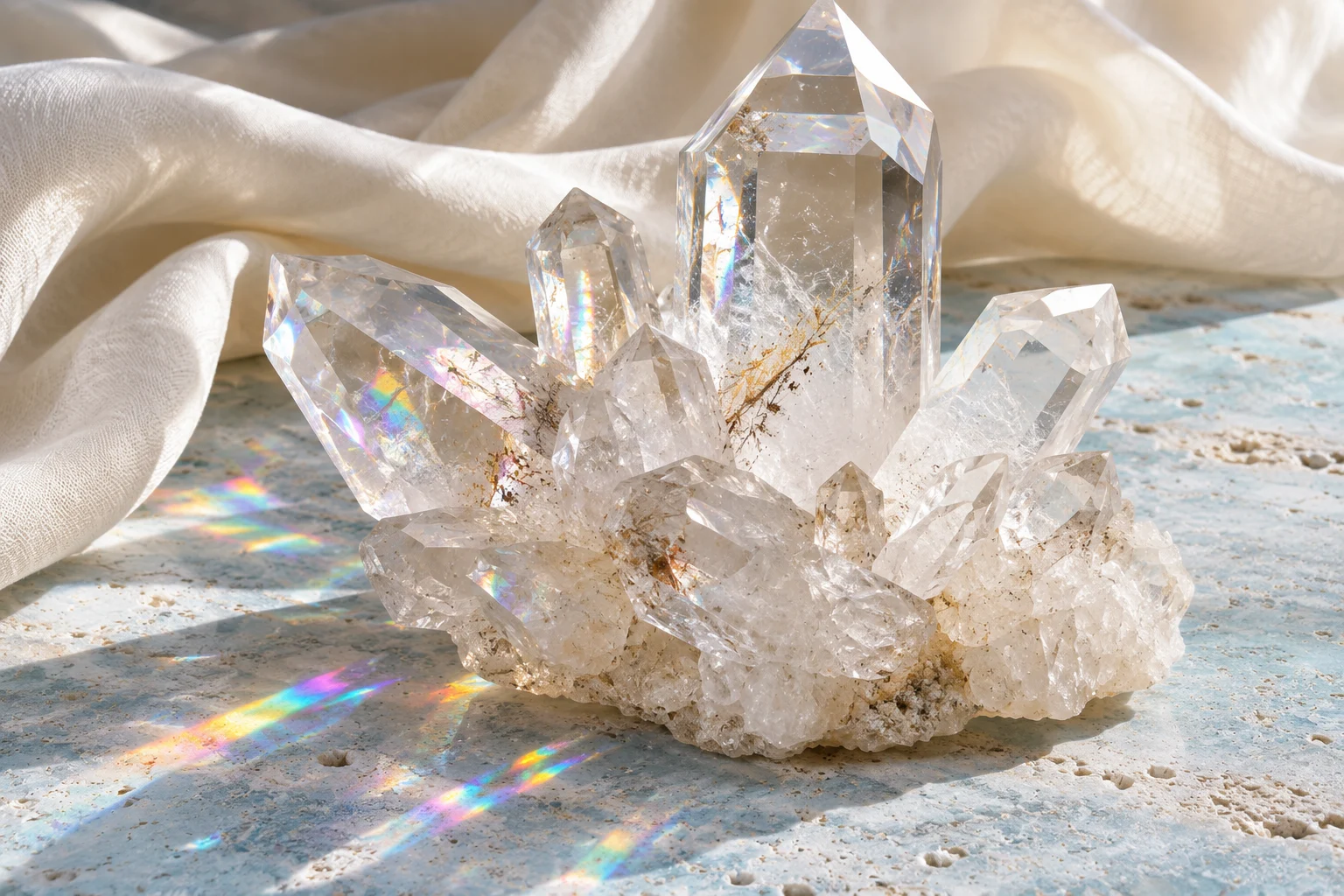
A clear crystal on a windowsill can be a beautiful object before it is anything else. The way light catches an edge, a tiny inclusion, a change in the view as you walk past: there is plenty to notice.
Begin with what you can see
Look at a crystal against a pale background, then a darker one. Turn it slowly in natural light. Notice the difference between the outer shape and what appears inside it. You are not trying to grade it; you are learning what you personally find interesting.
A perfectly clear polished point and an irregular mineral specimen offer different visual experiences. Neither has to be the correct choice for your home.
Buy the object, not a promise
When shopping, ask what the material is, whether it has been treated, and how the seller describes its origin. Request a photograph of the actual piece when possible. Shape, size, finish, condition, and a clear return policy are more useful starting points than a dramatic product story.
At Crystal by Ayesha, we approach crystals as materials, decorative objects, and sources of visual inspiration. We do not present them as medical treatments or suggest they can replace health care.
Give it room
A single piece on an uncluttered shelf can hold attention better than a crowded display. Try it beside an ordinary ceramic bowl or a piece of folded fabric. A little contrast helps you see the surfaces more clearly.
Keep heavy or pointed objects stable and out of reach of young children. Follow care instructions for the specific material. Do not assume every mineral belongs in water, on skin, or in a drinking vessel.
Let beauty be enough
You can attach a personal meaning to an object without asking it to perform a miracle. A crystal might remind you to pause, to look up from a screen, or simply to enjoy the light at a certain hour.
That is a small pleasure. It does not become less valuable because it is small.
This content is for informational purposes only and reflects our personal opinions and experiences.