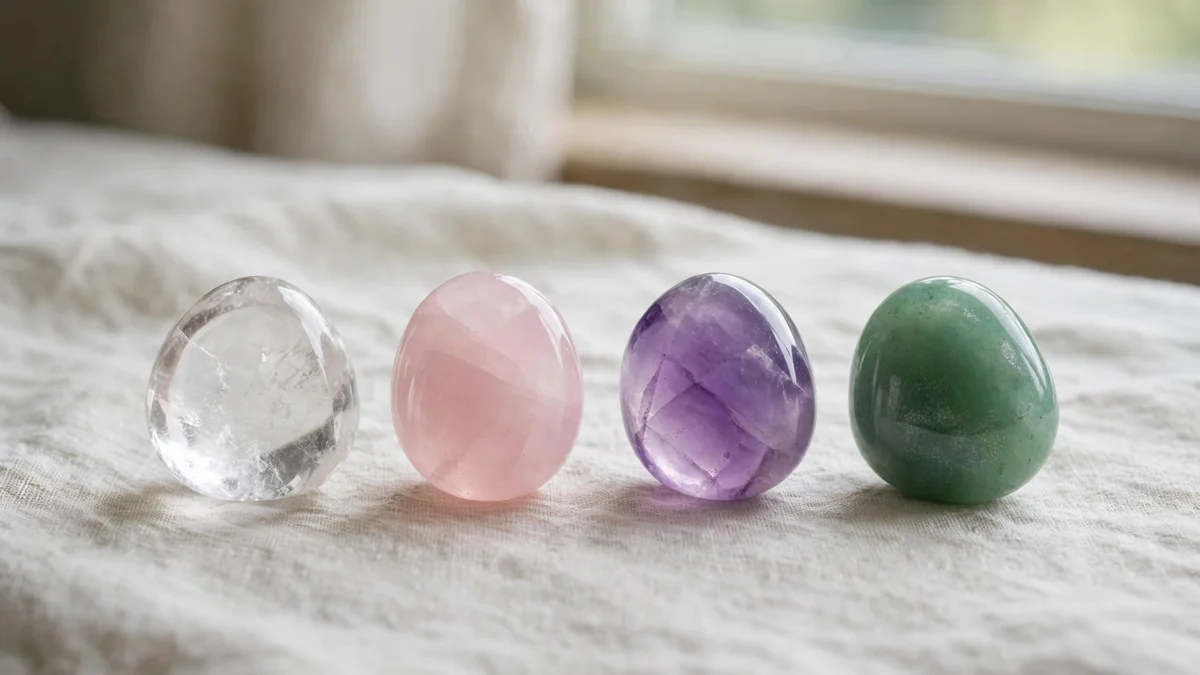
Choosing a first stone should feel like choosing a favourite mug or a good book: a small, personal decision, made slowly, with your own taste in charge. But shops are full of unfamiliar names and claims too large to trust.
The phrase "healing stone" is part of the confusion. It is the common name people use for crystals and polished stones kept for comfort, beauty, and quiet rituals. This guide uses the phrase in that everyday sense, and judges stones as beautiful objects: by look, feel, size, and ease of care. Nothing here promises a healing outcome.
Below: what the words mean, what to look at, five stones for a beginner, where to buy, and care at home.
Key Takeaways
- "Healing stone" is the common name for crystals and polished stones; judge them as beautiful objects, not medicine.
- Look first: colour, shape, and finish tell you more than any product story.
- Feel matters: a first stone should sit comfortably in your hand and feel pleasant to hold.
- Start small and smooth: a tumbled stone the size of a large coin is easy to keep and care for.
- Buy from a seller who answers plain questions — and keep the stone beside water, never in it.
What "Healing Stone" Means Here
Start with the words, because they shape everything after them. "Healing stone" is the phrase most shops and people use for crystals and polished stones kept for comfort, calm, and quiet rituals. Here it means just that: a name for the object, not a claim about what it does.
That distinction matters. A stone is a piece of the earth, shaped by geology and finished by polishing. It can be beautiful, pleasant to hold, and a reminder to pause. It cannot cure an illness, fix a mood, or change your health. Anyone who tells you otherwise is selling a promise, not a stone.
At Crystal by Ayesha, crystals are materials, decorative objects, and visual inspiration, not medical treatments. A first stone is worth choosing because you enjoy looking at it and holding it — a small pleasure, no less valuable for being small.
Before You Buy: Look, Feel, Size
The best first stone is chosen with your eyes and hands, not a list of claimed powers. Hold it in natural light and turn it slowly. Notice the colour: is it even, or does it change as it turns? Notice the surface: smooth, or pitted and rough? Tiny lines, clouds, and flecks are normal, and they make each piece different.
Then feel it. A tumbled stone should feel smooth, with no sharp edges that catch your skin, and sit comfortably in your palm. If a stone feels awkward, too heavy, or oddly slippery, put it down and try another. Your hand is a better judge than any label.
Size is the third test. A stone the size of a large coin or a small egg is a good first choice: big enough to hold easily, small enough for a bedside table, a pocket, or a small dish. Large specimens look impressive, but are harder to store and easier to knock over.
Five Stones That Suit a First Choice
Five stones are good places to begin: widely available, affordable, and easy to care for. None is the "right" first stone; the right one is the one you enjoy looking at and holding.
| Stone | Colour | Feel | Good to know |
|---|---|---|---|
| Clear quartz | Colourless, glassy | Smooth, cool | Shows light well |
| Rose quartz | Soft pink | Smooth, gentle | Avoid dyed pieces |
| Amethyst | Violet purple | Smooth, cool | Colour varies |
| Green aventurine | Soft green | Smooth, slightly grainy | Speckles are normal |
| Black obsidian | Deep black, glossy | Smooth, glassy | Can chip |
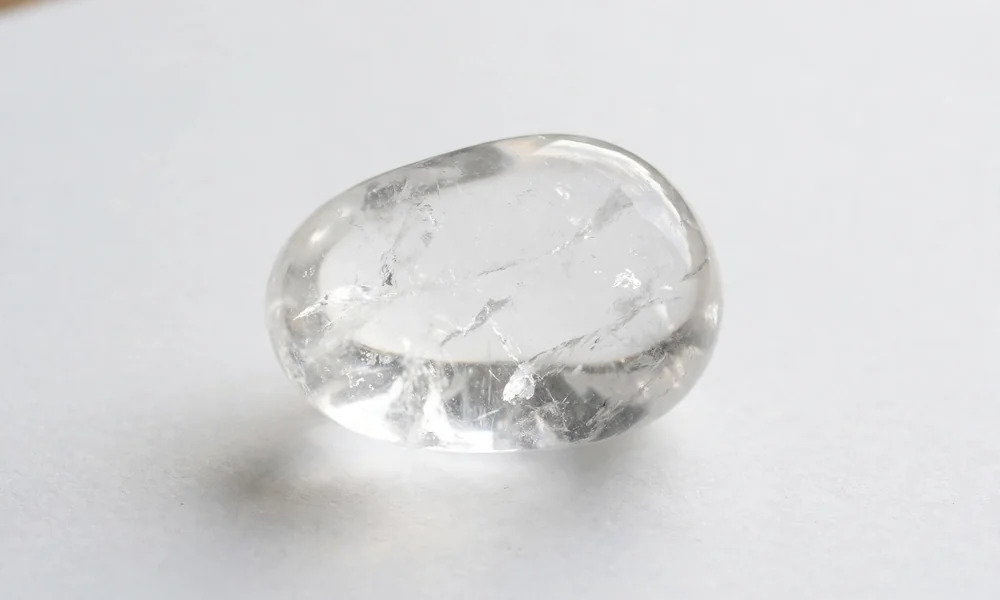
Clear quartz is the most neutral first choice: colourless, showing light beautifully, and a good way to learn what you like. Looking closely at a crystal in natural light is a habit worth building before you buy.
Rose quartz is the softest-looking, pale pink and calm. Amethyst brings a deeper violet that changes with the light. Green aventurine is a gentle, often speckled green, and black obsidian is glossy black glass, striking against pale linen. Hold each one, and let your own eye decide.
Where to Buy, and What to Ask
A good seller makes a first purchase easy — a small crystal shop, a market stall, or an online seller with clear photographs of the actual piece. What matters is the honesty of the answers. Before you buy, ask three plain questions: what is the material, has it been treated or dyed, and what is the return policy?
A seller who answers calmly is one you can trust. One who cannot, or who answers with dramatic claims about what the stone will do for you, is one to walk away from. Ask for a photograph of the actual piece online, not a stock image, and compare prices.
Buy one stone first, not five. A single stone gives you time to learn what you like: the colour you reach for, the size that feels right, the finish you prefer. You can always add another later; a slow collection is happier than a hurried handful.
Size, Shape and Finish
Size, shape, and finish decide how a stone fits into your daily life. A tumbled stone, rounded and smooth by polishing, is the easiest shape for a beginner: no sharp points, safe in a dish, comfortable to hold. Points and raw clusters look dramatic, but are harder to store and easier to chip.
Finish matters too. A well-polished stone feels smooth all over. Run your thumb slowly over the surface before you buy; it will find the rough patch your eyes missed. A roughly finished stone can still be beautiful, but it catches dust.
Think about where the stone will live. One that fits in a small dish on a bedside table will be seen and enjoyed every day. Choose a size that fits the place you already have, not one you hope to build later.
Caring for Your First Stone
Good care is simple. Dust the stone with a dry, soft cloth, and wash it only occasionally with plain lukewarm water, drying it at once. Avoid soap, harsh cleaners, and ultrasonic cleaners. Store it in a dish or soft pouch, away from harder stones and the table's edge.
Some stones are softer than others. Amethyst and rose quartz are reasonably hard but can still chip if dropped on a hard floor. Obsidian is a natural glass and can chip along a sharp edge. Handle it over a soft surface, like a bed or folded cloth, until you know how it feels.
Water deserves a clear rule. A stone can sit beside a glass of water while you drink it — the indirect method, and the only method this guide teaches. No stone ever goes into drinking water, and never drink water a stone has soaked in. Natural stones can carry dust and minerals you would not want in a drink, and some are damaged by water itself. Keep the stone in its dish, the water in its glass, and enjoy them side by side.
A Small Shelf, Not a Crowded One
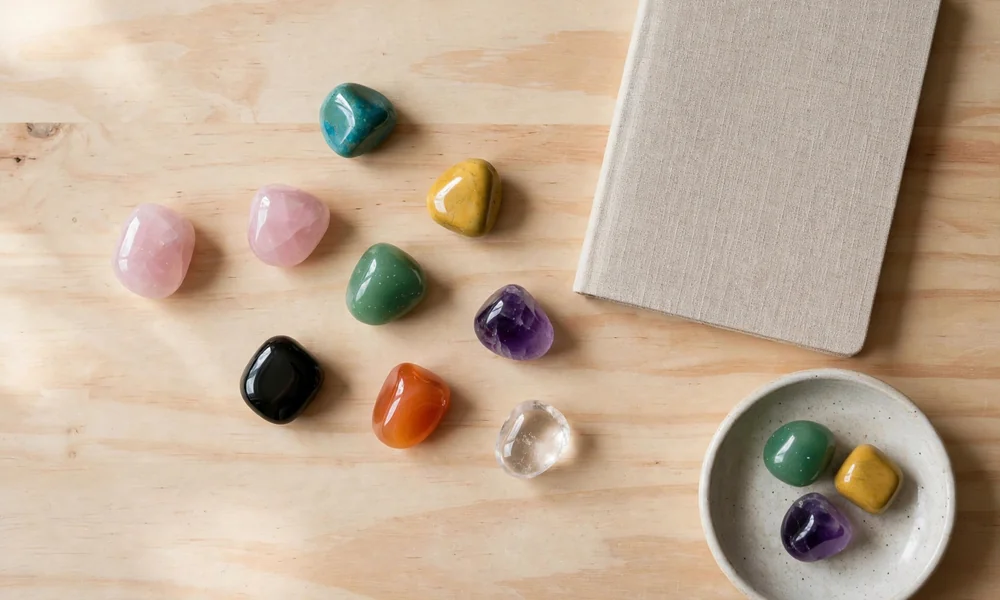
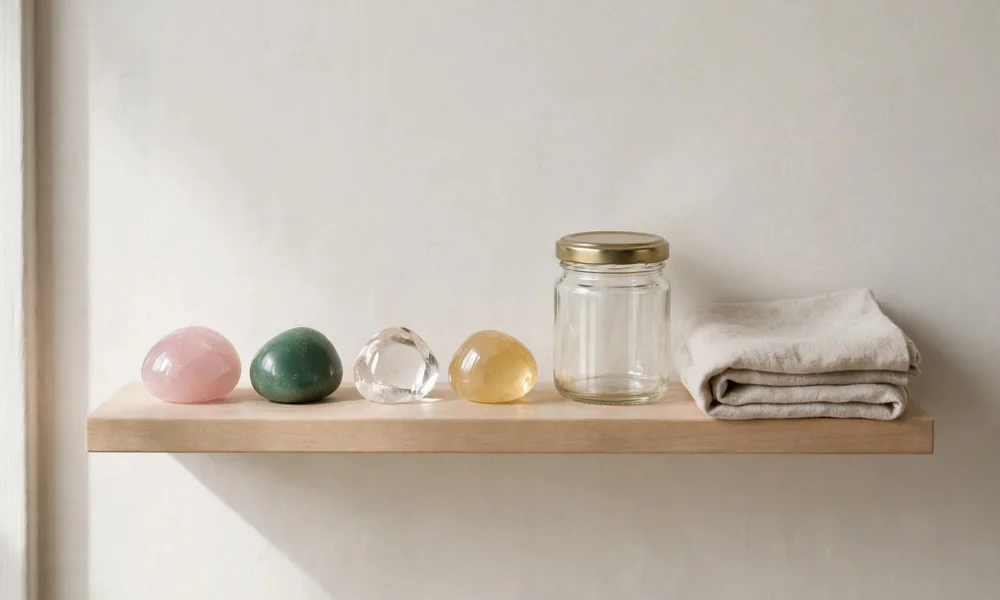
A first stone deserves a little room. A single stone on an uncluttered shelf holds attention better than a crowded display. Try it in a small dish, beside a folded cloth or a ceramic bowl.
Resist the urge to fill the shelf at once. A collection grows best slowly, one stone at a time, each chosen because you liked it. The beauty of a smaller shelf is that every object on it has earned its place.
Keep the shelf practical, too. Heavy or pointed pieces should sit low and stable, out of reach of young children, and small stones should not be left where a child could pick them up. A tidy shelf is not only prettier; it is safer.
What a Stone Will Not Do
Honesty is part of choosing well, so say plainly what a first stone will not do. It will not heal an illness, cure anxiety, remove toxins, or change your health. It will not bring luck or protect you from harm. A stone is a beautiful object, not a treatment and not a promise.
What it can do is simpler. It can give your attention a lovely place to rest, or mark a small ritual: a glass of water, a quiet minute, a stone beside the glass.
If you are struggling with your health or mood, please speak to a qualified health professional. A stone can support a calm moment, but it cannot replace care.
Your First Stone Checklist
- Decide what you like: colour, clarity, finish.
- Hold it: smooth and comfortable in your hand.
- Choose a small, tumbled stone about the size of a large coin.
- Ask about material, treatment, and returns.
- Store it in a dish or soft pouch, away from harder stones.
- Keep it beside water, never in it.
Frequently Asked Questions
How much should a first stone cost? A small tumbled stone usually costs very little. Set a modest budget, compare a few sellers, and be wary of prices far too low or high for the size.
Which stone should I choose first? The one you enjoy looking at and holding. Clear quartz, rose quartz, amethyst, green aventurine, and black obsidian are all good first choices.
How can I tell if a stone is real? Ask what the material is, whether it has been treated or dyed, and request a photograph of the actual piece. Natural stones usually have small inclusions and colour variations; a perfectly uniform, plastic-feeling piece deserves a second look.
Can I put my stone in drinking water? No. Keep the stone beside the glass, never inside it. Natural stones can carry dust and hidden inclusions, and some are damaged by water.
How do I clean my first stone? Dust it with a dry, soft cloth, and wash it only occasionally with plain lukewarm water, drying it at once. Avoid soap and ultrasonic cleaners.
Can children handle my first stone? Children can look at a smooth stone from a safe distance, with an adult nearby. Keep heavy, pointed, or small pieces out of reach, and never let a child put a stone in their mouth.
The Bottom Line
Choosing a first healing stone is a small, personal decision: look closely, hold it in your hand, pick a size that fits your life, and buy from a seller who answers plain questions. Judge it by colour, feel, and finish — not by promises.
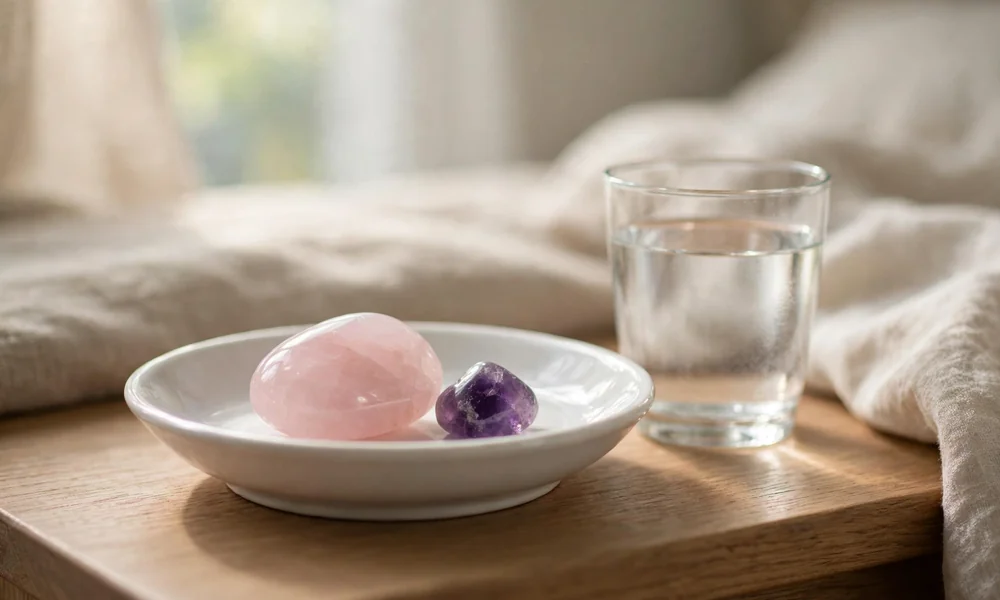
Begin with one stone you love. Set it in a small dish, give it room, and let it be what it is: a beautiful object, quietly at home.
A Note for Your First Stone
Keep it simple, keep it slow, and keep it yours. The best collections begin with a single stone chosen well, not a shelf filled in a hurry. Look, feel, ask — then enjoy an object chosen simply because you liked it. There is a little more room for wonder in a life that leaves space for such things. Stay curious. Stay clear.



