Some days move slowly on purpose. The kettle takes its time, the phone stays quiet, and there is nowhere you need to rush to before lunch. On days like that, the house feels softer, and the light seems in no hurry at all.
Siberite belongs to those unhurried days. It is the violet member of the tourmaline family, a soft purple stone the colour of dusk settling over a garden, or of lavender picked late in the afternoon. Set on a tray, it looks calm and low-key, never flashy, and it asks for nothing more than a glance now and then.
What follows is a plain walk through the violet stone: what it is, how to spot a good piece, and where to set it so it stays safely beside a glass of water. It is there to be looked at, not to treat anything.
Key Takeaways
- Siberite is the soft violet-purple tourmaline, gentle in colour and calm in mood.
- Muted purple fits slow mornings, still rooms and unhurried days.
- Next to pink, black and colourless tourmaline, siberite's purple stands on its own.
- Siberite stays on the dry side of the tray: the glass holds the water, the stone stays out of it.
- For a quiet day, one small violet piece is plenty.
What Siberite Is
Siberite is the name for tourmaline that grew violet. The tourmaline family spans many shades, and the shade of each stone depends on the small traces of other elements locked inside it as it formed. In siberite, those traces give the stone its purple tone, sometimes pale like lilac, sometimes deeper like a plum held in shade.
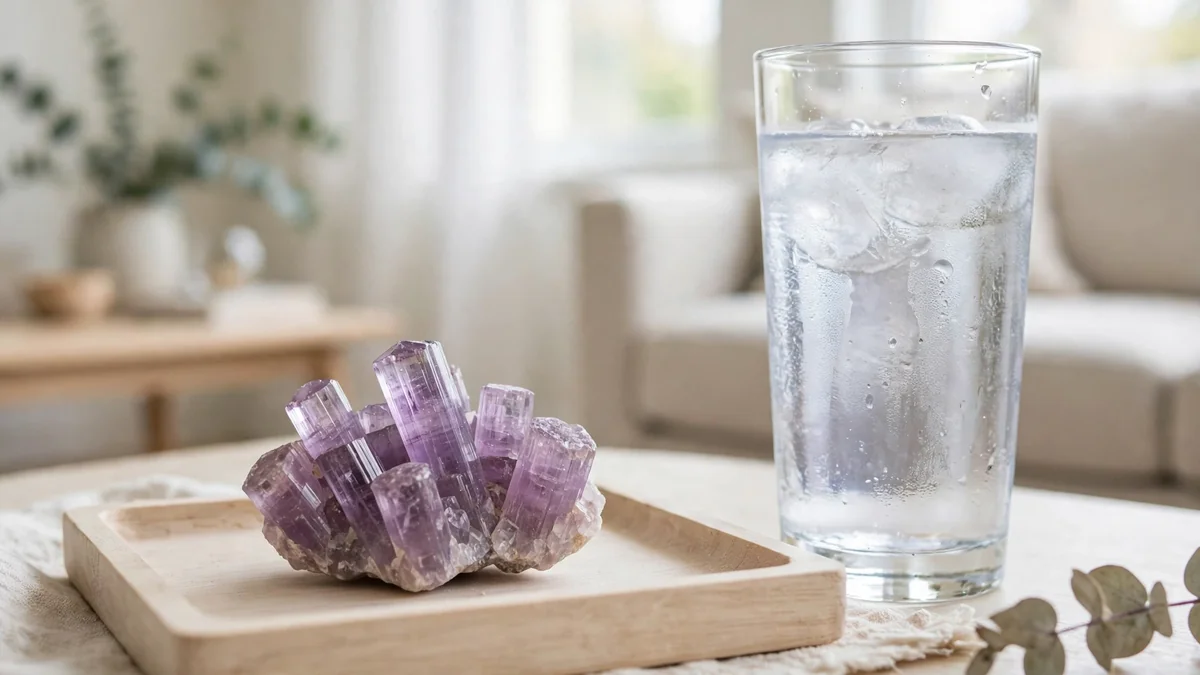
Look for short prisms with faint ridges along their length and a level top that glints softly. It feels cool to the touch, smooth and solid, and it is fairly hard, so it holds its polish with only gentle care.
Why Soft Violet Suits Quiet Days
Violet is a colour that lowers the volume of a room. It does not shout for attention the way a bright red or a vivid blue can, and it does not disappear the way white sometimes does. It sits in the middle, steady and restful. It is the shade of lavender drying on a kitchen shelf, or of the last light on a bedroom wall before the lamp is lit.
Set on a tray, it gives the room a low purple gleam that shifts as the lamp is passed, and on a slow day that small shift is company enough.
Choosing a Siberite Piece
Choose siberite in good daylight, with your eyes first and your hands second. Look for a piece whose purple is even from end to end, with no muddy brown patches and no pale washed-out streaks running through it. Neat straight edges and a level top that picks up a little light are good signs.
Keep the piece small: a cluster the size of a walnut is plenty for a tray, and a single prism about as long as your thumb works just as well. Ask the seller to confirm plainly that it is tourmaline.

A Quiet Day with Siberite
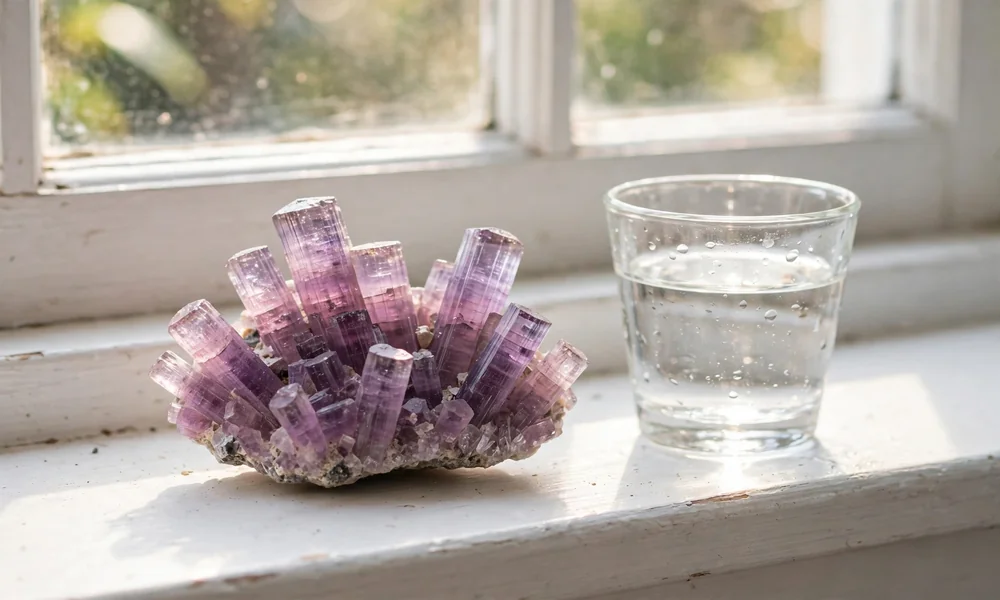
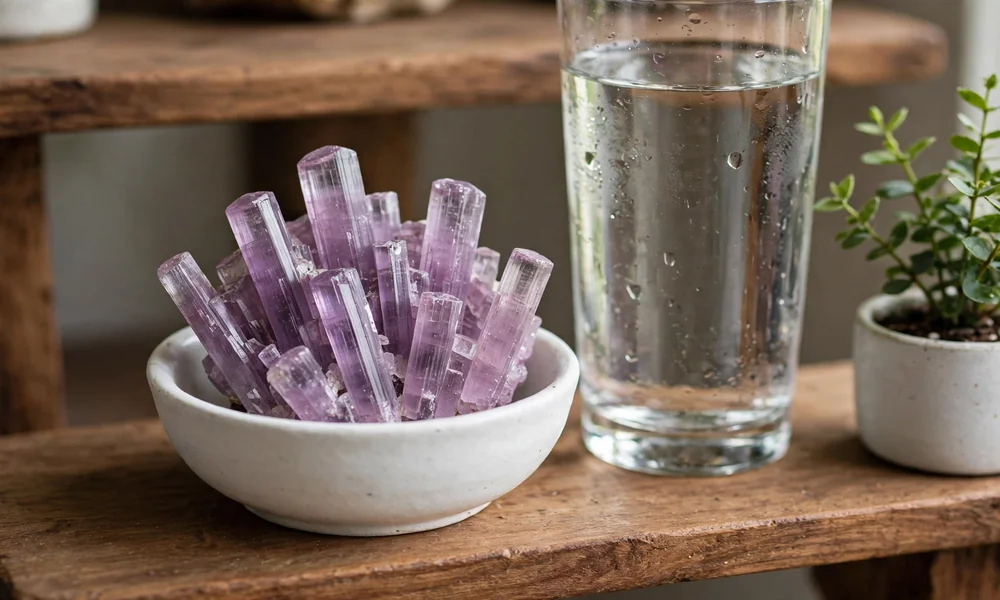
Begin the morning by placing the siberite on its tray where the light falls softly, a glass of cool water standing a hand's width away, the two never touching. Sip the water slowly, let the violet prisms catch your eye, and take one slow breath before the day begins to fill up.
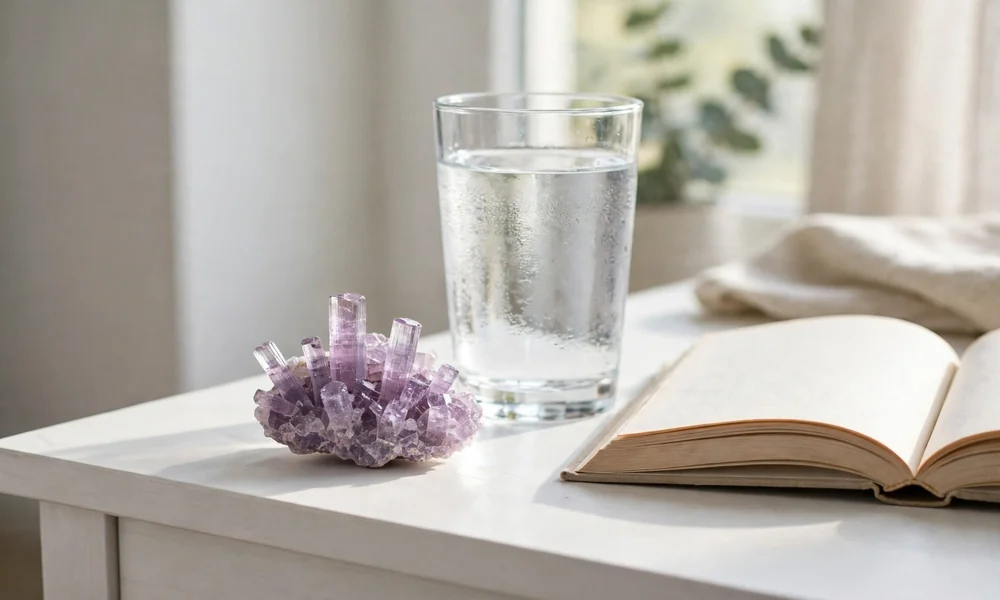
Keep the tray in view for the rest of the day, on a table the afternoon sun can reach. Each time you pass, the purple looks a touch different. In the evening, move the tray to the bedside table, where the violet can keep the same quiet company while you read. The stone does no magic; the quiet hour is yours, and the soft violet is only there to mark it.
Siberite Beside Water
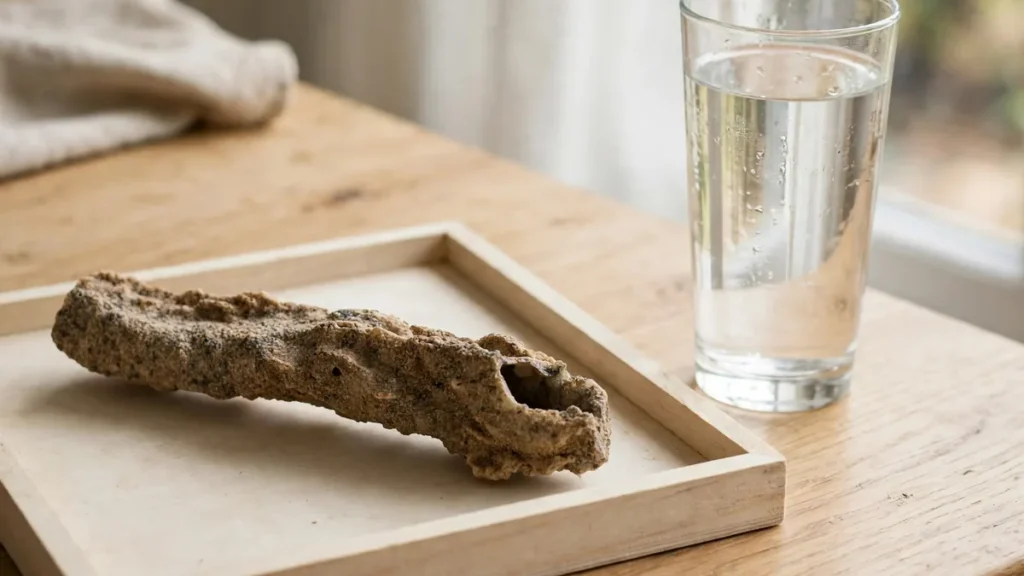
Water and siberite share a tray, and the tray is the closest they ever get. Set the glass at one end and the stone at the other: the stone is for looking at, and the drink is for drinking. A drop splashed on the stone can be wiped off at once, but the stone never sits in water.
This keeps the day easy and safe. Rinse your hands after you have held the stone, keep it clear of food and of small hands that might grab it, and never let it fall into a glass, a jug or a bath. The tray lets water and stone share one quiet picture while staying safely apart.
Siberite at a Glance
| Violet prisms | Slow days | Dry display |
|---|---|---|
| Purple tourmaline, soft shine | Tray, shelf, desk | Hands washed after |
| Cool, smooth, firm feel | Lamplight, gentle daylight | Water stays out |
| Short prisms, neat edges | Morning through evening | Soft brush dust |
Siberite and Pink Tourmaline
For the rose-pink side of the family, see Pink tourmaline for tender days: a stone with a soft, kind blush, made for slow mornings when the heart feels bruised.
Siberite holds none of that rose warmth. Where pink tourmaline glows with a soft blush, siberite stays cool and violet, borrowing the dusk rather than the dawn. One suits a tender morning; the other suits a still, quiet afternoon.
Siberite and Black Tourmaline
For the darkest side of the family, see Black tourmaline for grounded days: a deep black stone, cool and heavy, whose long ridges steady a quiet room.
Siberite is light where black tourmaline is dark, violet where it is black, and soft where it is still and solid. Black tourmaline steadies a room like a small dark weight; siberite softens a room like a small piece of evening sky.
Siberite and Achroite
For the colourless side, see Achroite for bright days: a clear white stone that takes in the room's light and gives it back as bright sparks.
Siberite carries a colour of its own, a soft purple that stays visible even in dim light, while achroite carries no colour at all. One feels like a bright morning; the other feels like a slow evening settling in.
Siberite and the Other Tourmalines
The shelf holds still more tourmalines beyond those three. Watermelon pairs a pink heart with a green rind, green tourmaline keeps the shade of young leaves, paraiba shines bright blue-green, and chrome runs deep forest green.
Only siberite brings a true purple to that shelf, which is why it gets a guide of its own. The general tourmaline guide covers the family's shared habits for crowded days, but this guide is about one shade only — tourmaline in violet, kept for quiet days. Each shade has its own day, and violet's day is the slow one, when nothing is asked of you and the house is at rest.
Caring for Siberite
Siberite asks for very little. Store it somewhere dry and cool — a lined box with a lid, or a shelf the sun never reaches. Keep it out of pockets with keys or coins, since the prism edges can chip.
A dry soft brush takes the dust off; skip soap, sprays and any kind of polish. If the tray gets wet, lift the stone off, dry the tray right through, and only then set the stone down again.
Stones That Must Never Touch Water
A few minerals should never come near a drink, so it is worth learning their names. Malachite tops that list: never let it near a jug or a cup, since it can shed things no drink should carry. Hematite is another one to keep out of drinking water for good, even for a brief dip.
Apatite needs the same distance, and so does lepidolite, whose flakes hold lithium within them. Pyrite, angelite and amber stay on the dry side as well, so none of them should ever land in a glass, a jug or a bowl of soaking water. The habit stays the same for siberite too: its place is on the dry tray, and the water in the glass stays exactly as it was.
Your Quiet Days Checklist
- Set the siberite on a dry tray, with a full glass of water standing apart from it.
- Drink the water at an easy pace while the afternoon stays quiet.
- Wash your hands with soap after you have handled the stone.
- Ask the seller to name the stone plainly before you pay.
- At home, give it a dry corner far from the kitchen and from small hands.
- For health worries, a doctor is the one to ask, not a stone.
Frequently Asked Questions
What is siberite?
Siberite is the violet-purple variety of tourmaline, a mineral that grows in many colours. It carries small traces of other elements inside it, which give it a soft purple tone, and it grows as short glassy prisms with faint lines down their sides.
Is siberite the same as amethyst?
No, though they can be confused at first sight. Siberite belongs to the tourmaline family, with ridged prism sides, while amethyst is quartz, a different mineral altogether.
Is siberite safe to touch?
A short look and a gentle hold are fine, as long as you wash your hands with soap when you set it down, and keep it away from food and from small children. It is a stone for the shelf, not something to keep pressed to the skin all day.
Why must siberite never go in water?
Because the stone's place is next to the glass, not in it. Never drop siberite into a drink, leave it in a soak, or stir water with it, and wipe off any splash right away.
Will siberite heal anything?
No. It is a lovely violet stone to keep on display and enjoy looking at, and any ease you feel after a still hour comes from the quiet itself, not from the stone.
Where should I keep siberite at home?
Give it a spot where gentle light lands and the air stays dry — a wooden tray, a still shelf, or the bedside table — and keep a glass of water beside it, always apart, far from little hands.
The Bottom Line
So the quiet day keeps its violet note: soft purple prisms on a dry tray, a glass of water standing apart, and a stone that is only ever looked at.
A Note for Quiet Days
Keep the afternoon slow, the tray dry and the violet in view. A small cluster and a glass of water are enough.