There is a small hour in the evening when the house finally goes quiet. The dishes are mostly done, the messages have slowed, and the light through the window has turned soft and low. Most of us hurry through this hour without noticing it, reaching for a screen or one more small task.
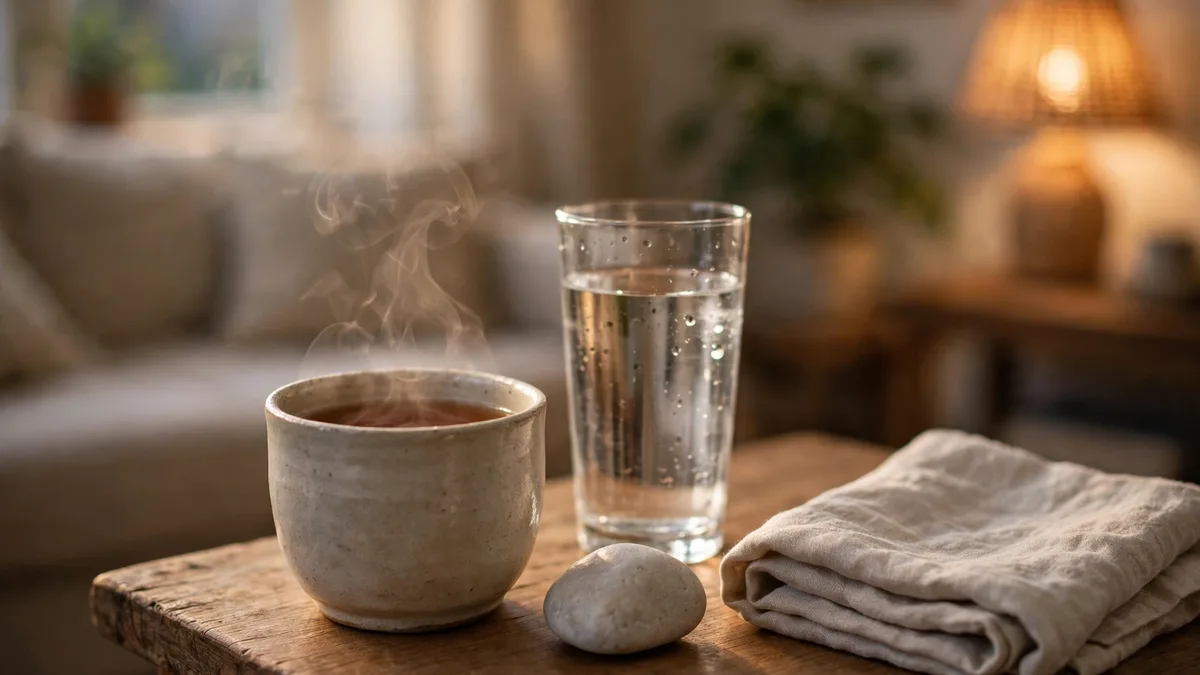
A quiet evening with tea gives that hour a shape. It is not a routine to perfect and not a treatment of any kind. It is simply a cup of tea, a glass of fresh water, and a smooth stone resting on the table beside them, enjoyed slowly in a comfortable chair. The tea is drunk as tea. The water is drunk as water. The stone stays dry on the table, a beautiful object to hold for a moment and then set down again.
This article explains how to build that evening, and states the safety rules plainly. Its only promise is a slower hour.
Key Takeaways
- A quiet evening with tea is a slow hour: one cup, one glass of water, one stone.
- Tea is drunk as tea; the stone never goes into the tea, the water, or any drink.
- A glass of fresh water beside the tea keeps the evening gentle and unhurried.
- The stone is a beautiful object, not a treatment for skin, sleep, or anything else.
- The whole evening takes about half an hour.
What a Quiet Evening with Tea Means
A quiet evening with tea is a pause, not a project. You sit down, make a cup of tea, and give yourself permission to do nothing else for a little while. The tea is the centre of the evening, and everything else gathers quietly around it.
The hour works best when it stays small. One cup of tea, not three. One glass of water, poured fresh. One stone on the table, chosen because you like the way it looks and feels in your hand. When the evening stays small, it stays easy, and an easy evening is one you will actually repeat tomorrow.
The Tea Itself: Choosing and Brewing
The tea is the heart of the evening, so choose one you genuinely enjoy. A soft herbal tea suits most evenings: chamomile, lemon balm, rooibos, or a gentle mint. A light black tea works too, if it does not keep you awake. There is no correct tea here. The correct tea is the one you look forward to pouring.
Brewing it slowly is part of the pleasure. Fill the kettle with fresh water and let it come to a proper boil. Add the tea, pour the water, and let it steep for the time the packet suggests, usually three to five minutes for herbal tea. Rushing the steep makes a weak cup; forgetting it entirely makes a bitter one.

Water Beside the Tea
Every quiet evening needs a glass of fresh water beside the tea. Tea is warm and flavourful, and a glass of plain water keeps the evening balanced. Pour it fresh, in a clean glass, and set it beside the cup. Sip from it between sips of tea, slowly.
The water also gives the evening its rhythm. A cup of tea is finished in ten or fifteen minutes, but a glass of water beside it stretches the pause a little longer. The evening moves at the pace of the drinks rather than the pace of the clock. That slower pace is the whole point.
The Stone on the Table
The stone sits on the table beside the tea and the water, and it stays there, dry, for the whole evening. Choose a smooth tumbled stone you like: a pale grey pebble, a soft white quartz, a gentle green aventurine, or any stone that feels pleasant in your hand.
Safety is simple here. The stone never goes into the tea, the water, or any drink. Some stones must never touch water at all: malachite, selenite, pyrite, lepidolite, and hematite should stay dry and away from anything you drink. When in doubt, keep every stone beside the water and never in it.
Setting the Corner
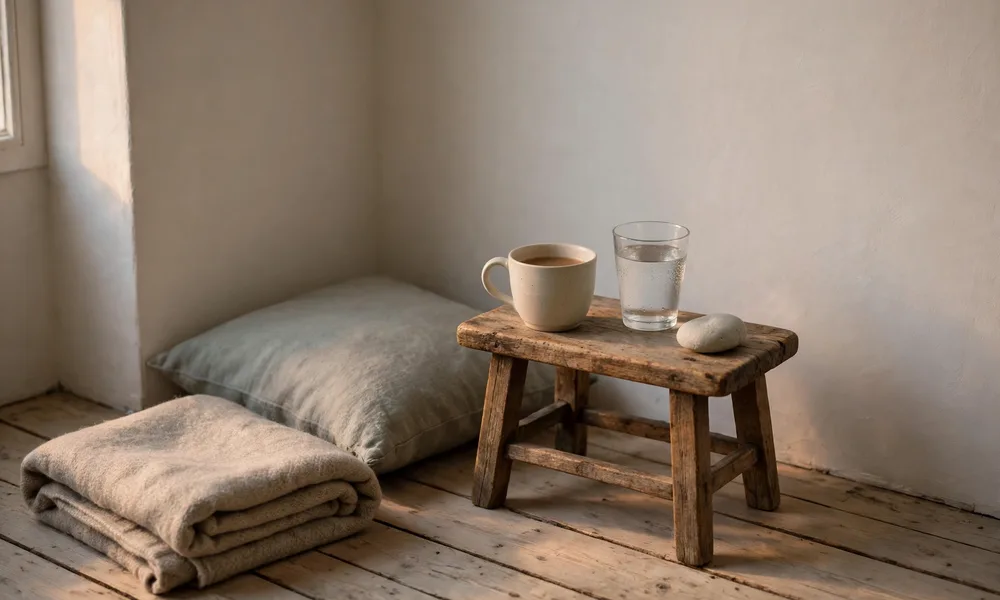
A quiet evening needs a corner, but the corner can be very small. A comfortable chair, a low table or a stool, and a soft light are enough. Clear the table before you begin, so the tea, the water, and the stone are the only things on it.
Light matters more than decoration. A single warm lamp suits the evening far better than bright overhead light, and a soft pool of light around your chair tells your mind the busy part of the day is over.
The Order of the Evening
A gentle order helps the evening feel unhurried rather than aimless. Begin by tidying the corner and setting out the cup, the glass, and the stone. Then boil the kettle and brew the tea, standing quietly while it steeps. Pour the fresh water into the glass and carry both drinks to your chair. Sit down and take the first sip of tea.
The middle of the evening is the simplest part: sit, sip, and do nothing much. Look out of the window. Watch the steam rise from the cup. Write a line or two in a notebook if a thought arrives. The evening does not need to produce anything.
End the evening as gently as it began. Rinse the cup and the glass, and put everything back where it belongs. If you would like a longer wind-down built around water, how to make bath time feel like a ritual follows a similar slow shape in the bathroom.

Green Tea Water as a Face Rinse
Green tea appears in this evening in one more place, and it is worth naming clearly: as a face rinse, never as a drink with a stone in it. If you have leftover cooled green tea, you can use it as a simple rinse for the face, splashed gently over clean skin and patted dry. That is the whole of it. The tea is a rinse, not a treatment, and it will not clear skin or cure anything.
The rule stays the same: the stone is never in the tea, and the tea water is never drunk with a stone in it. Brew the tea, let it cool, and use it only on the outside of the skin. If your skin is sensitive, test a little on one cheek first. A fuller guide is green tea water for the morning face, which follows the same rinse-only rule.
The Evening at a Glance
| Evening step | Cup or glass | Keep in mind |
|---|---|---|
| Tidy the corner | Empty table first | One clear surface |
| Brew the tea | Warm cup, steep | Three to five minutes |
| Pour fresh water | Clean plain glass | Stone stays outside |
| Sit and sip | Tea, then water | Slow, unhurried sips |
| End gently | Rinse cup, glass | Stone back on shelf |
What This Evening Is Not
It helps to say plainly what this evening is not, because a quiet ritual attracts grand promises. It is not a sleep routine, and it does not claim to make you fall asleep faster. If you want an evening that leads toward rest, lepidolite calm stones for anxious evenings describes a stone-led wind-down. This article is different: the tea is the centre, and sleep is not the goal. Sleep may come more easily after a calm hour, but that is a side effect of slowing down, not a promise.
It is not a beauty treatment, and it is not a cure. The tea will not clear your skin, the water will not change your face, and the stone will not heal anything. This evening offers something smaller and more honest: a slow hour, a warm cup, and a quiet house.

Your Quiet Evening Checklist
- Choose one tea you enjoy, preferably without caffeine for the evening.
- Pour a fresh glass of plain water and set it beside the cup.
- Place one smooth stone on the table, dry, never in any drink.
- Clear the table and switch on one soft, warm lamp.
- Put the phone in another room, or face down and silent.
- Sit, sip slowly, and let the evening end gently.
Frequently Asked Questions
What makes this a tea-centred evening?
The tea is the centre of the hour: you brew it slowly, carry it to your chair, and sip it unhurriedly while the water and the stone sit beside it. Here the cup of tea sets the pace, and everything else follows it.
Can I use any tea for a quiet evening?
Yes, any tea you enjoy works, though most people prefer a herbal tea without caffeine in the evening, such as chamomile, lemon balm, rooibos, or mint. The best tea is the one you look forward to pouring.
Is it safe to put a stone in my tea or water?
No. The stone stays on the table, dry, and never goes into the tea, the water, or any drink. Some stones, including malachite, selenite, pyrite, lepidolite, and hematite, must never touch water at all.
How long should a quiet evening with tea take?
About half an hour is enough: a few minutes to brew, fifteen minutes of slow sipping, and a few minutes to tidy away. A shorter evening of fifteen minutes still counts.
Can I use leftover green tea as a face rinse?
Yes, cooled green tea can be used as a simple face rinse, splashed gently over clean skin and patted dry. It is a rinse only, never a drink with a stone in it, and it is not a treatment. Test a little on one cheek first if your skin is sensitive.
Is this evening meant to help me sleep?
Not directly. It is a calm hour, not a sleep routine, and it promises nothing about sleep. Many people find that a slow evening makes the night feel easier, but that is a side effect of slowing down.
The Bottom Line
A quiet evening with tea is a slow hour built around a warm cup, a glass of fresh water, and a stone resting dry on the table. It costs almost nothing and takes about half an hour.
Start tonight with one cup of tea and a quiet chair.
A Note for Quiet Evenings
Keep it slow, keep it simple, keep it yours. A warm cup and a quiet hour will carry you further than any crowded evening ever could.



