
Evenings rarely arrive all at once. They creep in through small signals: the sky outside turning a deeper blue, the house going quiet room by room, the feeling that the day has finally spent itself. Yet many of us meet those signals with a bright screen and one more task, then wonder why the night feels restless and the mind keeps racing.
A lepidolite calm-stone ritual gives the end of the day a shape: a short, repeatable pause built around a piece of soft lilac stone, a glass of fresh water kept beside it, and a few unhurried minutes for yourself. Nothing is added to the water, and nothing here is a treatment.
This article explains what lepidolite is, how to build the ritual step by step, and how to keep it safe — including one rule that matters more than all the rest: lepidolite contains lithium, so it is for handling only, and it must never go in water.
Key Takeaways
- Lepidolite is a lilac mica mineral, coloured by lithium, with a soft, flaky, silvery sparkle.
- Lepidolite contains lithium: handle the stone only, never put it in water, never in drinking water, and never ingest it.
- A calm-stone ritual is a short, repeatable evening pause: stone beside water, slow breaths, and a quiet room.
- The ritual is a calming habit, not a treatment: it does not treat anxiety or any health condition.
- If anxiety is persistent, intense, or worrying, please speak to a qualified health professional.
What Lepidolite Is
Lepidolite is a mica mineral, and its colour gives it away at once: soft lilac, pale purple, sometimes pink-grey, with a fine silvery sparkle where the light catches its tiny flakes. It forms in flat, layered sheets, and it feels smooth and slightly pearly in the hand.
The lilac colour comes from lithium, which sits inside the mineral's structure, along with potassium and aluminium. Lithium is the same element used in some medicines, but that does not make the stone a medicine: the lithium is locked inside the rock, and holding a stone is not a dose of anything.
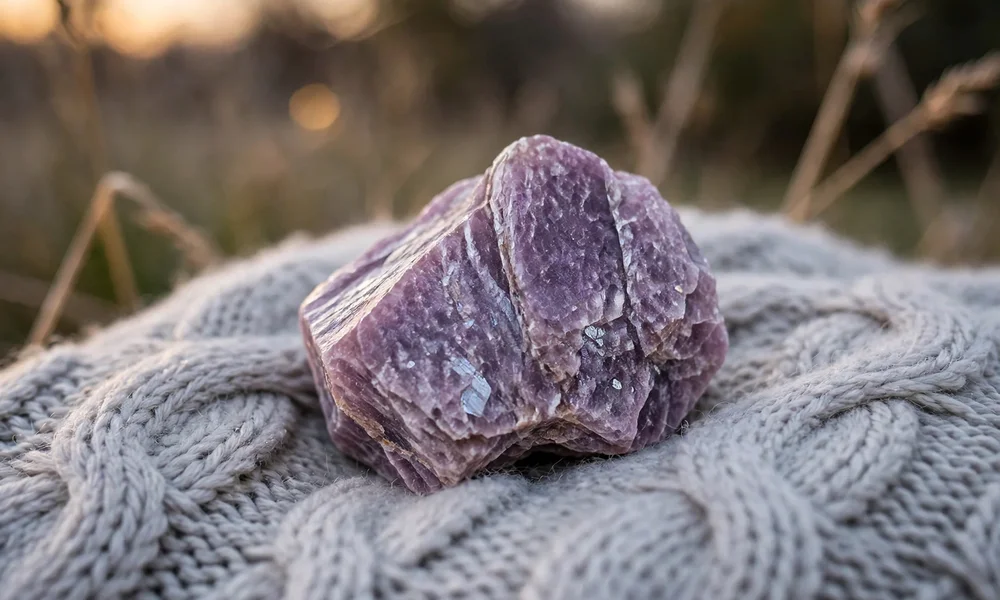
When you choose a piece, pick one that feels good in your hand: smooth, cool, and free of sharp edges. A small tumbled stone is enough.
Why Evenings Feel Anxious
Anxious evenings usually have a simple cause: the day ends, but the mind does not. During the day there are tasks, conversations, and noise to fill every minute. When the noise stops, the thoughts that were waiting underneath it arrive all at once.
The body adds to it. Bright screens keep the brain alert long after sunset, late caffeine lingers for hours, and a heavy evening meal can leave you restless.
The Calm-Stone Ritual, Step by Step
Give the ritual fifteen minutes, at the same time each evening, in the same quiet spot. Wash your hands, pour a glass of fresh water, and set it on the table beside you. Place your lepidolite on a small cloth or dish next to the glass — never in it. Dim the lamps, put your phone in another room, and sit comfortably.
Pick up the stone and hold it loosely in one hand. Feel its weight, its cool surface, and its smooth edges. Breathe slowly: in for four counts, out for six, for five or six breaths. Let your shoulders drop. If thoughts arrive, notice them and let them pass without chasing them.
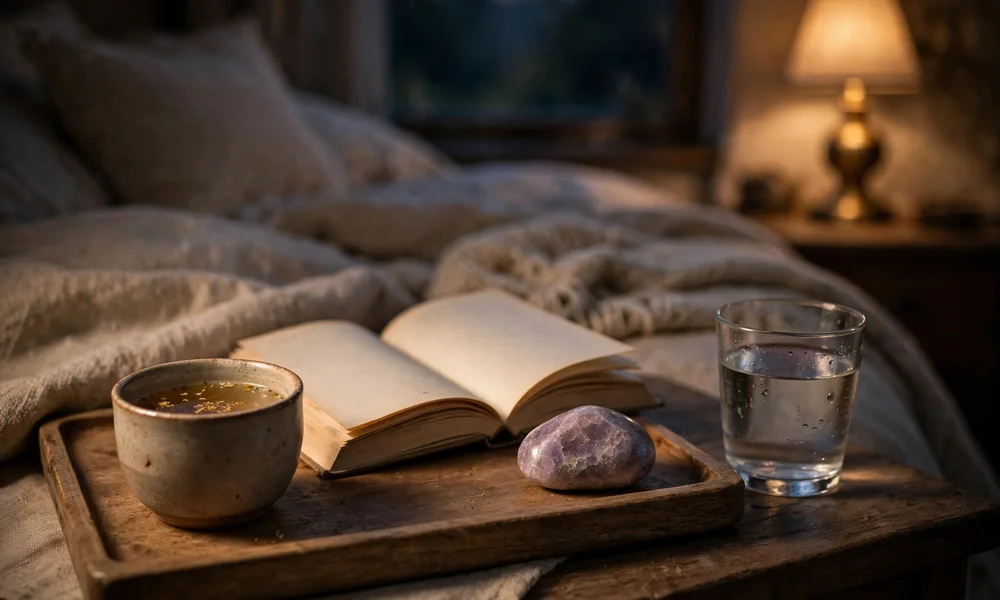
After the breathing, drink the water slowly, in small sips. Then read a few pages of a book, write a line or two in a notebook, or simply sit quietly for a few minutes. Put the stone back in its dish when you finish. That is the whole ritual: water beside stone, slow breaths, and a quiet close to the day. A similar evening ritual built around a different stone: amethyst water rituals for a calmer evening.
Water Beside the Stone, Never In It
This is the most important rule in the whole article, so it is worth saying plainly. Lepidolite contains lithium, and it must never be placed in water — not in a glass, not in a bath, not in a jug, and never in drinking water. Do not soak it, do not rinse it under a tap, and do not use it to make gem water or an elixir. Never ingest lepidolite, and keep it away from children and pets who might put it in their mouths. Lithium compounds can leach out of the stone into water, especially if it is chipped or left to soak, so drinking that water would be unsafe. The stone is for handling only — and the water beside it is simply fresh water, poured clean and drunk slowly.
If your stone ever gets wet by accident, dry it at once with a soft cloth and leave it out to dry fully. If it chips or starts to flake, set it aside and replace it.

A quiet-water ritual built around a stone kept beside water is a gentle companion to this one: blue lace agate and quiet water for calm evenings follows the same shape, with the same rule — water beside the stone, never in it.
Setting Up a Quiet Corner
A ritual needs a place, and a quiet corner is enough. Choose a chair, a windowsill, or a bedside table, and keep the same spot each evening so the habit builds itself.
Add one or two things that help you slow down: a small lamp with warm light, a book you enjoy, a notebook and a pen. Keep the corner free of screens, bills, and work. Keep the stone in its dish when you are not holding it, and keep the dish somewhere dry. A bedtime ritual built around a different deep-blue stone follows the same pattern: lapis lazuli and evening water: a calm bedtime ritual.
Breathing, Writing and Slowing Down
The stone gives your hands something to hold; breathing and writing give your mind something gentle to do. Slow breathing is the simplest of the three: breathe in through your nose for four counts, then out through your mouth for six. Longer exhales than inhales tend to feel calming, and five or six slow breaths are enough to begin. Writing is the second tool: keep a small notebook beside the stone, and each evening write three short lines — one thing that went well today, one thing worrying you, and one thing for tomorrow.
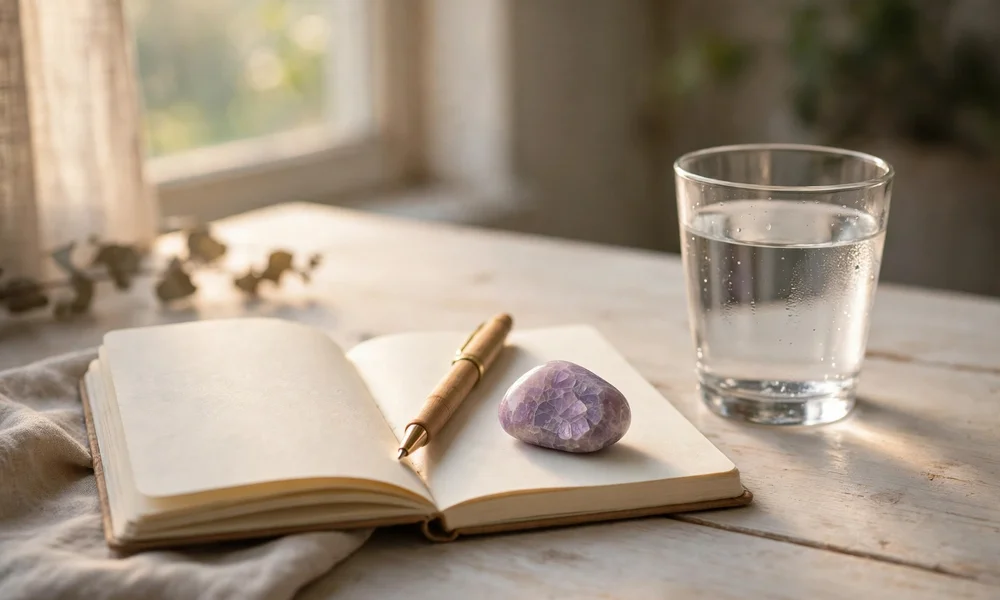
If writing feels like too much, simply sit. Hold the stone, drink the water slowly, and let the room be quiet for five minutes. Doing less, slowly, is the whole point.
What a Calm Stone Can and Cannot Do
Say plainly what a calm stone can and cannot do. It can give the evening a shape, give your hands something cool and smooth to hold, and give you fifteen quiet minutes that belong to no one else. It can help a bedtime habit feel pleasant enough to keep, and it can mark the line between the day and the night. It cannot treat anxiety, and it cannot cure, prevent, or diagnose any health condition. It does not replace sleep, rest, or talking to someone you trust.
If anxiety is persistent, intense, or worrying — if it keeps you awake most nights, stops you doing ordinary things, or comes with a racing heart or breathlessness — please speak to a qualified health professional.
Caring for Lepidolite
Lepidolite is soft, so care for it gently. Keep it in a small dish or a soft pouch, away from harder stones that could scratch or chip it. Never wash it under a tap, never soak it, and never put it in salt water.
To clean it, wipe it with a dry, soft cloth. If it is dusty, a barely damp cloth followed at once by a dry one is enough — never leave it wet. Keep it out of strong sun for long periods, and keep it away from heat.
| Care | Do | Do not |
|---|---|---|
| Cleaning | Wipe with a dry, soft cloth | Soak, rinse, or wash under a tap |
| Storage | Small dish or soft pouch, kept dry | Loose with harder stones |
| Water | Fresh water in a glass beside it | Stone in water, in any form |
| Handling | Hold gently, set down softly | Drop, knock, or let children mouth it |
Check the stone now and then for flakes or sharp edges. A smooth, whole stone is a safe stone.
Your Lepidolite Calm Stones Checklist
- Choose a small, smooth tumbled lepidolite stone, free of sharp edges.
- Keep the stone in a dry dish or pouch, beside a glass of fresh water, never in it.
- At the same time each evening, dim the lamps and put your phone away.
- Hold the stone and breathe slowly: in for four counts, out for six.
- Drink the water slowly, then read or write a few short lines.
- If anxiety is persistent or worrying, speak to a health professional.
Frequently Asked Questions
Is lepidolite safe to hold? Yes. Holding a smooth, whole lepidolite stone is safe. The safety rule is about water: never put it in water, never in drinking water, and never ingest it, because it contains lithium.
Can I put lepidolite in my drinking water? No, never. Lepidolite contains lithium, and lithium compounds can leach into water. The stone is for handling only, and the water beside it should be plain fresh water.
Can lepidolite help my anxiety? No, not as a treatment. A calm-stone ritual can give your evening a gentle shape and a few quiet minutes, but it does not treat anxiety or any health condition. If anxiety is persistent or worrying, please speak to a health professional.
How long should the ritual take? About fifteen minutes: a few slow breaths, a glass of water drunk slowly, and a few pages of a book or a few lines in a notebook. Short and repeated beats long and occasional.
How do I clean lepidolite? Wipe it with a dry, soft cloth. Never wash it under a tap, never soak it, and never put it in salt water. If it chips or flakes, set it aside and replace it.
Can children handle lepidolite? Keep lepidolite away from small children and pets. It is soft, it can flake, and it must never be put in the mouth or in water. Store it out of reach.
The Bottom Line
A lepidolite calm-stone ritual is small on purpose: a smooth lilac stone held gently, a glass of fresh water beside it, slow breaths, and fifteen quiet minutes before bed. It costs little and takes minutes a day.
Begin tonight: set the stone in its dish, pour a glass of fresh water, dim the lamps, and breathe slowly. Let the evening end gently. That is the whole habit — and if the worry does not ease, please talk to a health professional.
A Note for Anxious Evenings
Keep it lilac, keep it slow, keep it yours. Anxious evenings ask for very little: a little quiet and a little water. Be gentle with yourself. Stay curious. Stay clear.



