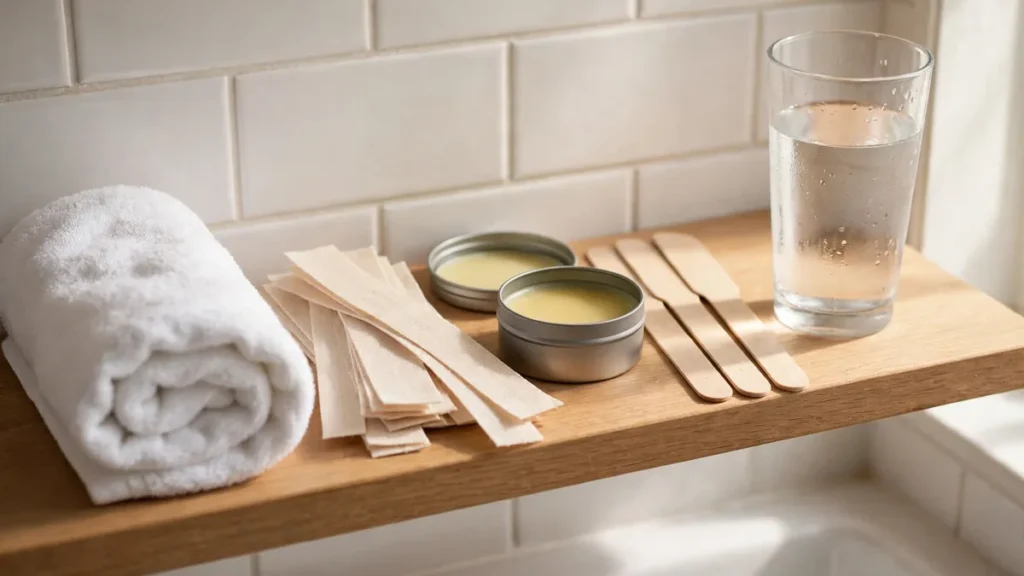
Some mornings open with the sky already washed clean, and the light comes through the window in one long warm sheet. The kitchen glows, and the whole house feels ready for something good. Those are the days when a flash of orange on the shelf feels exactly right.
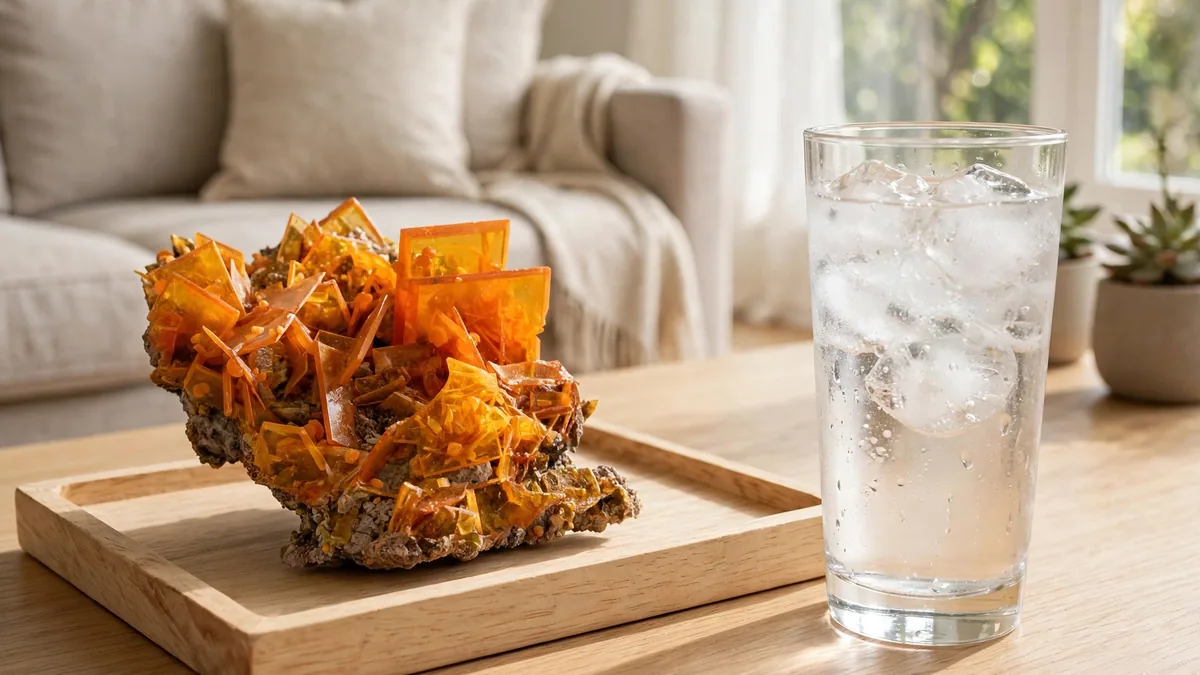
Wulfenite brings that flash. It grows in thin, flat, square plates the colour of marigold petals and late-afternoon sun, each one catching the light like a tiny windowpane. A small cluster on a wooden tray can warm a whole corner of the room.
Read this guide with one warning held clearly in mind. Wulfenite holds lead inside it, so it is a stone to look at and nothing more: admire it on its tray, wash your hands after you pick it up, and never let it near a drink, a soak, or any water you might swallow. It cannot mend the body, and no stone can.
Key Takeaways
- Wulfenite is a warm orange lead mineral that grows in thin square plates.
- Its bright orange suits sunny days, open windows and clear light.
- Wulfenite differs from orange kyanite, orange moonstone and orange spinel.
- Wulfenite is for looking at only: it holds lead, so wash hands after touching it.
- Keep it on a dry tray beside a glass of water, never in the water.
What Wulfenite Is
Wulfenite is a lead mineral, a lead molybdate formed where old lead veins have weathered near the surface. Fine pieces now come from desert mines in Arizona and Mexico, where the dry ground keeps the crystals sharp and bright.
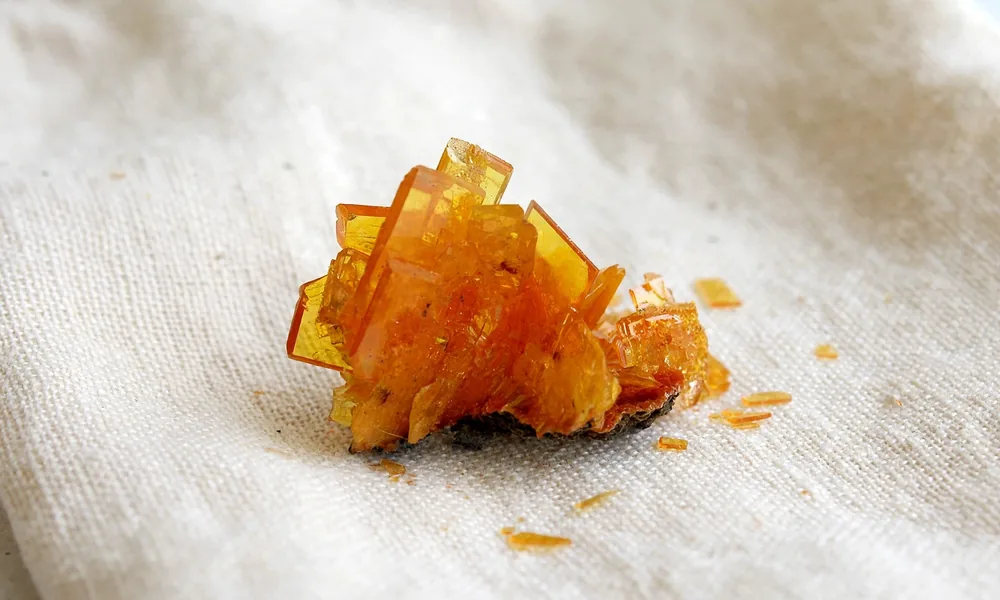
Its shape is what makes it unmistakable. Instead of rounded lumps, wulfenite grows in thin square tablets, sometimes stacked like tiny roof tiles, sometimes spread in a fan across dark rock. The colour runs from honey yellow to a deep burnt orange, and a good piece glows like the peel of a ripe orange held up to a lamp.
Why Warm Orange Suits Bright Days
Orange is the colour of mornings that begin well, sitting halfway between pale quiet yellow and loud urgent red, so it warms a room without rushing it. A bright day asks for exactly that middle note.
Wulfenite carries the note in a way few orange stones manage. Its flat plates throw the light back in small sharp winks, so the tray seems to flicker gently as you walk past. On a clear day that flicker feels like the day itself, bright and awake.
Choosing a Wulfenite Piece
A good wulfenite piece is chosen with the eyes first and the hands second. Look for plates of clear, even orange, with sharp square edges and a soft waxy shine, not dull brown patches or broken corners. The matrix beneath, often dark and rough, makes the orange stand out all the more.
Keep the piece small. A cluster the size of a matchbox is plenty for a tray, and it is easier to lift safely and set down gently. Ask the seller where it came from, and buy only from someone who says plainly that it holds lead.
A Bright Day with Wulfenite
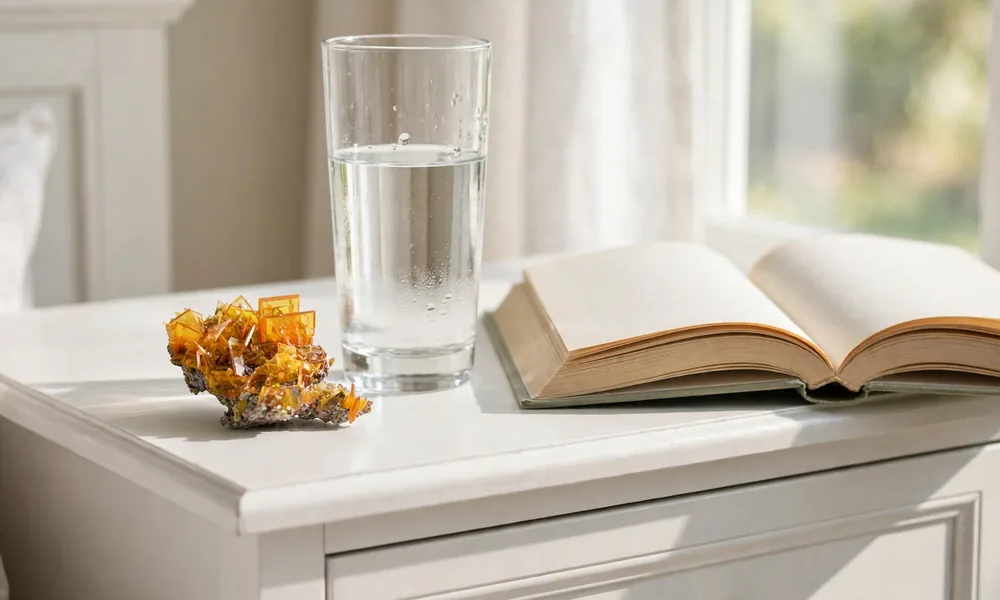
Begin the morning by setting the wulfenite on its tray in a patch of sunlight, with a glass of iced water alongside it, close enough to share the light but never touching the stone. Drink the water slowly, let the orange catch your eye, and take one unhurried breath before the day begins.
Leave the tray where you can see it through the morning, somewhere the sun reaches as it climbs. Each time you pass, the plates catch the light differently, and that small change is the whole pleasure. The stone does nothing by itself: the pause is yours, and the orange is only there to mark it.
Wulfenite Beside Water
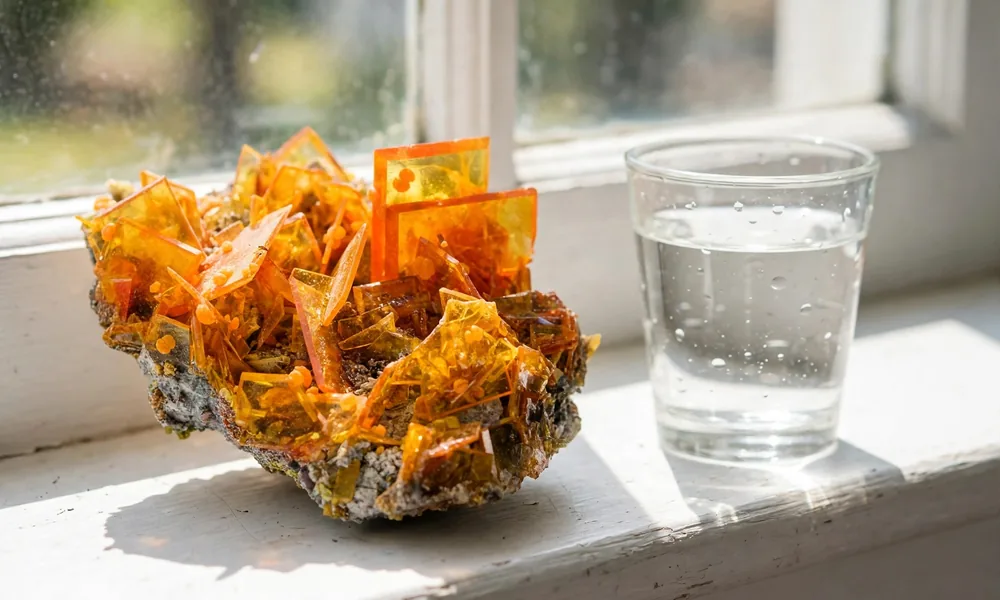
Water and wulfenite belong on the same tray and nowhere closer. The glass stands at one end, the stone at the other, and the two never meet, because a lead mineral must never be dipped, rinsed, or left to sit in any water at all. Even a splash should be wiped away at once.
This rule is firmer than the one for ordinary display stones. Wash your hands with soap after handling it, keep it away from children and food, and never drop it into a drink. The tray keeps the water and the stone in the same bright picture while keeping them safely apart.
Wulfenite at a Glance
| Thin orange plates | Bright days | Display only |
|---|---|---|
| Lead mineral, waxy shine | Tray, desk, shelf | Wash hands after |
| Honey to burnt orange | Sunlight, open windows | Never in water |
| Square tablets, stacked | Morning, midday, evening | Dry cloth wipe |
Wulfenite and Orange Kyanite
Orange kyanite is the nearest orange neighbour, and the two stones share a colour but little else. Orange kyanite for bright days covers a kyanite that grows in long flat blades, glowing apricot orange with light passing through them like honey held up to a lamp.
Wulfenite is built differently. Where kyanite grows in blades, wulfenite grows in thin square plates, and where kyanite is safe to hold freely, wulfenite must be handled with care because of the lead inside it. One is a soft apricot blade, the other a sharp orange tile, and the tray can hold both only if the wulfenite stays at its own dry end.
Wulfenite and Orange Moonstone
Orange moonstone is another warm neighbour, and it could hardly look more different up close. Orange moonstone for bright days covers an orange feldspar whose pale light seems to wander beneath the surface as the stone turns, like apricot lit from within.
Wulfenite has no wandering light. Its orange sits flat and bright on the surface of each plate, sharp-edged and steady, with no glow drifting underneath. Moonstone invites you to turn it and watch the light move; wulfenite asks you to set it down and enjoy the colour from where you stand.
Wulfenite and Orange Spinel
Orange spinel is the clearest of the orange stones, and it makes a useful contrast. Orange spinel for bright days covers a warm orange spinel that is clear and glassy all the way through, glowing like a small piece of morning sun kept on a tray.
Wulfenite is opaque where spinel is clear, and flat where spinel is rounded. Spinel lets the light travel through it, while wulfenite bounces the light off its plate faces in bright winks. Both suit bright days, but the difference is plain the moment they sit side by side.
Wulfenite and the Other Orange Stones
Beyond the three nearest neighbours, the orange shelf holds more company. Carnelian is a smooth orange chalcedony with a soft glow, tangerine quartz is a pale orange quartz with a gentle sparkle, and hessonite garnet is a deep cinnamon orange with a warm, heavy feel.
Wulfenite stands apart from all of them by its shape and its warning. No other orange stone on the shelf grows in thin square plates, and no other one asks you to wash your hands after touching it. That is why it earns its own guide: it is orange, but it is orange with rules attached.

Caring for Wulfenite
Wulfenite asks for little, but what it asks for matters. Keep it in a dry place out of strong heat, such as a covered shelf or a small box lined with soft cloth, and never carry it loose in a pocket with keys or coins, because the thin plates chip easily.
Dust it with a dry, soft brush, never with water or soap, and never polish it with creams or sprays. If the tray gets wet, lift the stone away, dry the tray fully, and only then set it back. A dry cloth and a steady hand are all the care it will ever need.
Stones That Must Never Touch Water
Some stones must stay dry always, and their names are worth learning by heart. Malachite leads the list: it should never rest in a glass or a jug, because it can give off things no drink should carry. Hematite belongs on the same dry list, and it must never rest in drinking water either.
Apatite and lepidolite join them, and lepidolite carries lithium within it. Pyrite, angelite and amber complete the list: none of them goes into a glass, a jug, or a soaking bowl. Wulfenite sits at the head of this list in its own way, because its lead makes any contact with drinking water unthinkable, so keep every stone named here beside the glass, never inside it.
Your Bright Days Checklist
- Set the wulfenite on a dry tray beside a full glass of water.
- Sip the water slowly while the bright morning gets going.
- Wash your hands with soap after you handle the stone.
- Buy from a seller who tells you plainly that it holds lead.
- Keep the stone dry, away from children, food and drinks.
- Stones mend nothing; take health worries to a doctor.
Frequently Asked Questions
What is wulfenite?
Wulfenite is a lead mineral, a lead molybdate that forms where old lead veins have weathered near the surface. It grows in thin square plates coloured honey yellow to deep burnt orange, with a soft waxy shine.
Is wulfenite safe to touch?
You may pick it up and admire it, but wash your hands with soap afterwards and keep it away from children and food. It holds lead, so it is for display, not for wearing against the skin all day.
Why must wulfenite never go in water?
Because lead must never reach anything you drink. Wulfenite must never be dropped into a glass, left in a soak, or used to stir a drink, and even a splash should be wiped away at once.
How is wulfenite different from orange kyanite?
Orange kyanite grows in long flat apricot blades that glow like honey, while wulfenite grows in thin square orange plates with sharp edges. Kyanite is safe to hold freely; wulfenite must be handled with care because of its lead.
Will wulfenite heal anything?
No. It is a beautiful mineral to display and to look at, and if you feel calmer after a quiet minute with it, that calm comes from the pause itself, not from any power in the stone.
Where should I keep wulfenite at home?
Give it a bright, dry corner — a tray, a shelf near a window, or a bedside table — with a glass of water close by yet never touching it, and out of reach of children.
The Bottom Line
Wulfenite brings warm orange light to bright days: thin square plates glowing like marigold, resting on a dry tray beside a glass of water, admired and never swallowed.
A Note for Bright Days
Keep the orange bright, the stone dry, and your hands washed. One small cluster, one glass of water, and a few quiet minutes are enough.