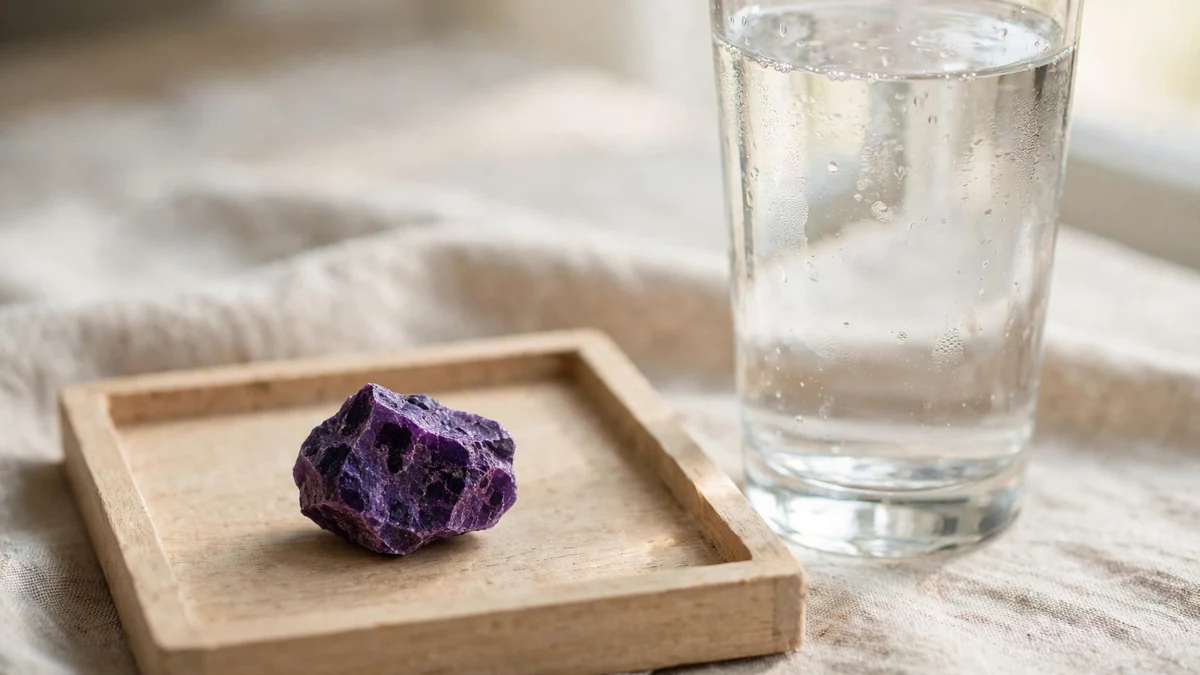
Some violet stones arrive polished and gleaming, cut to catch every lamp in the room. Purpurite arrives looking rougher and quieter than that. Its surface is matte and uneven, a deep violet broken by darker patches and paler streaks, and it holds the light instead of throwing it back. The colour is strong, almost inky in the darkest pieces, yet the stone itself feels calm, like a piece of dusk that has settled onto a shelf.
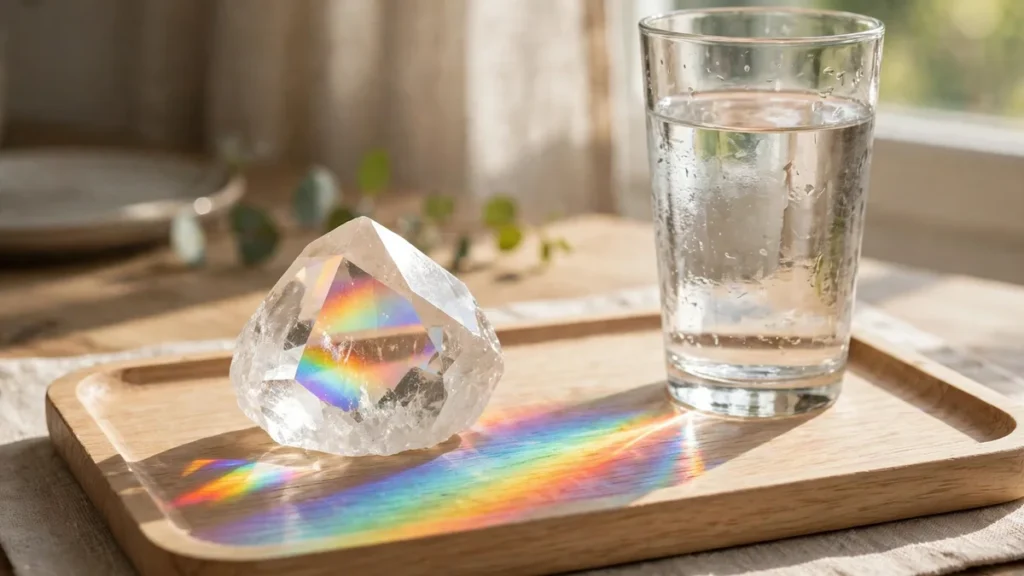
A slow day suits purpurite. It does not sparkle, and it does not ask to be shown off. Put it on a plain tray where the daylight can reach it, pour yourself a glass of water, and let the two rest apart from each other. The stone gives your eyes one deep colour to return to, and the water gives the morning a steady, unhurried start.
Purpurite is a manganese phosphate, and that fact shapes everything about how it should be enjoyed. It is a display stone, for looking at and for holding briefly, and it will never go into a drink. It heals nothing and changes nothing, and this guide makes no other claim for it.
Key Takeaways
- Purpurite is a deep violet manganese phosphate, opaque, matte, and patchy in colour.
- Its dark violet suits quiet days, slow mornings, and rooms with soft daylight.
- The stone is for display and brief holding only; it heals nothing and promises nothing.
- Rest the violet piece apart from your drink, then rinse your hands after you set it down.
- One small piece on a plain tray is enough for the whole quiet day.
What Purpurite Is
Purpurite is a phosphate mineral coloured by manganese, and that chemistry is what sets it apart from every other violet stone on these shelves. Most violet stones are quartz, fluorite, or spinel, but purpurite belongs to a different family altogether. It forms in granite pegmatites, where manganese-rich minerals grow slowly, and the best-known pieces come from Namibia and from South Dakota in the United States.
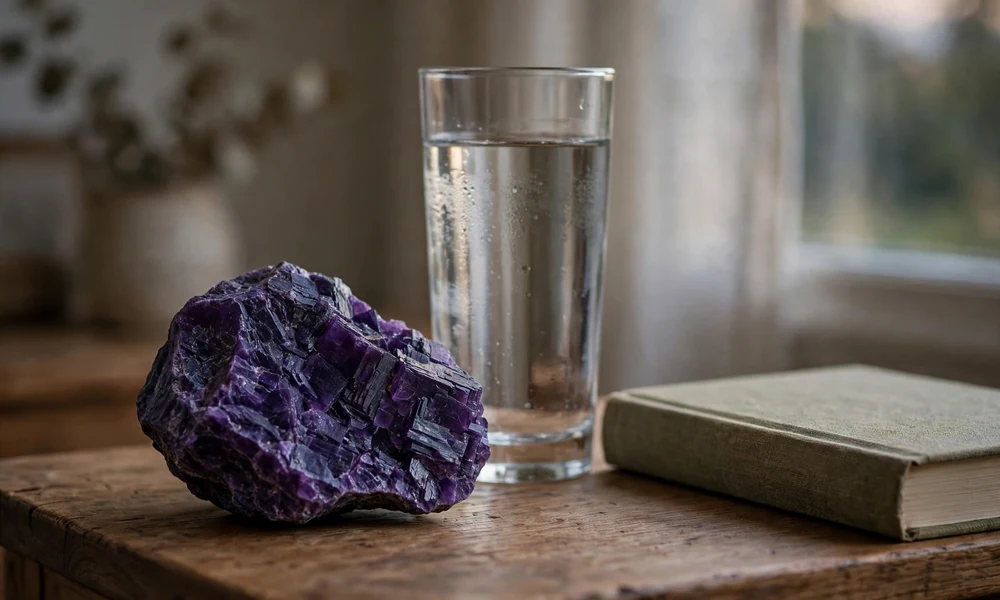
A piece of purpurite feels dry and slightly rough under the thumb, even when it has been polished, and its violet runs from a rich grape shade to a near-black purple. Darker patches of manganese oxide often break up the colour, so no two pieces look alike. Hold one beside a smooth violet fluorite and the difference is plain: fluorite is glassy and banded, while purpurite is opaque, earthy, and full of uneven tone.
Picking a Purpurite Piece
Choose purpurite in plain daylight, away from shop lamps that flatter every stone. Look for a violet that stays deep when you turn the piece, not one that fades to grey at the edges. Dark patches are normal for this mineral, so do not reject a piece for them, but do check for cracks, since purpurite is softer than quartz and can chip if it is knocked. Ask the shop where the stone was dug up and whether dye or sealant was added, then take the tiniest piece whose violet delights you.

A Quiet Day with Purpurite
A quiet day with purpurite begins with an empty surface and nothing else upon it. Spread a folded cotton cloth across the dressing table, place the stone toward the front where daylight can touch it, and stand a glass of water at the far end, safely beyond any elbow. Sip the water unhurriedly as the room grows warmer, and let the stone remain where you can admire it without lifting it over and over while the hours drift slowly by.
In the afternoon, move the stone to the windowsill for an hour, where the sun can deepen its violet, then bring it back to its tray before evening. The day needs nothing more than that slow movement, one stone and one glass, and the hours pass without any ceremony at all.
Purpurite Beside Water
Water and purpurite look pleasant together on a tray, yet the two must always remain separate. Place the tumbler at the left edge and the stone at the right, leaving bare wood showing between them. Once you have touched the stone, clean your hands before you lift your drink. The stone enters no glass, no jug, and no bath, and it is never washed under a running tap.
This matters more for purpurite than for most stones, because it is a manganese mineral, and manganese has no place in drinking water. When it needs cleaning, brush it with a soft, dry cloth, and keep every drop of water on its own side of the tray.
Purpurite at a Glance
| Deep violet patches | Plain tray, window | Dry hands only |
|---|---|---|
| Opaque, matte stone | Quiet days, light | Glass kept apart |
| Namibia, Dakota finds | One accent, plain | Never in drinks |
| Manganese phosphate type | Soft morning light | Never soak stone |
| Small pieces usual | Tidy shelf, tray | Dust dry weekly |

Purpurite and Violet Fluorite
Violet fluorite for quiet days is a soft pale violet stone, lighter than the deep violet fluorite sold beside it, with faint bands that appear as you tilt it.
Purpurite is darker, heavier-looking, and far less glassy. Where violet fluorite is pale, banded, and smooth, purpurite is deep, patchy, and matte. One is a soft wash of violet; the other is a dark, earthy purple.
Purpurite and Purple Spinel
Purple spinel for quiet days is a mid-purple spinel, clear and bright, holding more colour than pale lilac spinel and less depth than the richer violet spinel.
Purpurite holds no such clear brightness. It is opaque all the way through, with no light passing through it and no flat faces flashing as it turns. Spinel is a cut gemstone kind of violet; purpurite is a rough, mineral kind of violet.
Purpurite and Amethyst
Amethyst for calm nights is the deep purple form of quartz, rich grape purple, darker at the base and glowing in lamplight, often sold as a small cluster.
Purpurite is not a quartz at all, and it never grows in clusters or points. Amethyst is glassy, cool, and built from six-sided crystals, while purpurite is a solid, matte mass with no crystal points to catch the lamp. One glows; the other absorbs the light.
Purpurite and the Other Violet Stones
Violet has more members on this site than any other colour, and purpurite still stands apart from them all. Purple zircon is soft and pale, a gentle dusk violet, while purple jasper is opaque and smooth with an even, waxy violet. Purple fluorite is deep violet and banded for creative evenings, and charoite swirls lilac and purple together like clouds. Sugilite is another manganese stone, deep purple and gentle, yet it is smoother and more even than purpurite, and tanzanite is a clear violet-blue that flashes in the light. Lavender jade is pale and soft, siberite is a quiet lilac, and iolite is violet-blue, shifting as it turns. None of them is a manganese phosphate with the dark, patchy, matte violet that marks purpurite.
Purpurite and the Other Stones in This Batch
Four more stones arrive in this batch, and every one of them sits far from purpurite. Musgravite is a soft violet stone for quiet days, paler and gentler than the deep violet here. Condor agate is softly banded, its stripes the whole point of it, while purpurite shows patches, not bands. Painite is deep red for bold days, red through and through where purpurite is violet. Optical calcite is clear light for bright days, a transparent stone that bends light, the opposite of an opaque dark violet mass.
Keeping Purpurite at Home
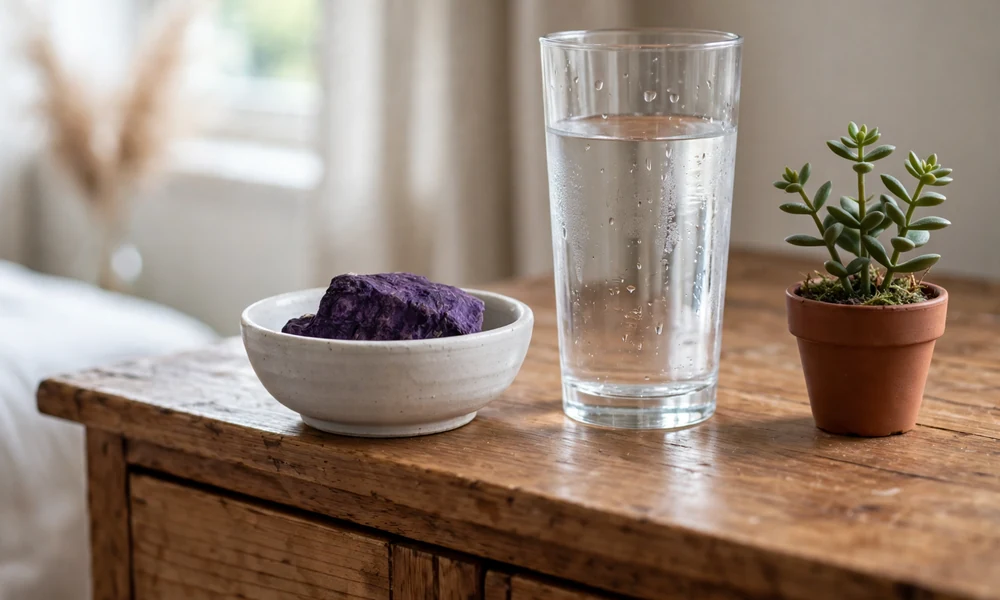
Find purpurite a bright, uncluttered nook where it can be admired without being bumped: a desk end, a ledge by the morning window, or a little saucer on the chest of drawers. Choose a nook far from the sink, the kettle, and steamy bathroom air, and up high enough that little hands cannot grab it. Once a week, dust it gently with a soft, dry cloth, and keep soap and sprays locked in the cupboard. When the stone is not on display, lay it alone inside a soft cloth bag, far from keys and harder stones, so its softer face stays undamaged.
Stones That Must Stay Away from Water
Certain stones hide things inside them that water must never meet, so the safest habit is plain: keep every stone out of every drink. Malachite shows green bands and holds much copper, a metal that belongs nowhere near a glass. Hematite stays out of drinking water too, as do apatite and pyrite, which crumble or rust once wet. Lepidolite holds lithium in its flakes, so it remains dry and distant from drinks. Angelite grows dull and loses its lustre once wet, while amber, ancient tree resin turned solid, clouds over in a soak and stays far from any drinking glass.
Your Quiet Days Checklist
- Lay the stone on a dry tray, with the glass apart from it.
- Sip your water slowly, with no rush at all.
- Turn the piece once and watch the dark patches catch the light.
- Return the stone to its tray, then clean your hands.
- Buy from a shop that tells you honestly where the piece was dug up.
- If a health worry troubles you, ask your doctor — a stone holds no answer for it.
Frequently Asked Questions
What is purpurite?
Purpurite is a deep violet manganese phosphate, an opaque mineral with dark patches and a matte surface.
Where does purpurite come from?
The best-known purpurite comes from Namibia and from South Dakota in the United States, where it forms in granite pegmatites.
Why is purpurite patchy?
Dark patches of manganese oxide break up the violet as the mineral forms, so no two pieces show quite the same pattern.
How is purpurite different from amethyst?
Amethyst is a glassy purple quartz that grows in points and clusters. Purpurite is a matte manganese phosphate with no crystal points at all.
Is purpurite safe to hold?
Holding a small piece briefly suits nearly everyone, because a dry stone passes nothing to the skin, but rinse your hands once you have handled it.
Where should I keep purpurite at home?
Choose a dry nook with daylight: a desk end, a ledge by the window, or a saucer on the drawers. Keep it away from the glass, away from knocks, and away from steam.
The Bottom Line
Purpurite fits quiet days: a deep violet manganese phosphate, a glass of water nearby, and the stone kept dry beside it.
A Note for Quiet Days
One dark violet stone, a dry tray, a full glass — a quiet day asks for nothing more.