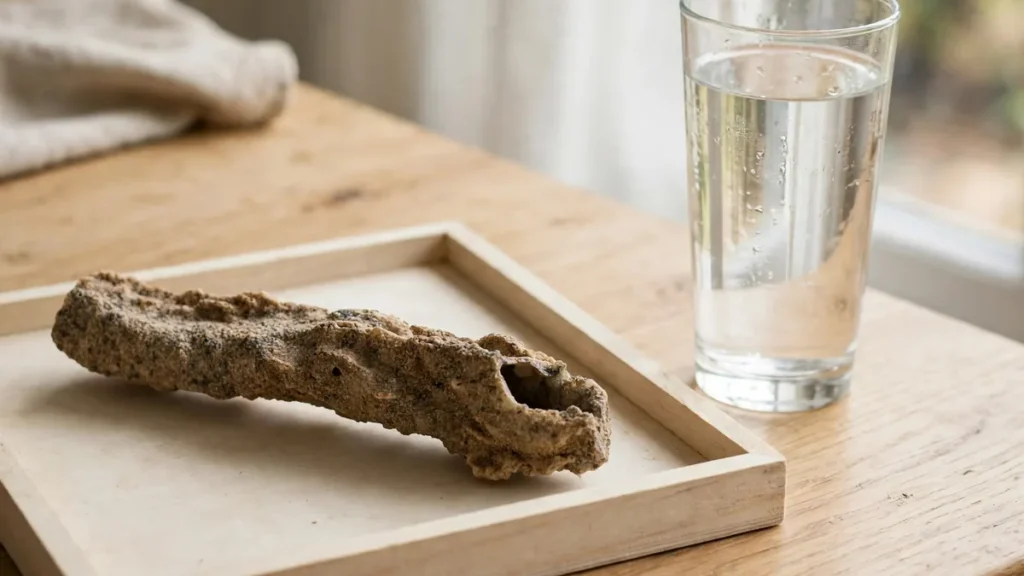
Some days ask for very little. The house stays hushed, the light comes in low through the window, and there is nowhere you need to hurry to.
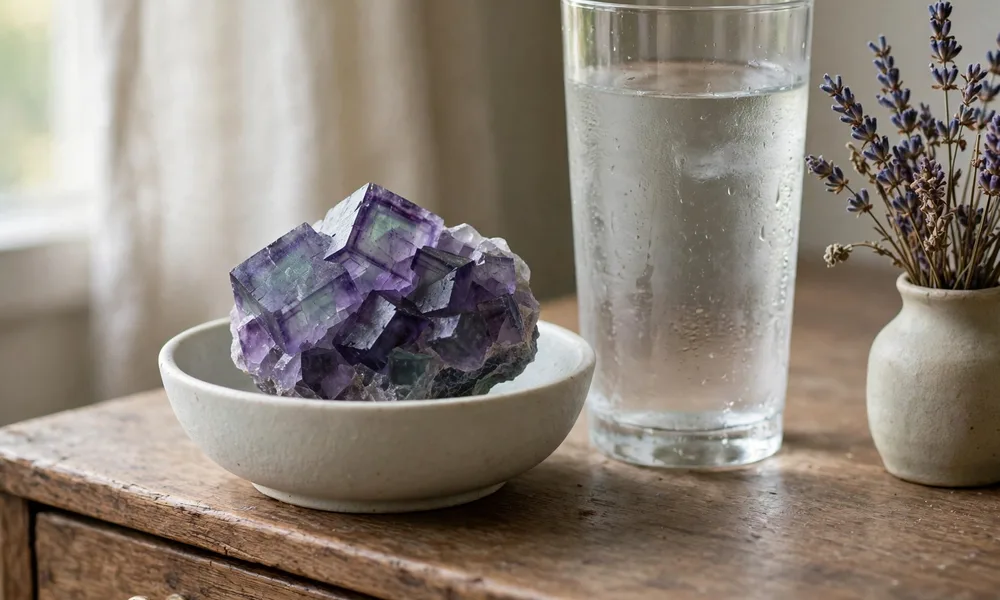
Violet fluorite is a stone for those unhurried hours. It is a soft pale violet mineral, lighter than the deep violet of its purple sister, with faint bands that show themselves when the piece is turned in the light.
This guide looks closely at that pale stone: what it is made of, how its colour differs from the rest of the fluorite family, how to choose a piece you like, and how to keep it on a tray beside a glass of water without ever letting the two touch. It is a pretty object, not a treatment.
Key Takeaways
- Violet fluorite is a pale violet fluorite, softer and lighter than deep violet purple fluorite.
- Its gentle colour suits quiet days, slow mornings, and rooms kept calm and uncluttered.
- It is a display piece to look at and hold briefly, with no power to heal or treat anything.
- Drinking water stays in its own glass, well apart from the stone, which stays dry.
- One small tumbled piece is plenty for a whole quiet day.
What Violet Fluorite Is
Violet fluorite belongs to the fluorite family, a mineral built from calcium fluoride that forms in many colours. Pure fluorite has no colour of its own, and the violet here comes from tiny traces caught inside the crystal while it was forming underground. Those traces settle in layers, so most pieces show soft bands.
A tumbled piece feels cool when you first pick it up, then slowly takes warmth from your hand. Its surface is smooth and glassy, and the pale violet lightens and deepens as you tilt it. ## Why Soft Violet Suits Quiet Days
Soft violet is a colour that does not demand attention. It sits quietly on a tray the way a lilac shadow sits on a wall, present but never loud. On a day with no plans, when the radio is off and the kettle has gone quiet, that kind of colour fits the room.
Pale violet holds the middle: easy to look at for a long while, leaving the room restful rather than busy. It belongs to quiet days, when the point is to do less and notice more.
Picking a Violet Fluorite Piece
Choosing a piece is mostly a matter of looking at it in ordinary daylight and seeing whether you like what you see. The violet should be pale and even, with bands you can follow across the stone, and no chalky patches or cloudy smears. A piece about the size of a plum is easy to hold, easy to dust, and easy to move from tray to shelf.
If the colour stays soft in every light and the stone feels comfortable in a closed hand, it is a good match. Ask the seller where the piece came from, and walk away from painted-looking violet or any promise that it will make you well.

A Quiet Day with Violet Fluorite
A quiet day with violet fluorite needs no plan and no ceremony. Set a pale linen cloth on the table, place the stone at one end, and stand a tall glass of water at the other, with a stretch of bare cloth between them. Drink the water slowly, in small sips, while the pale violet catches whatever light the window offers.
Then pick the stone up for a moment, feel its cool weight, and set it back down. The stone is there to be looked at between other small things, not to fill the day on its own.
Violet Fluorite Beside Water
Water and violet fluorite look gentle together, but they must stay apart. Keep the glass at one end of the cloth and the stone at the other, with dry fabric in between, so the drink stays clean and the stone never gets damp. The cloth is a place to show them side by side, never a place to dip anything.
Once the stone is settled, wash your hands with soap and water before you lift the glass. The stone goes into no glass, no jug, and no bath, at any time. Soaking can dull its polish and chip its edges, so dryness is part of looking after it.
Violet Fluorite at a Glance
| Pale soft violet | Quiet tray, desk | Dry hands only |
|---|---|---|
| Lilac bands, smooth | Slow mornings, calm | Glass kept apart |
| Cool, glassy stone | Low light, hush | Never in drinks |
| Plum-sized piece | One tray, one glass | Dust dry weekly |

Violet Fluorite and Purple Fluorite
Purple fluorite for creative evenings is the nearest stone to this one, and the difference between them is easy to see once they sit together. Purple fluorite is a deep violet stone with dark violet bands, made for lamplit evenings of sketching and writing, when the room has gone warm and the day has wound down.
Violet fluorite is paler and softer than that deep violet, the colour of a lilac petal rather than dusk ink. Where purple fluorite suits the evening, with its lamps on and a sketchbook open, violet fluorite suits the quiet daytime hours, when the light is low and nothing is being made.
Violet Fluorite and Pink Fluorite
Pink fluorite for tender days is the gentle pink member of the family, a soft rose stone for days that call for kindness and ease. Its colour is warm where violet fluorite is cool, and the two sit pleasantly together on a shelf without ever looking alike.
Pink fluorite warms a room the way a pale rose does, while violet fluorite cools it, the way a lilac shadow does. If a day feels tender and needs warmth, the pink stone fits; if a day feels still and needs calm, the pale violet one fits better.
Violet Fluorite and the Other Fluorites
The rest of the family spreads out in every direction from this pale violet. Clear fluorite for fresh days is bright and nearly colourless, a stone for clear light and fresh mornings, while violet fluorite keeps its soft colour for quieter hours. Blue, yellow, and red fluorite are each louder than this pale piece.
Green fluorite is fresh and leafy for clear mornings, and rainbow fluorite holds many colours at once for creative days full of colour. Black fluorite, the next piece in this run, sits at the far end of the family as a deep black stone, while violet fluorite stays pale and soft at the other end.
Where Violet Fluorite Sits at Home
Violet fluorite likes a spot where the light is soft and the room stays calm. A low shelf, the corner of a desk, or a tray on a chest of drawers all work, as long as the stone is visible and out of the way of passing elbows. Low morning light shows its pale bands at their best.
Keep the tray away from sinks, kettles, and steamy bathrooms, and above the reach of small children.
Keeping Violet Fluorite Clean and Dry
Violet fluorite is soft, so it asks for gentle handling and nothing more. Dust it once a week with a soft dry cloth, and that is the entire cleaning routine. Soap, polish, sprays, and scrubbing all belong in the cupboard, since wetness and chemicals only wear the polish down.
When the stone is not on show, slip it into a soft pouch on its own, far from keys, coins, and harder gems that could scratch it. Keep it off a sunny sill, where strong sun can fade the pale violet over months.
Stones to Keep Far from Water
Some stones and water simply do not mix, and a few of them carry things that must never reach a drinking glass. Malachite holds copper inside its green stripes, and copper has no place in anything you drink. Hematite turns rusty when it stays wet, and that rust stains whatever it touches.
Angelite slowly melts away in water, while amber is old tree resin, not rock, and a long soak leaves it dull and softened. Apatite chips and flakes if bathed, and lepidolite carries lithium in its pale layers. Keep every one of them away from drinks, and treat violet fluorite the same way: beside the glass, never in it.
Your Quiet Days Checklist
- Set the stone on a dry cloth, a full glass beside it.
- Sip the water slowly in the calm room.
- Hold the stone for one slow breath, then set it down.
- Wash your hands with soap after setting it down.
- Buy from a seller who names where the stone came from.
- For health worries, talk to a doctor, not a stone.

Frequently Asked Questions
What is violet fluorite?
Violet fluorite is a pale violet form of fluorite, a calcium fluoride mineral, coloured by tiny traces inside the crystal. A polished piece is smooth and glassy, cool when lifted, and marked with soft bands that shift as the stone turns.
How is violet fluorite different from purple fluorite?
Purple fluorite is a deep violet stone with dark bands, for creative evenings under lamplight. Violet fluorite is paler and softer, the colour of a lilac petal, and it suits quiet daytime hours when the light is low and the room is still.
How is violet fluorite different from pink fluorite?
Pink fluorite is a soft rose stone for tender days that call for kindness. Violet fluorite is cooler and paler, a lilac shade that suits still days, so the two share one family but wear different colours and moods.
How is violet fluorite different from clear fluorite?
Clear fluorite is bright and nearly colourless, for fresh mornings and clear light. Violet fluorite keeps a soft pale colour of its own, and it suits quieter hours, when the day has slowed down and the room is calm.
Is violet fluorite safe to hold?
Most people can hold a tumbled piece for a minute or two without trouble. Put it back on its tray afterwards, wash your hands with soap, and keep it stored where children cannot reach it and away from food and drink.
Where should I keep violet fluorite at home?
Choose a calm, dry place: a low shelf, a desk corner, or a tray on drawers. Keep the glass a little apart, the stone away from damp and knocks, and the whole tray out of strong direct sun.
The Bottom Line
Violet fluorite gives quiet days a pale companion: one soft violet stone in low light, a glass of water beside it, never in it.
A Note for Quiet Days
Keep the day slow and the stone dry: one pale violet stone, one glass of water, a few unhurried hours.