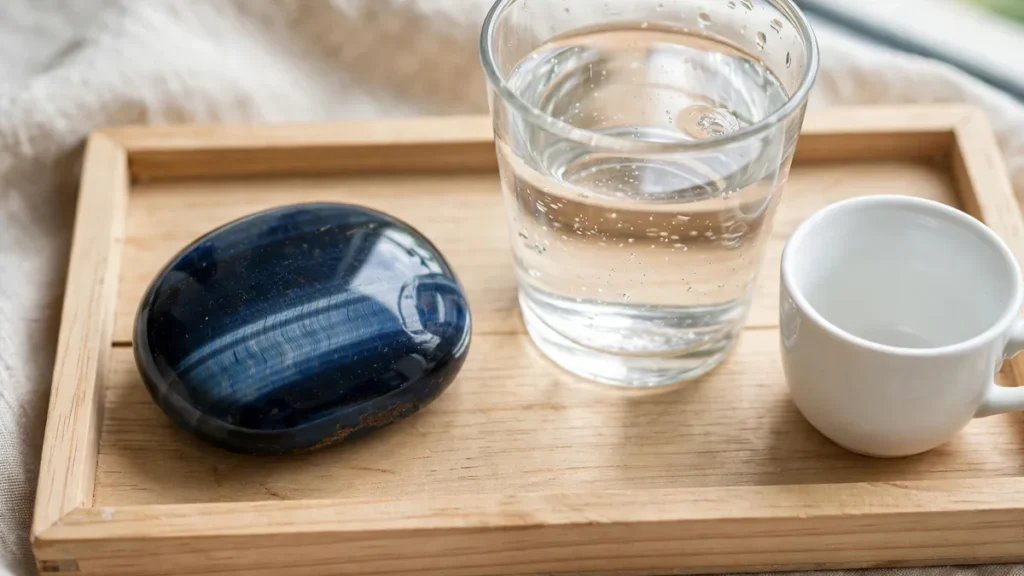
Some days are quiet, and that quietness is a gift. The house is still, the light is soft, and nothing asks you to hurry. A quiet day is not an empty day. It is a day with room in it, room to sit, to drink water slowly, and to let your thoughts settle.
Goshenite is a stone that suits those quiet days. It is the colourless variety of beryl, plain, clear and uncoloured, like a piece of still water that has turned to stone. It has no blue, no gold, no pink and no green. It is simply clear, and that plain clearness is what makes it restful.
This guide explains what goshenite is, how to choose a piece, how to keep it safely beside water, and how to build a short, quiet routine around it. The stone is for display and handling only, never a treatment. It will not heal anything.
Key Takeaways
- Goshenite is the colourless variety of beryl, plain, clear and uncoloured like still water.
- Its clear white colour suits quiet days, soft light and slow, unhurried hours.
- Goshenite differs from blue, golden and pink beryls, and from clear quartz.
- The stone is for display and handling only; it will not heal anything.
- The stone stays beside drinking water, never in it, and it should be kept dry and dusted.
What Goshenite Is
Goshenite is beryl, a mineral family that also gives us aquamarine, morganite and emerald, but goshenite itself carries no colour at all. Pure beryl is colourless, and goshenite is beryl in that pure, uncoloured form. Its name comes from Goshen, a town in Massachusetts where it was first found, and it has been known for centuries as the plain white beryl.
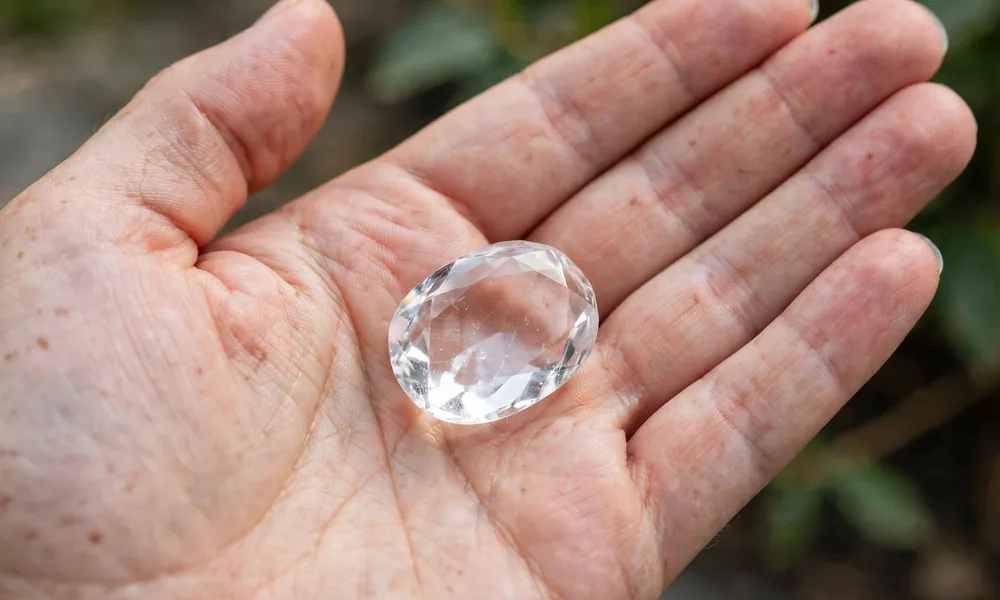
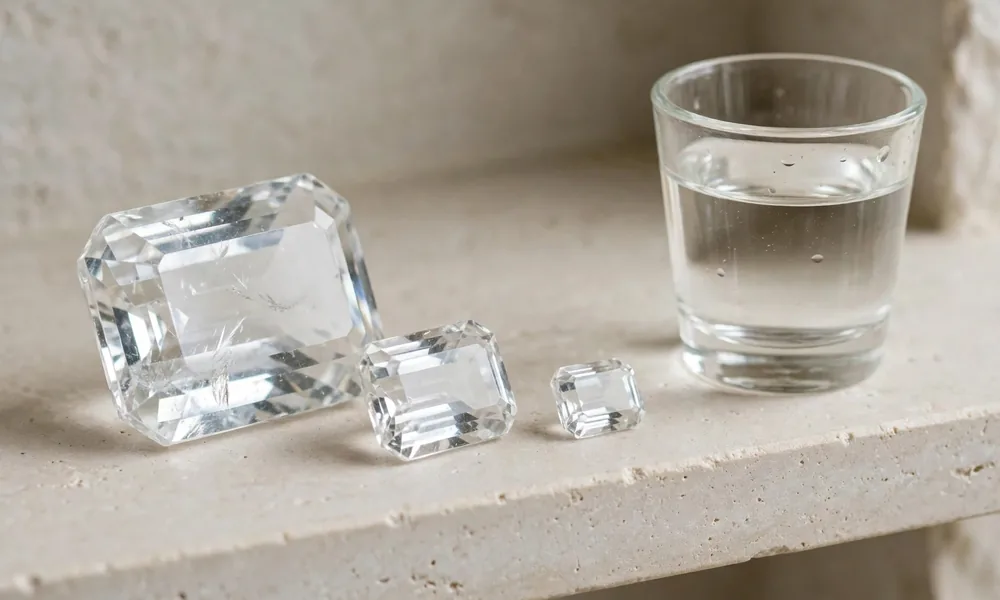
A good piece is clear like glass, sometimes with a soft white glow when the light passes through it. It is sold as a smooth polished tumbled stone, as a faceted gem, or as a small clear point. Hold one in your palm and it feels cool, smooth and solid, with a soft, glassy shine.
Why Clear White Suits Quiet Days
Clear white suits quiet days because it asks nothing of the eye. It is the colour of still water, clean glass and pale morning light, and a small clear stone on a tray gives the eye a restful place to land. On a quiet day, a clear stone feels like a pause, and that pause is the whole point.
A quiet day also suits goshenite because the stone is simple. It does not sparkle loudly or flash in the light. It simply sits beside the water, clear and still, while you drink your water slowly. Where white agate clean white quiet desks keeps a banded white stone for quiet desks, this guide keeps a clear, uncoloured stone for quiet days.
Choosing a Goshenite Stone
Choosing a goshenite is mostly a matter of looking closely and trusting your eye. A good piece is clear and clean, with no cloudy patches and no yellow or grey tint. Hold it up to the light and look through it. Look for a smooth polish with no sharp chips, and check that the stone sits flat without rocking.
A palm-sized tumbled stone is enough for a quiet tray, and it is easy to hold, dust and move. If a piece feels pleasant in your hand and its clear, uncoloured look makes you feel calm, it is the right one. Buy from a trusted seller.
A Quiet Day Routine
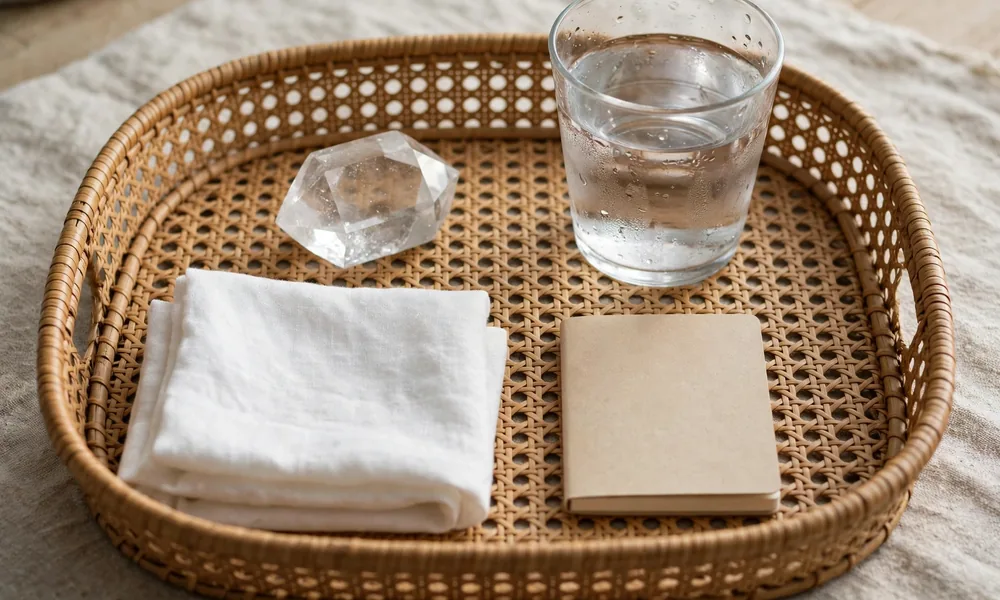
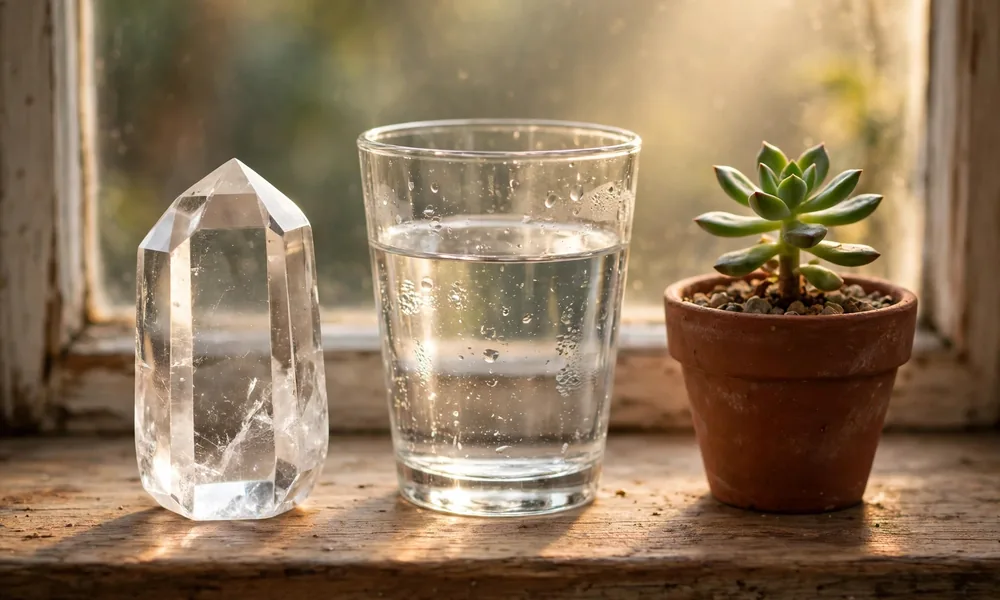
A quiet day routine takes only a few minutes, and it starts the night before. Place the stone on a small tray beside a clear glass, where the morning light will find it. When you wake, fill the glass with fresh water and drink it slowly, in small sips. Then pick up the stone and look through its clear, colourless body for a few breaths, watching how the light moves inside it.
Put the stone back on the tray, open the curtains, and let the quiet day begin. The routine is simply water, light, one clear stone, and a short pause before the day starts.
Goshenite Beside Water
Water belongs beside the stone, never around it. Set a clear glass of fresh drinking water next to the stone on the tray. They share a tray, not a glass. Never place the stone inside drinking water, and never soak it, because a stone in water can chip, dull or carry dust into the glass.
This rule is simple, and it applies every single quiet day. If the glass spills, lift the stone away, dry it with a soft cloth, and set it back once the tray is dry. Goshenite contains beryllium, like all beryls, so it must never go into drinking water or elixirs.
Keeping the Stone Dry and Clean
Goshenite is a hard stone, at hardness 7.5 to 8 on the Mohs scale, so it resists scratches well, but it still deserves gentle, dry care. Dust it once a week with a soft, dry cloth, never soap, polish or cleaners, and never scrub it.
Keep the stone away from damp windowsills, steamy bathrooms and kitchen sinks. Store it on its tray in a dry room. If it ever gets wet, dry it at once and leave it in open air for an hour.
Goshenite at a Glance
| Clear, no colour | Quiet days | Keep it dry |
|---|---|---|
| Colourless beryl | Slow gentle hours | Beside water only |
| Smooth cool stone | Water, light, pause | Dust with dry cloth |
| Plain clear glass | One stone, one tray | Never soak it |
A Quiet Corner for the Stone
A quiet corner gives the stone a home, and a home makes the quiet routine easier to keep. Choose a small, clear surface near a window: a bedside table, a shelf, or a corner of a desk. Set down a small tray, the stone on it, a clear glass beside it, and little else.
Keep the corner the same from day to day. When the stone always sits in the same place, the quiet pause becomes a habit instead of a decision.
Goshenite and Other Beryls
Goshenite is one member of the beryl family, and each colour suits a different kind of day. Aquamarine is pale blue, the colour of shallow sea water, and it suits travel. Morganite is soft pink, the colour of a petal, and it suits gentle days.
Goshenite is the plain one, colourless and clear, and it suits quiet days. Where topaz light bright beauty keeps a warm golden stone for bright special days, this guide keeps a clear, uncoloured stone for quiet days.
Goshenite and Clear Quartz
Goshenite and clear quartz look alike at first glance, and both are clear stones, but they are different minerals with different habits. Goshenite is beryl, a harder stone often cut as a faceted gem. Clear quartz is silicon dioxide, most often seen as a six-sided point that catches the light in small bright flashes.
Where clear quartz bright light fresh starts keeps a bright quartz point for fresh starts, this guide keeps a clear beryl for quiet days. Quartz marks a beginning. Goshenite marks a pause, clear and still.
Stones That Must Never Touch Water
Not every stone is safe beside water, and some must never touch water at all. Malachite must never go in water or in elixirs, because it can release harmful substances. Hematite must never go in drinking water. Apatite, lepidolite — which contains lithium — pyrite, angelite and amber must never go in drinking water or in soaks either.
Goshenite is different: it is a hard, stable stone, safe to hold and display. Even so, it still stays beside water, never in it, because it contains beryllium and must never go into drinking water.
When a Stone Is Not the Answer
A stone is not the answer to a health problem, and goshenite is no exception. It will not heal anything, and it will not replace rest, food, water or a doctor.
If you feel unwell or worried about your health, please see a doctor. Enjoy the stone for what it is, a piece of clear, uncoloured earth, and leave health to the people trained to help.
Your Quiet Days Checklist
- Place the stone on a small tray beside a clear glass of water.
- Drink a glass of fresh water slowly when you wake.
- Hold the stone for a few breaths and watch the light move through it.
- Keep the stone beside water, never inside drinking water.
- Dust the stone weekly with a soft, dry cloth, never soap.
- Remember the stone will not heal anything; see a doctor for health problems.
Frequently Asked Questions
What is goshenite?
Goshenite is the colourless variety of beryl, plain, clear and uncoloured like still water. Pure beryl has no colour, and goshenite is beryl in that pure form.
Is goshenite safe beside water?
Yes, goshenite is safe to keep beside a glass of drinking water, on the same tray. It must never be placed inside drinking water or soaked, because it contains beryllium.
Will goshenite heal anything?
No. Goshenite will not heal anything. It is a beautiful object for display and handling, and the calm of the quiet day comes from the pause, the water and the slow start.
How do I clean goshenite?
Dust it once a week with a soft, dry cloth. Do not use soap, polish or cleaners, and never scrub it. If it gets wet, dry it at once.
How is goshenite different from clear quartz?
Goshenite is beryl, a harder stone often cut as a faceted gem, while clear quartz is silicon dioxide, most often seen as a six-sided point. Both are clear, but they are different minerals for different days.
Where should I keep my goshenite?
Keep it on a small tray in a dry room, with a clear glass of water beside it. A bedside table or a quiet shelf near a window works well, as long as the spot stays dry.
The Bottom Line
Goshenite brings clear white to quiet days: a plain, colourless beryl, clear like still water, held beside a glass of fresh water in soft light. Keep it beside water, never in it, and dust it dry.
A Note for Quiet Days
Keep it clear, keep it dry, keep it quiet. A small clear stone, a glass of water, and a few quiet minutes can begin a day well.