Some people wash their face and feel fresh straight away. Others wash the same way, with the same cleanser, and feel tight, dry, and a little itchy within minutes. The difference is often not the product at all. It is the water coming out of the tap.
Water feels different from place to place because it carries different minerals. In some homes it is soft and light, and soap rinses away easily. In others it is hard, full of dissolved calcium and magnesium, and it leaves a faint film on skin, hair, and taps.
This article explains what soft water is, why hard water can leave skin feeling tight, and how gentler washing, steadier drinking, and lighter moisture help skin feel comfortable again. Nothing here is a treatment, and nothing will change your water overnight.
Key Takeaways
- Soft water is low in dissolved calcium and magnesium; hard water is high in them.
- Hard water can leave a residue on skin that makes cleansers harder to rinse away.
- Wash with lukewarm water, use a little cleanser, and rinse well.
- Moisturise while skin is still slightly damp, so it holds water in.
- Soft water supports comfortable skin; it does not treat, cure, or prevent any skin condition.
What Soft Water Is
Water picks up minerals as it travels through rock and soil. Rainwater starts out soft, with almost no dissolved minerals. As it seeps through limestone and chalk, it dissolves calcium and magnesium, and by the time it reaches a tap it may be hard. Water that passes through granite or sandstone stays softer, because those rocks give up far fewer minerals.
Water hardness is measured in milligrams of calcium carbonate per litre. In the United Kingdom, water below about 100 milligrams per litre is classed as soft, and water above 200 is hard or very hard.
Soft water feels different the moment you use it. Soap lathers quickly and rinses away cleanly, with no squeaky or filmy feeling. Hard water needs more soap to lather. That difference is not imagination: it is chemistry, and your skin notices it every time you wash.
Why Hard Water Feels Different on Skin
Hard water changes how cleansers behave. Soap and hard water minerals react together to form a sticky residue sometimes called soap scum. On a bath or a shower screen you can see it as a dull white film. On skin, you cannot see it, but you can feel it: a slight tightness after washing, or a feeling that the cleanser never quite rinsed away. That residue can sit on the skin's outer layer, the barrier that keeps water in and irritants out, so skin loses water more easily and feels dry.
Hard water also shows itself around the home. White limescale builds up on taps, kettles, and shower heads, and towels washed in hard water can feel stiff. None of this means hard water is unsafe to drink, but for skin, softer water is simply easier to live with.
How Soft Water Helps Skin Feel Kinder
Soft water helps skin in a quiet, practical way: it lets cleansers do their job and then rinses them away completely. With less residue left behind, skin feels clean without feeling stripped. Soap lathers with less product, so you can use a smaller amount of cleanser.
Drinking water matters too, though not in the way headlines sometimes suggest. Drinking more water does not wash dryness out of your skin or give you glowing skin on its own. What steady drinking does is support the body as a whole, and skin that is supported from the inside tends to feel less tight. A glass with each meal and one in the afternoon covers most of the day. If plain water bores you, a gentle guide to drinking more water without forcing it has simple ideas that make the habit easier to keep.
Washing Gently with Soft Water
Whether your water is soft or hard, how you wash matters as much as what you wash with. Start with clean hands, and use water that feels comfortable — neither hot nor icy. Hot water strips the skin's natural oils quickly. Lukewarm water is the kindest choice for most faces, and why lukewarm water works better for morning skin explains the case for it in detail.
Use a small amount of a mild, fragrance-free cleanser, and only when you need it. In the morning, a rinse with water alone is often enough. In the evening, after a day outdoors or wearing sunscreen, a gentle cleanse removes the day properly. Massage lightly with your fingertips, never scrub, and rinse well — two or three splashes more than you think you need.
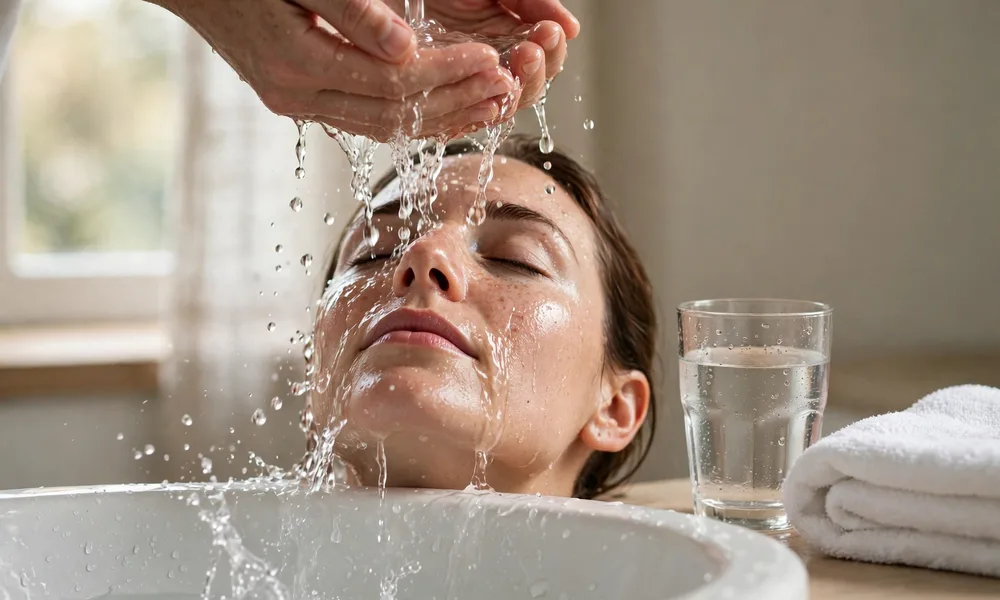
Pat your face dry with a clean, soft towel, pressing lightly instead of rubbing. If your water is hard, a final rinse with a jug of soft or filtered water is worth trying for a week: pour it gently over your face after washing, then pat dry.
Moisturising After Soft Water
Soft water makes washing kinder, but moisture still needs to be held in. After washing, skin loses water to the air quickly, and a light moisturiser helps slow that loss. The best moment to apply it is while skin is still slightly damp, within a minute or two of patting dry.
Choose something simple and fragrance-free, with humectants such as glycerin or hyaluronic acid that draw water into the skin's outer layer. In warm weather, a light lotion is usually enough. In cold weather, a slightly richer cream protects better against wind and indoor heating. You do not need many products: a cleanser, a moisturiser, and sun protection cover most faces.
Keeping the routine short is part of what makes it work. A routine with room to breathe is easier to keep every day than a crowded shelf of products, and a skin routine with room to breathe is a good reminder of that.
Limescale, Taps and Your Bathroom
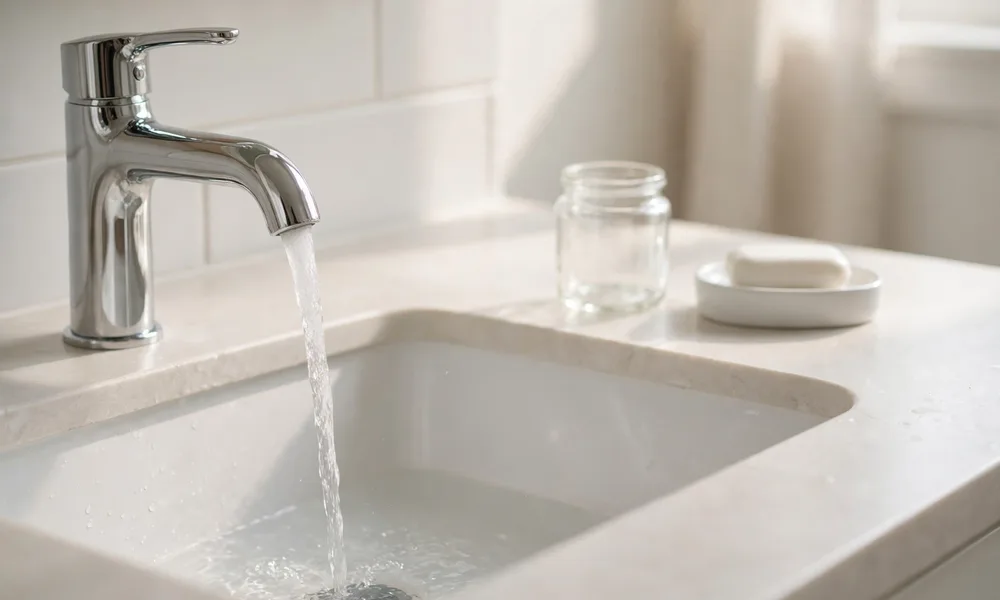
Limescale is the most visible sign of hard water, and your bathroom tells the story plainly. White crust forms around taps and shower heads, kettles fur up inside, and glass shower screens go cloudy. Towels feel stiff after many washes. None of this is dirt: it is calcium carbonate left behind when hard water dries.
A few simple habits help. Wipe taps and shower screens dry after use, and the scale builds up far more slowly. Soak a shower head in white vinegar now and then to dissolve the crust. Wash towels with a little less detergent than the packet suggests.
If you want softer water at home, a water softener is the most complete answer, but it is a real expense and a job for a plumber. A cheaper step is a shower filter, which will not truly soften water but can improve how it feels.
What Soft Water Will Not Do
Say plainly what soft water will not do: it will not erase fine lines, shrink pores, clear acne, fade dark spots, or give glowing skin in a week. It will not cure dryness, eczema, redness, or any skin condition, and it will not replace a cleanser, a moisturiser, or sun protection.
What it can do is simpler: it can make washing feel fresh and comfortable, help cleansers rinse away cleanly, and leave skin feeling less tight after a wash.
If a skin concern is persistent, changing, painful, or worrying, please speak to a qualified health professional or dermatologist. Soft water is a habit, not a diagnosis.
Choosing Softer Water at Home
You do not need to rebuild your plumbing to enjoy softer water. Start by finding out what you have: your water supplier's website usually lists hardness by postcode, or a simple test strip gives a rough answer in a minute.
If your water is only moderately hard, small changes may be enough. Use less cleanser, rinse longer, and finish with a jug of filtered water on your face. If your water is very hard, a water softener is worth considering, though it costs money and needs space and salt refills.
| Water choice | Best for | Keep in mind |
|---|---|---|
| Soft tap water | Everyday washing and drinking | Enjoy it; use less soap |
| Hard tap water | Everyday use, with care | Rinse longer; wipe taps dry |
| Filtered or jug water | A final face rinse, drinking | Change filters on time |
| Softened water | Very hard-water homes | Needs salt and servicing |
Try one change at a time, and give it a week before judging it. Skin adjusts slowly.
Your Soft Water Checklist
- Find out your water hardness from your supplier or a test strip.
- Wash with lukewarm water, never hot; mild cleanser only when needed.
- Rinse well, two or three splashes more than you think you need.
- Pat dry gently with a clean, soft towel; never rub.
- Moisturise lightly on slightly damp skin, and keep the routine short.
- Drink steadily: a glass with each meal and one in the afternoon.
Frequently Asked Questions
How do I know if my water is hard or soft? White limescale on taps and kettles, soap that lathers poorly, and towels that feel stiff all point to hard water. Your water supplier's website lists hardness by postcode, and a test strip gives a rough number in a minute.
Is hard water bad for my skin? Not for everyone. Many people wash in hard water without trouble. But hard water can leave a residue that makes skin feel tight or dry, especially if your skin is already sensitive or dry.
Can soft water help eczema? Soft water will not cure eczema or any skin condition. Some people with eczema find washing in softer water feels more comfortable, but if eczema is persistent, speak to a doctor or dermatologist.
Should I buy a water softener? Only if your water is very hard and simpler steps have not helped. A softener is the most complete fix, but it costs money, needs space, and needs salt refills and servicing. Try less cleanser and longer rinsing first.
Does drinking soft water help my skin? Drinking water supports the body, and skin that is supported from the inside tends to feel less tight. But drinking water does not clear skin, fade spots, or cure any condition, whatever the water's hardness.
Will soft water make my shampoo work better? Usually yes. Shampoo lathers more easily in soft water, so you need less of it, and hair often feels smoother after rinsing.
The Bottom Line
Soft water feels kinder on skin because it lets cleansers rinse away cleanly, with less residue and less tightness afterwards. You cannot always change your water, but you can wash more gently, rinse longer, and moisturise on damp skin.
Start tomorrow with lukewarm water, a small amount of cleanser, and a good rinse. Let your skin tell you the rest.
A Note for Softer Days
Keep it gentle, keep it simple, keep it yours. Kind water, a light touch, and a routine short enough to keep will carry your skin further than any crowded shelf.