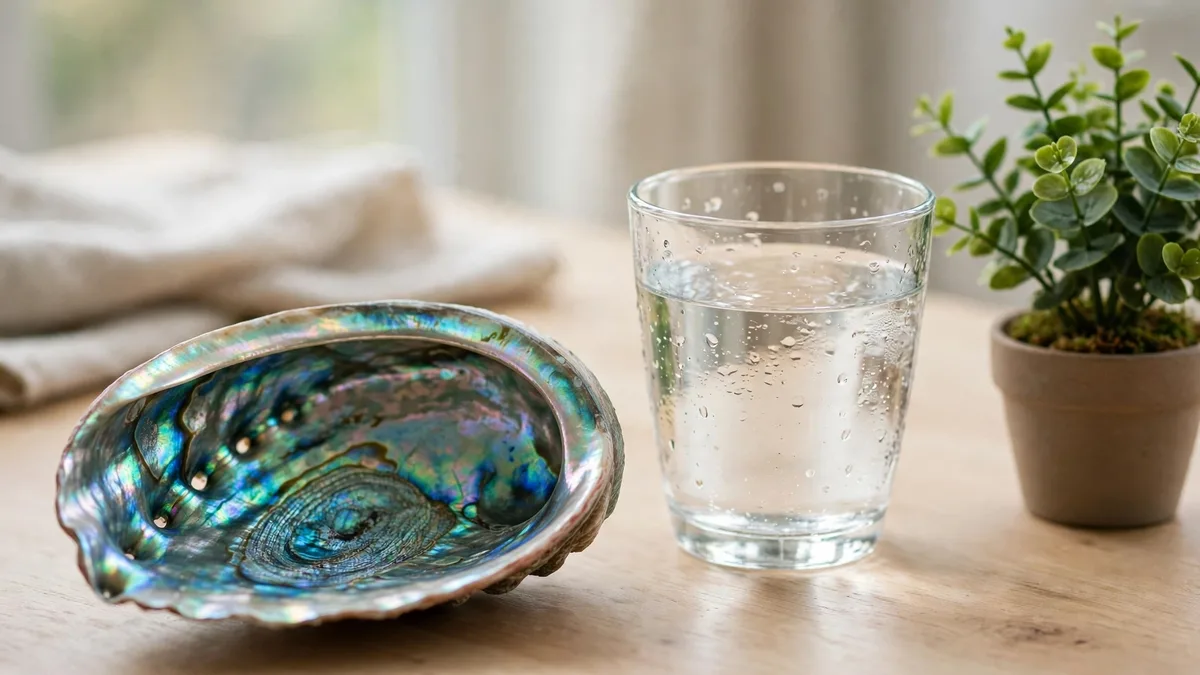
Some mornings feel fresh before anything has happened. The window is open, the air is cool, a glass of water waits on the desk, and the light is pale and clean. On days like that, a dark heavy stone feels wrong. What suits a fresh day is something bright, light and alive with colour, a piece that looks like the sea on a clear morning.
Abalone is that kind of piece. It is the shell of a sea snail, polished until its inside shines in vivid blue, green and violet, like oil on water or a wave caught in glass.
This guide explains what abalone is, how to choose a piece, how to keep it safely beside water, and how to build a simple fresh day around it. The shell is for display and handling only, never a treatment, and it will not heal anything. Real health problems belong with a doctor.
Key Takeaways
- Abalone is a sea shell with vivid blue-green iridescence that moves in the light.
- Its bright fresh colour suits fresh days, open windows and slow mornings.
- Abalone is for display and handling only; it will not heal anything.
- The shell stays beside drinking water, never in it, and it needs gentle care.
- A fresh day needs very little: soft light, plain water, one shell, and a slow start.
What Abalone Is
Abalone is the shell of a sea snail that lives in cool coastal waters. The outside of the shell is rough and dull, often dark brown or grey, but the inside is lined with a layer called nacre, the same shining material that forms pearls. When the shell is cut and polished, that lining shows its colours: bright blue, fresh green, soft violet and flashes of pink, all shifting as the light changes. The shine is called iridescence, and it comes from the thin layers of nacre bending the light, not from paint or dye. A good piece feels smooth and cool, with a gentle curve and a weight that suits its size. In crystal and shell traditions it is kept as a companion for fresh days, a small reminder of the sea on a bright morning. That is belief and habit, not medicine: no shell has been shown to protect health or treat any condition.
Why Blue Green Suits Fresh Days
Blue green suits fresh days because it is the colour of clear water and new leaves. A bright room already has pale morning light, so a vivid shell adds colour without adding noise. It simply sits there, bright and calm, while the day goes on around it.
Blue green also suits fresh days because it feels clean. A fresh day is not a grand day: it is a plain breakfast, a short walk, a clean desk and an open window. A bright shell matches that mood exactly, and it looks right beside a glass of water, a notebook and a small plant.
The Safety Rule First: Beside Water Only
The shell stays beside water only, never inside drinking water, never soaked, and never used in elixirs of any kind. If a piece ever falls into a glass by accident, throw the water away and wash the glass and your hands.
Stones that must never touch water at all are worth naming here. Malachite must never go in water or elixirs, apatite and lepidolite must never go in drinking water, lepidolite contains lithium, pyrite must never go in drinking water, angelite must never be soaked, and amber must never go in drinking water or soaks. Hematite must never go in drinking water either. Abalone itself is a shell and will not dissolve in a splash, but even a pretty shell must stay dry and out of every drink. No shell or stone belongs in a drink.

Choosing an Abalone Piece
Choose a piece you can see clearly before you buy it, in daylight if you can. Look for bright blue-green colour that stays vivid in daylight, a smooth polish with no rough patches or cloudy spots, and a gentle curve that sits flat without rocking. The shell should feel cool and smooth, with a little weight for its size, and the shine should move when you tilt it. Buy from a trusted seller who can tell you plainly that the shell is natural abalone, and never from one who promises it will change your health.
Abalone in Your Palm
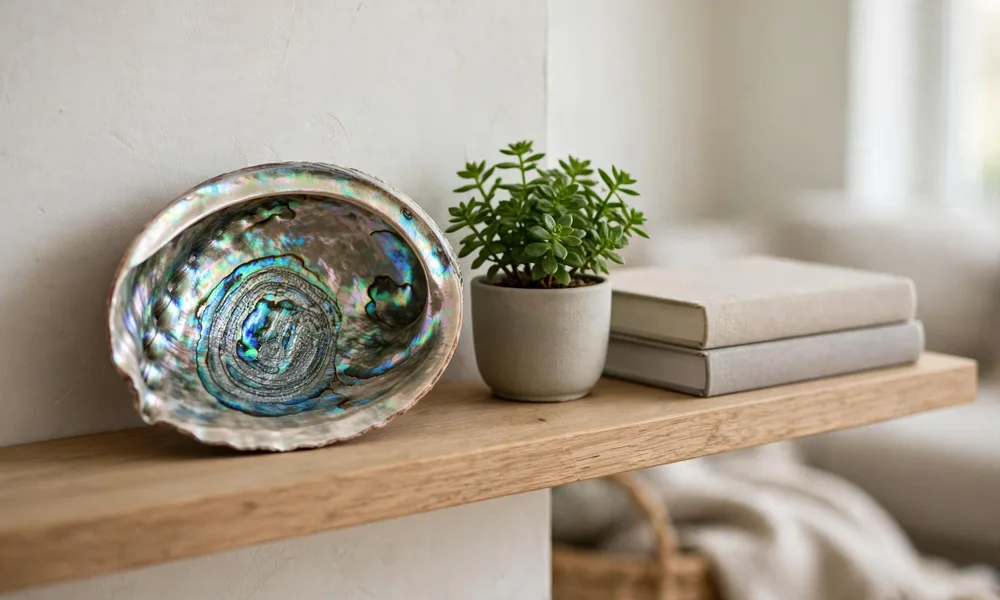
Holding the shell is the quietest part of the routine. Pick up the abalone with both hands, supporting its base, and feel its cool, smooth weight. Turn it once in the light and watch the blue turn to green, then to violet, as the angle changes. Then set it back down on its desk or shelf, a little back from the edge, where nobody will brush past it.
The polished surface is the fragile part, so hold the piece by its edges and never press it hard against metal or other stones. A shell held gently will last for years, and a shell dropped on a hard floor can chip.
A Fresh Day with Abalone
A fresh day takes only a few minutes to set up, and it starts the evening before: leave the desk clear, the glass washed, and the shell where the morning light will find it. When the morning comes, open the curtains, pour a glass of fresh water, and sit down for a moment. Hold the shell briefly if you like, then drink your water slowly and begin the day with something easy.
Fresh days reward a slow start.

Abalone and Mother of Pearl: How They Differ
Abalone and mother of pearl are cousins, not twins, and it is easy to mix them up. Both are shells lined with nacre, and both shine in the light. Mother of pearl is the soft white lining of the pearl oyster, with a gentle milky glow and quiet pastel flashes. Abalone is the vivid lining of the abalone snail, with bold blue-green colour that changes fast as you turn it. One is classic and soft, the other is bright and lively, and they suit different days. Where pearl powder in skincare keeps pearl as a fine powder for skin, this guide keeps abalone as a whole shell for fresh days. The materials share a family, but the habits are different: one is an ingredient, the other is a display piece on a bright shelf.
Abalone at a Glance
| Vivid blue-green shell | Fresh bright days | Shell care |
|---|---|---|
| Shines in daylight | Open window best | Dust with soft cloth |
| Cool smooth weight | Morning light suits | Hold by edges |
| Sits flat firmly | Pale room suits | Never soak shell |
| Colour shifts fast | Space around piece | Shade from harsh sun |
Caring for an Abalone Piece
Abalone is a fairly sturdy shell, and its care is simple. Dust it once a week with a soft, dry cloth, working gently across the polished surface where dust gathers. Never use vinegar, lemon juice or harsh chemicals. If it needs more than dusting, wipe it with a cloth barely dampened with plain water, then dry it at once.
A brief wipe is enough for a deeper clean, followed by a soft cloth to dry it. Do not soak the shell, and never put it in drinking water.
What It Will Not Do
Be honest about what a shell can and cannot do. Abalone will not heal anything: it will not cure an illness, ease a health problem, protect you from harm, or steady your mood by itself. It is a beautiful shell, and a shell is all it is. The fresh day is the part that helps: a slow start, a glass of water and an open window can make a day feel calmer. The shell keeps you company while you do that work.
No shell or ritual will replace rest, sleep and medical advice. If a health problem stays with you week after week, the answer is a doctor, not a new shell.
Your Abalone Fresh Days Checklist
- Choose an abalone piece with vivid blue-green colour and a base that sits flat.
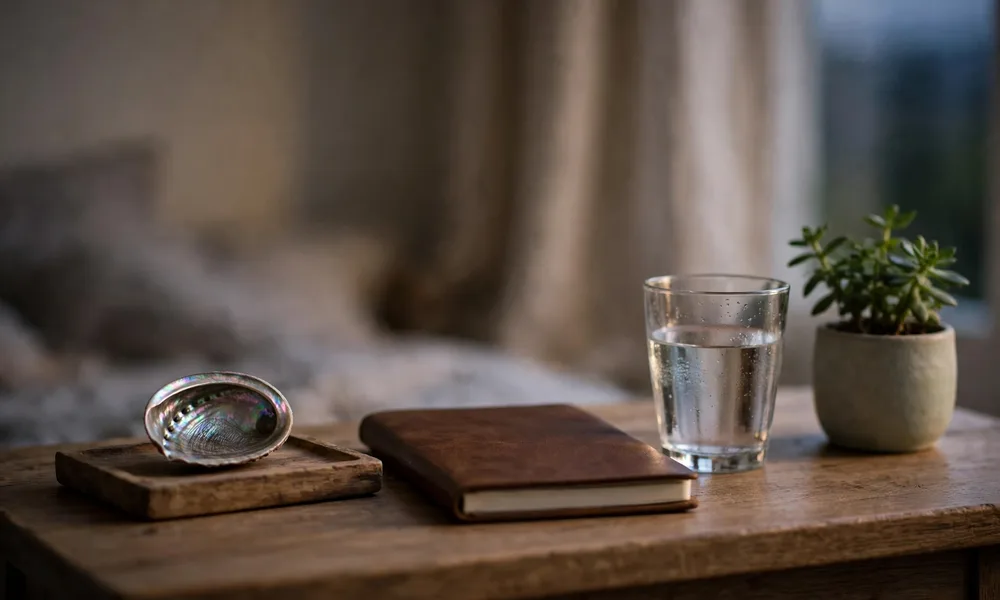
- Set a glass of fresh water beside the shell each morning, never in it.
- Place the shell where soft light reaches it, a little back from the edge.
- Hold the shell by its edges, never press it against metal or hard stones.
- Dust it weekly with a soft dry cloth and keep it away from harsh sun.
- Drink your water slowly, open the window, and let the day begin freshly.
Frequently Asked Questions
What is abalone?
Abalone is the polished shell of a sea snail, lined with nacre that shines in vivid blue, green and violet. It is kept as a display and handling piece, never as a treatment.
Will abalone heal anything?
No. It will not cure an illness, ease a health problem, or protect you from harm. Real health problems belong with a doctor.
Can I put abalone in my drinking water?
No. Keep the shell beside the glass, never in it. No shell or stone belongs in a drink, and soaking can dull its shine over time.
How is abalone different from mother of pearl?
Mother of pearl is a soft white shell lining with a gentle milky glow, while abalone is a vivid blue-green shell whose colour shifts fast in the light. They are cousins from different shells, and they suit different days.
How is abalone different from labradorite?
Labradorite is a grey stone with a hidden flash that appears only at the right angle, while abalone is a bright shell that shines in open daylight. Where labradorite shimmer for evening beauty keeps a grey stone for soft evening light, this guide keeps a vivid shell for fresh mornings.
How do I clean abalone safely?
Dust it with a soft, dry cloth, working gently across the polished surface. Never use vinegar, lemon juice or harsh chemicals, and store it dry on its shelf. Where opal shimmer for daytime keeps a milky stone for soft daylight, abalone keeps a bright shell for the same fresh hours.
The Bottom Line
Abalone is a vivid blue-green shell, a glass of water beside it, and a day that begins in fresh light. Set your shell out tonight, and let tomorrow begin fresh.
A Note for Fresh Days
Keep it bright, keep it dry, keep it fresh. The clear mornings belong to you.


