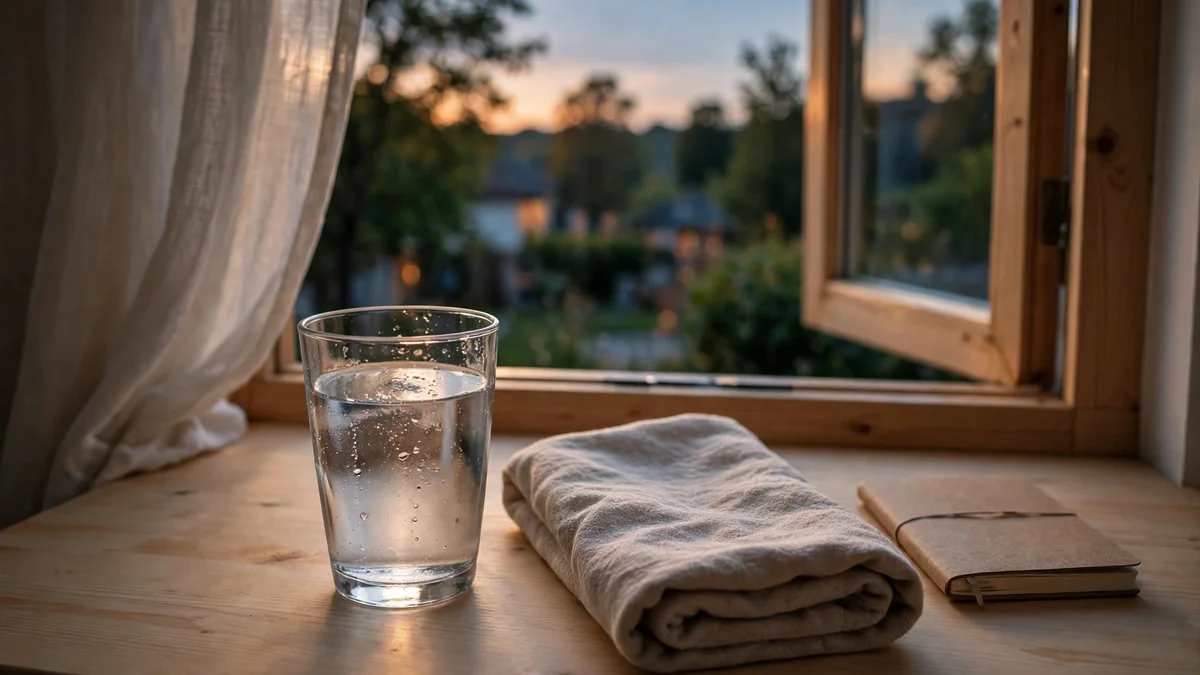
Some days are long from the very first minute. The alarm goes early, the list is full before breakfast, and the day already feels hours old.
A long day is not one hard moment. It is the whole stretch: the early start, the busy middle, the slow afternoon, and the tired evening when you finally walk through your own front door. Water can walk beside you through all of it, in small sips and small pauses, and then help you close the day with a simple fresh reset.
This guide follows one long day from morning to night, with plain water at each step and a short reset at the end. It is gentle general information only, never a treatment or a cure, and it will not fix a hard life. If you feel ill, or the tiredness keeps returning, talk to a doctor.
Key Takeaways
- A long day is the whole day, from the early start to the tired evening.
- Water fits a long day in small sips, taken slowly, from morning to night.
- A simple fresh reset needs very little: water, a wash, fresh air and a few minutes.
- The reset comes at the end of the day, not in the middle of it.
- This guide offers gentle general information only — no cures, no treatments — and lasting tiredness is a matter for a doctor.
What a Long Day Feels Like
A long day has a shape you can recognise by mid-morning. The shoulders sit a little higher than usual, the eyes work harder, and the hours seem to pass slowly while the list of things to do barely shrinks. By lunch, the morning already feels like yesterday.
The body keeps a quiet count all day: steps on hard floors, hours in one chair, conversations that ask for patience. A long day wears you down gently, a little at a time, until the evening arrives and the whole day lands on you at once.
Why Water Fits a Long Day
Water fits a long day because it asks for nothing and fits everywhere. A glass stands on the kitchen counter in the morning, on the desk by midday, and on the bedside table at night. It needs no preparation, no special skill, and no money beyond the tap.
Drinking slowly is a small pause in itself. Lifting a glass, taking a sip, and setting it down again takes only a few seconds, yet it breaks the day into gentler pieces. A steady glass beside you is a quiet companion from morning to night.
Starting the Day with Water
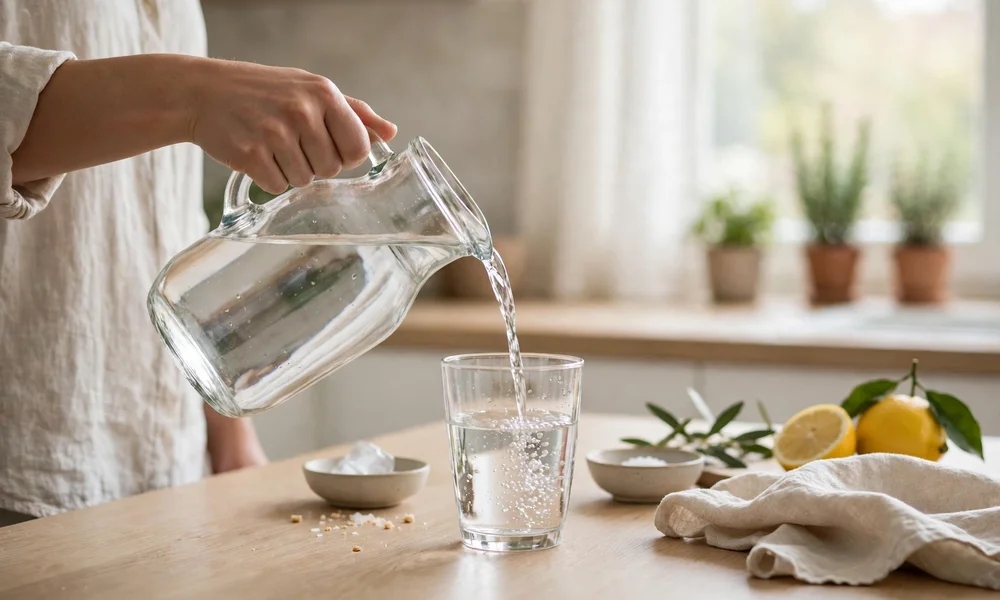
Begin a long day before it begins, in the kitchen, while the house is still quiet. Fill a jug and a glass, and drink the first glass slowly by the window, before the phone and the list take over. The morning is the easiest time to set the pattern for the rest of the day.
Pack a bottle if you are leaving the house, and set a glass on the desk before you sit down to work. A long day is easier to face when the water is already there, waiting.
Water Through the Middle of the Day
The middle of a long day is where good habits quietly fall apart. The glass on the desk empties, the bottle stays in the bag, and hours pass without a single sip. Keep the glass where you can see it, and refill it every time you stand up for another reason.
Take the water with you when you move: to the next room, to the next meeting, to the next chore. A full glass in your hand is a small reminder to pause.
The Afternoon Dip
Every long day has a dip in it, usually in the afternoon, when the morning energy has gone and the evening still feels far away. Your eyelids droop, your thoughts turn sluggish, and the hour ahead feels twice as long as the one behind you. It is a normal part of a long day, not a failure.
A glass of water, drunk slowly, with a short pause and a little light, can make the afternoon feel a little clearer. Water for the afternoon slump looks at that dip on its own, in full; this guide treats it as one chapter of a longer day, and then moves on toward evening.
Coming Home: The Fresh Reset
The reset begins the moment you walk through your own front door. Put the bag down, change out of the day's clothes, and wash your hands and face with cool water. The day is not over yet, but the working part of it is, and your body should know that.
Now drink a full glass slowly, by the window or on the sofa, and sit for five quiet minutes before you start the evening. This is the heart of the reset: water, a wash, clean clothes, and a pause.
Water for Tired Feet
Feet carry a long day more than any other part of the body. They spend the day standing, walking and climbing stairs, inside shoes that pinch more as the hours pass. Come evening they ache, feel swollen and warm, and they deserve the same reset as the rest of you.
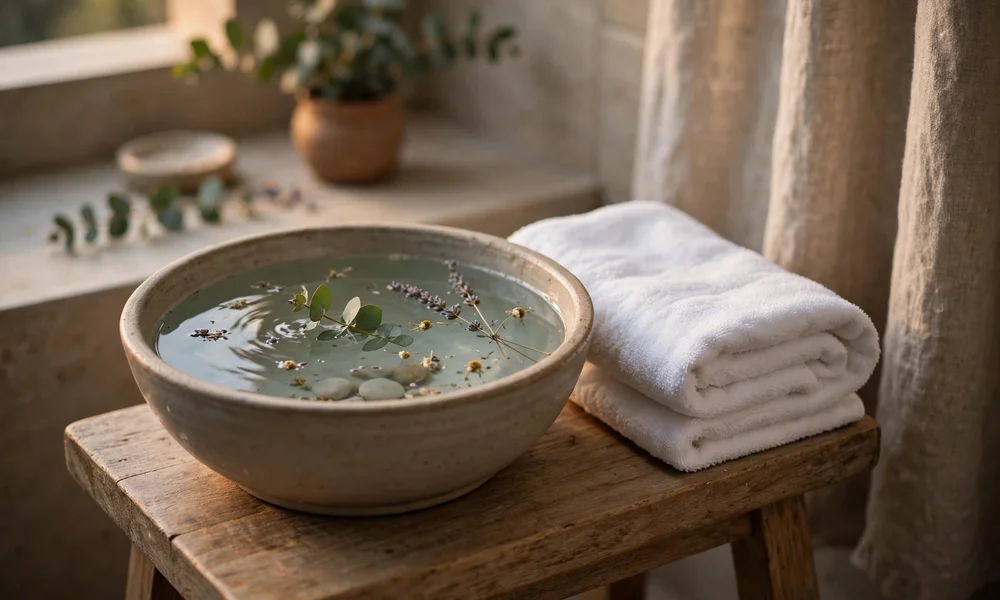
All it takes is a basin of lukewarm water, a clean towel, and a quarter of an hour sitting down. Water for tired feet explains the soak in full, step by step; here it is enough to know that the feet come last in the reset, after the wash and the drink, when the day is finally done.
A Long Day at a Glance
| Morning glass | Midday refill | Evening reset |
|---|---|---|
| Jug, glass, window | Desk, bottle, pause | Wash, drink, rest |
| Slow sip, quiet start | Full glass in sight | Feet, towel, quiet |
| Short walk, fresh air | Bedside glass, rest | Tomorrow, fresh start |

Water and Workdays
A long day is often a workday, and the two guides walk side by side. Water and workdays is about keeping fresh through the working hours themselves, hour by hour, with a simple routine at the desk. This guide is wider: it starts before work, follows the day home, and ends with a reset after work is done.
The workday routine keeps you going through the day. The fresh reset closes the day once you are home. Both use the same plain water, and both ask for very little, but they sit at different ends of the same long day.
What the Reset Is Not
The reset is not a cure, and it is not a treatment for anything. It will not fix a bad job, a broken sleep pattern, or a body that keeps asking for help. A glass of water and a wash are small comforts, and they should stay small comforts in your mind.
It is also not a reason to push harder the next day. If every day feels long and the tiredness never lifts, that is a sign to talk to a doctor, not to add more water to the routine. The reset is for ordinary long days, the kind that end well with a quiet evening.
Small Habits That Keep the Day Fresh
A long day goes better when a few small habits run quietly underneath it. Open a window when you can, and let fresh air into the room for a few minutes. Step outside once, even if it is only to the front step, and let the daylight reach your face.
Eat lunch sitting down, away from the screen, with a glass of water beside the plate. None of these habits is grand, and none of them takes more than a minute, yet together they keep a long day from feeling endless.
If You Keep a Stone Nearby
Some people like a stone on the tray beside the glass, and there is nothing wrong with that, as long as the rules are kept. A stone stays beside water, never inside drinking water, and it is never soaked or dropped into a glass.
A few stones should never meet water at all. Malachite never belongs in water or in elixirs, because it can give off harmful substances. Hematite never belongs in drinking water, and the same holds for apatite, lepidolite, which contains lithium, pyrite, angelite and amber, in a drink or in a soak alike. A stone is a handsome object to look at, and it cannot heal anything.
Your Long Day Checklist
- Fill a jug and drink the first glass slowly in the morning.
- Keep a full glass in sight through the middle of the day.
- Drink slowly in the afternoon dip, with a short quiet pause.
- Come home, wash your hands and face, and change your clothes.
- Drink a full glass slowly, then rest your feet in lukewarm water.
- The reset heals nothing; lasting tiredness belongs with a doctor.

Frequently Asked Questions
What is a simple fresh reset?
A simple fresh reset is a short end-of-day routine: a wash, a change of clothes, a glass of water drunk slowly, and a few quiet minutes, sometimes with a foot soak.
When should I do the reset?
At the end of the long day, once you are home and the working part of the day is done. It closes the day, rather than breaking up the middle of it.
How is this different from the afternoon slump reset?
The afternoon slump reset is a short pause in the middle of the day, for the tired dip after lunch. This reset comes at the end of the whole long day, and it covers the evening as well.
Do I need anything special for the reset?
No. A glass, fresh water, a towel, and a basin for the feet are the whole list, and most of it is already in your home.
Can water fix a long day?
No. Water is a small comfort, not a cure. It can make a long day feel a little clearer, but it will not make the day shorter or fix lasting tiredness.
What if every day feels long?
If the tiredness keeps coming back, or it never lifts after rest, please see a doctor. That is a matter for a clinician, not for a glass of water.
The Bottom Line
Water and a long day go together from morning to night: small sips through the day, and a simple fresh reset at the end, with a wash, a drink, and a few quiet minutes.
A Note for Long Days
Let the day be long, and let the evening be short and simple. One glass of water, one wash, and a few unhurried minutes are plenty to close a long day well.


