Some bright days feel made for warm colour. The sun comes up strong, the curtains glow amber, and the kitchen table looks its best with something orange on it, a bowl of fruit, a marigold in a jar, a stone that catches the light.
Clinohumite is a stone for a day like that: a rare warm orange mineral, the colour of honey held up to a lamp, of apricots left in the sun. Few people have seen one, and fewer still own one, which is part of its charm.
This guide takes a slow look at clinohumite: what the stone is, where its warm orange comes from, how to tell a good piece from a poor one, and how to enjoy it through a bright day with a glass of water close by. It is an object to admire and to hold, and nothing more. It will not heal anything.
Key Takeaways
- Clinohumite is a rare warm orange mineral, a magnesium silicate with a soft glassy shine.
- Its honey orange suits bright days, open windows, and rooms full of morning light.
- It is the only clinohumite here, and it differs from every live orange stone.
- Keep the drinking water in its own glass, set apart, and the stone dry.
- One small warm stone is enough for a whole bright day.
What Clinohumite Is
Clinohumite belongs to the humite family, a small group of magnesium silicate minerals that grow where hot fluids have moved through limestone and marble deep underground. A few crystals take on a warm orange colour from traces of iron and titanium inside. Most pieces are small, and clean stones large enough to cut are uncommon, which is why the mineral stays rare.
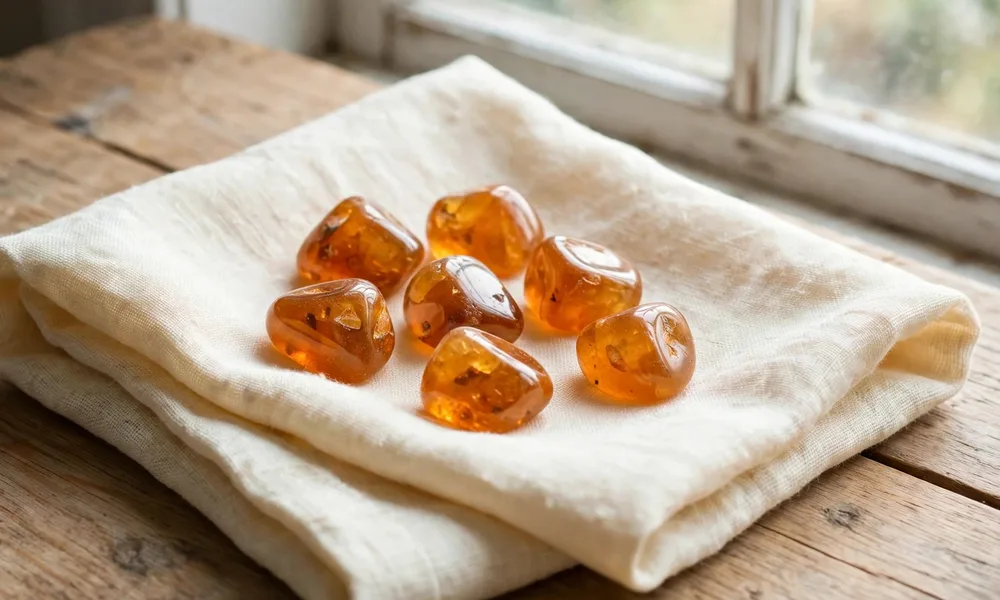
A polished piece feels cool and smooth in the palm, with a soft glassy lustre rather than a hard sparkle. The orange runs from pale honey to a deeper amber, and the best pieces hold one warm tone all the way round. Hold it toward a window and the light sinks into the stone, so the orange seems to glow from within.
Choosing a Clinohumite Piece
Look for a clinohumite piece in daylight, turning it slowly between your fingers. A good one keeps a warm, even honey orange as it moves, with no muddy brown patch and no washed-out corner. Run a fingertip over it: the face should feel even, with no pitting and no nicked edges, and the colour should stay honest away from the window too.
Ask the seller to call the stone by its full name, clinohumite, and ask where it came from. Good pieces often come from the Pamir mountains or from marble country in Italy. Walk past anyone who promises the stone will mend your health, and be wary of a price that looks far too low for a rare mineral.
A Bright Day with Clinohumite
A bright day with clinohumite starts quietly, with the tray already waiting. Lay a pale cloth over the side table, set the stone at one end, and stand a tall glass of cool water at the other, with dry cloth between them. Drink the water slowly as the sun climbs, and lift the stone to watch the honey orange deepen.
There is nothing else to arrange. Leave the stone on its tray while you cook, read, or step out into the garden, and it will be waiting when you return. At dusk, wipe it with a dry cloth and return it to its shelf.
Clinohumite Beside Water
Water and clinohumite look warm together on one tray, yet they must never meet. Stand the glass on one side and the stone on the far side, with dry cloth laid between them, so the drink stays pure and the stone stays dry. A stone left sitting in water loses its shine.
Wash your hands once the stone is placed, before you lift the glass, and never let the stone fall into any cup, jug, or bath. The two share one sunny tray, yet they always remain quite separate.
Clinohumite at a Glance
| Honey orange glow | Bright daylight | Display only |
|---|---|---|
| Smooth, cool, glassy | Tray, shelf, sill | Dry hands only |
| Even warm colour | Open windows, sun | Glass kept apart |
| Small rare stone | Slow mornings, light | Never in drinks |
| Iron colours it | One tray, one glass | Dust dry weekly |

Clinohumite and Orange Agate
Orange agate for bright days is the live orange stone most often confused with clinohumite, because both wear warm orange, yet they belong to different branches of the mineral world. Orange agate is a banded chalcedony, built up in thin glassy layers, with apricot, peach, and cream bands winding through it.
Clinohumite has no bands at all. Its orange is one warm honey tone all the way through, smooth and unbroken, with a soft glassy shine rather than a waxy one. Pick the agate for fine banding, and pick clinohumite for a plain, even honey orange in a rare stone.
Clinohumite and Orange Jasper
Orange jasper for bright days is the solid earthy cousin of the pair. Orange jasper is an opaque quartz, dense all the way through, coloured by iron minerals while the rock was slowly forming, and no light passes through it at all. Its charm is one warm orange from edge to edge, like a peach held up to the light.
Clinohumite is the clearer of the two. Light sinks a little way into its surface, so the honey orange seems to glow from within, where jasper stays flat and earthy. Jasper is common and sturdy, while clinohumite is rare and small, a stone to look at slowly.
Clinohumite and Orange Zircon
Orange zircon for bright days is the sparkling member of the orange shelf. Orange zircon is a natural zircon in a warm orange shade, most often shaped into a small faceted gem, clear and glassy, flashing brightly when daylight strikes it.
Clinohumite is softer and quieter beside it. It is usually polished smooth rather than cut into facets, so its shine is a gentle glassy glow instead of a bright flash. Zircon is the stone for sparkle, clinohumite is the stone for a calm warm glow.
Clinohumite and the Other Orange Stones
Three more live orange stones stand apart from clinohumite, each in its own way. Orange coral is the hard skeleton built by tiny sea animals, cut and smoothed by hand into branches, beads, and jewellery, and it keeps the forks it grew with, so no two branches match. It is a protected marine material, so buy it only from lawful, reputable sellers.
Orange spinel is a clear, glassy spinel, warm orange and light, rarer than red spinel, with a sunny orange rather than a fiery red. Orange moonstone is a warm orange feldspar whose soft light wanders as the stone turns. Clinohumite is none of those: not a sea branch, not a glassy spinel, not a feldspar with a wandering light. It is a rare magnesium silicate, honey orange, smooth and quiet.

Where Clinohumite Sits at Home
Clinohumite likes a calm corner where daylight falls gently and the room stays uncluttered. Try a low shelf by the window, a clear patch on the desk, or a tray set on the chest of drawers, with the stone in plain view and the glass a short distance away. Morning light shows the honey orange at its warmest.
Keep the tray away from sinks, kettles, and steamy bathrooms, and beyond the reach of small children. Settle on one place and leave the stone there.
Keeping Clinohumite Clean and Dry
Clinohumite asks for little care. Wipe it once a week with a dry, soft cloth, barely touching the surface, and that will do. Keep soap, polish, and sprays off it, and never put it in an ultrasonic cleaner.
When it is not on show, lay it by itself in a small lidded box with a cotton lining, away from keys, coins, and harder gems. Strong sun through glass can fade the warm orange, so keep it off bright sills.
Stones to Keep Far from Water
A few minerals hold things no mouth should ever meet, so keep this plain warning in mind whenever you lay out a tray. Malachite heads the list: copper runs through its green bands, and copper is not for swallowing, so never drop it into a cup or a jug. Hematite sits on the same dry list, far from drinking water, because dampness can speckle it with rust.
Pyrite, angelite, and amber also stay dry, and so do apatite and lepidolite, which holds lithium inside its pale flakes. Clinohumite keeps the same habit: beside the glass, never inside it, and never soaked.
Your Bright Days Checklist
- Lay the clinohumite on a dry cloth, glass a little apart.
- Sip the water slowly while the sun warms the room.
- Lift the stone, watch its honey glow, and set it down again.
- Put the stone back in its box before washing your hands.
- Buy from a seller who names the stone and its ground plainly.
- For any health worry, take it to a doctor, not to a stone.

Frequently Asked Questions
What is clinohumite?
Clinohumite is a rare warm orange mineral, a magnesium silicate from the humite family that grows where hot fluids have moved through limestone and marble. A good piece is smooth and cool, with one even honey orange.
How is clinohumite different from orange agate?
Orange agate is a banded chalcedony with apricot, peach, and cream bands winding through it. Clinohumite has no bands at all, just one warm honey orange all the way through.
How is clinohumite different from orange jasper?
Orange jasper is an opaque quartz, dense and earthy, with no light passing through it. Clinohumite is clearer, with light sinking into its surface, so the honey orange seems to glow from within.
How is clinohumite different from orange zircon?
Orange zircon is most often shaped into a small faceted gem, clear and glassy, flashing brightly in daylight. Clinohumite is usually polished smooth, so its shine is a gentle glassy glow instead of a bright flash.
Is clinohumite safe to hold?
Most people can hold a small piece for a little while. Set it back on its tray when you finish, and wash your hands.
Where should I keep clinohumite at home?
A bright dry shelf, a desk corner, or a tray all work. Keep the stone apart from the glass, away from fierce sun.
The Bottom Line
Clinohumite suits bright days: one rare honey orange stone in gentle light, a glass of water standing close, and the stone kept dry.
A Note for Bright Days
Warm light, a dry stone, a full glass — a bright day needs nothing more.