
A steady day does not ask for colour that shouts. The kettle boils at its usual hour, the post lands on the mat, the same chair waits beside the window, and the hours fill up with small familiar jobs. It needs something solid, dark, and warm.
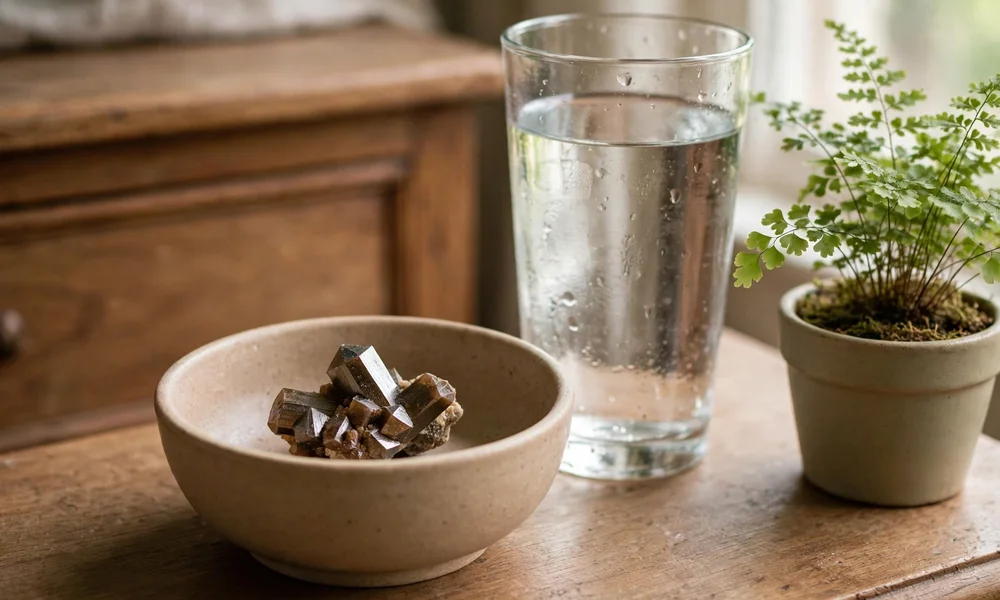
Cassiterite answers that mood. It is the main ore of tin, a mineral that grows in dark brown crystals with faces that catch the light like polished wood after rain.
This guide takes cassiterite on its own terms: the mineral behind the colour, the way to tell a good piece from a dull one, and a plain routine for enjoying it through a steady day, the drink poured into its own tumbler while the stone rests dry on wood nearby. It is a thing to look at and to hold, and nothing more.
Key Takeaways
- Cassiterite is a tin oxide mineral, dark warm brown, heavy and hard, with glossy crystal faces.
- Its deep brown suits steady days, plain routines, wooden trays and unhurried hours at home.
- A good piece shows an even warm brown with bright faces, no painted look and no sharp chips.
- Drinking water stays in its own glass; the stone rests dry on the board, apart from it.
- One small piece, about the size of a walnut, is plenty for a whole steady day.
What Cassiterite Is
Cassiterite is tin oxide, the mineral from which most of the world tin has come for centuries. Its colour runs from a reddish chestnut brown to a brown so deep it looks almost black in a dim room, and in strong daylight the brown warms up and shows its true tone.
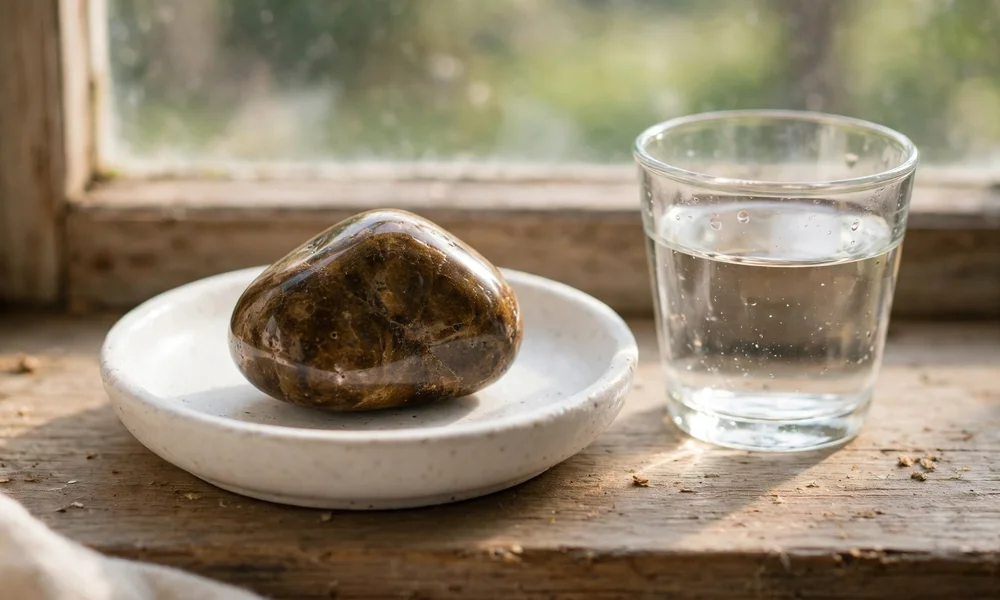
A tumbled piece loses those sharp faces and becomes a rounded pebble with a soft, glassy polish. Cassiterite is hard and unusually heavy, so a small piece surprises the hand.
Picking a Cassiterite Piece
Look at cassiterite in ordinary daylight, away from the hard lamps of a shop counter. The brown should stay warm as you turn the piece slowly, deepening toward chestnut in the light and never sliding into grey. Good crystal faces gleam like dark varnish, while a tumbled piece should carry one even brown from edge to edge, with no pale chalky patches and no brown that looks painted on.
A walnut-sized piece sits flat without rocking and fits neatly in a closed hand. Ask the seller plainly where the stone came from,

A Steady Day with Cassiterite
A steady day with cassiterite begins in a few quiet minutes. Put a small wooden board by the window, the stone resting at one side and a tall tumbler of fresh water at the other side, with a stretch of bare wood lying between them. Drink the water in slow sips and let your eyes rest on the deep brown while the morning settles around the house.
There is no task to finish and nothing to measure. When the glass runs dry, fill it again.
Cassiterite Beside Water
Water and cassiterite look calm together on one board, yet the board is the only thing they share. Park the glass at the far end and the stone at the near end, with bare wood in between, so the drink stays clean and the stone stays dry. A board is a display, not a bath, and the stone has no business in a drink.
Rinse your hands with soap once you set the stone down, before lifting the glass. Never let it fall into a tumbler, a jug, or a bath, and never swirl it through water meant for drinking.
Cassiterite at a Glance
| Deep warm brown | Wooden board, tray | Dry hands only |
|---|---|---|
| Tin oxide, hard | Steady days, slow hours | Glass kept apart |
| Heavy, glossy faces | Daylight, soft lamps | Never in drinks |
| Walnut-sized piece | One board, one glass | Dust dry weekly |
Cassiterite and Brown Jasper
Brown jasper for steady days shares this stone warm brown colour and its love of steady days, which makes the two easy to mix up at a glance. Brown jasper is a quartz made opaque by iron held inside it, one even tone from edge to edge, with a gentle waxy sheen and no markings to study.
Cassiterite is a different mineral altogether. It is a tin oxide, harder and far heavier than jasper, and its brown is deeper, with bright crystal faces that catch the light where jasper stays soft and matte.
Cassiterite and Brown Onyx
Brown onyx for steady days is the banded member of the brown family, a warm brown chalcedony crossed with bands of cream, caramel and deep chestnut. The bands run in soft lines across the stone, giving the brown a quiet rhythm for the eye to follow, and a polished piece feels cool, then warms in the palm.
Cassiterite carries no bands at all. Its brown is solid and dark, broken only by the flat faces of its crystals, and it is much heavier than onyx for the same size.
Cassiterite and Brown Jade
Brown jade for steady days is the earthy member of the jade family, a warm chestnut brown stone with darker veins wandering through it like grain in a piece of oak. Its polished surface carries a soft, waxy shine, and the stone feels cool when first lifted, warming gently as it rests in the hand.
Cassiterite is warmer in the hand in a different way: it is heavier, harder, and its brown is deeper and glossier, with bright crystal faces where jade shows a smooth, solid face.
Cassiterite and the Other Brown Stones
The rest of the brown family spreads out around cassiterite, and each one keeps its own character. Brown zircon is a warm cocoa-brown gem, clear and bright, with soft amber glints and a lively sparkle that cassiterite never shows. Chocolate calcite is a calcite in a deep cocoa shade, like a square of dark chocolate, with a smooth earthy feel, yet far softer than cassiterite and marked with pale cream bands.
Chocolate pearl is a round brown gem grown in the sea, light for its size and silky to the touch, with a soft glow from within. Smoky topaz is a warm brown crystal, clear and glassy, with a soft smoky depth. Dravite is a warm brown tourmaline, dark and rich, and mahogany obsidian is a deep brown volcanic glass with reddish swirls. Cassiterite stands apart by being dark, heavy, hard, and glossy, a tin stone with bright crystal faces.
Where Cassiterite Sits at Home
Cassiterite likes one fixed spot where daylight can find it and the glass can stand beside it. A shelf in the living room, a corner of the desk, or the table beside the bed all suit it, provided the stone is simple to see and unlikely to be knocked off.
Pick a place far from sinks and steamy kitchens, where damp air takes the shine off the polish, and high enough that small children, who love to pocket a smooth pebble, cannot reach it. Choose one place for it and leave it there, so the stone is never moved about or knocked, and the pause becomes a habit instead of a decision.
Keeping Cassiterite Clean and Dry
Cassiterite is a hard stone, so it asks for almost no care at all. A weekly rub with a clean, dry cloth is enough to lift the dust from it. Keep soap, polish, and sprays away from it, since cleaning products can dull its bright faces over time.
When the stone is not on show, rest it alone inside a soft cloth pouch, well away from keys, coins, and harder gems that could leave a mark on it.
Stones to Keep Far from Water
A few stones hold things that have no place near a mouth, and learning their names is worth the minute it takes. Malachite hides copper inside its green bands, and copper is not something to swallow, so it stays out of glasses, jugs, and baths altogether. Hematite spots with rust when it stays wet, and that rust marks anything it rests against.
Angelite thins away slowly in water, while amber is ancient tree resin rather than rock, so soaking turns it cloudy. Apatite falls apart in a bath, lepidolite keeps lithium inside its pale layers, and pyrite falls to pieces in damp air. Keep each of them far from food and drink, and give cassiterite the same treatment: resting on the board next to the glass, never within it.
Your Steady Days Checklist
- Lay the cassiterite on a dry wooden board, a full glass standing close by.
- Sip the water unhurriedly while the morning light grows stronger.
- Lift the stone, feel its cool weight, and set it back in its place.
- Rinse your hands with soap once the stone is back on the board.
- Buy from a seller who can say plainly where the stone was found.
- When a health worry stays with you, talk it over with a doctor.

Frequently Asked Questions
What is cassiterite?
Cassiterite is a tin oxide mineral, the main ore of tin, dark warm brown with glossy crystal faces.
How is cassiterite different from brown jasper?
Brown jasper is a quartz made opaque by iron held inside it, one even tone throughout, with a gentle waxy sheen. Cassiterite is a tin oxide, harder and far heavier, with a deeper brown and bright crystal faces that gleam in the light.
How is cassiterite different from brown onyx?
Brown onyx is a banded chalcedony, warm brown crossed with cream and caramel bands. Cassiterite has no bands at all, and its brown is solid and dark, with flat crystal faces instead of flowing lines.
How is cassiterite different from brown jade?
Brown jade is a warm chestnut brown jade with a soft waxy shine and darker veins like wood grain. Cassiterite is heavier, harder, and glossier, with a deeper brown and bright faces where jade shows a smooth, solid surface.
Is cassiterite safe to hold?
A short hold of a tumbled piece is fine for most people. Return it to its board once you have finished, clean your hands with soap, and store it where children cannot get at it, well away from food and drink.
Where should I keep cassiterite at home?
Try a bright, dry shelf, the edge of a desk, or a tray set on the drawers. Leave a gap between the stone and the glass, and keep the tray out of fierce direct sun.
The Bottom Line
Cassiterite suits steady days: one dark warm brown stone in soft light, your drink poured into its own glass nearby, and the stone resting dry.
A Note for Steady Days
Gentle light, a dry stone, a full glass: nothing more is needed for a steady day.


