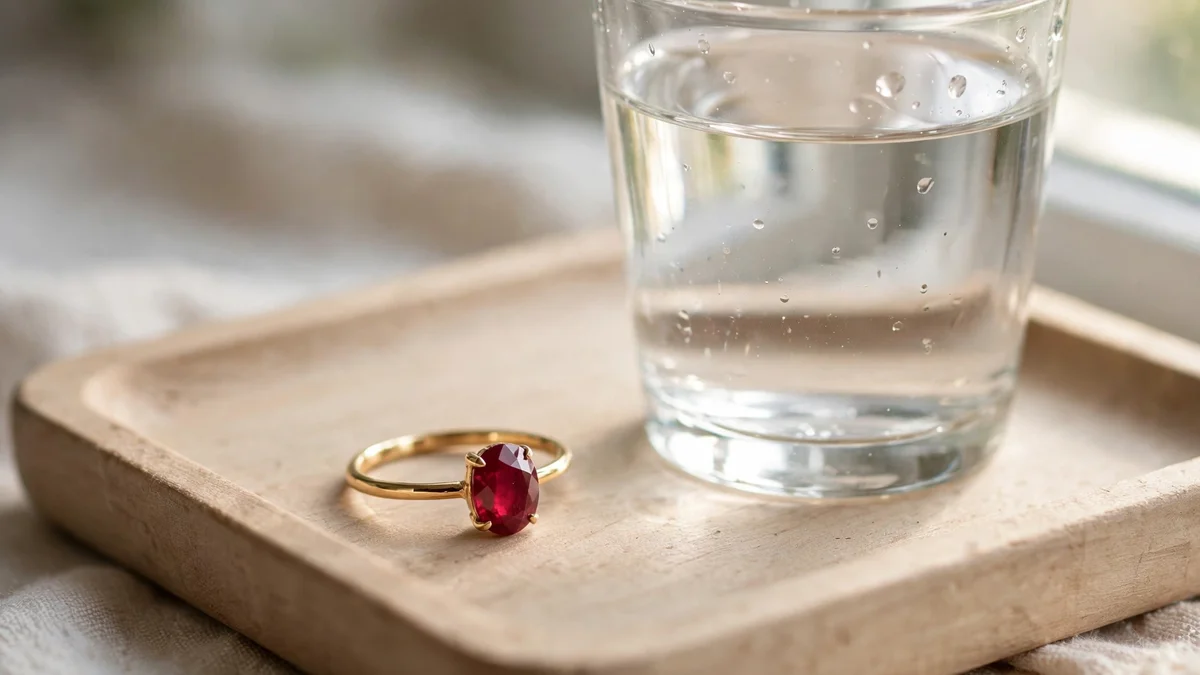
Some days ask for quiet more than anything else. The house is still, the light is low, and there is nowhere you need to be in a hurry. On a day like that, a loud bright stone feels too busy, and a pale stone feels too faint to hold your eye for long.
Bixbite is a stone for quiet days like these: a rare red beryl, deep red and glowing, the colour of dark cherries held up to soft light. It is one of the rarest red stones in the world, usually seen only as a small gem in jewellery or in a box.
This guide is a spotlight on bixbite: what it is, how to choose a piece, how to display it, and how to enjoy it through a quiet day. The stone is for display and jewellery only, never in water, never in elixirs or soaks, and it will not heal anything.
Key Takeaways
- Bixbite is red beryl, a very rare deep red stone.
- Its deep red colour suits quiet days, soft light and slow hours.
- Bixbite differs from aquamarine, emerald and morganite.
- Bixbite is for display and jewellery only; it will not heal anything.
- The stone stays beside drinking water, never in it, and stays dry.
What Bixbite Is
Bixbite is red beryl, the red member of the beryl family, and it is very rare. Beryl is the family that gives us aquamarine, emerald, morganite and heliodor, yet the red form is far scarcer than any of them.
The colour of bixbite is a deep, glowing red, like dark cherries or old wine held up to the light. It is a rich red that looks warm in soft daylight and deeper still in low light, and a well-cut piece throws back small flashes from every face. Bixbite is also called red beryl, and the two names mean the same stone.
Why Rare Red Suits Quiet Days
Rare red suits quiet days because it asks for slow looking. A bold red stone on a bright evening wants to be noticed, but a rare red stone on a quiet day wants to be looked at closely, in soft light, with time to spare. Its deep colour gives a still room a warm, steady point of focus, like a small ember kept on a tray.
The deep red also suits low light: in a bright room it glows, and in a dim room it deepens. On a quiet day, when the hours move slowly and the light stays soft, that steady red feels calm rather than demanding.
Choosing a Bixbite Piece
Choosing a bixbite piece is mostly a matter of looking closely and trusting your eye, and of buying from a seller you trust. A good piece shows a deep, even red with a bright glassy shine, not a dull brown-red with no light at all. The surface should be smooth with no sharp chips or rough pits, and the colour should stay rich even in soft light.
Buy from a trusted seller, never one who promises the stone will change your health, and wash your hands after handling it.
A Quiet Day with Bixbite
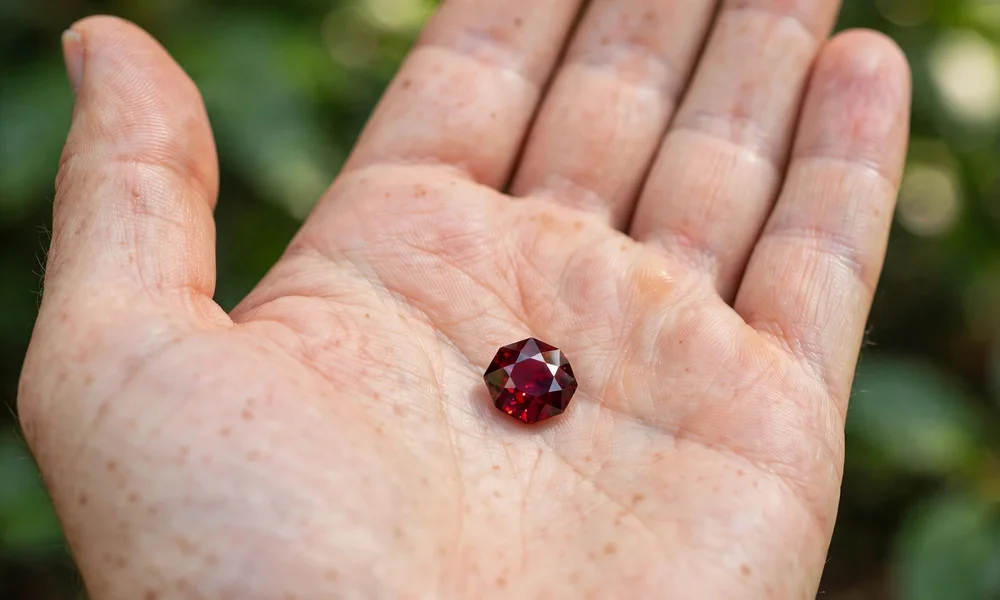
A quiet day with bixbite takes only a few minutes to begin: place the stone on its tray, fill a clear glass with fresh water, and set it beside the stone. When you sit down with your notebook or your morning tea, drink the water slowly, in small sips, and then pick up the stone and look at its deep red surface for a few breaths.
Put the stone back, and let the day carry on quietly: water, soft light, one rare red stone, and a short pause before the hours begin.
Bixbite Beside Water
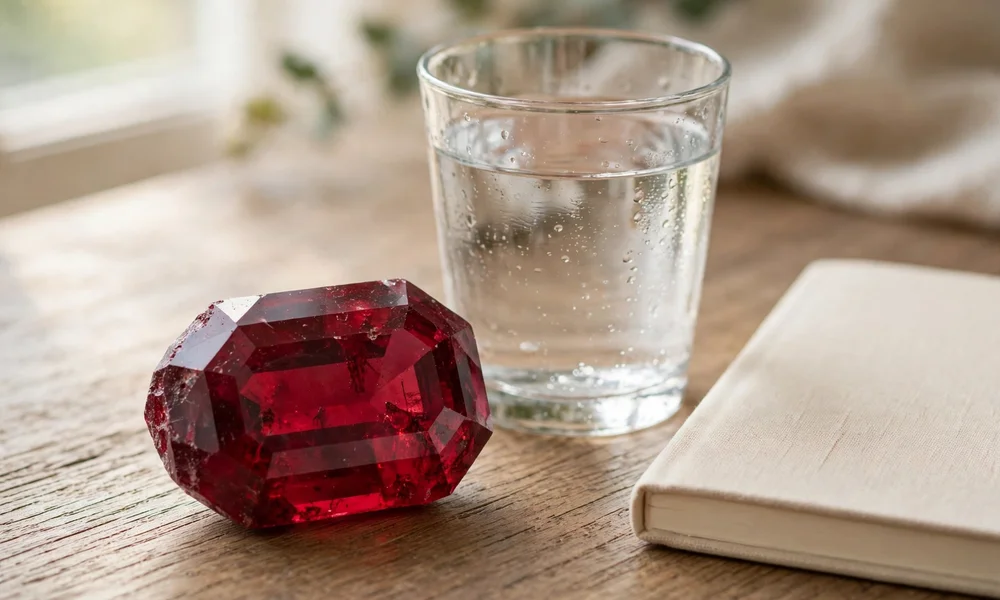
Water belongs beside the stone, never around it: set a clear glass of fresh drinking water next to the stone on the tray. They share a tray, not a glass. Never place the stone inside drinking water, and never soak it, because bixbite is a beryl and contains beryllium, so it must never go into drinking water or elixirs.
If the glass spills, lift the stone away and dry it at once with a soft cloth. The rule never changes: the stone sits beside the water, and the two never meet.
Keeping Bixbite Safe
Bixbite needs only gentle care: the stone is for display and jewellery only. Never put it in drinking water, never soak it, never use it in a bath or a foot soak, and never use it in an elixir. Wash your hands with soap and water after handling the stone, and keep it away from small children and pets.
Dust the stone weekly with a soft, dry cloth, never soap or polish, and keep it in a small box or a soft pouch away from harder stones and damp places.
Bixbite at a Glance
| Rare red stone | Quiet days | Display only |
|---|---|---|
| Deep red beryl | Soft daylight | Never in water |
| Very rare gem | Desk and tray | Dust with dry cloth |
| Small, costly pieces | Water, light, pause | Wash hands after |
Bixbite and Aquamarine
Bixbite and aquamarine are both beryl, yet they could hardly look more different. Aquamarine is a pale blue beryl, the colour of shallow sea water, long carried by sailors and travellers as a companion stone for calm journeys.
Bixbite is a deep red beryl, rich and glowing, and it suits quiet days at home in soft light. Where aquamarine travel rituals for calm journeys keeps a pale sea-blue stone for travel, this guide keeps a rare deep red stone for quiet days. One is pale blue and made for moving; the other is deep red and made for staying still. Both are beryl, and both must stay beside water, never in it.
Bixbite and Emerald
Bixbite and emerald are both beryl, and both are deep in colour, but their colours sit on opposite sides of the year. Emerald is a deep green beryl, the colour of spring leaves, and it suits spring skin and fresh colour in soft spring light.
Bixbite is a deep red beryl, warm and glowing, for quiet days in low light and slow hours. Where emerald green beauty for spring skin keeps a fresh green stone for spring, this guide keeps a rare red stone for quiet days. Green is fresh and outward; red is warm and inward. Both are beryl, and both must stay beside water, never in it.
Bixbite and Morganite
Bixbite and morganite are both beryl, yet they suit different kinds of days. Morganite is a soft pink beryl, pale as a petal, for gentle days when you want everything to feel easy and slow.
Bixbite is a deep red beryl, rich and rare, for quiet days when you want one warm point of focus in a still room. Where morganite soft pink beauty for gentle days keeps a pale pink stone for gentle days, this guide keeps a deep red stone for quiet days. One is soft pink and gentle; the other is deep red and rare. Both are beryl, and both must stay beside water, never in it.
Bixbite and Other Red Stones
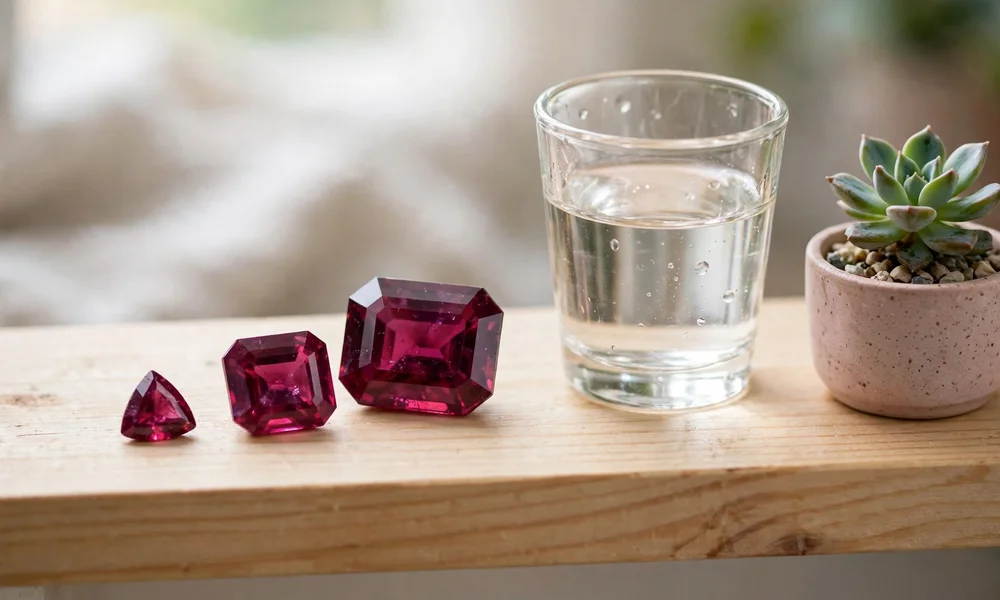
Bixbite is not the only red stone, and it helps to know how it differs from the others. Cuprite is a deep red copper mineral for bold evenings, dark and warm like old wine. Red calcite is a warm red stone for bold mornings, and red goldstone is a warm red stone full of sparkle for bold evenings.
Bixbite is different: it is red beryl, very rare, deep red and glowing, for quiet days in soft light. Cuprite is a copper mineral, red calcite is a calcite, and red goldstone is a glassy stone full of glitter. Bixbite is a beryl, and its rarity sets it apart from every other red stone on the shelf. Look at any red stone in soft light: bixbite is the deep, glowing red that asks you to slow down.
Stones That Must Never Touch Water
Some stones must never touch water at all. Malachite must never go in water or in elixirs, because it can release harmful substances. Hematite must never go in drinking water, and apatite, lepidolite — which contains lithium — pyrite, angelite and amber must never go in drinking water or in soaks either.
Bixbite belongs on that list too: as a beryl it contains beryllium, so it must never go in drinking water, elixirs or soaks. The rule stays the same: display it on a tray, keep a glass of water beside it, and never let the two meet. The stone will not heal anything, and real health problems belong with a doctor.
Your Quiet Days Checklist
- Set the stone on a tray beside a clear glass of water.
- Drink a glass of fresh water slowly while the day begins.
- Hold the stone for a few breaths and look at its deep red colour.
- Keep the stone beside water, never inside drinking water, elixirs or soaks.
- Dust the stone dry weekly, and wash your hands after handling it.
- Remember the stone will not heal anything; see a doctor for health problems.

Frequently Asked Questions
What is bixbite?
Bixbite is red beryl, the very rare red member of the beryl family, with a deep glowing red colour like dark cherries held up to soft light.
Is bixbite safe to handle?
Yes, if you wash your hands with soap and water after handling it. It is for display and jewellery only, never in drinking water or soaks, and kept away from small children and pets.
Can I put bixbite in drinking water?
No, never. Bixbite is a beryl and contains beryllium, so it must never go in drinking water, elixirs or soaks. Keep a glass of water beside the stone, and never soak it.
Will bixbite heal anything?
No. Bixbite will not heal anything. It is a beautiful and very rare object for display and jewellery, and the calm comes from the pause and the quiet day.
How is bixbite different from aquamarine?
Aquamarine is a pale sea-blue beryl for travel rituals, while bixbite is a deep red beryl for quiet days at home.
Where should I keep my bixbite?
Keep it in a small box or on a tray in a dry room, with a clear glass of water beside it — a desk, a shelf or a windowsill works well.
The Bottom Line
Bixbite brings rare red to quiet days: a very rare deep red beryl, held beside a glass of fresh water. Keep it beside water, never in it, and dust it dry.
A Note for Quiet Days
Keep it rare, keep it dry, keep it quiet. A small red stone, a glass of water, and a few slow minutes carry a day well.