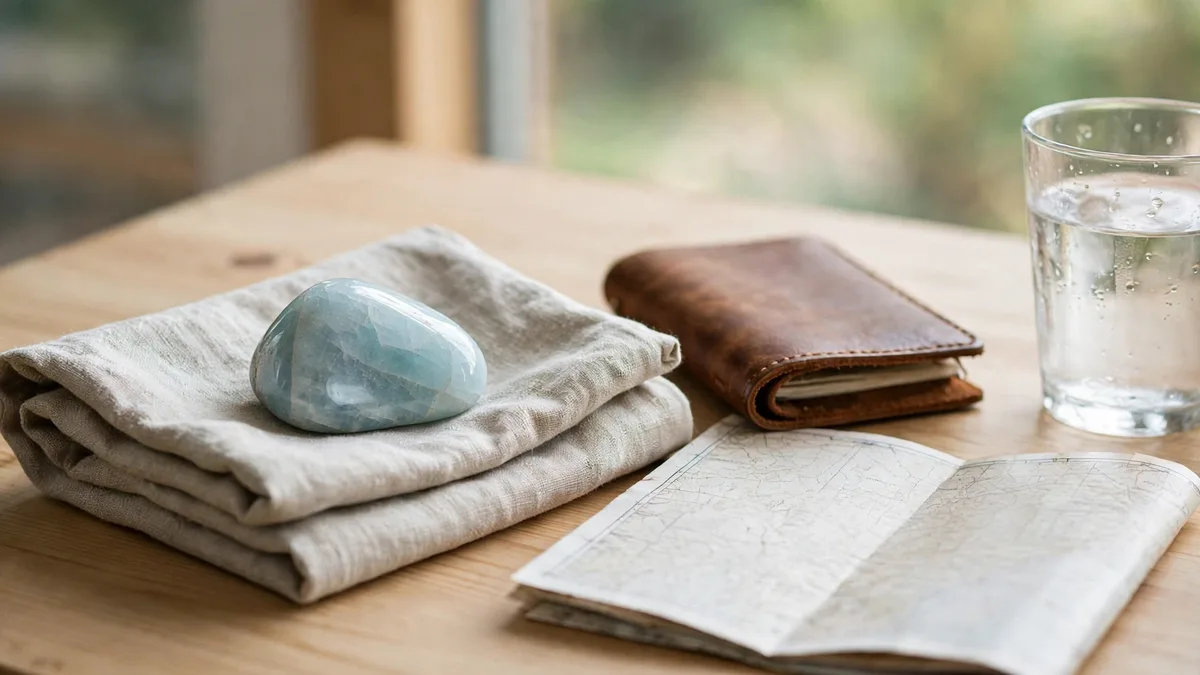
Travel asks a lot of a person. There are early alarms, crowded stations, long waits and unfamiliar beds. Even a happy journey can feel tiring, and the tiredness often starts before the journey itself, in the rush of packing and leaving.
Aquamarine travel rituals offer a gentler way to move through all of that. Aquamarine is a pale blue stone, the colour of shallow sea water, long carried by sailors and travellers as a companion stone. The stone will not calm a delayed train or smooth a rough sea. What it can do is give you a small, steady point of focus at each stage of the journey.
This article explains what aquamarine is, how to pack it safely, and how to build small rituals around it: before you leave, on the journey, beside the water, and on arrival. The safety rule is simple and runs through the whole article: aquamarine sits beside water, never in drinking water.
Key Takeaways
- Aquamarine is a pale blue variety of beryl, long carried by sailors and travellers as a companion stone.
- A small travel ritual is a pause, not a promise.
- Pack aquamarine in a soft pouch, inside the bag, where it cannot knock against harder stones.
- Aquamarine is beryl and contains beryllium: never put it in drinking water or elixirs.
- On the journey, hold the stone, breathe slowly, and drink plain water in small sips.
Why Aquamarine Suits Travel
Aquamarine takes its name from the Latin for sea water. The stone ranges from the palest blue, almost clear, to a soft sea green-blue, and it is at its most beautiful in natural light. It is the birthstone of March, the month when winter loosens and the travelling season begins to stir.
Sailors once carried it for safe passage across the water, and it was said to calm rough seas. Those are stories, not facts: no stone can change the weather or guarantee a safe journey. But the stories tell us something true: its colour reminds people of calm water, and calm water is what every traveller hopes for.
Aquamarine is fairly hard, about 7.5 to 8 on the Mohs scale, so a polished stone survives well in a bag, but it is not unbreakable. A hard knock against a harder stone can chip it, and a long spell in harsh sunlight can fade its palest colours. Like every stone at Crystal by Ayesha, aquamarine is a beautiful object to enjoy, not a treatment. It will not cure travel sickness or anxiety, and it should never be mistaken for medicine.
Packing Aquamarine Well
A calm journey starts the evening before, with the bag. Pack the aquamarine last, so it is not buried under shoes and books. Slip the stone into a small soft pouch, a drawstring linen bag or a lined pocket, and place the pouch near the top of the bag where you can reach it easily. The pouch protects the stone from knocks, and it also protects everything else in the bag from the stone.
If you carry more than one stone, give each its own pouch, so they cannot scratch and chip each other.
Think about what else goes in the bag with the stone. A water bottle, a book, a light scarf and a notebook are good travelling companions for a calm journey, and they all sit happily beside a small stone. Keep the pouch where you can find it in a moment, even in a crowded station.
Remember the water rule: the stone always sits beside a glass of water, never in it, and it stays dry in its pouch on the move.

A Calm Ritual Before You Leave
The morning of a journey is often the most hurried part of it, and that is exactly why a short ritual before leaving is worth having. Give yourself ten unhurried minutes before the taxi or the train. Pour a glass of fresh drinking water, set it beside your aquamarine, and drink it slowly in small sips.
Hold the stone for a minute, feel its coolness and weight, then place it in its pouch in your bag. The ritual is deliberately small: a glass of water, a quiet minute, and a stone packed with care. It does not need candles, music, or a long meditation. Its value is the pause itself, a calm start before the noise of the journey begins.
A quick written list the night before, tickets, identification, keys, charger, address, saves a frantic morning search. A beginner's guide to wearing crystals every day is a useful companion here, because it covers the same gentle idea at home: a stone worn or carried daily, as a quiet habit rather than a grand gesture. Travel is simply that habit, carried a little further from home.
On the Journey: Slow Moments
On a train, a bus or a plane, take the aquamarine from its pouch and hold it for a few minutes. Its cool surface and gentle weight give your hands something steady to do. Breathe slowly while you hold it, and let the movement of the journey carry you rather than fighting it.
Keep a bottle of plain water within reach and sip it little and often. The stone sits beside the water, on the tray or the table, never in it. A book, a window view and a glass of water make a better trio than a screen, and the stone is a small reminder to slow down.
If the journey becomes stressful, pause, hold the stone, breathe slowly, and deal with one thing at a time. The stone will not fix a delay, but a moment of stillness helps you think clearly. Put it back in its pouch when you need both hands.

Pauses Beside the Water
Aquamarine is a sea stone, and a journey that passes water deserves a pause beside it. If your route takes you past a river, a lake, or the sea, stop for a few minutes and sit where you can see the water. Take the stone from its pouch and hold it while you watch the water move.
This is the moment to remember the one rule that matters most. The stone may sit beside the water, on a wall or a table, but it must never go into the water you drink, and it is best kept out of rivers and the sea as well, where it can easily be lost. Aquamarine is beryl, and beryl contains beryllium, so it must never go into drinking water or elixirs. Beside the water is the only place for it.
Aquamarine and cool water for sensitive skin describes the same rule at home: fresh water, a cool stone, and a quiet moment, with the stone always outside the glass. Five minutes beside the water, breathing slowly, is worth more than an hour spent hurrying past it.

Arriving Well: The First Evening
Arriving well is the part of travel that most people rush, and it is the part that shapes how the whole trip feels. When you reach your room, unpack the aquamarine first, before the clothes and the chargers. Set it on the bedside table and pour a glass of fresh water to sit beside it. The stone is home, even when you are not, and the small act of placing it says that the journey is over and the stay has begun.
Wash your face with lukewarm water, drink the glass slowly, and change into something comfortable. How to store crystals beautifully offers ideas for giving stones a proper place at home, and the same thinking works on the move. When the trip ends, pack the stone in its pouch again, in the same place in the bag, and carry it home the way it came. Clean it at home before you leave and again when you return, with lukewarm water, mild soap and a soft cloth. Remember: aquamarine contains beryllium and must never go in drinking water, and malachite, selenite, pyrite and lepidolite must never go in water at all.

Journey Moments at a Glance
| Journey moment | Stone habit | Keep in mind |
|---|---|---|
| Packing evening | Pouch, top of bag | One pouch each |
| Leaving morning | Hold, breathe slowly | Stone beside water |
| On the journey | Hold on quiet stretches | Sip water often |
| Beside the water | Pause, watch, rest | Never in drinking water |
Your Aquamarine Travel Checklist
- Pack aquamarine in its own soft pouch, near the top of the bag.
- Keep the stone beside water only, never in drinking water or elixirs.
- Take ten calm minutes before leaving: water, a quiet minute, stone packed.
- Hold the stone on quiet stretches and sip plain water little and often.
- Pause beside water on the way, and unpack the stone first on arrival.
- Clean it gently at home before and after the trip, and store it in its pouch.
Frequently Asked Questions
What is aquamarine?
Aquamarine is a pale blue variety of beryl, ranging from almost clear to a soft sea green-blue. It is fairly hard, about 7.5 to 8 on the Mohs scale, and sailors and travellers have carried it for centuries.
Can I put aquamarine in my drinking water?
No, never. Aquamarine is beryl and contains beryllium, so it must never go into drinking water or elixirs.
Does aquamarine really calm a journey?
No stone can calm a delayed train or cure travel sickness or anxiety. Aquamarine gives you a small, steady focus and a reason to pause and breathe slowly.
How should I pack aquamarine for travel?
Slip it into its own soft pouch near the top of your bag, away from harder stones and sharp objects.
Which stones must never touch water?
Malachite, selenite, pyrite and lepidolite must never go in water, and no stone should ever go into the water you drink.
Can I wear aquamarine while travelling?
Yes, a pendant or a ring travels well. Put jewellery on last, take it off for heavy work or swimming, and keep it away from perfume and harsh chemicals.
The Bottom Line
Aquamarine travel rituals are small and simple: pack the stone with care, take a calm minute before you leave, hold it on the quiet stretches, pause beside the water, and unpack it first when you arrive. The stone stays beside the water, never in it.
Start your next journey the calm way, with a glass of water and a pale blue stone.
A Note for Calm Journeys
Keep it slow, keep it simple, keep it close. A small stone, a glass of water, and a few unhurried minutes will carry you further than any hurried plan.


