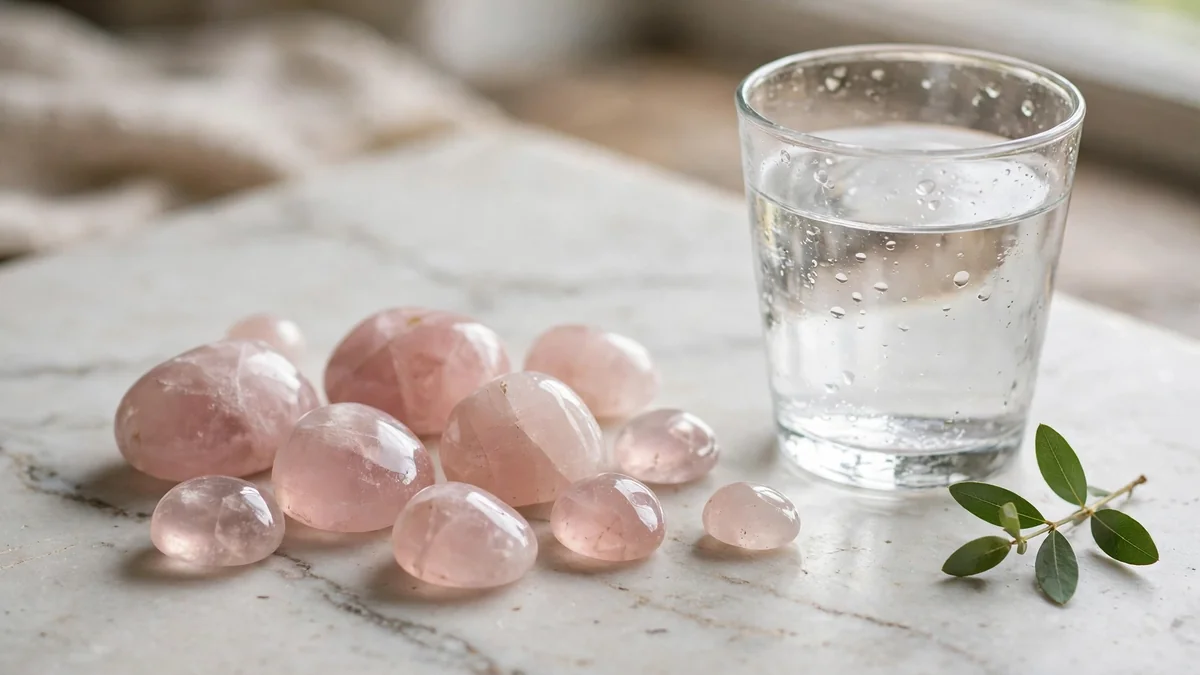
Some days ask for softness — a gentle day, where you move slowly and let things be easy. Morganite belongs to those days: a pale pink stone, soft as a petal, that seems to slow the morning down a little.
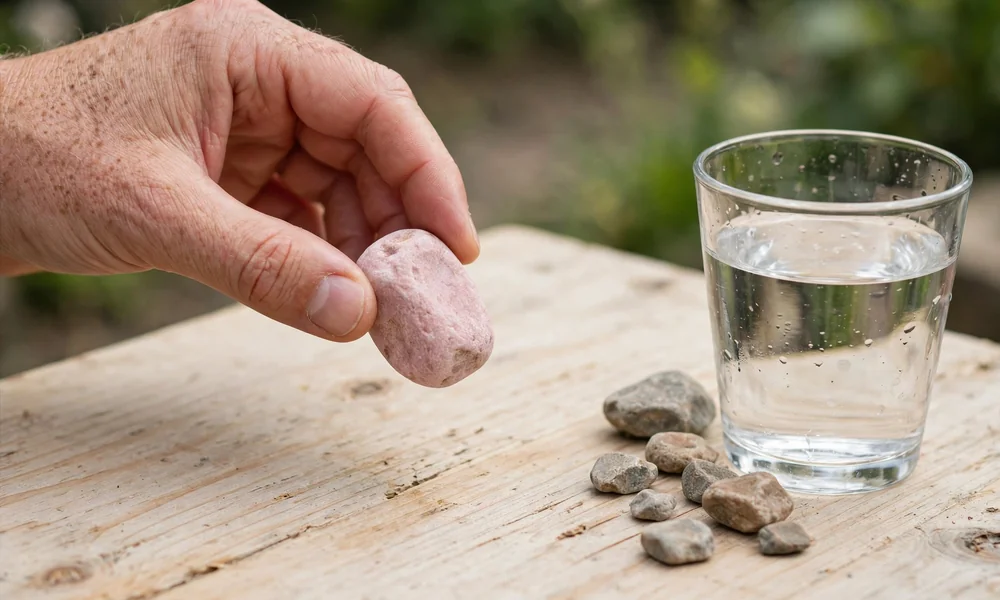
Morganite is the soft pink variety of beryl, coloured by manganese, loved for its quiet colour rather than any bold sparkle. It sits happily as a pendant on a fine chain, or as a polished stone on a dressing table beside a glass of water, giving a small sense of calm to its corner.
This article explains what morganite is, how to wear and keep it gently, and the one safety rule that matters most: morganite contains beryllium, so it must never go into drinking water or elixirs.
Key Takeaways
- Morganite is the soft pink variety of beryl, coloured by manganese; its beauty is its gentle petal-pink colour.
- Wear it as jewellery or keep it nearby on a dressing table — the stone is a companion, not a treatment.
- Morganite contains beryllium: never put it in drinking water or elixirs; stone beside water only.
- Malachite, selenite, pyrite, and lepidolite must never go in water either.
- A gentle-day ritual is simple: fresh water, a clean glass, a dry stone nearby, and a few unhurried minutes.
What Morganite Is
Morganite is a member of the beryl family, a cousin of emerald and aquamarine. Where emerald is green and aquamarine is blue, morganite is pink — a soft peach-pink to rose-pink, coloured by tiny amounts of manganese. Named after the banker and gem collector J. P. Morgan, it is found in Brazil, Madagascar, Afghanistan, and California.
It is fairly hard, about 7.5 to 8 on the Mohs scale, so it wears well in jewellery if treated kindly. You will most often see it as a polished tumbled stone, a faceted gem in a pendant or ring, or a pink bead. Its colour varies from almost colourless-pale to a deeper rose, and the palest stones are often the most calming. Strong heat and harsh sunlight can fade its pink, so keep it out of both.
Like every stone at Crystal by Ayesha, morganite is a beautiful object and a source of comfort, not a medical treatment. It will not change your skin or heal anything; its value is simpler — a pretty, gentle stone that makes a quiet corner feel cared for.
Why Soft Pink Feels Gentle
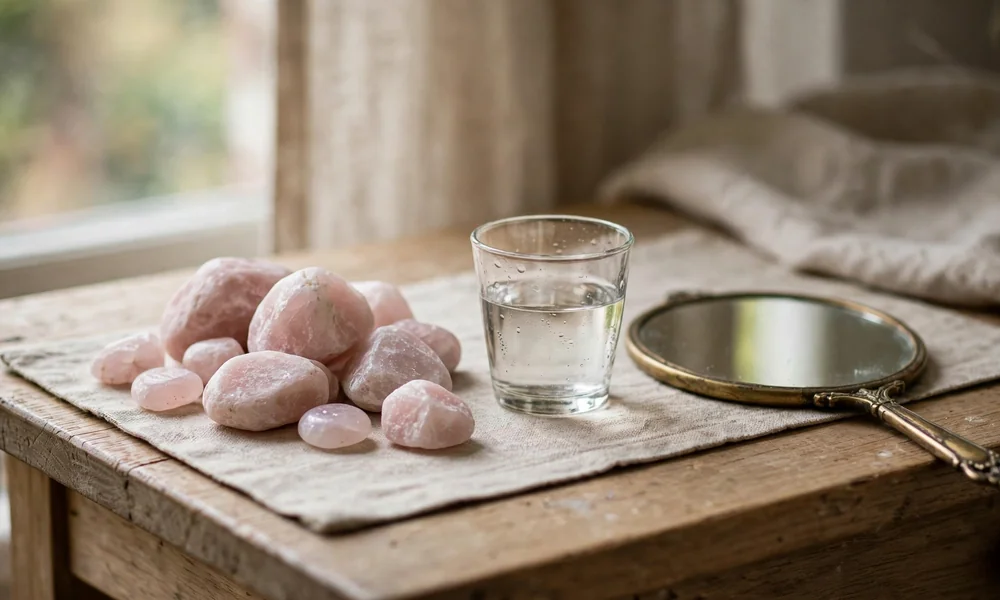
Soft pink is an easy colour to live with: warm without being loud, comfortable beside linen, light wood, white cotton, and clear glass. A pale pink stone on a dressing table changes the mood of the whole corner — mirror, glass of water, and stone together look like a place where someone takes a little care of themselves.
We all respond to colour, and soft pink is widely felt to be calming and kind — the colour of a rose petal, a shell, or a quiet morning sky. On a gentle day, a pink stone is a good companion: it does not demand attention the way a bright red or deep blue stone might, it simply sits there, pale and steady.
For brighter days, topaz light for bright beauty is a good companion to this one.
Wearing Morganite Softly
A morganite pendant on a fine chain is the simplest way to wear it, the stone sitting near the collarbone and catching soft light through the day. Rings and small earrings suit it too, though a ring takes more knocks, so a pendant is kindest for a stone you want to keep beautiful. Whatever you choose, put jewellery on last, after perfume, hairspray, and creams, so the stone meets as few chemicals as possible.
Morganite is fairly hard, but not unbreakable: a sharp knock can chip it, and a faceted stone can lose a corner. Take it off for heavy work, gardening, cleaning, and the gym, and keep it from harsh household cleaners. At night, rest it in a soft pouch or a lined box, on its own rather than jumbled with harder stones.
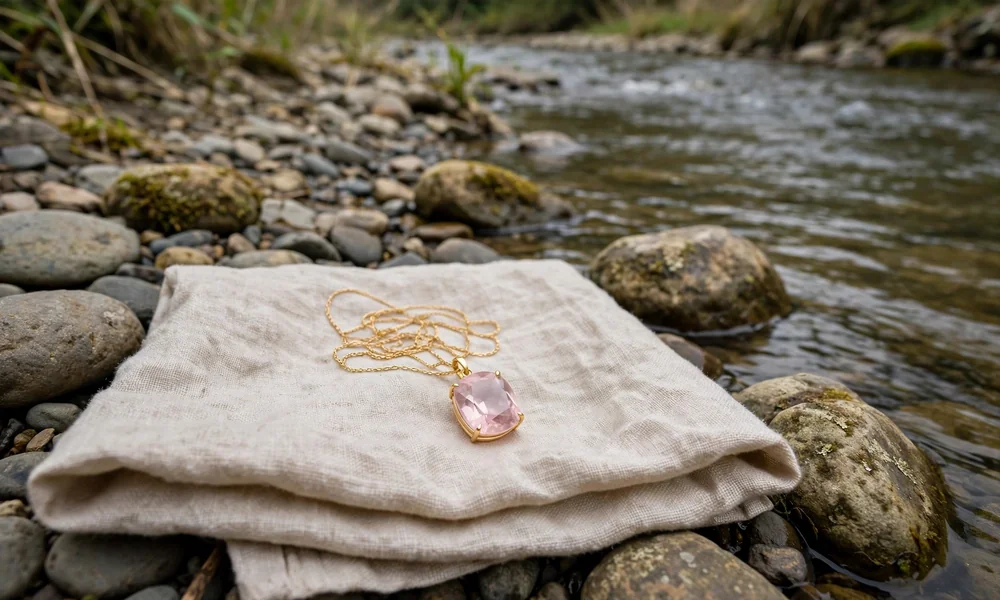
Cleaning is simple: lukewarm water, a drop of mild soap, a soft cloth, and a pat dry. Never use steam cleaners, ultrasonic cleaners, or strong chemicals, and do not leave it soaking. A clean, dry stone, kept in a soft place, will keep its colour and shine for years.
A Gentle-Day Ritual
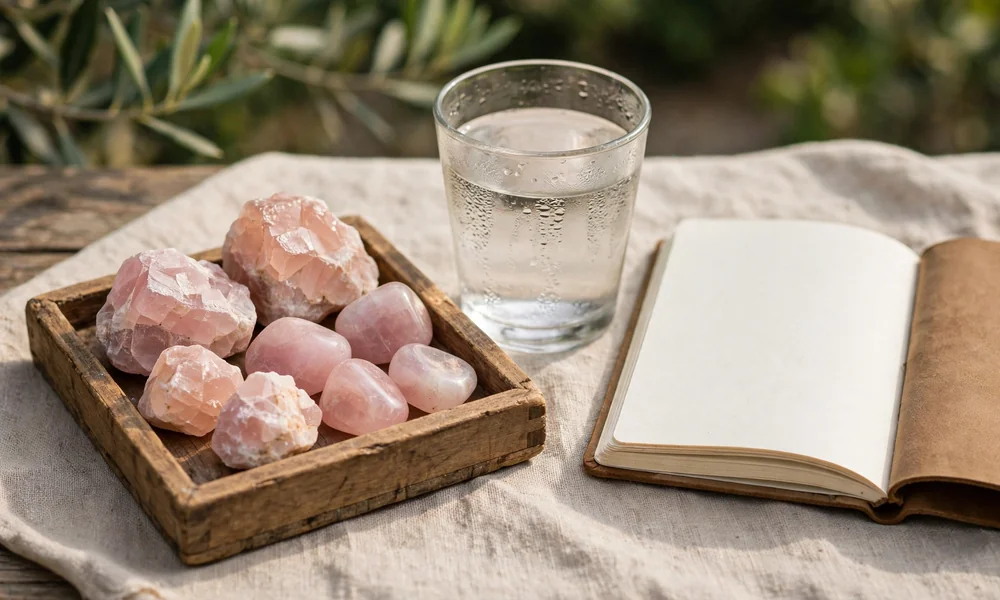
A gentle day starts slowly, and morganite fits a slow morning easily. Set a small wooden tray on your dressing table, place the stone where you can see it, and put a clean glass of fresh water beside the tray. That is the whole arrangement: stone, tray, glass.
Take a few unhurried minutes. Drink the water slowly, in small sips, and let the morning arrive at its own pace. Some people hold the stone for a moment, or write a line or two in a notebook. The point is the pause, not the stone: the stone marks the pause, and makes an ordinary glass of water feel deliberate.
In the evening, the same tray can sit beside your bed. A slow bath with a pink stone nearby is another gentle ritual, and rose quartz bath rituals for soft skin shows how a soft pink stone can set the mood for one.
Morganite and Water: The Safety Rule
Here is the rule that matters most, and it is not negotiable: never put morganite in drinking water, and never use it to make an elixir. Morganite contains beryllium, and beryllium compounds are toxic. A stone in a glass of water is not a beautiful ritual; it is a risk.
The safe way is the indirect method: the stone stays beside the glass, on a tray or a shelf, and the water stays plain water inside the glass. The two never meet. The stone joins the ritual through its presence, its colour, and the pause it invites — not by touching the water. A beginner's guide to crystal elixirs at home explains this method in full. No stone ever goes into the water you drink, and morganite is no exception.
Morganite is not the only stone with this rule: some stones must never touch water at all. Malachite contains copper and can release toxic compounds in water. Selenite is so soft that it dissolves and crumbles in water. Pyrite contains iron sulphide, which can rust and release sulphur compounds. Lepidolite contains lithium, which does not belong in drinking water. Keep all of them dry, beside water only — never in it.
Caring for Morganite
Good care keeps morganite pale and pretty for years. Store the stone in a soft pouch or a lined box, away from harder stones and long, harsh sunlight, which can fade its pink. A drawer or a shaded shelf is ideal; a sunny windowsill is not.
Clean it as above: lukewarm water, a drop of mild soap, a soft cloth, and a gentle pat dry. Never use bleach, acetone, or abrasive cleaners, and keep it away from perfume and hairspray by putting jewellery on last. If a chain tarnishes, clean it on its own, and keep the stone out of any cleaning dip.
Check the setting now and then: a loose claw or a worn chain is easy to miss, and a stone lost down a drain is a sad end for a pretty thing. A jeweller can tighten a setting in minutes, once a year.
What Morganite Will Not Do
Say it plainly: morganite will not make your skin softer, clearer, or younger, and it will not treat, cure, or prevent any condition.
What morganite can do is simpler: it can make a dressing table look cared for, give a slow morning a small point of focus, and remind you to drink your water slowly. That is a real comfort, and it is enough — worth keeping, as long as it is never mistaken for a treatment.
| Stone | Near drinking water? | Keep in mind |
|---|---|---|
| Morganite | Beside the glass only | Contains beryllium; keep dry |
| Rose quartz | Beside the glass only | The safest pink companion |
| Clear quartz | Beside the glass only | A gentle beginner stone |
| Malachite | Never in water | Contains copper; toxic in water |
| Selenite | Never in water | Dissolves and crumbles |
Your Morganite Gentle-Day Checklist
- Choose a morganite you love: a pendant, a ring, or a polished stone.
- Keep it beside water only — never put morganite in drinking water or elixirs.
- Remember the never-in-water stones: malachite, selenite, pyrite, and lepidolite.
- Set a small tray with the stone and a clean glass of fresh water.
- Clean with lukewarm water and mild soap, dry with a soft cloth, store in a soft pouch.
- Wear it gently, put jewellery on last, and check the setting once a year.
Frequently Asked Questions
Is morganite safe to wear every day? Yes, for most people. It is fairly hard, about 7.5 to 8 on the Mohs scale, so a pendant wears well. Take it off for heavy work, cleaning, and the gym, and keep it from harsh chemicals and knocks.
Can I put morganite in my drinking water? No, never. Morganite contains beryllium, which is toxic, so it must never go into drinking water or elixirs. Keep the stone beside the glass only.
Which stones should never go in water? Malachite, selenite, pyrite, and lepidolite must never go in water, for different reasons: copper, dissolving, rusting, and lithium. No stone should ever go into the water you drink — stone beside the glass is the only safe way.
Does morganite need cleansing? A simple wash is enough: lukewarm water, a drop of mild soap, a soft cloth, and a gentle pat dry.
Will morganite fade? Its pink can fade with prolonged strong sunlight or heat, so store it away from sunny windowsills. A shaded shelf or a soft pouch keeps the colour best.
Is morganite the same as rose quartz? No, though both are soft pink. Morganite is a pink variety of beryl, while rose quartz is a pink variety of quartz — different minerals, happy side by side on a dressing table.
The Bottom Line
Morganite soft pink beauty is a gentle-day companion: a pale pink stone to wear as jewellery or keep on a dressing table beside a glass of fresh water. Its one unbreakable rule is safety — morganite contains beryllium, so it never goes into drinking water or elixirs; the stone stays beside the water, always.
Choose a stone you love, keep it clean and dry, and let it mark a slower kind of day.
A Note for Gentle Days
Keep it soft, keep it simple, keep it safe. A pale pink stone, a glass of water, and a quiet morning are often all a gentle day needs.



