
A crystal elixir sounds mysterious, and that is half its charm. In practice, it is a much simpler thing: a glass of fresh drinking water kept beside a stone you love, while you take a few unhurried minutes.
That simplicity is the point. You do not need rare stones or expensive bottles. One glass, one stone, and a small corner of calm are enough to begin.
This guide explains the indirect method, the only safe way to make an elixir at home, how to choose your first stones, and how to build a gentle rhythm around it. No stone ever goes into the water you drink.
Key Takeaways
- A crystal elixir at home is fresh drinking water kept beside a stone, never with the stone in the water: the indirect method.
- No stone ever goes into drinking water, and some stones must never touch water at all: malachite, pyrite, hematite, lapis, turquoise, calcite, fluorite, opal, selenite.
- Clear quartz, rose quartz, and amethyst are gentle beginner stones.
- A simple elixir takes five to ten minutes: fresh water, a clean glass, a dry stone, a quiet pause.
- The value is the ritual: a calm moment and water drunk slowly.
What a Crystal Elixir Is
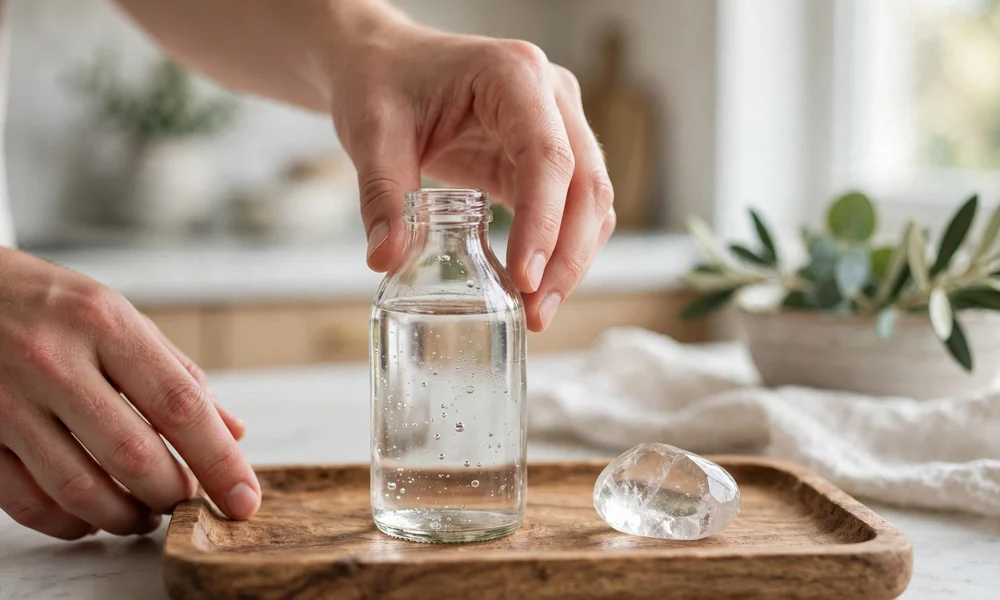
A crystal elixir is a glass of fresh drinking water kept beside a crystal for a few quiet minutes. The stone sits next to the glass, on a tray or shelf. The water stays plain water, and the stone stays dry.
This is sometimes called the indirect method, because the stone joins the ritual through its presence, its colour, and the pause it invites, rather than by touching the water. It is the only method a beginner should use. The stone gives an ordinary glass of water a sense of occasion, and the wait creates a pause. None of this changes the water: it is still plain water, and the ritual adds no minerals or healing properties to it. What it can do is make drinking water feel deliberate rather than rushed, and that attention is the real benefit.
The Indirect Method, First and Always
The indirect method is the whole safety story of this guide. The stone stays outside the glass. The water stays inside the glass. The two never meet.
There are good reasons for the rule. Natural stones are not food, and they were never made to sit in drinking water. A polished stone can have tiny cracks, sharp edges, or a surface that sheds fine dust you cannot see. Some stones contain metals or minerals that dissolve in water; others are soft enough to crumble, or coated with waxes and dyes that wash off. None of that belongs in a drink. The indirect method avoids all of those risks: the stone keeps its beauty, the water stays clean, and you enjoy both safely.
Stones That Must Never Touch Water
Some stones must never touch water at all, not in a glass, not in a bowl, and not under a tap. This matters because several of the prettiest stones in a shop are on this list.
Malachite is the most important example. Its rich green bands are beautiful, but malachite contains copper, and it should never sit in water you might drink or splash on your face. Keep it dry. Pyrite is another to keep dry: it contains iron and sulphur, and it can rust, tarnish, and shed particles in water. Hematite, though it looks like solid metal, can rust and stain when wet.
Lapis lazuli and turquoise are soft and porous, and water can dull them; turquoise is often treated with resins or dyes that water disturbs. Calcite is soft enough for water to dissolve its surface, and soft fluorite can crack or cloud. Opal already holds water inside its structure, and soaking can damage it. Selenite is the most fragile: a water-soluble mineral that dissolves when wet. Enjoy these stones as display pieces, away from the sink.
Choosing Your First Stones
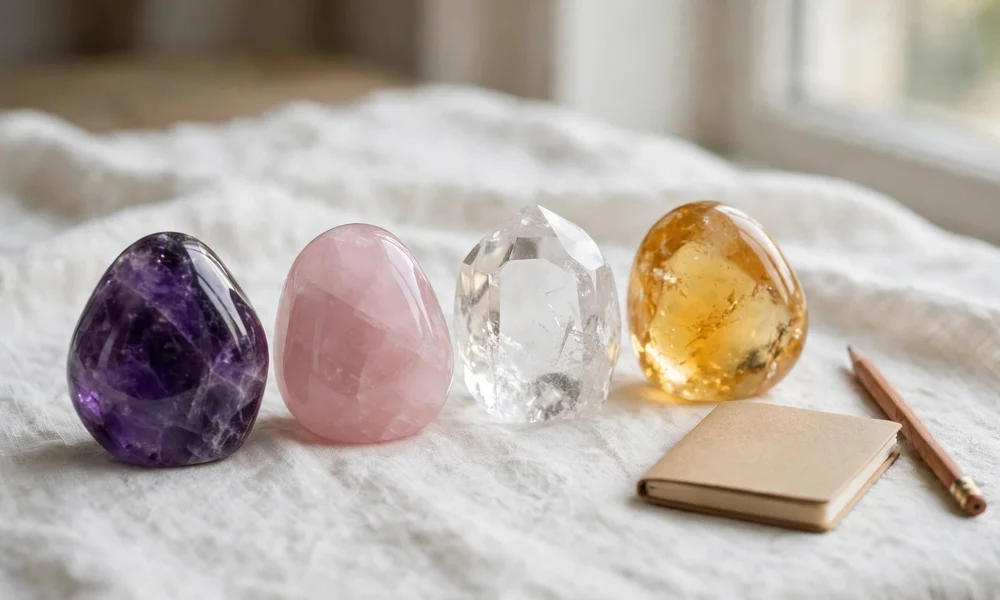
A beginner needs very few stones. Clear quartz is the classic starting point: a small, smooth piece is inexpensive, widely available, and pleasant in any light. For a closer look, clear quartz, a study in light is a gentle place to begin. Rose quartz is a second good choice, soft pink for a bedroom shelf or morning tray. Amethyst is a third, calm violet for an evening glass.
Citrine, warm pale gold, suits a morning elixir. One stone is enough, and three is plenty. Pick a piece that feels smooth in your hand, with no sharp edges, and a colour you enjoy. Buy from a seller you trust, and ask what the stone is, so you know whether it is on the dry list. If you are still deciding, how to choose your first healing stone walks through the choice slowly, without pressure to buy anything rare or expensive.
What You Need to Begin
You need very little, and you may already own all of it. A clean glass or small glass bottle is the centre of the ritual: glass is easy to wash, shows the water clearly, and holds no flavours from earlier drinks. Wash it with warm water and a little washing-up liquid, rinse well, and let it air dry.
A small tray, a folded cloth, or a shallow dish gives the ritual a home, holding the glass and the stone together. A cloth under the stone keeps it from sliding and protects the tray. Fresh drinking water is the only ingredient: pour it fresh each time, plain, at room temperature or cool, with nothing added. Keep the kit in one place, so the ritual is already waiting for you.
Making Your First Elixir, Step by Step
Making your first elixir takes about ten minutes, mostly sitting quietly. Choose a moment when you will not be rushed, perhaps after breakfast or before bed, and gather your tray, glass, water, and stone.
Wash your hands and glass. Dry the glass, place it on the tray, and set the stone beside it, a few centimetres away, where you can see it. Pour fresh water into the glass, leaving a little room at the top. Then sit down, breathe slowly, and let the water and the stone simply be there for five to ten minutes.
| Step | Time | What to do |
|---|---|---|
| Prepare | 2 minutes | Wash hands and glass; set the stone beside the glass |
| Pour | 1 minute | Pour fresh water into the glass, leaving room |
| Pause | 5 to 10 minutes | Sit quietly and enjoy the colour of the stone |
| Drink | 2 minutes | Drink slowly, in small sips; dry and store the stone |
When the pause is over, drink the water slowly, in small sips, rather than in one long gulp. Then wash the glass, dry the stone if it needs it, and return everything to the tray. The ritual is complete.
Morning, Evening, and Weekly Rhythms
An elixir ritual can fit into different parts of the day, and the time changes how it feels. A morning elixir suits a bright stone like citrine or clear quartz: make it after breakfast and sit with it while the day is still quiet.
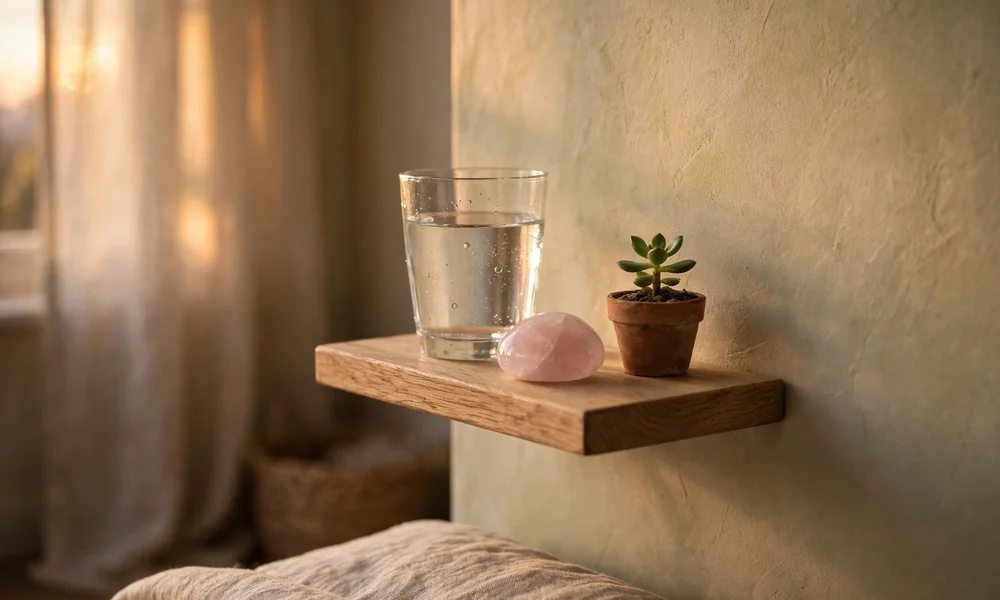
An evening elixir suits a calmer stone like amethyst or rose quartz. Make it an hour or so before bed, when the house is settling down, and let the pause signal that the day is ending. If you already have a gentle night routine, an elixir fits naturally into it: a simple five-step night routine with stone and water shows how a stone and a glass of water can anchor an evening. Once a week, wash the glass and tray and check for chips. Three or four elixirs a week is plenty.
Keeping a Simple Elixir Journal

A small journal turns a pleasant habit into a practice you can learn from. A few lines after each elixir are enough.
Write the date, the stone, and one sentence about the morning or evening. Note anything you noticed: the light on the stone, a calm moment before a busy day, or a glass you actually finished. Over a month, those notes show which stones and times suit you best. If an elixir felt rushed three days in a row, that is useful information: perhaps the time is wrong, or the tray is badly placed. Adjust one small thing and see whether the next week feels better. Keep the journal beside the tray.
Your Crystal Elixir Checklist
- Use the indirect method only: the stone stays beside the glass, never in drinking water.
- Check every stone against the never-in-water list — malachite, pyrite, hematite, lapis, turquoise, calcite, fluorite, opal, selenite — and keep those dry.
- Start with one beginner stone — clear quartz, rose quartz, or amethyst — smooth and free of sharp edges.
- Use a clean glass, fresh water, and a small tray or cloth to hold glass and stone together.
- Pause for five to ten minutes, then drink the water slowly in small sips.
- Wash the glass after each elixir, dry the stone, tidy the tray weekly.
Frequently Asked Questions
What is a crystal elixir? A crystal elixir is a glass of fresh drinking water kept beside a crystal for a few quiet minutes. The stone never touches the water.
Can I put a crystal directly into my drinking water? No. Stones can have cracks, dust, sharp edges, or dissolving minerals, and some contain metals. Keep the stone beside the glass, never in it.
Which stones are safe for a beginner elixir? Clear quartz, rose quartz, and amethyst are gentle beginner choices for display beside a glass. Even these stay outside the water, and should be smooth, with no sharp edges.
Which stones must never touch water? Malachite, pyrite, hematite, lapis lazuli, turquoise, calcite, fluorite, opal, and selenite. Malachite contains copper, pyrite can rust, and selenite can dissolve. Keep them dry on a shelf or in a lined box.
How long should the glass sit beside the stone? Five to ten minutes is enough. The pause is for you, not for the water: a quiet moment before you drink. Longer is fine if you enjoy it.
Do crystal elixirs heal or cure anything? No. A crystal elixir does not treat, cure, or prevent any health condition, and it does not change the water. Its value is the calm ritual and the habit of drinking water slowly. If you have a health concern, please speak to a qualified health professional.
The Bottom Line
A crystal elixir at home is a small, honest ritual: fresh water in a clean glass, a stone you love beside it, and five to ten unhurried minutes. The indirect method keeps it safe, the beginner stones keep it simple, the journal keeps it yours.
Begin with one stone and one glass, tomorrow morning or evening. Pour the water, set the stone beside it, sit quietly, and drink slowly. That is the whole practice.
A Note to Begin Gently
Keep it simple, keep it safe, keep it yours. The best rituals are rarely elaborate: a glass of water, a beautiful stone, and a few quiet minutes, repeated until they become part of how you live. Stay curious. Stay clear. Begin gently.



