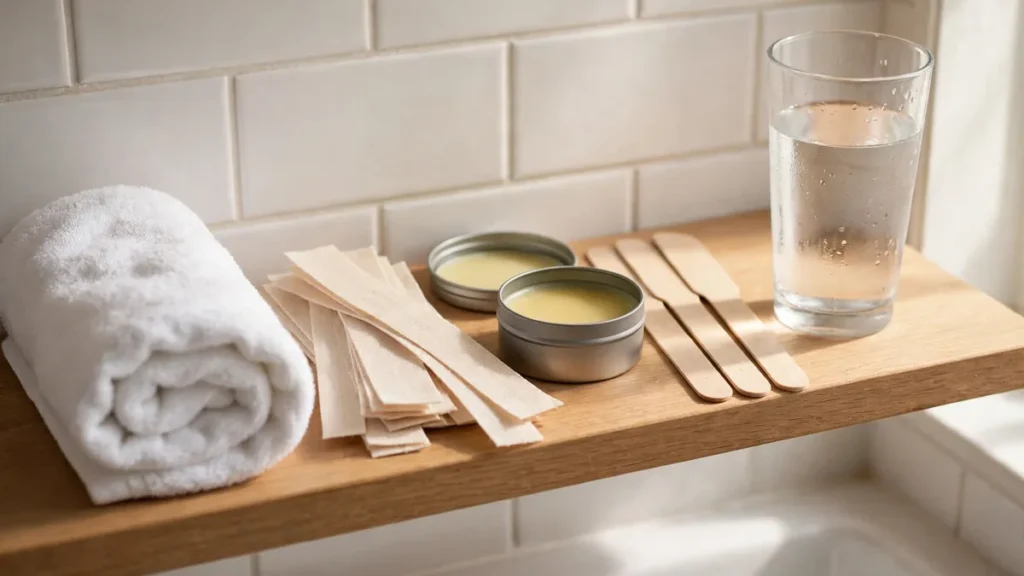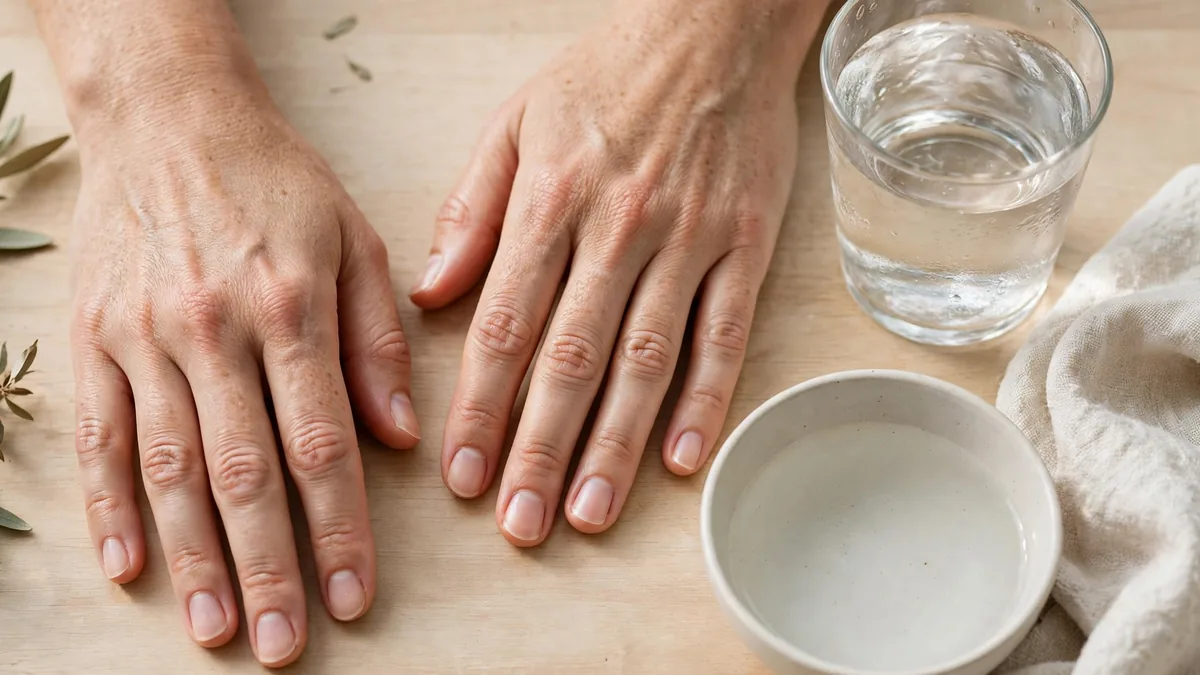
Nails seem small, but they show up everywhere. They tap on keyboards, hold a pen, open a jar, and sit in plain view all day long, so when they split or peel, it feels bigger than it is.
Nail care with water is simpler than most routines promise. It is not about long soaks or special products: it is about lukewarm water, gentle handling, and a few small habits that protect the nail while it grows.
This guide explains nail care with water in plain steps: how water helps and harms nails, how to soak briefly and safely, how to file softly, how to dry and moisturise, and which habits to avoid.
Key Takeaways
- Nail care with water means short, lukewarm soaks and gentle handling, never long soaking.
- Lukewarm water softens nails for trimming and filing, while hot water dries them out.
- Nails are weakest when wet, so file and push cuticles only when nails are dry.
- A soft file, one direction, and short rounded tips protect nails from splitting.
- Daily water, gentle drying, and plain hand cream keep nails looking stronger.
What Nail Care with Water Means
Nail care with water means using plain water as a gentle tool, not a treatment. Water softens the nail plate for a short time, which makes trimming easier and helps the nail bend instead of snap.
But water is a double-edged helper. Nails absorb water and swell, then shrink as they dry, and that swelling and shrinking weakens them over time. So the rule is simple: short and lukewarm, never long and hot. Five minutes is plenty, and the water should feel comfortable on the inside of your wrist.
Why Nails Split and Peel
Nails split and peel for ordinary reasons, and most of them are habits, not mysteries. Long hot showers, washing dishes without gloves, and constant hand-washing all soak the nails again and again, and each cycle leaves them a little weaker.
Rough handling adds to the damage. Over-filing is another common cause: filing back and forth like a saw frays the tip, and the layers of the nail begin to peel apart. Habits can change, and nails grow out fresh.
The Lukewarm Soak, Done Right
A good soak is short, warm, and plain. Fill a small bowl with lukewarm water, comfortable on the inside of your wrist, and soak your fingertips for three to five minutes. Plain water is enough: no soap, no oils, no salt, nothing extra is needed for a simple soak.
Three to five minutes softens the nails just enough for trimming, without the long swelling that weakens them. After the soak, pat your hands dry with a soft towel, and trim or file while the nails are still slightly soft, but not dripping wet. The same gentle logic applies to skin: why lukewarm water works better for morning skin explains the case for a softer start.

Trimming Nails the Gentle Way
Trim nails after a short soak, when they are soft and less likely to crack. Use clean, sharp clippers, and cut straight across in small steps, rather than one hard squeeze. Small cuts give you control, and they stop the nail from bending and tearing.
Keep the length short to medium: nails that are too long catch on things and break, while nails cut too short can hurt and invite ingrown edges. After clipping, smooth the corners with a soft file so nothing catches on fabric. Trim once a week.
Filing Softly in One Direction
Filing is where most nail damage happens, and it is also the easiest habit to fix. Use a soft, fine file — a wooden emery board or a glass file — and file in one direction only, from the edge toward the centre. Never saw back and forth: that motion frays the tip and splits the layers of the nail.
File dry nails, not wet ones, because wet nails are softer and tear more easily. Use light pressure and short strokes, and stop as soon as the edge feels smooth. File the corners into a soft rounded shape.
Drying and Moisturising After Water
What happens after water matters as much as the water itself. Pat your hands dry with a soft towel instead of rubbing, and dry between the fingers too, where water lingers. Wet hands left to air-dry pull moisture out of the skin and nails as the water evaporates.
Then moisturise while the skin is still slightly damp. A small amount of plain, unscented hand cream, rubbed into the hands and around each nail, seals in the moisture. Pay attention to the cuticles: a little cream massaged gently around each nail keeps the skin soft and the nail bed protected. Do this after every wash.
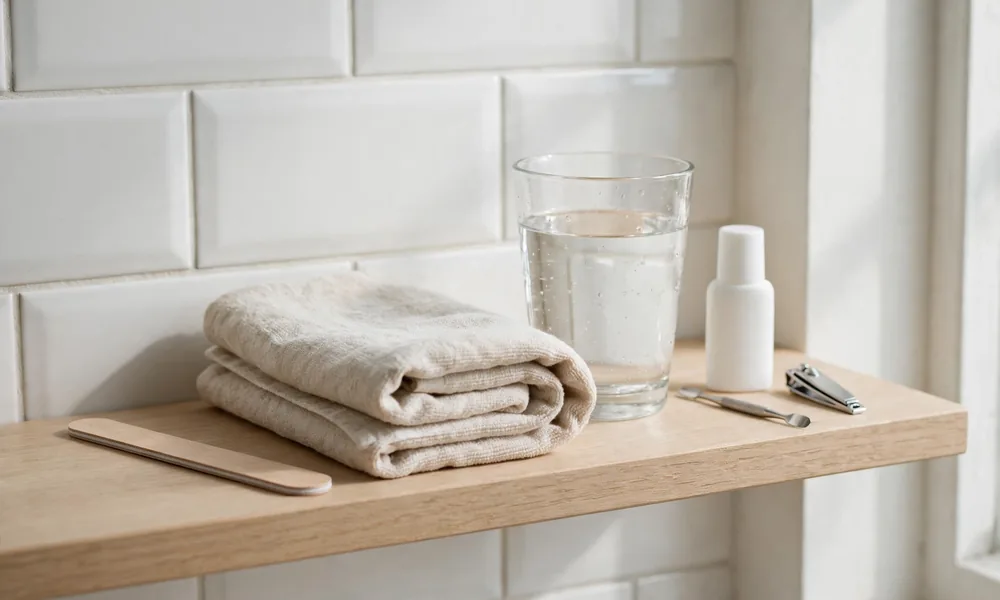
Protecting Nails from Daily Water
Daily water is the hardest part of nail care, because hands are in water all day. Washing dishes, cleaning, and frequent hand-washing all soak the nails, and the damage adds up quietly. Gloves are the simplest protection, and they work better than any cream.
Wear rubber gloves for dishes and cleaning, and thin cotton gloves for dry dusty work. Wash your hands with lukewarm water and a mild soap, and rinse well: leftover soap dries the skin and nails. Pat dry every time, and keep a small tube of hand cream near the sink.
Cuticles: Leave Them Mostly Alone
Cuticles are the thin skin that seals the base of each nail, and their job is protection. They keep germs and water out of the nail bed, so cutting them away opens a door that should stay closed. Leave them mostly alone, and your nails will thank you.
After a short soak, when the cuticles are soft, you may push them back very gently with a soft towel or a wooden stick, using almost no pressure. Never cut them, never tear them, and never push hard. Healthy cuticles mean healthy-looking nails.
Habits That Weaken Nails
Some habits weaken nails slowly, day after day, without any warning. Biting and picking are the worst: they tear the nail layers, damage the skin around the nail, and invite infection. If you catch yourself biting, keep nails short and keep your hands busy with something else.
Using nails as tools is another quiet destroyer: opening cans, scraping stickers, and prying things apart all bend and split the tips. Harsh removers and strong chemicals dry the nail plate, so use them rarely and rinse well after. A gentle daily habit protects more than any quick fix, as in lip care water: a simple daily habit, where small steps done daily beat harsh treatments.
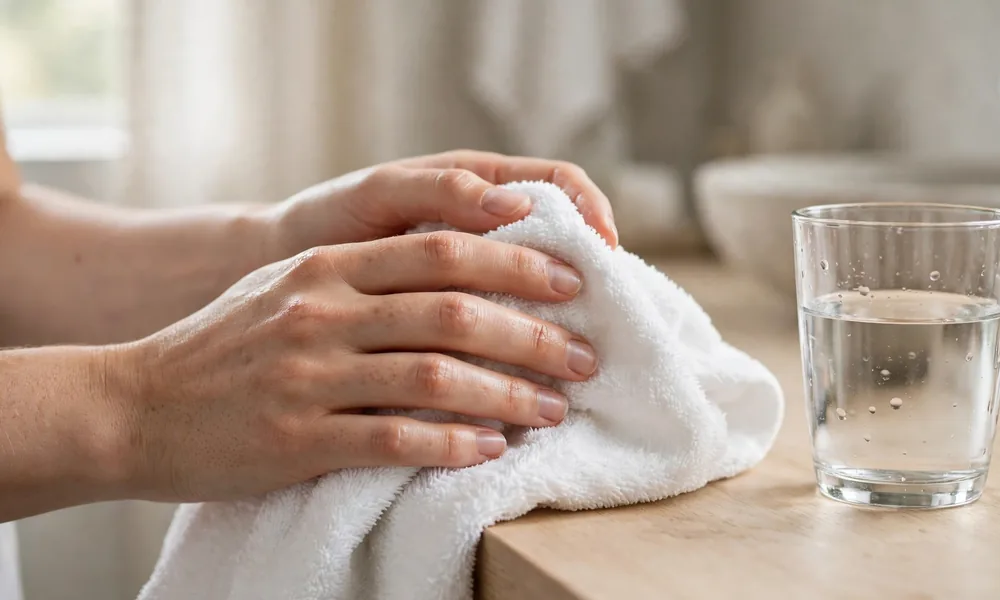
Nail Care Through the Seasons
Nails feel the seasons just like skin does. Cold winter air and indoor heating dry the air, and nails grow drier and more brittle. In winter, moisturise more often, wear gloves outdoors, and keep soaks short and lukewarm, never hot.
Summer brings the opposite problem: swimming, frequent washing, and sun all soak and dry the nails in turn. Rinse with fresh water after swimming, pat dry, and moisturise. Nails change slowly, so give a new habit a month before judging it.
When Nails Need More Than Habits
Gentle habits help healthy nails, but they cannot fix every nail problem. If a nail stays painful, swollen, or very discoloured, or if it lifts from the nail bed, keeps breaking in the same place, or shows a dark line that does not grow out, habits alone are not enough.
These signs deserve a professional opinion, not a home remedy. See a doctor or a dermatologist, and describe what you have noticed and for how long. Knowing when to ask for help is part of good nail care.
What Water Cannot Do for Nails
Be honest about what water can and cannot do. Water will not cure weak nails, repair a split nail, or make nails grow faster. No soak, cream, or routine can change how fast your nails grow: they grow at their own pace, about three millimetres a month for fingernails.
That is a real result, even if it is a quiet one. The same gentle logic applies to hair, where water used thoughtfully helps the hair you already have look its best, as in a simple guide to glossy, healthy-looking hair with water.
| Nail step | Water rule | Gentle habit |
|---|---|---|
| Soak briefly | Lukewarm, five minutes | Pat dry softly |
| Trim after soak | Nails slightly soft | Cut straight across |
| File dry nails | One direction only | Soft rounded tips |
| Moisturise after wash | Cream on damp skin | Gloves for dishes |
Your Nail Care with Water Checklist
- Soak fingertips in lukewarm water for three to five minutes, never long or hot.
- Trim after a short soak, in small steps, straight across, then smooth the corners.
- File dry nails in one direction only, with light pressure and a soft file.
- Pat hands dry with a soft towel and moisturise while skin is still slightly damp.
- Wear gloves for dishes and cleaning, and keep hand cream by the sink.
- Leave cuticles alone, never cut them, and never use nails as tools.

Frequently Asked Questions
How long should I soak my nails in water?
Three to five minutes in lukewarm water is enough. A short soak softens nails for trimming, so never soak for fifteen minutes or more.
Is hot water bad for nails?
Yes, hot water dries nails out and makes them more brittle over time. Keep every soak lukewarm.
Should I file my nails wet or dry?
File dry nails. Wet nails are softer and tear more easily, so wait until nails are fully dry, then file in one direction only with a soft file and light pressure.
Can I cut my cuticles?
No, it is best not to cut cuticles. They seal and protect the nail bed, so cutting them can let in germs and water. Push them back very gently after a soak, and leave them alone otherwise.
Why do my nails keep peeling?
Peeling usually comes from repeated soaking and drying, over-filing, or using nails as tools. Gentle habits help the nail grow out stronger.
Will water make my nails grow faster?
No, water will not make nails grow faster. Nails grow at their own pace, about three millimetres a month, but gentle water habits protect the nail so it breaks less while it grows.
The Bottom Line
Nail care with water is short lukewarm soaks, soft filing, gentle drying, and cream after every wash.
Start tonight, and let your nails grow out stronger, one gentle habit at a time.
A Note for Stronger Nails Simply
Keep it lukewarm, keep it short, keep it gentle. Small habits, done daily, are the whole secret.