An oven is the hot box of the kitchen. Behind its glass door, racks hold trays of food while heat turns dough into bread and raw vegetables into dinner. The door shuts, and the box works out of sight, filling the room with warm smells.
Wiping it down is a small chore with a clear reward. A door wiped clean lets you see the food inside, racks wiped dry slide smoothly, and a fresh oven smells of nothing at all. Warm water and a soft cloth do most of the work, and the habit takes ten quiet minutes.
This guide follows the oven itself: what it is, when the cloth should come out, and how to wipe door, racks and walls without fuss. Take everything here as gentle general information for a household chore. Nothing in these pages treats illness, and a question about your health belongs with your doctor, not with a cleaning cloth.
Key Takeaways
- An oven is a heated box with a glass door and sliding racks.
- Wipe it down once it has cooled, never while it is hot.
- Warm water and a soft cloth lift most grease.
- Grease left alone hardens and grows harder to shift.
- Wiping an oven is care for a kitchen, not a cure for anything.
What an Oven Is
An oven is a box that cooks with enclosed heat. Heating parts warm the air inside, the walls hold that heat steady, and the door keeps it in while a window lets you watch. Racks slide in and out on ledges, so trays sit at different heights, and a dial sets how hot the box becomes.
Most kitchens hold one oven built into the cupboards, with a steel front and a dark glass door. Others stand alone under a hob, but the job stays the same. The oven asks for little — a clean rack, a shut door, and a wipe now and then.
Why Water Helps an Oven Stay Clean
Warm water loosens what heat has baked on. A cloth dipped in warm water and wrung out softens grease on the door glass, so a gentle wipe lifts it instead of scraping it. The water does the softening, and the cloth does the carrying, which is why a damp cloth beats a dry one every time.
Water also keeps the job calm. A spray of plain water on the wall of a cool oven sits for a minute, and the marks beneath it grow pale and loose. Keep the water in the cloth and the bowl, though, and never pour it into the oven itself.
When to Wipe an Oven Down
Wipe the door glass after every bake that spatters it. A quick pass while the oven is still only faintly warm takes seconds, and the mark comes off before it can harden into a brown stain. Wait until the glass no longer stings your hand, then wipe and dry it.
Give the inside a fuller wipe once a week if you bake often, or once a month if the oven sees little use. A spill of sugar or fruit juice deserves a wipe the same day, because sweet spills turn to hard amber if they are left to bake again.
A Quiet Wipe-Down, Step by Step
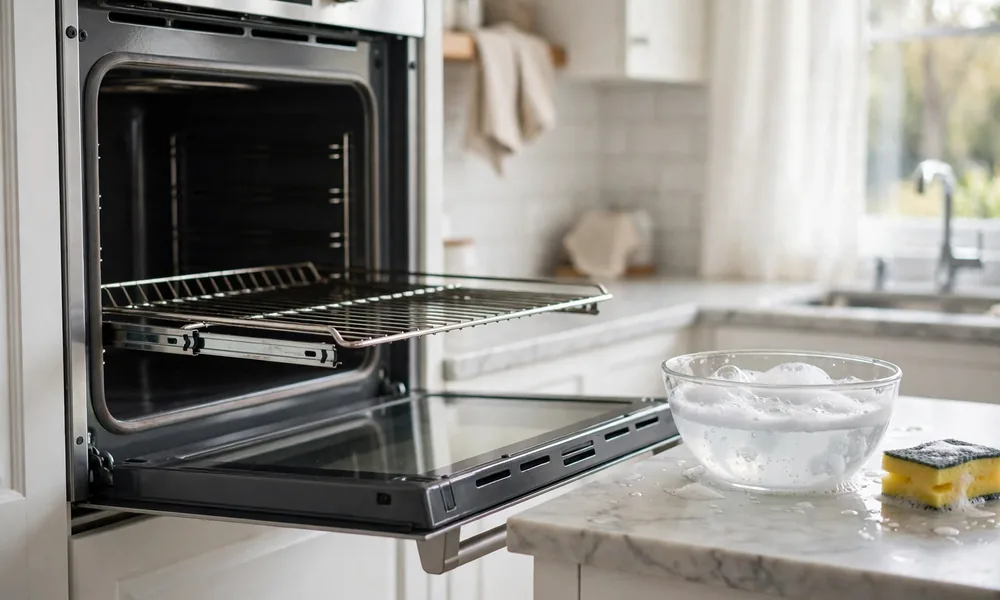
Start with a glass of water for yourself, set well away from the oven, and let the oven cool until its door feels only warm. Pull the racks out and lay them in the sink, then mix a bowl of warm water with a drop of plain soap.
Wipe the door glass first, inside and out, with the damp cloth, then wipe the walls and floor in slow, even passes. Rinse the cloth often, and dry the glass with a second, dry cloth so no streaks stay behind. Wash the racks with the sponge, dry them fully, and slide them back onto their ledges.

Water and an Oven at a Glance
| Cool oven first | Damp cloth ready | Racks out first |
|---|---|---|
| Door glass wiped | Walls wiped slow | Dry glass twice |
| Racks washed well | Soap rinsed off | Warm water only |
| Sweet spills same day | Glass dried clear | Wipe, then rest |
Water and a Cast Iron Pan
For a heavy skillet on the stove, see the cast iron pan guide.
That guide follows a single piece of iron, poured into a mould and left with no coating, which holds heat steadily and cooks food in a thin film of oil. It asks for water first, a low flame, and a pan washed warm and dried on the stove.
This guide is wider and different: it is about the box the food bakes in, not the pan that fries it. The pan sits on a flame and holds almost no water, while the oven holds dry heat all around the food. One is a tool lifted by its handle, and the other is a cupboard that cooks.
Water and a Soup Pot
For a deep pot that simmers soup, see the soup pot guide.
That guide follows a deep steel pot with two handles and a lid, built to hold litres of water over a low flame for forty slow minutes. It simmers carrots, celery and onion until the water turns golden, then serves it warm at the table.
An oven works the other way round. It holds no water at all, and its heat is dry air, not a simmering liquid. The pot keeps water where it belongs under a loose lid, while the oven keeps hot air where it belongs behind a shut door. One makes soup, and the other bakes bread.
Water and a Baking Tray
For the flat sheet that carries bakes, see the baking tray guide.
That guide follows a flat sheet of metal with a low rim, which slides in and out of the oven holding biscuits, roast vegetables and loaves. It is washed by hand in the sink after the serving hour.
The tray and the oven belong together, and that is the difference. The tray is the flat sheet that goes into the heat, while the oven is the heated box it goes into. One is carried to the sink for washing, and the other is wiped where it stands.
An Oven and a Freezer Are Not the Same
A freezer stores food. It keeps food cold. It keeps food frozen. An oven cooks food. It cooks food with heat. The two do opposite jobs. One holds the cold in. The other makes heat.
The freezer guide in this batch follows cold storage, where food waits frozen until it is needed. This guide follows the hot box, where food changes under heat until it is ready to eat. Keep the two apart in your mind, and each chore stays simple.
Nine Neighbours in This Batch
The hallway waits by the front door. Wurtzite rests on a shelf. The staircase climbs between floors. Pyrolusite sits dark and quiet. The attic keeps old boxes. Cinnabar glows red behind glass. The freezer holds food frozen. Soapstone feels soft and grey. Fulgurite carries lightning in its tube. The oven alone cooks with heat.
Stones That Must Never Touch Water
Keep stones out of the kitchen sink and off the oven shelf. A stone that looks dry can still suffer from steam and splashes, so the safest home for one is a dish on a dry shelf, far from the tap. Apatite is first on the watch list: damp air softens it, and thin flakes lift from its surface. Lepidolite is next, because its pale layers carry lithium, and lithium has no place near a drink.
Damp air harms pyrite too, dulling its gold face and leaving rust-coloured patches behind. A single wetting clouds angelite for good, and a long soak turns amber milky, since amber is tree resin that hardened over ages. None of these stones should ever sit in drinking water, and none should be dropped into a glass: let the water stay plain, and let the stones stay dry.
Your Oven Checklist
- Let the oven cool fully before the cloth touches it.
- Wipe the door glass after every bake that spatters it.
- Pull the racks out and wash them in the sink.
- Patch-test any new cleaner on a small hidden corner first.
- Dry the glass twice so no streaks stay behind.
- If a cleaning product leaves your skin red or your breathing uneasy, stop, rinse with plain water, and ask a doctor; an oven wipe is a chore, not a cure.
Frequently Asked Questions
When is the right moment to wipe an oven down?
Wipe the door glass after a bake that spatters it, once the glass no longer stings your hand. Wipe the inside weekly if you bake often, monthly if not.
Can I wipe the oven while it is still warm?
You can wipe it once it is only faintly warm, but never while it is hot. A hot surface can burn your hand, and a cold rinse on hot glass can crack it, so wait until the door feels only warm.
What cloth works best on oven glass?
A soft cotton cloth, dampened with warm water and wrung out, works best on oven glass. It lifts grease without scratching, and a second dry cloth afterwards leaves the glass clear and streak-free.
Does baking soda help with baked-on grease?
Yes, a paste of baking soda and a little water, left on the mark for an hour, softens baked-on grease so a cloth can lift it. Wipe the paste away fully afterwards, and rinse the cloth often as you work.
How do I keep the racks from rusting?
Wash the racks in warm soapy water, dry them fully with a cloth, and slide them back only when they are dry. Racks left wet in a damp oven spot and rust, so dry storage matters more than anything else.
Should I ask a doctor about a cleaning rash?
Yes, if a cleaner leaves your skin red, itchy or sore, or your breathing feels uneasy, stop using it, rinse with plain water, and ask a doctor. A rash is a health question, and a doctor is the right person for it.

The Bottom Line
Let the oven cool, wipe it with warm water and a soft cloth, and dry the glass twice. A clean oven cooks better, and the chore takes ten quiet minutes.
A Note for Clean Ovens
A cool oven, a damp cloth, and a glass of water on the counter — that is all a tidy kitchen asks.