Some days arrive softly, with no hurry at all. The light comes in low, the kettle hums, and nothing needs doing before noon. On days like that, a bright stone feels too loud and a dark one too heavy. What fits is something gentle: a soft pink shell, smooth to hold, quiet to look at.
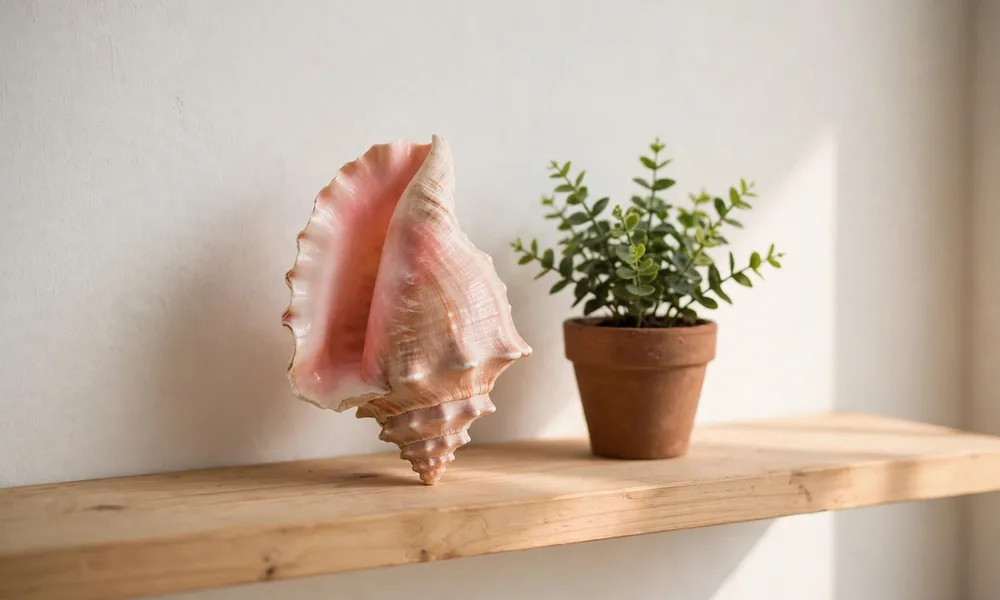
A conch is that kind of shell. It fills both hands, pink as sunrise, a spiral opening into a wide lip. It sits on a tray and catches the light.
This guide explains what a conch is, why its soft pink suits tender days, and how to hold it, keep it and build a slow morning around it. It is gentle general information, and it promises nothing for health: a conch will not heal anything.
Key Takeaways
- A conch is a large spiral shell, pink flared lip.
- Its gentle pink suits tender days and slow mornings.
- A conch is meant for holding and looking at, not for healing anything.
- The shell stays dry, next to a glass of water, and never goes inside one.
- A tender day needs little: soft light, plain water, one shell.
What a Conch Shell Is
A conch is the shell of a large sea snail that lives in warm, shallow water, growing its shell layer by layer. It is made of calcium carbonate, the same hard material that forms pearls and other shells, laid down in thin coats until it is thick and strong. When the snail is gone, the empty shell remains, heavy and cool.
Most conches are hand-length. The outside is usually pale cream or soft pink, ridged along the spiral, while the inside glows a deeper pink. No two shells match exactly.
In shell traditions the conch is a companion for tender days, a small reminder of the sea. That is belief, not medicine: no shell has been shown to protect health.
Why Pink Suits Tender Days
Pink suits tender days because it is a colour that asks for nothing. A tender day is not a bright day or a busy one: a slow breakfast, a short walk, a clean desk and an open window. Soft pink matches that mood exactly, gentle without being pale, warm without being loud.
Pink also suits tender days beside plain water. A tall glass of water, a pale cloth, morning light, and a pink shell on a tray calm the eye. The shell needs no story. It simply sits there, pink and quiet, while the day goes on around it.
A dark stone can feel heavy on a tender day, and a bright one demanding; the conch sits between them.
The Spiral and the Flared Lip
Turn a conch over and first you notice the spiral. It winds upward in steps, each turn smaller, ending in a pointed tip. The spiral is the shell's history: every turn is a year of slow growth, added one thin layer at a time.
The second thing you notice is the lip. Where the spiral ends, the shell flares outward into a wide, smooth opening, pink inside and edged like a soft wave. The lip makes a conch different: no other common shell opens so wide, or holds so much pink.
Run a thumb along the lip and it feels smooth and cool, with no sharp edge.

Holding a Conch Gently
Pick a conch up with both hands, one under the spiral and one under the lip. It is heavier than it looks, and the weight is part of its comfort: it sits in the hands like something made to be held.
Then set it back down, lip facing out, where nobody will brush past it. The lip is the fragile part, so never press it hard against metal or other stones, and never drop the shell onto a hard floor.
A conch knocked against a table edge will chip, and a chip on the lip never heals. Hold it slowly, set it down slowly, and it will stay pink.
A Tender Morning with a Conch, Step by Step
Lay a wooden tray on the desk by the window first thing. Stand a tall glass of plain water on it, then set the conch down next to the glass with its lip turned outward. Water stays in the glass; the shell stays out of it.
Take a seat, lift the shell with both hands, and hold it for a minute. Give it one slow turn, put it back, and sip the water a little at a time as the room wakes up. A page or two in a notebook can follow, or a few quiet minutes at the window.

At the end of the morning, give the shell a wipe with a dry cloth and return it to its place. The whole habit takes less than ten minutes.
Where a Conch Lives at Home
A conch needs a dry, steady home out of the way. A wooden tray on a desk suits it well, and a low shelf suits it better still, since the shell cannot roll off a flat surface. Keep it away from edges and windowsills where a gust could knock it down.
The shell likes a lined box for its longer rests. A small box with a soft cloth inside keeps the dust off and the lip safe.
Never store a conch in a bathroom, where steam settles, and never leave it in direct sun, which can fade the pink. A cool, dry shelf in a quiet room is all it asks.
Conch at a Glance
| Large spiral shell | Soft pink lip | Cool and heavy |
|---|---|---|
| Sea snail shell | Flared wide opening | No two alike |
| Hold with care | Dry cloth clean | Beside water only |
| Pink suits tender days | Dry tray keeps safe | Never soak shell |
Abalone and Its Bright Colours
Abalone blue green shine for fresh days shows a shell built for looking at: a sea snail shell sliced and polished flat until the nacre inside flashes blue, green and violet as you tilt it. It is colour first, shape second.
A conch keeps its whole shape, a tall spiral with a wide pink lip, and its colour stays soft. Abalone fits a fresh day full of light; conch fits a tender day that asks for less.
Cowrie and Its Quiet Dome
Cowrie: the complete guide to shell days is about a shell you can close your hand around: a small cream-white dome, smooth as a pebble, with a thin toothed slit underneath. It weighs almost nothing and asks for almost nothing.
A conch could not be more unlike it in size: it needs both hands, climbs in a stepped spiral, and opens wide in pink instead of hiding behind a slit. Cowrie fits a calm day; conch fits a tender one.
Freshwater Pearl and Its Soft Glow
Freshwater pearl for gentle days follows a soft white gem grown inside a mussel in lakes and rivers, far from the sea. Layer upon layer of nacre builds up slowly around a tiny speck, until a small, milky pearl is ready. Its shine is quiet, a glow from inside.
A conch is not grown inside another creature: it is the whole shell of a sea snail, built layer by layer around the snail itself. The pearl is small enough to wear on a thread; the conch is large enough to hold in both hands.
Nine Neighbours in This Batch
Nine other guides stand beside the conch in this batch. The terrarium guide builds a small glass garden with ferns and moss, the rainbow fluorite guide studies a bright banded stone, and the muscovite guide keeps a silvery stone for quiet days. The baking tray guide washes a kitchen tray well, the rolling pin guide starts a baker's morning, and the cookie jar guide keeps biscuits fresh.
The linarite guide asks if a deep blue stone is safe to display, the pumice guide explains a light grey stone, and the bonsai guide tends a tiny tree in a calm corner. The conch alone holds the sea in a pink spiral.
Stones That Must Never Touch Water
A conch rests on a dry tray, and the same dry rule covers the stones on the shelf beside it. Amber clouds over when it is soaked, because it is hardened tree resin and not a mineral at all. Angelite takes water into itself and swells, so its polished surface cracks and flakes. Pyrite left in damp air goes dark and loses its bright face.
Apatite fades when it stays wet, its shine wearing away a little at a time. Lepidolite must stay away from water altogether, since its flakes carry lithium.
Your Conch Checklist
- Choose a conch you can hold in both hands.
- Rest it on a dry tray, away from the edge.
- Keep it beside a glass of water, never inside one.
- Wipe it with a soft dry cloth when dust settles.
- Store it in a lined box when not on display.
- If the shell chips or your skin troubles you, ask a shell seller or a doctor — a shell is a comfort, not a cure.
Frequently Asked Questions
What makes a day a tender day?
A tender day is a slow one, with little hurry and little noise: a late breakfast, a short walk, a clean desk and an open window. A soft pink shell suits that mood better than a bright stone.
Can a conch go in water to clean it?
No, a conch should never be soaked or dropped into water. Wipe it with a soft dry cloth instead, and if it ever falls into a glass, throw the water away and wash the glass.
How do I pick a good conch to buy?
Choose a conch you can see before you buy it. Look for soft pink colour, a smooth lip with no chips, and a spiral that feels solid and heavy.
Where should a conch rest when it is not being held?
A conch rests best on a dry tray or low shelf, away from the edge. For longer rests, a small lined box keeps the dust off and the lip safe.
Is a conch safe to hold every day?
Yes, holding a conch every day is safe, as long as your hands are clean and dry and you set it down gently.
Does a conch need polishing?
No, a conch needs no polish or oil. A wipe with a soft dry cloth is enough.

The Bottom Line
A conch suits tender days when held gently, kept dry, and set beside a glass of water, pink and quiet.
A Note for Tender Days
A soft pink spiral on a wooden tray, a glass of water beside it — that is all a tender day needs.