Wet feet can spoil a whole day before it has properly begun. One step into a puddle, one walk across a soaked lawn, and the rest of the morning is spent thinking about cold socks instead of anything else. Wellies are the simplest answer to that small misery: tall rubber boots that keep the rain where it belongs, outside.
A pair of wellington boots asks for very little. They stand by the door on a tray, they pull on in seconds, and they wash clean under a tap.
This guide is a simple one, in plain words. It explains what wellies are, how to choose a pair that fits, how to wear them well, how to dry them after a wet walk, and where they live at home. It is gentle general information only, never medical advice.
Key Takeaways
- Wellies are tall rubber boots that keep feet dry in rain, mud and puddles.
- A good pair fits snugly at the heel, with room to wiggle your toes.
- Wear thick socks, tuck trousers in, and step carefully on wet ground.
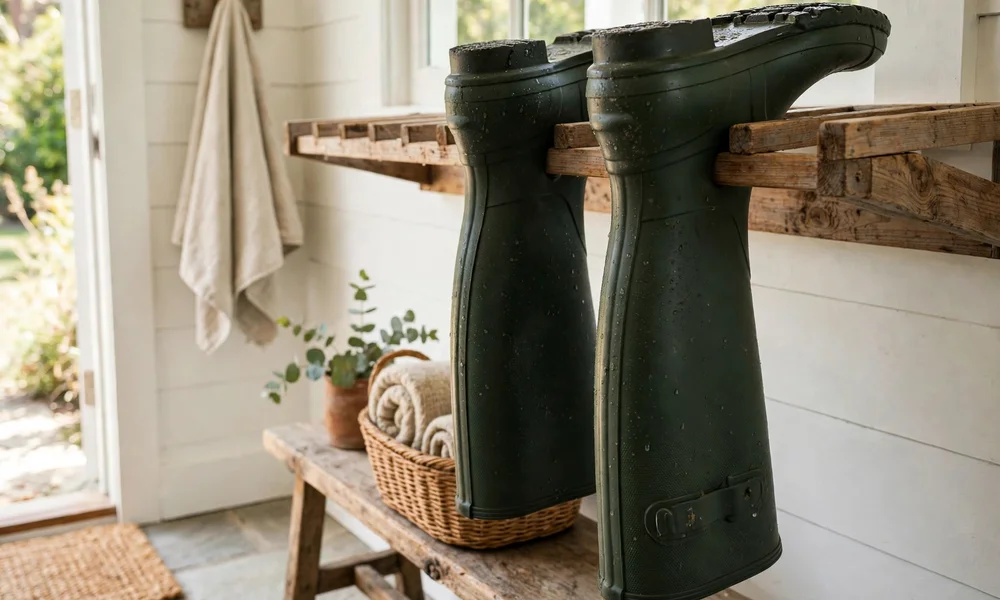
- Rinse mud off after every walk, then dry boots upside down in fresh air.
- Keep boots by the door on a tray, with dry socks close at hand.
What Wellies Are
Wellies, short for wellington boots, are tall waterproof boots made of rubber, reaching halfway up the calf or higher. They were named for the Duke of Wellington, who asked for a boot that could be worn on muddy ground, and farmers, gardeners and walkers have relied on them ever since.
A wellington boot has no laces and no zip. You pull it on, step out, and the rubber keeps water out from every side. The sole is thick, with a deep tread that grips wet grass and muddy paths. They are work boots at heart, made for puddles, not pavements.
Why Dry Feet Change a Wet Day
Dry feet change everything about a wet day. Cold, wet socks make you hurry, and hurrying on wet ground is how people slip. Dry feet let you walk at your own pace, stop to look at the garden, and come home feeling fresh instead of chilled.
There is a comfort in it too. A warm house feels warmer when you arrive with dry feet, and a cup of tea tastes better when you are not peeling off damp socks.
Wellies and Rainy Days: Boots for the Whole Day
Water and rainy days, a simple fresh ritual follows a whole rainy day at home: a glass of clean water, a warm drink, a window opened briefly for fresh air, and a tidy room to sit in.
Wellies belong to the part of that day spent outdoors. The rainy-day ritual stays mostly inside, with water to drink and fresh air through a window, while wellies are for the walk itself: the muddy lane, the wet garden, the puddle at the gate.
Choosing a Pair of Wellies
Choose wellies in the afternoon, when your feet are at their fullest, and wear the socks you will walk in. The heel should sit snugly, with no lift as you step, while the toes have room to wiggle. A boot that is too tight will rub; a boot that is too loose will slip at the heel and tire your legs.
Look at the sole first. A deep tread grips mud and wet grass, while a shallow tread slides. Check the rubber for cracks, especially around the ankle where it bends, and bend the boot gently to see that it flexes without splitting. Try both boots, walk the shop floor, and pick a pair that feels steady, not stiff.
A Wet Morning, Step by Step
Start the morning by laying out dry socks and trousers you can tuck in. Pull the socks up smooth, with no wrinkles at the heel, then step into the wellies and press the heel down firmly. Tuck the trouser legs inside the boots, so rain runs down the outside instead of into the top.
Step out and walk slowly at first, testing the ground. On wet grass, take short steps; on mud, plant the whole foot flat. When you come back inside, step onto the tray by the door, pull the boots off by the heel, and slip straight into dry socks.
Wellies and Clean Water
Water and wellies meet twice in a morning. The first is the glass you drink: clean tap water, sipped slowly when you come back inside, warming you up after the cold air. The second is the rinse you give the boots, plain water washing the mud away.
Keep the two apart in your mind. The water you drink comes from the tap, clean and fresh. The water you rinse with can come from a bucket outside, and the muddy water it makes goes on the garden, never in a glass. Rainwater itself is not for drinking or for skin, so keep the rain outdoors, and keep the water you drink clean and plain from the tap.
Wellies at a Glance
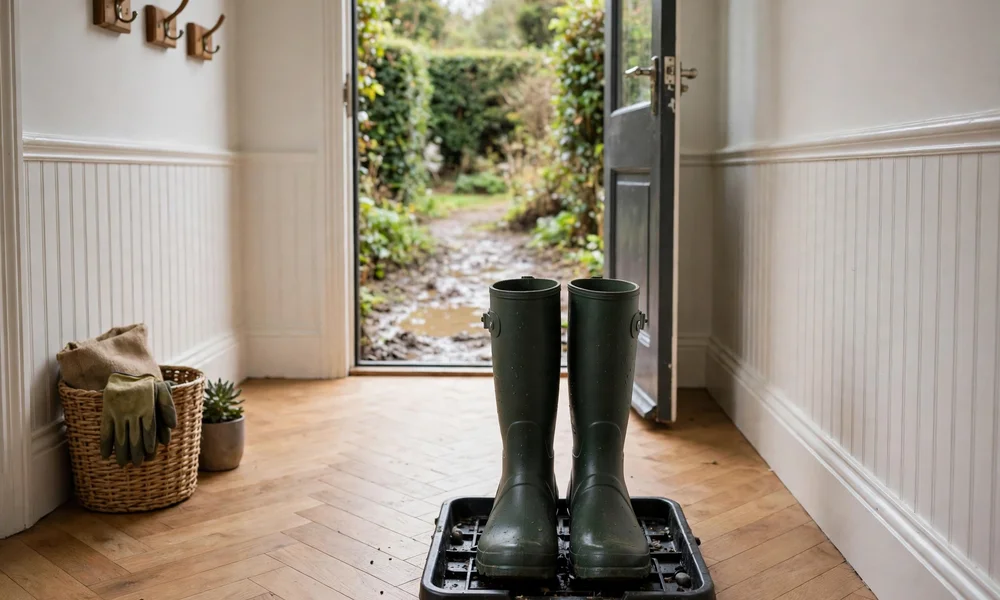
| Tall green rubber boots | Boot tray, hallway | Dry feet first |
|---|---|---|
| Waterproof, knee high | Wet days, muddy paths | Socks kept dry |
| Deep tread, firm grip | Garden, lanes, puddles | Rinse mud off |
| Buckle strap, plain rubber | Door, porch, garden | Store upside down |
Wellies and Shoes: Boots Beside Trainers
Water and shoes, a simple fresh routine follows ordinary shoes: a bowl of plain lukewarm water, a soft brush, a clean cloth and fresh air, with a damp wipe, gentle brushing, and a full day of air drying in the shade.
Wellies are a different job. Shoes are cleaned to look fresh; wellies are rinsed to stay waterproof. Shoes dry slowly, stuffed with newspaper; wellies dry fast, upside down on a rack. Shoes ask for a soft brush and no harsh chemicals; wellies ask for a rinse under the tap and a wipe inside.
Wellies and Rainy Evenings: Coming Home Dry
Water and a rainy evening, a simple calm ritual follows one wet evening indoors, hour by hour: stepping inside, sipping water, warming cold hands, washing up, eating something light, and settling into a chair.
Wellies are the first step of that evening, the moment at the door. The rainy-evening guide begins once you are inside, with dry clothes and a tall glass of water; this guide covers the walk that came before it, the muddy path, the puddle at the gate, the boots pulled off on the tray.
Wellies Beside the Other Water Guides
Four more water guides sit in this batch beside wellies, each with its own small ritual. A hammock brings a calm ritual for resting outdoors, a fire pit gets a first guide, an umbrella offers six ways to stay dry, and a wool scarf has a guide to when to wear one.
The stone guides in this batch take a different road altogether. Goethite wears warm brown, orthoceras deep black, bornite a shifting purple-blue-gold, galena soft grey, and sphalerite warm gold.
Where Wellies Live at Home
Wellies live by the door, on a tray that catches the mud. Pick a spot just inside the front door, where you can step out of them without carrying dirt through the house. A boot tray, an old baking tray, or a shallow box all work, as long as it holds the drips.
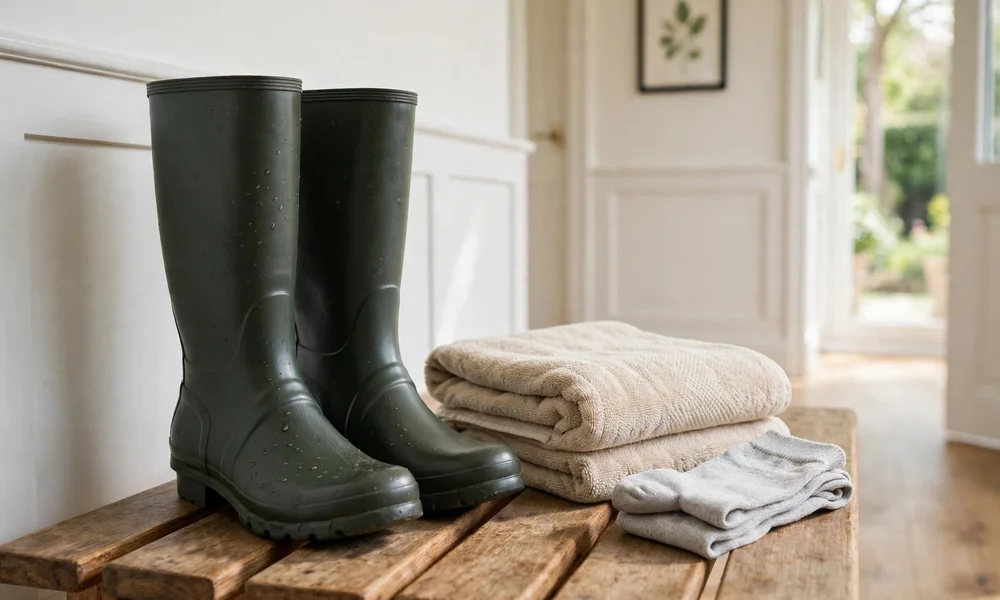
Keep a folded towel and a pair of dry socks on the bench beside them, so changing is one easy motion. In summer, move the tray to the garden door instead, and give the boots a rinse before they come inside.
Footwear That Must Stay Dry
A wellington boot can take a soaking; most other shoes cannot, and knowing which is which saves good pairs. Suede and nubuck want no water at all: a brush made for suede, drawn softly one way, is the only cleaning they need, since wetting stains the nap and leaves it stiff.
Leather is kinder to a cloth that is just damp, wiped lightly across the surface and left to dry in moving air, never near heat, and never dunked, because a soak can stain, stiffen and warp it. Pairs with glued soles or fine trims stay out of water too, since a dunk can loosen glue and wash colour away.
Your Dry Feet Checklist
- Pull on thick dry socks, smooth at the heel, before stepping into the boots.
- Tuck trouser legs inside the boots, so rain runs down the outside.
- Walk slowly on wet grass, with short steps and the whole foot flat.
- Step onto the tray at the door, pull the boots off by the heel, and change into dry socks.
- Rinse the mud off the boots, then dry them upside down in fresh air.
- If feet or skin trouble you, see a doctor, and patch-test any cream first.
Boots by the door, dry socks on the bench, and a glass of water waiting.
Frequently Asked Questions
How do I choose the right size of wellies?
Try them on in the afternoon with the socks you will walk in. The heel should sit snugly with no lift, while the toes have room to wiggle.
Can I wear wellies for a long walk?
Yes, for a walk of an hour or two, with thick socks and short steps on wet ground. For a full day on hard paths, a walking boot with more support suits your feet better.
How do I clean muddy wellies?
Rinse them under a tap or with a bucket of plain water, wipe the inside with a damp cloth, and dry them upside down in fresh air. Never dry them on a radiator or in strong heat.
Why do my feet still feel cold in wellies?
Rubber keeps water out but holds little warmth, so cold comes through on a chilly day. Thick wool socks help.
Can I wear wellies without socks?
You can, but socks are better. Bare skin rubs against rubber and grows damp quickly, while a dry sock keeps the foot comfortable.
Where should wellies live at home?
By the front door, on a tray that catches the mud, with a folded towel and dry socks on the bench beside them.

The Bottom Line
Wellies are a simple promise: tall rubber boots, dry socks, and a tray by the door, and wet days lose their worst sting.
A Note for Dry Feet
Keep it simple, keep it dry, keep it fresh. A clean pair of boots, dried in the air, is ready for the next wet day.