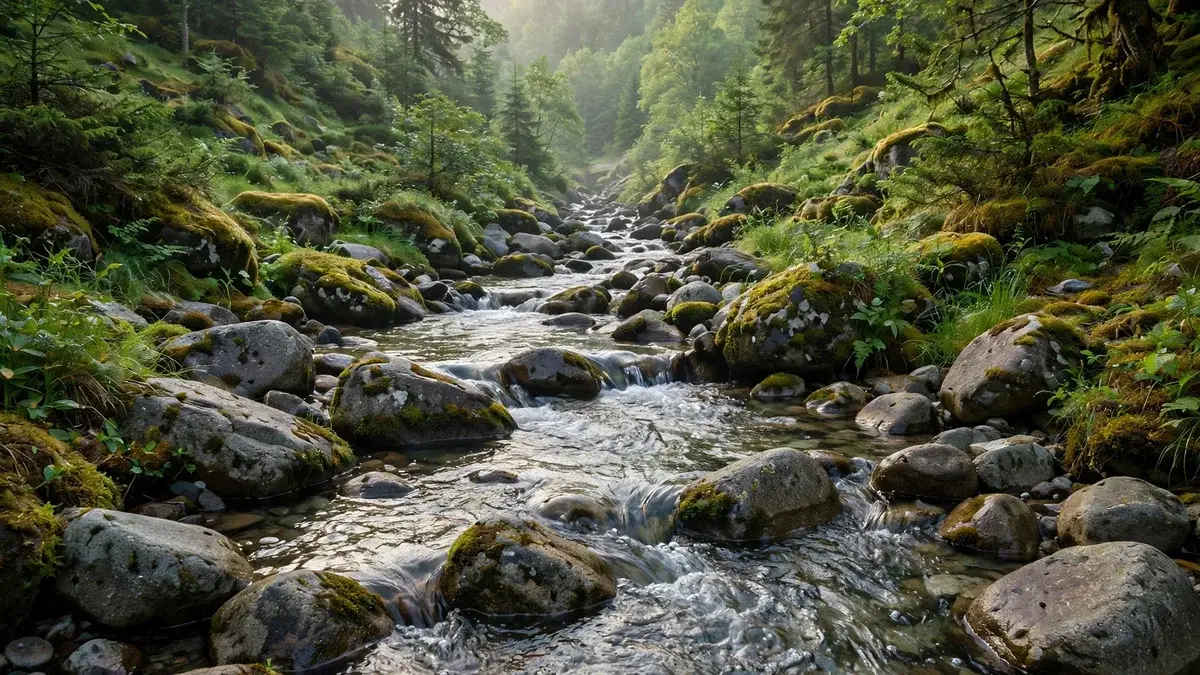
A mountain stream is a small river that runs downhill over stones, clear and cold, through a green valley where the air smells of wet earth and ferns. It does not sit still like a pond, and it does not fall like a waterfall. It simply flows along its path, around rocks and under low branches, making a soft sound that you can hear before you see it.
This guide sets out a simple fresh ritual for a short visit to a mountain stream: what to pack, how to sit beside the water, how to freshen up with the water you carried from home, and how to come home feeling clean and calm.
One rule runs through the whole ritual, and it matters most of all. The stream is for looking at and listening to, not for drinking.
Key Takeaways
- A mountain stream is water that flows along a path over stones, clear and cold, through a green valley.
- The stream is for looking at and listening to, never for drinking.
- Carry your own clean water from home, and drink that in slow sips.
- A mountain stream visit is a short stop beside flowing water, not a whole day out.
- Freshen up with your own water and a cloth, then wash properly when you get home.
What a Mountain Stream Is
A mountain stream begins high up, where rain and melting snow gather in a hollow and start to run downhill. By the time it reaches the valley floor it is clear and cold, and it smells faintly of stone and green leaves.
The sound is part of it. Water running over stones makes a soft, steady murmur, and in a quiet valley that sound carries a long way. The stream asks nothing of you except a little attention, and it gives back a calm that lasts long after you have walked away.
Planning a Mountain Stream Visit
A mountain stream visit takes very little planning, and that is half its charm. Pick a stream you can reach on a short walk from a road or a path, and go in the morning, when the light is soft and the air is still cool.
Check the weather before you leave. A stream can rise fast after heavy rain, and a steep bank can turn slick in a shower, so a dry, settled morning is the best time to go. Pack light: a bottle, a cloth, a little soap, and a small snack, all in one bag you can carry easily.

A Simple Fresh Ritual at the Stream
Start by finding a flat rock or a dry patch of grass a little way back from the water, where you can sit without wet feet. Set your bag down, take out the bottle, and drink a few slow sips of the clean water you carried from home.
Then freshen up with your own water and a cloth. Wet the cloth with a little water from the bottle, wipe your face, your neck, and your hands, and dry them well. The ritual is simply water, a cloth, and a quiet hour, and it leaves you feeling clean and calm for the walk home.
Water Safety at the Stream
Water safety at a stream starts with one plain rule: carry your own clean water, and never drink untreated stream water. A mountain stream may seem pure yet still hold germs that can make you sick, so do not sip from a stream, a lake, or a spring unless the water has been treated. Keep the stream water out of your drink and off broken skin, and wash your hands with soap when you get home.
Stay on dry ground and keep your footing. Clean water from home is always the safe choice, and the stream is safest when it is admired from the bank.
Mountain Stream at a Glance
| Flowing stream | Short valley visit | Carry own water |
|---|---|---|
| Clear, cold, moving | Morning, dry weather | Never drink stream |
| Stones, ferns, shade | Flat rock to sit | Cloth and soap |
| Sound of running water | One hour or two | Dry shirt spare |
| Sit on the bank | Tell someone first | Wash hands home |

Mountain Stream and a Waterfall Visit
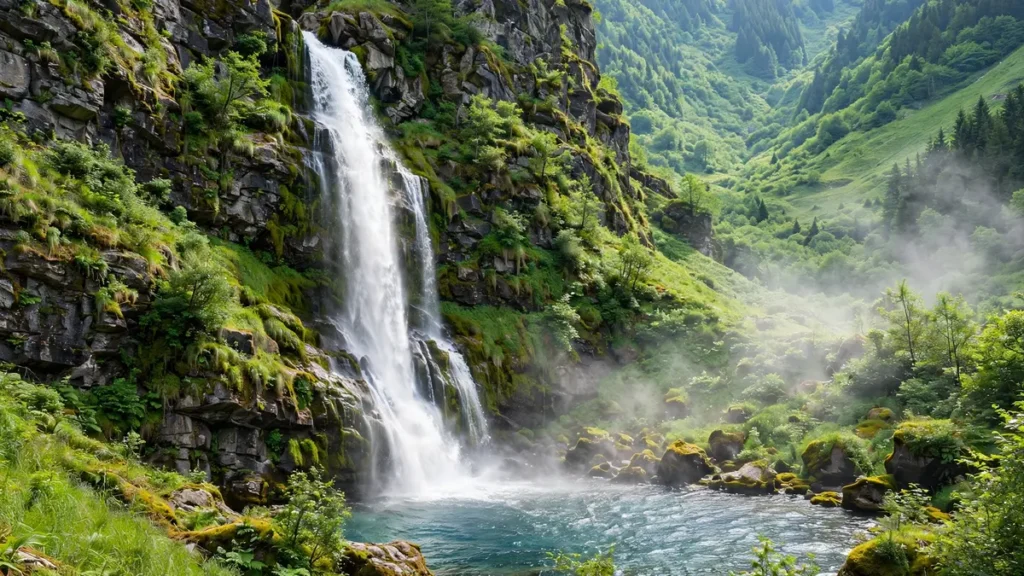
A waterfall visit is the nearest cousin to a mountain stream visit, and the difference is in how the water moves. A stream flows along a path, running over stones from one place to another, and you sit beside it and watch it go. A waterfall drops. The water falls from a height in a rush, and the air around it is full of spray, so you stand back and feel the cool mist on your face instead of sitting close beside quiet water.
A waterfall visit, topic 863 in this same batch, is about that drop: the roar, the spray, and the view from a safe distance. A mountain stream visit is quieter and closer, a small flow you can sit beside and listen to.
Mountain Stream and a Pond Visit
A pond visit is the other close cousin, and here the difference is that a pond sits still. A pond is a small body of water that stays where it is, its surface calm and flat, with reeds at the edges and dragonflies above it.
A pond visit, topic 867 in this same batch, is about that stillness: sitting beside quiet water and watching the sky in it. A mountain stream is the opposite in movement, always running, always changing, its surface broken by stones and ripples.
Mountain Stream and Day Trips
Day trips for staying fresh outdoors mean a day spent away from home, leaving in the morning and returning that same evening, with a packed bag, a filled bottle, and hours of daylight still ahead.
A mountain stream visit is much smaller than a day trip. It is one stop inside a day, an hour or two beside flowing water, and it needs no more than a bottle, a cloth, and a little soap.
Mountain Stream and Hiking
Water and hiking on the trail is about walking for hours uphill, with the sun warm through the trees and the bottle half empty by the third hour.
A mountain stream visit is not a hike. The walk to the stream is short and easy, the bottle matters less because you are never far from home, and the point of the visit is to sit still beside the water rather than to keep moving.
Mountain Stream and Boat Days
Boat days for staying fresh on the water are spent out on open water, where the sun is stronger because its light bounces off the surface all around you, and there is no shade to step into and no tap to turn on.
A mountain stream visit is the opposite in setting. You are on dry land, sitting on a bank with your feet on solid ground, and the water runs past you in a narrow channel rather than spreading out all around. A boat day is a day on the water; a stream visit is an hour beside the water, with both feet firmly on the bank.

What to Pack for the Stream
Packing for a mountain stream visit takes five minutes, and it saves the whole morning. Top up a reusable bottle with fresh water and slip it into the bag first, since water is what you will want most often. Add a small cloth, a little soap in a tiny bottle, a spare dry shirt, and a small snack for the walk home.
A bottle, a cloth, soap, and a spare shirt, tucked in matching pockets, for each visit.
After the Stream: Fresh at Home
When you get home, wash properly with clean water and soap. Wash your hands, splash your face, and change into fresh clothes, and hang the damp shirt somewhere it can dry in the air.
The stream visit is over, but the calm it gave you can last into the evening, and a proper wash at home is what turns a short visit into a fresh start.
Your Mountain Stream Checklist
- Fill the bottle at home, and carry it full.
- Sit on dry ground, a little way back from the water.
- Drink your own water in slow sips, never from the stream.
- Wipe your face, neck, and hands with your cloth.
- Change into a dry shirt before the walk home.
- If you feel unwell after the visit, see a doctor and say where you went.

Frequently Asked Questions
What is a mountain stream?
A mountain stream is a small river that runs downhill over stones, clear and cold, through a green valley.
Can I drink water from a mountain stream?
No, you should never drink untreated water from a stream, a lake, or a spring. A mountain stream may seem pure yet still hold germs that can make you sick, so always bring your own clean water from home and drink that instead.
How is a mountain stream different from a waterfall?
A mountain stream flows along a path over stones, and you sit beside it and watch it go. A waterfall drops from a height in a rush, with spray in the air around it, so you stand back and feel the cool mist instead of sitting close beside quiet water.
How is a mountain stream different from a pond?
A mountain stream is always moving, its surface broken by stones and ripples, and it makes a soft sound that a pond never makes.
What should I pack for a mountain stream visit?
Pack a reusable bottle filled with fresh water, a small cloth, a little soap, a spare dry shirt, and a small snack. Wear shoes with a good grip, because the stones beside a stream are often wet and slippery.
Is a mountain stream visit safe for children?
A mountain stream visit can be a pleasant short outing for children when an adult watches them closely the whole time. Keep children on dry ground, well back from the water, and never let them drink from the stream or play near fast water.
The Bottom Line
A mountain stream visit is simple: your own clean water, a cloth, a dry place to sit, and an hour beside flowing water.
A Note for Fresh Days
Flowing water, a full bottle, a quiet hour — a fresh day asks for nothing more.