There are days when the calendar looks plain and the day turns out to be anything but. A job interview lands in the inbox, a friend asks you to speak at a gathering, or a long-delayed errand finally reaches the top of the list. On mornings like these, the room you get ready in sets the tone.
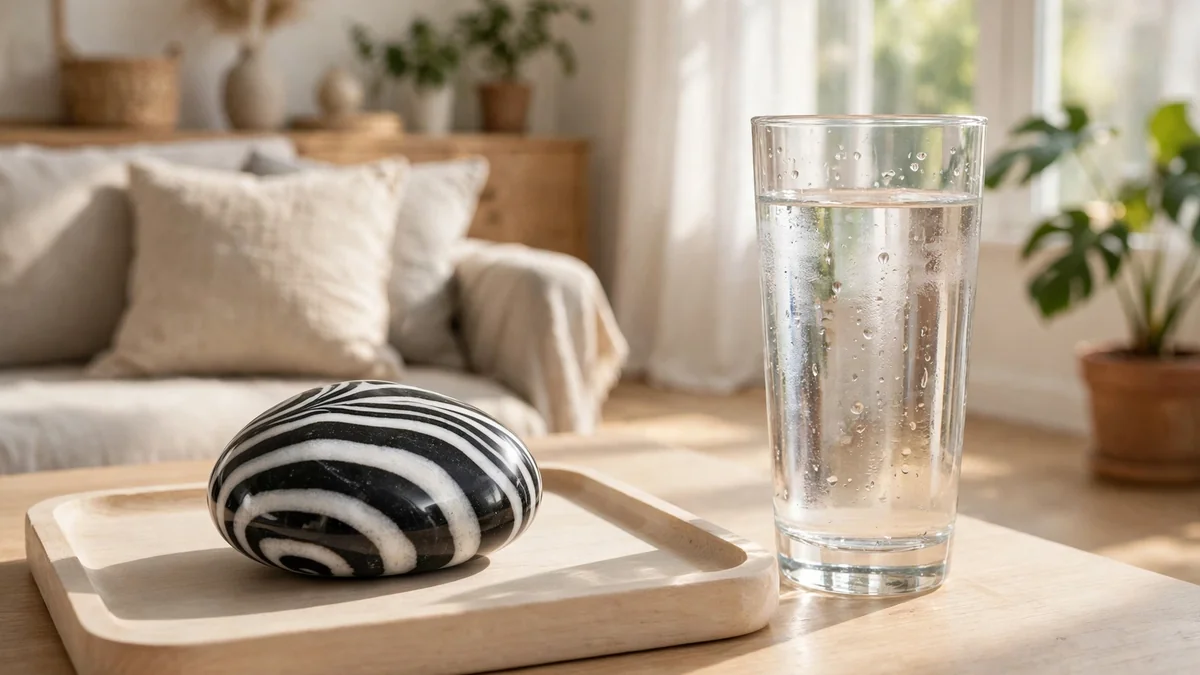
Zebra marble fits a morning like that. Its black and white bands run across the stone in bold, flowing lines, like ink poured into pale stone and left to settle. Set the marble out on a wooden tray, a glass of fresh water standing alongside, and the two together read as one clear statement in black and white.
What follows is a plain look at this stone: the ground it came from, the way its two colours meet, and a few easy ways to set one out where you can see it on a busy morning. Treat it as an object to look at and pick up, nothing more, and keep it clear of any glass you plan to drink from. Stones do not fix health troubles.
Key Takeaways
- Zebra marble is a black-and-white banded marble, not a jasper.
- Its bold black and white bands suit bright, busy days.
- Marble is softer than quartz, so it needs gentle, dry care.
- It belongs on a shelf or in a hand, not in a treatment plan.
- A glass of water stands next to it, and the stone stays dry.
What Zebra Marble Is
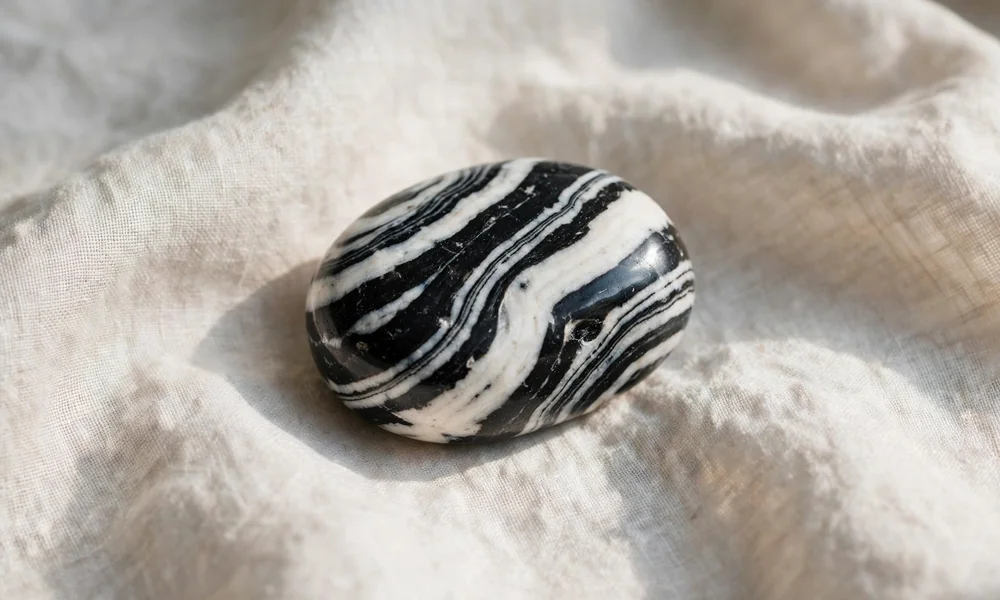
Zebra marble is a banded marble, a stone formed when limestone was pressed and warmed deep underground until it changed into marble. Inside it, dark and pale layers settled side by side, so the finished stone shows flowing bands of black and white, sometimes straight, sometimes curling.
Pick one up and the marble feels cool and smooth, a little softer under the fingers than a quartz stone, with a gentle shine rather than a hard glassy gleam. The white bands are the pale marble itself, and the black bands are darker mineral layers caught inside it, so every piece carries a pattern no other piece shares.
Why Black and White Suits Bold Days
Nothing in a room reads as clearly as black set against white, and a day with much at stake calls for that kind of plainness. Gentle tints tend to melt into bright walls, and a light stone can fade in hard sun, yet these two tones hold their edge wherever you put them.
The bands also give the eye a clear line to follow while the mind settles, and that short pause is often the most useful minute of the morning.
Choosing a Zebra Marble Piece
Shop for one in daylight if you can, holding the stone near a window so the bands show as they truly are. Run a thumb over the face and feel for an even finish, free of gritty hollows and flaky rims, and look for dark lines that hold their path without fading into grey.
A stone about the size of your palm is plenty, and it travels well from tray to pocket. Ask the seller plainly if the colour is natural, and walk straight away if the answer is vague or if anyone says the stone will make you healthier. Marble is softer than quartz, so thin, crumbly rims are a reason to choose another piece.
A Bold Day with Zebra Marble
Put the stone on its tray first thing, and pour a glass of water to stand alongside it while the room is still quiet. Take a seat, drink slowly, and lift the marble for a moment to feel how cool and smooth it is before you set it down again.
Leave the tray where you can see it as the morning goes on, near the light. When the hardest part of the day draws near, pick the stone up once more, take one slow breath, and then get on with what needs doing.
Zebra Marble Beside Water
Fill a glass with cool water and set it on the tray near the marble, close enough to look like a pair, far enough that the two never touch. The stone has no place in a drink or a basin, because a wet marble face can lose its sheen and pick up pale spots.
Marble feels water more than a hard quartz does, so this boundary counts double here. Pick the stone up only with dry hands, and if a glass ever spills, lift the marble clear at once, dab it dry, and set it back only after the tray has dried out.
Zebra Marble at a Glance
| Black white bands | Bold days | Dry display |
|---|---|---|
| Marble, not jasper | Tray, desk, shelf | Glass apart |
| Cool, smooth, veined | Morning, midday, evening | Soft dry wipe |
| Two colours, one | Daylight, lamplight, pause | Never soak |
Zebra Marble and Zebra Jasper
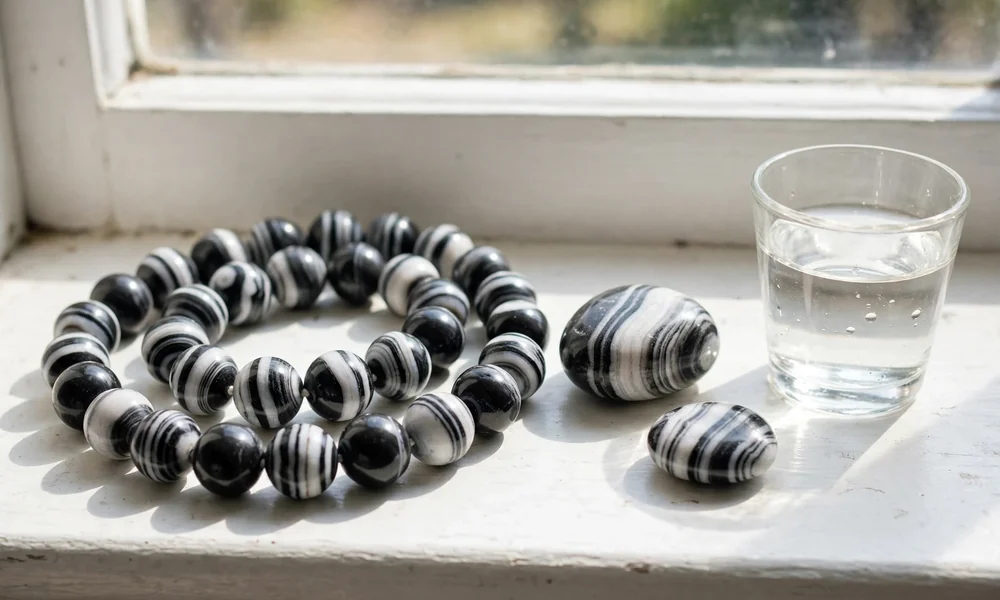
Zebra jasper is the closest name to zebra marble in this journal, and the two are easy to mix up. Zebra jasper for bold days covers a black-and-white striped jasper, an opaque quartz coloured by iron oxides, with bold black stripes across a white or pale grey ground.
Zebra marble is a different stone that happens to wear the same two colours. Where zebra jasper is a hard quartz, zebra marble is a softer metamorphic limestone, so its bands flow and vein like marble rather than running as sharp quartz stripes. Jasper is the tougher stone, marble the gentler one: handle marble more softly and keep it dry. Both suit bold days, but only one of them is a marble.
Zebra Marble and Tigers Eye
Tigers eye is another stone for a day that asks for nerve, though its colours could hardly differ more. The tigers eye guide looks at a single golden-brown quartz, honey-toned, with a band of light that slides across the face whenever the piece is turned.
Zebra marble has no gold in it at all. It is black and white from rim to rim, cool where the other stone is warm, and its lines stay put instead of gliding. One is a lone quartz with light that moves; the other is a marble whose dark and pale layers flow quietly together.
Zebra Marble and Hematite
Hematite is a dark, cool stone that also suits a day of strong lines, though it sticks to one tone. Hematite for a steadier day looks at a grey metal-like stone, cool in the hand and weighty for its size, kept as a small pebble for unhurried mornings.
On a bold day, hematite shows a single grey face, calm and metallic. Zebra marble shows two tones at once, black and white in running bands, and reads far louder than hematite on its own. Hematite is a hard iron oxide; zebra marble is a soft limestone marble, so the marble asks for softer handling and a drier perch.
Caring for Zebra Marble
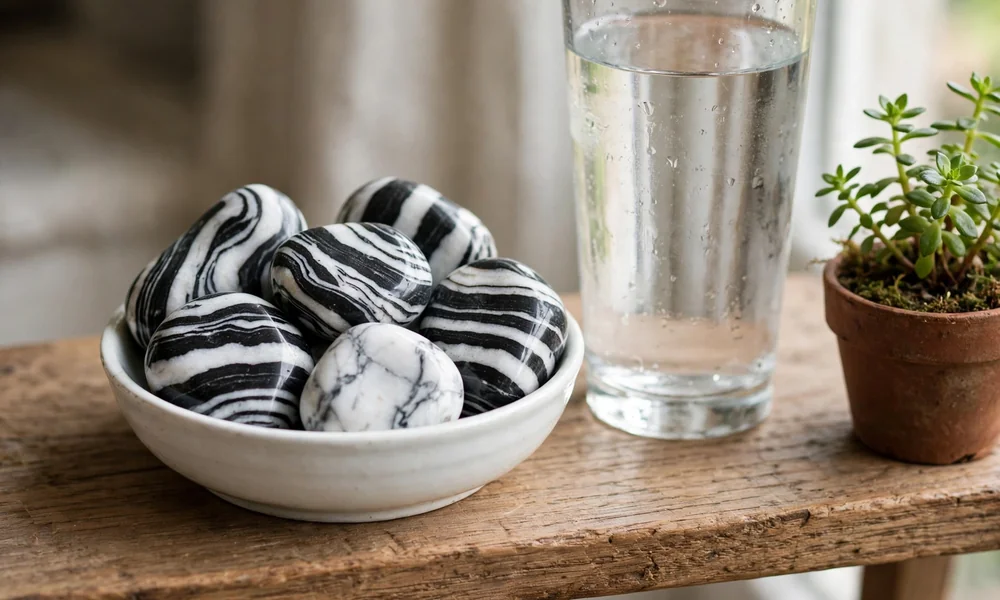
Looking after zebra marble takes only a little effort, and the effort pays off. Rest it on a small dish or tuck it into a cloth pouch, in a spot with fresh air and no hard sun, away from radiators, steamy rooms and spray bottles. A light pass with a dry cloth from time to time keeps the black and white lively.
Because marble is soft, a bump against a table corner can nick it, and sand or grit dragged over the face can wear the shine away. Blot it at once if it gets splashed, keep it in its own pouch far from metal clutter, and never let it rest where water pools. Vinegar, lemon and strong cleaners should stay far away too, as acids can bite into a marble face.
Stones That Must Never Touch Water
Some stones should stay dry always, and it helps to know them by name. Malachite leads the list: keep it out of every glass and jug, because it can give off things you would never want in a drink.
Hematite comes next, and it must never sit in drinking water either. Then there are apatite and lepidolite, and lepidolite holds lithium inside it, along with pyrite, angelite and amber: none of these belong in a drink or a soaking bowl. Zebra marble is a softer stone, so it stays beside the glass as well, never inside it, and the same goes for everything else named here.
Your Bold Days Checklist
- Put the marble on a tray with a filled glass alongside.
- Drink your water at an easy pace while the day opens.
- Hold the marble briefly and take one slow breath.
- Buy from a seller others trust, and keep the receipt safe.
- Let the stone sit near water, never in a drink or soak.
- Stones cure nothing; a doctor is the one for health worries.

Frequently Asked Questions
What is zebra marble?
Zebra marble is a black-and-white banded marble, a metamorphic limestone whose dark and pale layers settled side by side underground. Its flowing black bands run across a white ground, and no two pieces wear the same pattern.
Is zebra marble the same as zebra jasper?
No. Zebra jasper is a hard opaque quartz with sharp black stripes, while zebra marble is a softer banded marble whose bands flow and vein like marble. The two share only their colours: black and white.
Why must zebra marble stay out of drinking water?
Marble is soft, so water that sits on it can take the shine off and leave pale marks behind. Holding it and showing it beside a glass is fine, yet dropping it into a drink or leaving it in a soak is not.
Will zebra marble heal anything?
No. It is a fine-looking stone to pick up and enjoy, and any calm you feel afterwards belongs to the unhurried minutes you took, not to anything inside the rock.
How do I choose a good zebra marble piece?
Look for clear bands in daylight: black lines that run unbroken, white ground that stays bright, and a smooth surface with no rough pits. A palm-sized tumbled stone from a seller you trust is a good start.
Where should I keep zebra marble at home?
A small tray or a shelf in a bright, dry room does the job, with a glass of fresh water close by but not touching the stone. A desk, a bedside table or a windowsill all work nicely.
The Bottom Line
Zebra marble lends black and white to a bold day: dark and pale bands running through one soft marble, resting on its tray with a glass of fresh water close by.
A Note for Bold Days
Keep the bands bright, the stone dry, and the day steady. A single banded stone, a glass of water, and a few quiet minutes will do.