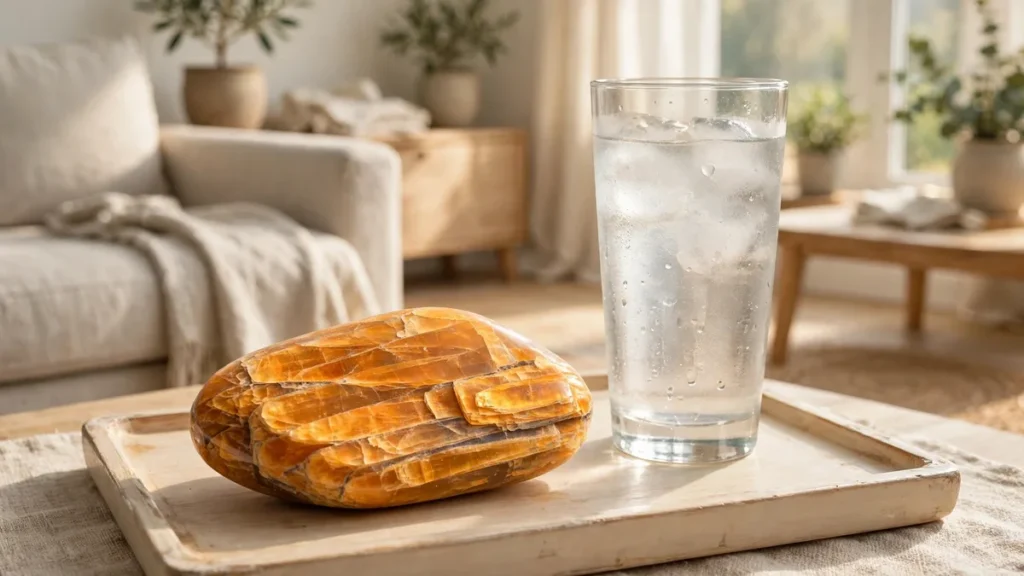
Steady days rarely announce themselves. They begin with a kettle, a short list of jobs, and a window full of plain morning light, and they ask for nothing more dramatic than getting through each task in turn. There is no celebration waiting at the end, only the quiet satisfaction of a day handled well.
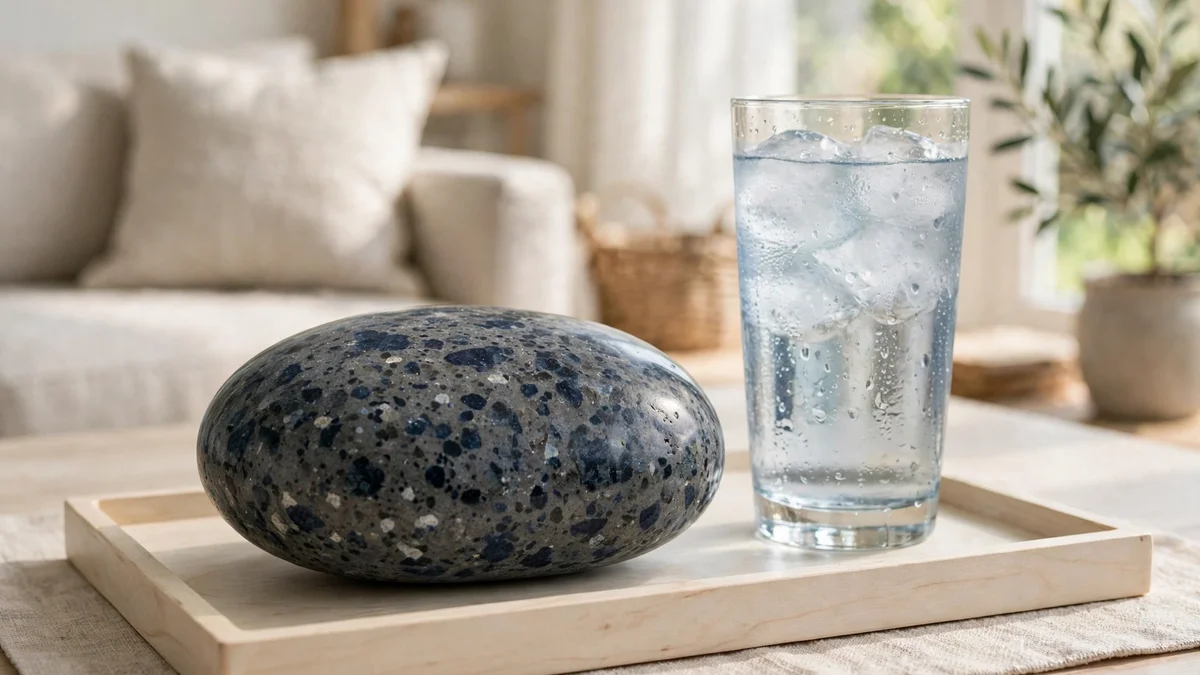
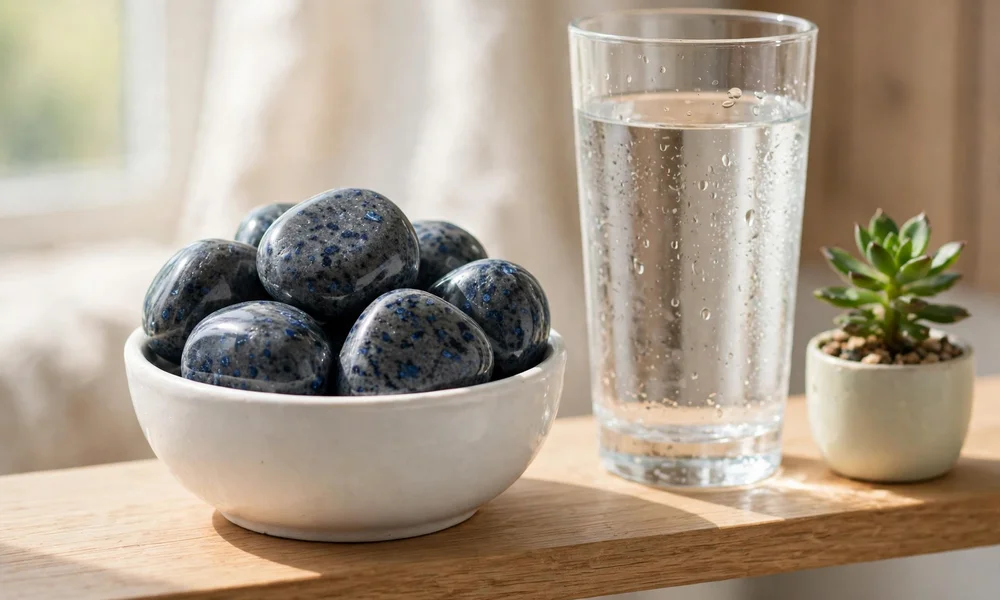
Indigo gabbro fits that kind of day. It is a deep grey stone, almost black in low light, scattered with flecks of dark indigo blue and the odd pale speck, like a night sky caught in rock. Put it on a tray beside a glass of water, and it anchors the desk the way a paperweight anchors a pile of letters.
This guide describes indigo gabbro in everyday language: what the stone is, where its speckled pattern comes from, and how to give it a place on a tray for steady days. It is a stone to look at and to hold, and it stays beside the glass, never in it. It cannot mend the body, and no honest guide would say otherwise.
Key Takeaways
- Indigo gabbro is a dark volcanic stone, deep grey with indigo-blue flecks.
- Its quiet, speckled pattern suits steady days and plain working hours.
- Indigo gabbro is a new stone in this journal; no other live post covers it.
- Indigo gabbro is meant for looking at and holding, nothing more; it holds no healing power.
- Set it next to a glass of water, never inside the glass, and wipe it dry after a splash.
What Indigo Gabbro Is
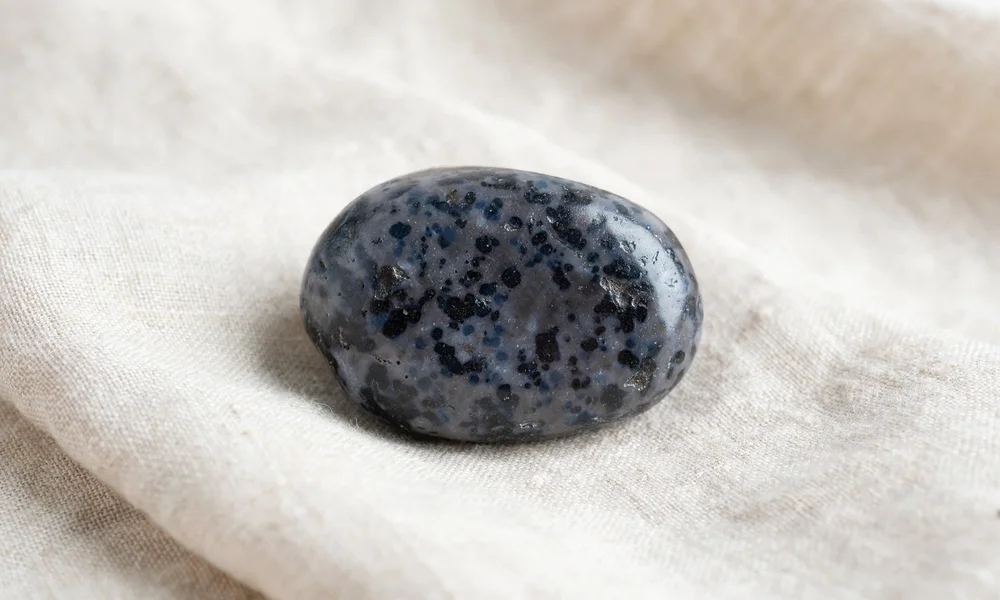
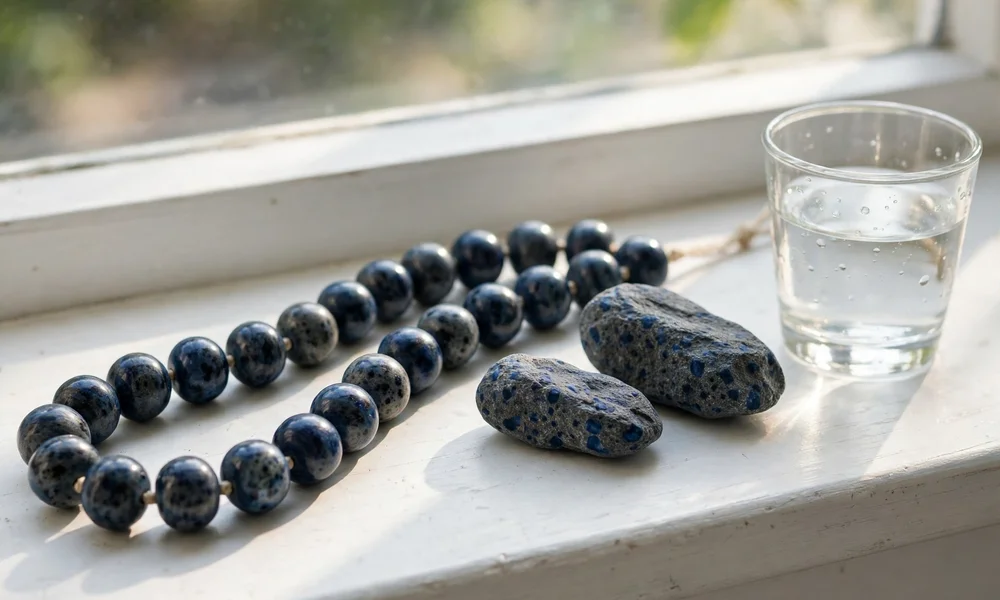
Indigo gabbro is a dark igneous rock, formed when molten stone cooled slowly deep underground. Its ground colour is a deep grey, close to charcoal, and across that ground sit flecks and patches of dark indigo blue, with smaller pale speckles scattered between them. The pattern is uneven by nature, so every piece looks a little different from the next.
Most pieces are sold polished, as tumbled stones or palm stones, and the polish brings out the blue flecks against the grey. Hold one and it feels cool, dense and smooth, with a satisfying weight for its size. The surface is usually matte grey with brighter blue spots that catch the light as the stone turns.
Why Deep Grey Suits Steady Days
Deep grey is the colour of a cloudy morning that still promises a fair day. It does not shout for attention, and it does not fade into the background either; it simply stays where you put it, solid and unhurried. That is exactly the mood a steady day needs.
The indigo flecks add a small surprise to the grey. They are dark enough to stay calm, yet blue enough to reward a second look, and that tiny moment of noticing can slow a rushed morning down. A steady day is built from such small pauses, one after another, until the work is done.
Choosing an Indigo Gabbro Piece
Choose your piece in daylight if you can, turning it slowly in your hand. Look for a deep grey ground that reads as stone rather than paint, and for indigo flecks that are clear and spread across the face, not gathered in one corner. A smooth polish with no sharp edges is what you want.
A palm-sized tumbled stone makes a good first piece, easy to hold and easy to place. Ask the seller plainly what the stone is and where it came from, and buy elsewhere if the answer is vague or if anyone promises better health from it.
A Steady Day with Indigo Gabbro
Begin the evening before, by clearing a small corner of the desk and setting the stone on its dish. Lay out the next day's list beside it, fill a glass of water, and leave the corner ready for the morning. A desk prepared at night makes a calmer start.
When morning comes, sit down, drink the water slowly, and hold the stone for a moment, feeling its cool weight and watching the blue flecks. Then take the first job on the list, and the next, letting the grey stone sit in view while the steady hours pass.
Indigo Gabbro Beside Water
Fill a tall glass with cool water and place it on the tray beside the indigo gabbro, near enough to share the light, far enough that a spill cannot reach the stone. The two belong side by side, not together, and the glass stays plain water throughout.
This matters for every stone in this journal, and indigo gabbro is no exception. A stone in a drink can carry dust, chip a tooth, or be swallowed by mistake if it is small. Beside the glass, the stone gives the same quiet pleasure with none of that risk.
Indigo Gabbro at a Glance
| Deep grey stone | Steady days | Dry display |
|---|---|---|
| Indigo blue flecks | Desk, tray, shelf | Glass apart |
| Cool, dense, smooth | Morning, midday, evening | Soft dry wipe |
| Volcanic, speckled, dark | Daylight, lamplight, pause | Never soak |
Indigo Gabbro and Larvikite
Larvikite is the closest grey stone in this journal, and the two are worth telling apart. Larvikite for steady days covers a grey feldspar from Norway, whose soft silvery shimmer slides across a dark surface as the piece turns, like moonlight on quiet water.
Indigo gabbro is a different rock with a different look. Where larvikite shimmers silver, indigo gabbro is speckled indigo blue on deep grey, with no sliding flash at all. One glows softly as it moves; the other holds still, spotted like a starry sky, and the two suit the same steady day in different ways.
Indigo Gabbro and Lodestone
Lodestone is another dark grey stone for steady work, but it is built differently. Lodestone for steady desks covers a dull, heavy stone with a quiet pull towards iron, kept on a small dish as an anchor for long desk hours.
Indigo gabbro has no such pull. It is simply a speckled volcanic stone, cool and dense, chosen for its deep grey colour and its indigo flecks. Lodestone is about weight and magnetism; indigo gabbro is about colour and pattern, and a desk could hold either without the two ever being mistaken for each other.
Indigo Gabbro and Grey Moonstone
Grey moonstone is the softest of the grey stones here, and the contrast with indigo gabbro is clear. Grey moonstone for calm days covers a soft grey feldspar with a pale silvery blue sheen that drifts across it, made for slow mornings and low light.
Indigo gabbro is far darker and bolder. Its grey is deep charcoal, not soft cloud, and its blue is a strong indigo speckle, not a drifting sheen. Grey moonstone suits a calm day that asks for gentleness; indigo gabbro suits a steady day that asks for grit and follow-through.
Caring for Indigo Gabbro
Indigo gabbro asks for little, and the little it asks is simple. Keep it on a small dish or in a cloth bag, away from full sun, heaters and damp rooms, and give it a wipe with a soft dry cloth after handling. That is enough to keep the flecks bright.
The stone is hard, so a knock on a table edge will seldom mark it, but grit dragged across the face can dull the polish, and standing water does it no good. Dry it at once after any splash, keep it away from keys and coins, and never leave it sitting in a puddle or a glass.
Stones That Must Never Touch Water
A few stones should always stay dry, and their names are worth learning. Malachite leads the list: it stays out of every glass and jug, since it can give off things no one should swallow.
Hematite is next, and it must never sit in drinking water either. Apatite and lepidolite join them on the dry list, and lepidolite holds lithium inside it, while pyrite, angelite and amber do too: none of these go into a drink or a soaking bowl. Indigo gabbro sits beside the glass, not in it, and the same rule covers every stone named here.
Your Steady Days Checklist
- Clear a small desk corner the night before, stone on its dish.
- Fill a tall glass of water and set it beside the stone.
- Hold the stone a moment, then drink your water slowly.
- Work through one job at a time, pausing between tasks.
- Keep the stone out of every drink and soak, always beside them.
- Stones mend nothing; ask a doctor about health worries.

Frequently Asked Questions
What is indigo gabbro?
Indigo gabbro is a dark volcanic rock, deep grey like charcoal, scattered with flecks of dark indigo blue and small pale speckles. It is usually sold as polished tumbled stones or palm stones, kept for display and handling on steady days.
Is indigo gabbro the same as larvikite?
No. Larvikite is a grey feldspar with a silvery shimmer that moves as the stone turns, while indigo gabbro is a speckled volcanic stone with fixed indigo flecks on deep grey. The two share a grey mood, but they are different rocks with different patterns.
Can I put indigo gabbro in my drinking water?
No. Keep the stone on its own dish next to the glass, and leave the water untouched by stone. That way the drink stays clean and the stone stays dry.
Will indigo gabbro heal anything?
No. It is a handsome speckled stone to hold and to look at, and any quiet you notice likely comes from the unhurried minutes you spent with it, not from the stone itself.
How do I choose a good indigo gabbro piece?
Look for a deep grey ground and clear indigo flecks in daylight, with a smooth polish and no sharp edges. A palm-sized tumbled stone from a seller who says plainly what it is makes a good first piece.
Where should I keep indigo gabbro at home?
Give it a spot on a tray, a shelf, or a bedside table, somewhere bright, with a fresh glass of water close by but not touching the stone. Desks and windowsills work just as well.
The Bottom Line
Indigo gabbro brings deep grey and indigo flecks to steady days: a speckled volcanic stone on its dish, a glass of fresh water standing alongside, and one job finished at a time.
A Note for Steady Days
Keep it grey, keep it steady, keep it dry. One speckled stone, one glass of water, and a clear list are enough.