
Bright days have a colour of their own, and it is orange. It is the colour of a peach cut open at breakfast, of marigolds along a garden path, of the low sun slipping through a kitchen window in the late afternoon. When a day opens clear and warm, an orange stone on the tray fits the morning the way a yellow mug fits tea.
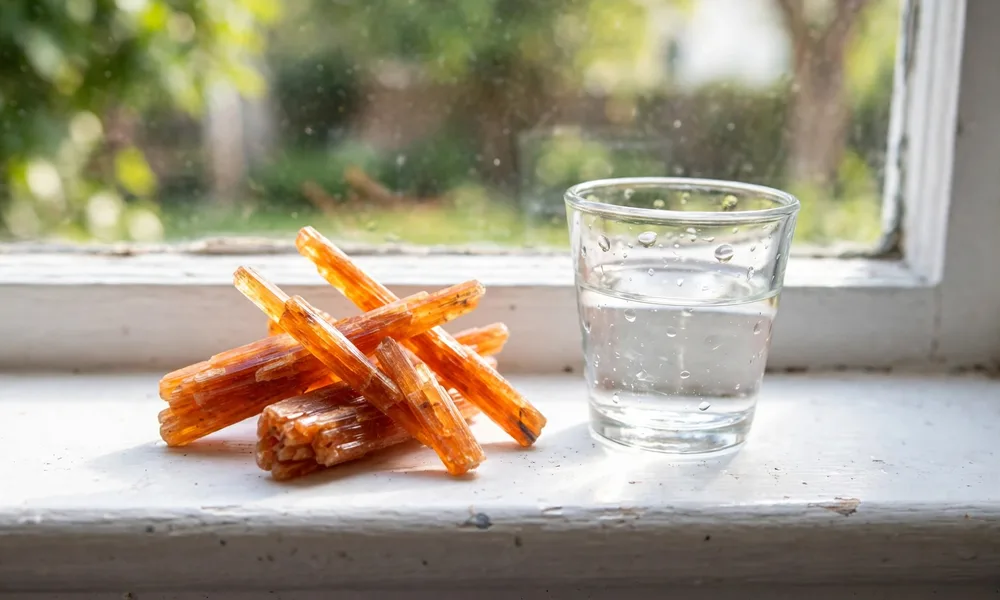
Orange kyanite carries that colour quietly. Its blades glow a warm apricot orange, light passing through them the way light passes through honey held up to a lamp.
What follows is a plain look at this orange stone: where its colour comes from, what to look for when you pick one out, and where to put it so it catches the light on bright days. Think of it as an ornament for the tray, handled now and then, admired often, and kept well away from any glass you plan to drink from. Stones do not fix health, and this orange one has no special powers either.
Key Takeaways
- Orange kyanite is kyanite in its warm orange form, glowing like late sun.
- Its warm orange colour suits bright days, open windows and clear light.
- Orange kyanite differs from blue, green and black kyanite, its cooler cousins.
- Treat it as an ornament to look at and pick up, not as a remedy.
- The glass stands beside it on the tray; the stone never goes in.
What Orange Kyanite Is
Orange kyanite is the orange form of kyanite, an aluminium silicate mineral that grows in long, flat blades. The orange comes from tiny traces of iron and manganese held inside the crystal as it formed, and the best pieces are a clear, warm apricot orange with a soft glassy shine. Lift a blade toward a lamp and the orange lights up from inside, soft and warm, the way a glass of apricot juice catches the light.
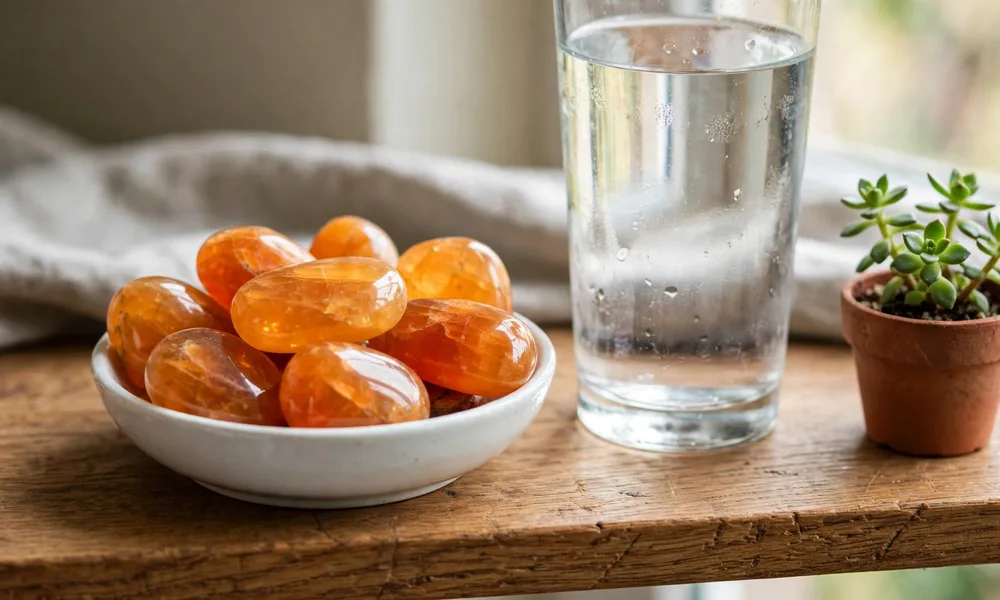
Shops usually carry it in three shapes: flat polished blades, little clusters fanned open like a hand of cards, and round tumbled pebbles. A piece near the size of a small peach sits nicely on a tray next to a glass. The mineral is hard enough for daily handling, yet a blade can crack along its length if it is knocked, so pick it up with care and set it down on cloth or wood rather than stone or tile.
Why Warm Orange Suits Bright Days
Warm orange suits bright days because it is the colour of light itself when the sun is low and generous. Morning light on a white wall turns faintly orange, evening light on a wooden floor does the same, and a small orange stone carries that same warmth into the room.
The colour also lifts a room without shouting. Orange kyanite sits in that openness quietly, catching the light when you pass and giving the eye a warm place to land.
Choosing an Orange Kyanite Piece
Do not rush the picking. Carry the stone toward the nearest window and study it there, since shop lighting flatters every colour. You want an orange that stays rich from edge to edge, without pale patches or a muddy brown cast, and blades that run whole, without ragged ends or powdery spots.
For a bright-day tray, a blade that fits across your palm, or a small cluster, is plenty, and either one is simple to lift, wipe and shift around. Shop with someone whose name carries weight, steer clear of anyone who claims the stone will improve your health, and when ordering online ask to see a photo of the exact piece you will receive.

A Bright Day with Orange Kyanite
A bright day with orange kyanite takes only a few minutes to begin: place the stone on its tray, fill a clear glass with fresh water, and set it beside the stone near a window, where the sunlight can reach them both. When you sit down, drink the water slowly, in small sips, and then pick up the stone and look at its warm orange blades for a few breaths.
If a short pause before the day helps you think, a kyanite clarity ritual for a clearer mind follows the same calm shape, with the stone resting beside the glass while you write down one question.
Orange Kyanite Beside Water
Water belongs beside the stone, never around it: set a clear glass of fresh drinking water next to the stone on the tray. They share a tray, not a glass. Never place the stone inside drinking water, and never soak it, because kyanite blades can split and shed tiny pieces, and no stone belongs in a drink.
If the glass spills, lift the stone away, dry it with a soft cloth, and set it back once the tray is dry.
Orange Kyanite at a Glance
| Warm orange blades | Bright days | Beside water |
|---|---|---|
| Apricot, honey glow | Open windows, sun | Glass apart |
| Long flat blades | Morning, midday, evening | Soft dry wipe |
| Smooth glassy shine | Tray, shelf, bedside | Never soak |
Orange Kyanite and Blue Kyanite
These two are one mineral wearing two colours, and each colour fits a different part of the day. Blue kyanite for honest conversations keeps a clear, vivid blue blade on the table before a talk, a cool colour for plain words said slowly and truly heard.
Orange kyanite is the warm side of the family. Where blue kyanite is cool and steady like water seen through glass, orange kyanite is warm and open like late sun on a wall. Blue belongs to the careful talk; orange belongs to the bright, easy day, when the windows are open and nothing needs deciding.
Orange Kyanite and Green Kyanite
Orange kyanite and green kyanite share the same long blades and the same glassy shine, yet their colours point in opposite directions. Green kyanite for calm days keeps a fresh leafy green stone on the bedside table, a quiet colour for slow mornings and soft light.
Orange kyanite is louder in the best sense: warm, sunny, and full of light, like a garden in the afternoon rather than a garden after rain. Green suits the calm day that asks for very little; orange suits the bright day that asks you to step outside and enjoy it.
Orange Kyanite and Black Kyanite
Black kyanite is the dark cousin of this stone, and the contrast between the two could hardly be sharper. Black kyanite is a deep grey-black blade, kept for quiet days, when the house is still and the light is low and the day asks for rest rather than going out.
Orange kyanite is its opposite in mood: warm, bright, and made for open windows and clear morning light. One is the colour of a shaded room at dusk; the other is the colour of sun on a peach. Both are kyanite, grown in the same long blades, yet they belong to different days entirely, and this guide keeps the orange one for the bright ones.
Caring for Orange Kyanite
Looking after orange kyanite is a small job, and a small job done often is all it needs. Rest it on a little dish, or tuck it into a cloth pouch, in a breezy spot away from hard sun, radiators, steamy rooms and cleaning sprays. A brief rub with a dry cloth every so often keeps the orange looking fresh.
A knocked blade can crack along its length, so store the stone apart from keys and coins, and keep it out of puddles and glasses alike.
Stones That Must Never Touch Water
A few stones must always be kept away from water, and naming them here will help you remember which ones. First is malachite: leave it out of all glasses and jugs, since it can release things no one should ever swallow.
Then there is hematite, which must never sit in drinking water either. Apatite and lepidolite need the same dry treatment, lepidolite because it holds lithium, and pyrite, angelite and amber for their own reasons: keep all of them out of drinks and out of soaking bowls alike. Orange kyanite stays on the tray beside the glass, and every stone named above stays there too.
Your Bright Days Checklist
- Put the orange kyanite on a tray with a full glass alongside.
- Drink your water unhurriedly as the bright day gets going.
- Hold the stone in your palm for a slow breath or two.
- Buy from a reputable seller and keep the receipt safe.
- Drinks and soaks stay stone-free; the tray is the stone's place.
- Stones mend nothing, so carry health concerns to a doctor.
Frequently Asked Questions
What is orange kyanite?
Orange kyanite is kyanite in its warm orange form, an aluminium silicate mineral that grows in long, flat blades. Its orange colour comes from tiny traces of iron and manganese inside the crystal, and the best pieces glow a clear apricot orange in daylight.
Is orange kyanite the same as blue kyanite?
No. Blue kyanite and orange kyanite are the same mineral in two different colours. Blue kyanite is a clear vivid blue blade for honest conversations, while orange kyanite is a warm apricot blade for bright days, and the two suit very different hours.
Why must orange kyanite stay out of drinking water?
Blades of kyanite can flake apart and drop small fragments, which is one more reason no stone should ever be steeped in something you drink. Holding the piece or showing it off beside a glass is fine; dropping it into a glass or leaving it in a basin is not.
Will orange kyanite heal anything?
No. It is a lovely thing to pick up and look at, and any lift in your mood afterwards comes from the unhurried minutes you spent with it, not from anything hidden in the mineral.
How do I choose a good orange kyanite piece?
Check the colour in daylight for rich, steady apricot tones, check the blades are whole with no ragged edges, and check the surface shines like glass. Start with a blade that fits your palm or a small cluster, and buy it from a seller with a solid reputation.
Where should I keep orange kyanite at home?
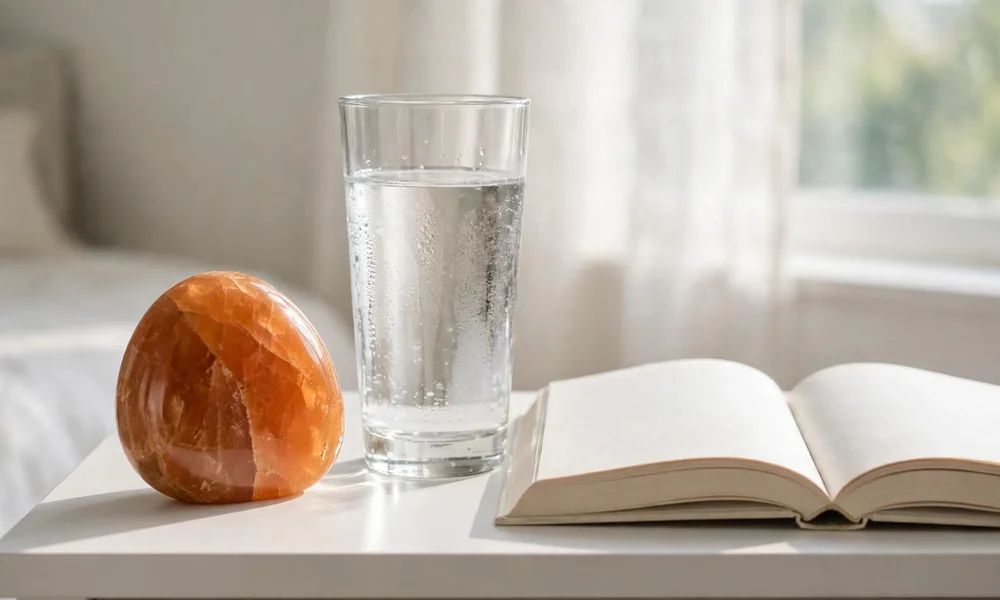
Give it a bright room and a small tray or shelf, the glass of fresh water standing close by but never touching the stone. A desk, a bedside table or a sunny sill all work well.
The Bottom Line
Orange kyanite brings warm orange to bright days: apricot blades glowing in the light, set on a tray with a glass of fresh water standing alongside.
A Note for Bright Days
Keep the colour glowing, the tray dry, and the morning unhurried. A single warm stone, a glass of water, and a few peaceful minutes will do.


