Some conversations are easy, and some are honest. An easy talk flows on its own, with light words and no hard edges. An honest talk is different: it asks you to say the true thing, the thing you have been carrying quietly for weeks, plainly, without dressing it up or hiding it behind a joke. Those talks matter most, and they are the ones we put off longest.
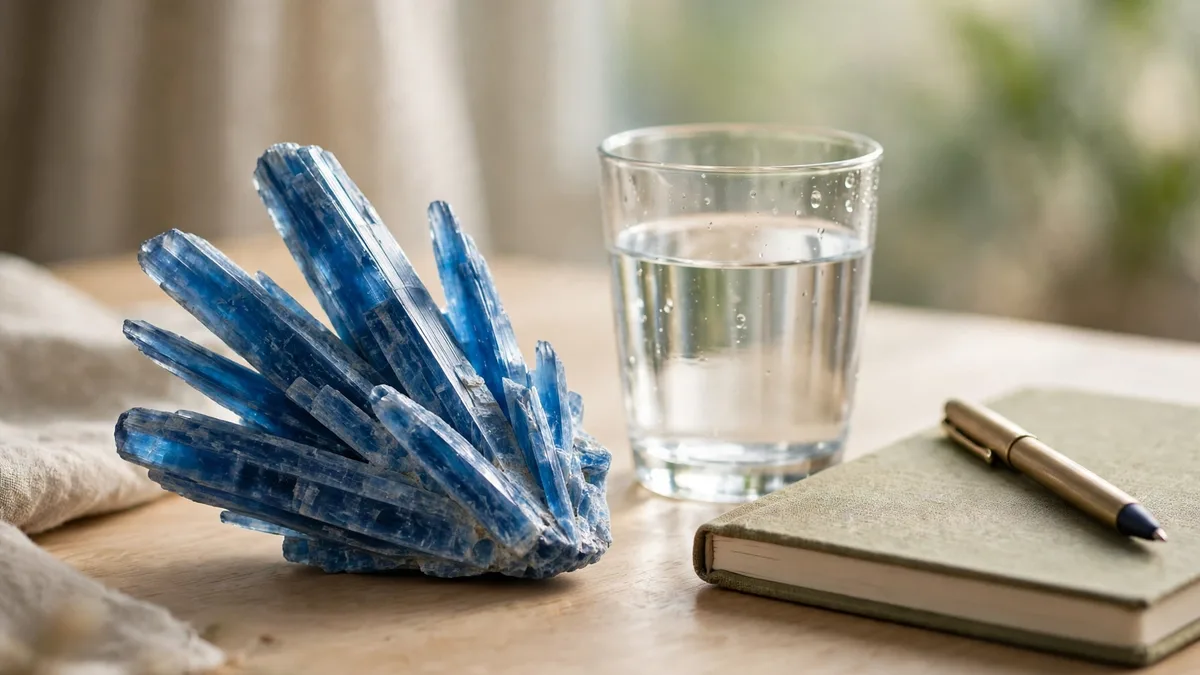
Blue kyanite is a stone that suits those talks. It is a clear, vivid blue crystal that grows in long, flat blades, like frozen shards of sky. Set it on the table before a talk, and it sits there quietly, a small blue reminder to speak plainly and listen well.
This guide explains what blue kyanite is, how to choose one, how to keep it safely beside water, and how to build a short habit around the honest conversations that matter. The stone is for display and handling only, never a treatment, and it will not make a hard talk easy on its own.
Key Takeaways
- Blue kyanite is a clear blue crystal that grows in long, flat blades.
- Its clear blue suits honest talks: plain words, said slowly, truly heard.
- The stone stays beside drinking water, never in it.
- An honest talk needs little: water, two chairs, one stone.
- The stone is for display only; it will not heal anything.
What Blue Kyanite Is
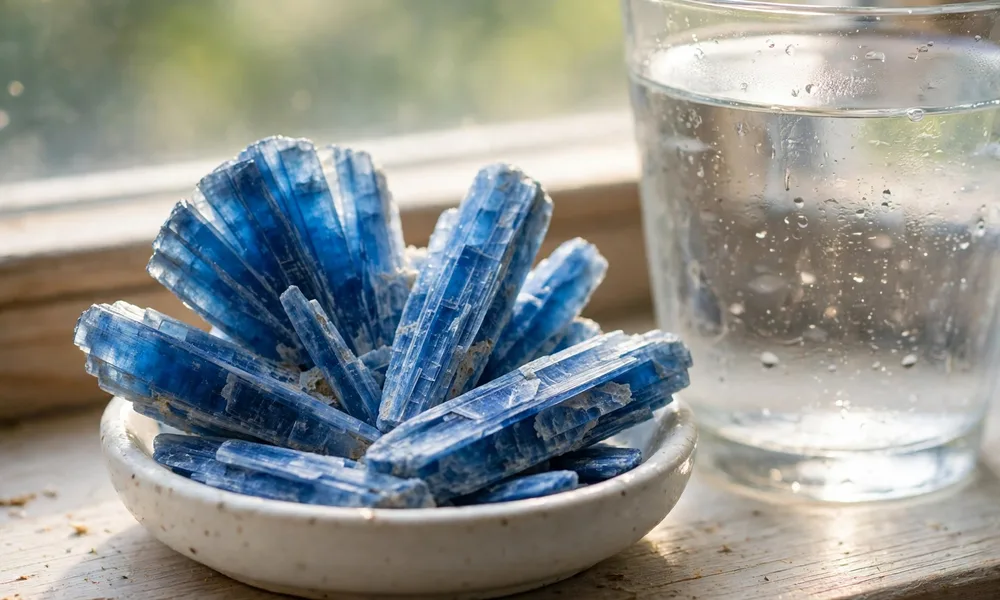
Blue kyanite is an aluminium silicate mineral, and its blue form is the one most people know. It grows in long, flat blades, often fanned out like a small sheaf of blue glass, and the best pieces are a deep, clear blue. Hold a blade up to the light and the blue glows, cool and steady, like water seen through glass.
It is most often sold as polished blades, small clusters, or smooth tumbled pieces, and a piece about the size of a plum fits on a tray beside a glass. Kyanite is fairly hard, but its blades can split along their length, so handle it gently.
Why Clear Blue Suits Honest Conversations
Clear blue suits honest conversations because it is the colour of clean water and open sky, and both ask nothing of you. Clean water does not argue, and an open sky does not hurry. A small blue stone carries that same quiet feeling into the room.
Honesty is not the same as bluntness. Bluntness throws words at a person; honesty offers them, slowly, with care for how they land. The same gentle pause runs through kyanite clarity rituals for a clearer mind, where the stone marks a small pause before thinking, and here the pause comes before speaking.
The Safety Rule First: Beside Water Only
This is the most important part of this article. Blue kyanite must never go in drinking water, never be soaked, and never be used in elixirs of any kind. The stone stays on its dish beside the glass, and the water stays plain and safe to drink.
The rule is wider than one stone: malachite must never go in water or elixirs, hematite must never go in drinking water, and apatite, lepidolite, which contains lithium, pyrite, angelite, and amber must never go in drinking water or soaks. Keep every stone beside the water, never inside it, and if a piece ever falls into a glass, throw the water away, wash the glass, and wash your hands.
Choosing a Blue Kyanite Piece
Choose a stone you can see clearly before you buy it, in daylight as well as in the shop light. Look for blades that are a deep, clear blue, with a glassy shine and no dull, chalky, or crumbling patches. A good cluster fans out evenly.
Buy from a trusted seller who makes no medical claims, and ask for a photograph of the actual piece when buying online. A seller who promises that a stone heals is not an honest seller; walk away.
Setting Up a Conversation Corner
A conversation corner takes only a few minutes to set up. Clear a small table, wipe it clean, and put back only what the talk needs: the stone on its tray, a glass of water for each person, and nothing that buzzes or rings. Two chairs facing each other finish the room.
Sit down a minute early, pour the water, and look at the stone for a moment. Then write down, in a single short line, the one true thing you need to say.
Starting Honestly
Start an honest talk slowly, and start with yourself. Say what you feel before you say what the other person did, because a sentence that begins with how you feel is easier to hear than one that begins with blame. Keep the first sentence short, then stop, and let the other person answer.
It helps to name the talk plainly at the start: this is a talk about something that matters, and I want us to be honest with each other.
Listening Without Interrupting
Listening is the harder half of an honest talk, and it asks for more than silence. Let the other person finish a sentence, even when you disagree, and hear the feeling behind the words before you answer them. Most hard talks are not really about the words; they are about feeling heard.
When the other person speaks, put your hands around your glass and look at them, not at the stone. The stone did its quiet work before the talk began; now the listening is yours. A glass of water gives the hands something to hold.

Saying the Hard Part Plainly
Every honest talk has one hard part, the sentence you have been avoiding, and it is usually shorter than you fear. Say it in plain words, without softening it into a joke and without hardening it into an accusation. Plain words leave nothing for the other person to guess at.
If the words stick, drink some water, breathe once, and try again, shorter this time. The same plain speaking suits other calm talks too, like the blue-green stone in chrysocolla for calm conversations.
Blue Kyanite at a Glance
| Clear blue | Honest talk | Beside water |
|---|---|---|
| Long bladed crystals | One slow breath | Stone beside glass |
| Deep glassy blue | Plain short words | Never in elixirs |
| Aluminium silicate stone | Listen fully first | Wash hands after |
| Handle blades gently | Two chairs facing | Dish beside glass |
When a Talk Gets Heated
Even a well-prepared talk can get heated, and heat is a sign to slow down, not to push harder. When voices rise, put the glass down, take one slow breath, and say so plainly: let us slow down for a minute. A short pause is not a defeat.
If the pause does not help, agree to stop and return to the talk another day. An honest talk can wait for a calmer hour, and a postponed talk is better than a finished friendship.
What It Will Not Do
Be honest about what blue kyanite will not do. It will not heal anything: it will not cure an illness, ease a medical condition, fix a relationship, or make a difficult talk easy on its own. It is a beautiful blue stone, and a blue stone is all it is.
The quiet is the part that helps, in an ordinary way: a clear table can steady a nervous talk, a glass of water can slow a hurried voice, and one plain sentence can open a door that silence kept shut.

Buying Honestly
Buy blue kyanite honestly, and expect honest sellers to do the same. A good seller will tell you the stone is a natural aluminium silicate mineral, show you the actual piece before you pay, and never promise that it heals or changes your health. Prices vary with the size of the cluster and the depth of the blue.
The same honesty applies to every blue stone for talks, including the pale blue quartz in blue chalcedony for calm conversations.
Your Honest Conversation Checklist
- Clear the table, the stone on its tray, water for each person.
- Keep the stone beside your glass of water, never inside it.
- Write down one true thing to say, in a single short line.
- Start with how you feel, then listen without interrupting.
- Say the hard part plainly, and pause when voices rise.
- Remember the stone will not heal anything; the plain words help.

Frequently Asked Questions
What is blue kyanite?
Blue kyanite is an aluminium silicate mineral that grows in long, flat, vivid blue blades, often fanned out like a small sheaf of blue glass. The best pieces are a deep, clear blue with a glassy shine.
Can I put blue kyanite in drinking water?
No, never. Blue kyanite must stay beside drinking water, never in it, and never be used in elixirs. Keep the stone on its dish beside the glass. If a piece ever falls into a glass, throw the water away, wash the glass, and wash your hands.
Is blue kyanite safe to handle?
A polished piece is safe to display and handle briefly with clean, dry hands, but wash your hands afterwards, especially before eating or drinking. Handle the blades gently, because they can split along their length, and never cut, grind, sand, or break the stone.
How is it different from the kyanite clarity ritual?
The clarity ritual uses kyanite alone for a quiet ten minutes of clear thinking, with one written question and a glass of water. This guide uses the same stone for honest talks with another person: plain words, said slowly, and truly heard.
How do I choose a good piece?
Look at the stone in daylight before you buy it, and choose blades that are a deep, clear blue, with a glassy shine and no dull or crumbling patches. Ask for a photograph of the actual piece when buying online.
How do I clean blue kyanite?
Dust it with a soft, dry cloth once a week, and never use water, soap, or cleaning sprays on it. Store it on its tray or in a soft pouch, away from harder stones and strong sunlight.
The Bottom Line
Blue kyanite is a clear blue stone, and an honest conversation is one plain sentence at a time, said slowly and heard fully.
Put the stone on its tray, pour the water, and say the true thing.
A Note for Honest Conversations
Keep it blue, keep it clear, keep it honest. The talk will do the rest.