Sunny days end the same way most evenings do: shoes by the door, the bag dropped on a chair, and the skin carrying a little of the day's warmth. The shoulders feel heated, the face feels flushed, and the arms carry a faint pink glow.
That warmth is the moment after-sun care is for. Not a burn, not an emergency, just skin that has spent hours in the sun and now asks for something cool and quiet. Cool water, a damp cloth, a shaded room and a little patience are all it needs.
This guide is a simple after-sun routine built on plain water: cooling down gently, drinking well, and letting warm skin settle through the evening. It is gentle general information only, and it will not heal anything. If the skin turns red, blisters or hurts badly, a doctor should be the one to look at it.
Key Takeaways
- After-sun care is the gentle cooling routine for warm skin after sunny days.
- Cool water, cool damp cloths and rest help warm skin settle slowly.
- Sip cool water slowly through the evening after time in the sun.
- Keep ice off the skin, and do not scrub skin that feels warm.
- See a doctor for red, blistering, swelling or very painful skin.
What After-Sun Care Means
After-sun care is what you do once the sun is done, when the skin feels warm but is not burned. The day outside is over, and now the body needs a slow cool-down, inside and out. It is a small routine, not a treatment: cool water to drink, a cool cloth on warm skin, plain moisture, and rest.
The word after matters: this routine does not protect you from the sun while you are in it, and it does not treat a burn once one has formed. It is the quiet middle step, between coming indoors and going to bed.
Why Skin Feels Warm After Sun
Skin feels warm after sun because it has been soaking up heat for hours. The sun warms the skin's surface, and the blood near it carries that warmth, so cheeks, shoulders and arms can feel heated long after you have stepped out of the light.
Sweat plays a part too: a day outside makes the body lose water, and skin can feel dry and tight by evening. That is why water leads this routine from both sides: cool water on the skin takes the heat away gently, and cool water drunk slowly replaces what the day took.
Your First Cool-Down
Step out of the sun and indoors as soon as the day outside is done. Head for a cool, shaded room, loosen any tight clothes, and let the skin breathe. Do not rub the skin or press anything hard against it.
Take a cool shower, never a cold one, and let the water run gently over warm skin for a few minutes. If a shower feels like too much, pour cool water into a clean bowl instead and press a soft cloth, dipped and lightly wrung, against the skin. Dry yourself by patting softly with a towel. Skip hot water and skip soap for now, because both can sting skin that is already heated.
Cool Cloths, Gently Done
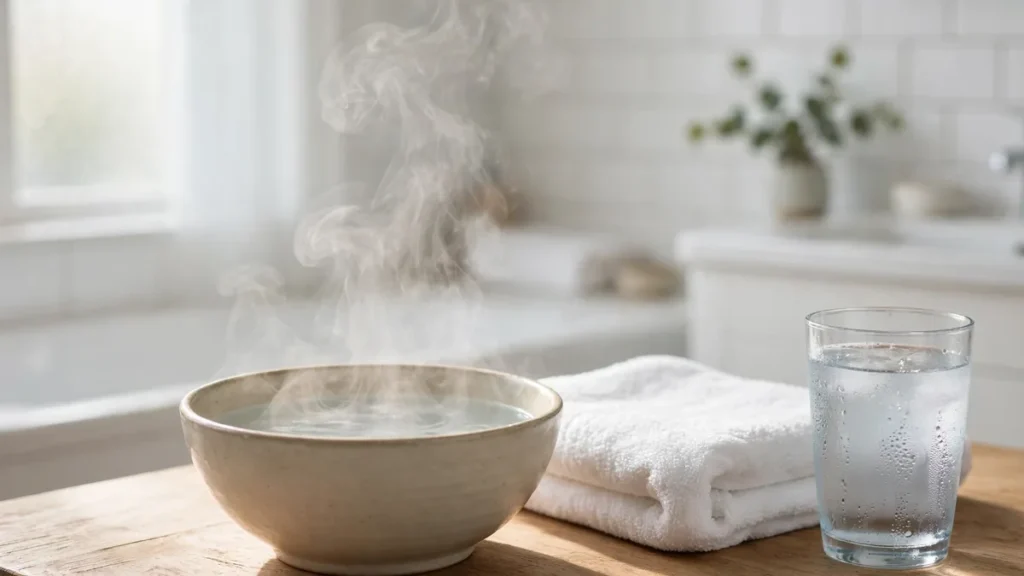
Cool cloths are the heart of this routine. Pour cool water into a clean bowl, dip a soft white cotton cloth in it, and squeeze it out lightly so it stays damp without dripping. Rest it softly over the warmest skin, the shoulders or the back of the neck, for a few minutes.
When the cloth warms, dip it again. Repeat this a few times, slowly, and let the skin cool little by little. Never press ice straight onto the skin, and never rub with the cloth: it is there to cool, not to scrub, and warm skin should be touched as lightly as possible.
Drinking Cool Water After Sun
Drinking water after sun is simple: keep a glass nearby and sip often through the evening. Start with a glass as soon as you come indoors, drink again with your evening meal, and keep sipping until bedtime. Small sips beat one big glass at the end.
Hot days call for more water than mild ones, and the body keeps losing water even after the sun has gone down. Do not wait until thirst is strong. A glass of plain water is all you need, and nothing beats it. Keep the glass where you can see it.
After-Sun Care at a Glance
| Cool water first | Warm skin | Gentle rest |
|---|---|---|
| Cool damp cloths | Shade, cool room | Slow sips |
| Plain moisture | No ice, scrub | Soft pat dry |
| Evening, bedtime | Doctor if red | Patch test first |

After-Sun Care and Sunburn Care
Sunburn care and after-sun care sound alike, and the two are easy to mix up. Water and sunburn: a gentle cooling routine covers skin that has already turned pink and sore, where the skin has gone pink and a shirt that felt fine at midday now chafes.
After-sun care comes before that. It is for skin that feels warm and flushed but is not pink or sore, and its whole purpose is to cool the skin down gently so the evening stays comfortable. One is care for burned skin, the other for warm skin, and knowing which you need starts with looking honestly in the mirror.
After-Sun Care and Everyday Sun Care
Everyday sun care and after-sun care are two halves of the same sunny day, and they belong at different hours. Water and sun care: a simple pairing covers the daytime half: fresh water on the inside, and sunscreen and shade on the outside, with sunscreen applied before going out and reapplied through the day.
After-sun care takes over when that half is finished. The sunscreen has done its job, and now the skin needs cool water, a damp cloth and rest. One protects the skin while the sun shines, the other soothes it once the sun is gone, and neither replaces the other.
After-Sun Care and Flaky Skin
Flaky skin and warm after-sun skin can look alike in the evening, but they are different problems. Water and flaky skin: a gentle routine covers skin shedding its top layer in small visible pieces, common in cold air and dry rooms, where lukewarm water helps the flakes lift away.
After-sun skin is not shedding, it is simply warm and a little dry from hours in the sun. Cool water suits it better than lukewarm, and the routine is shorter: cool down, drink, moisturise, and rest. If flakes appear in the days after a sunny break, that belongs to the flaky skin routine, not this one.
A Plain Moisturiser on Damp Skin
Once the skin has cooled and been patted dry, a plain moisturiser can help. Choose one that is fragrance-free and simple, and smooth a little over skin that is still slightly damp, so the moisture stays in.
Use only a little, spread with a light hand, never rubbing hard. A plain moisturiser is not a treatment and it will not fix burned skin. It is simply a gentle layer that keeps warm skin from feeling tight, and it belongs here only after the cooling is done.

Rest and Shade for the Evening
Rest is the last part of after-sun care, and the part most people skip. Stay out of the sun for the rest of the day, keep the room cool, and let the body settle. Light curtains, a fan, and a glass of water by the bed are worth more than a busy evening plan.
Sleep helps too: warm skin often feels calmer by morning if the evening was quiet, so keep the night simple, with a cool room and loose night clothes. If the skin still feels hot or sore by morning, look at it again in daylight.
The Safety Rule First
This routine is gentle general information only. It will not cure sunburn, and it is no replacement for medical care. It is for warm skin after sun, not for skin that is red, blistered, swollen or very painful, and it will not heal anything.
Try every new product on a small patch first: dab a little on the inside of your wrist or behind your ear, leave it a full day, and look for redness, itching or swelling. If anything shows up, stop using it. Never apply strong acids, lemon or vinegar remedies, or any new active product to warm skin. If your skin is red, blistering or swelling, or you feel ill or feverish after time in the sun, see a doctor promptly, and follow the doctor, not a home routine.
Your After-Sun Checklist
- Come indoors, find shade, and loosen tight clothes.
- Sip cool water slowly all evening.
- Lay cool damp cloths softly on warm skin.
- Pat dry gently, then smooth on moisturiser.
- Rest in a cool room and stay out of the sun.
- Red, blistering or painful skin needs a doctor.
Frequently Asked Questions
What is after-sun care?
After-sun care is the gentle cooling routine for warm skin after time in the sun: cool water to drink, cool cloths on the skin, plain moisture, and rest in a cool room. It is for skin that feels warm, not burned.
How is after-sun care different from sunburn care?
Sunburn care is for skin that has already turned pink and sore, and hurts when clothes press against it. After-sun care is the step before that, for skin that feels warm and flushed but is not pink or sore, and its purpose is to cool the skin down gently.
Should I use ice on warm skin after sun?
No. Ice is too cold for warm skin and can shock it, so it should never be pressed straight on. Cool water and cool damp cloths take the heat away slowly, and that is the safer way.
Can I use a moisturiser after sun?
Yes, once the skin has cooled and been patted dry. Choose a plain, fragrance-free moisturiser, smooth a little over skin that is still slightly damp, and spread it with a light hand, never rubbing hard.
How much water should I drink after sun?
Sip cool water often through the evening, starting with a glass as soon as you come indoors, then with your meal, and on until bedtime. Small sips beat one big glass at the end.
When should I see a doctor after sun?
See a doctor promptly if the skin turns red, blisters, swells badly or feels very painful, or if you feel ill or feverish after time in the sun. This routine is gentle general information only, not medical care.
The Bottom Line
After-sun care is simple: cool water, cool cloths, plain moisture and rest, letting warm skin settle slowly through the evening.
A Note for Sunny Evenings
Keep the water cool, the cloth soft, and the evening quiet. One glass of water, one cool cloth, and a shaded room are enough.