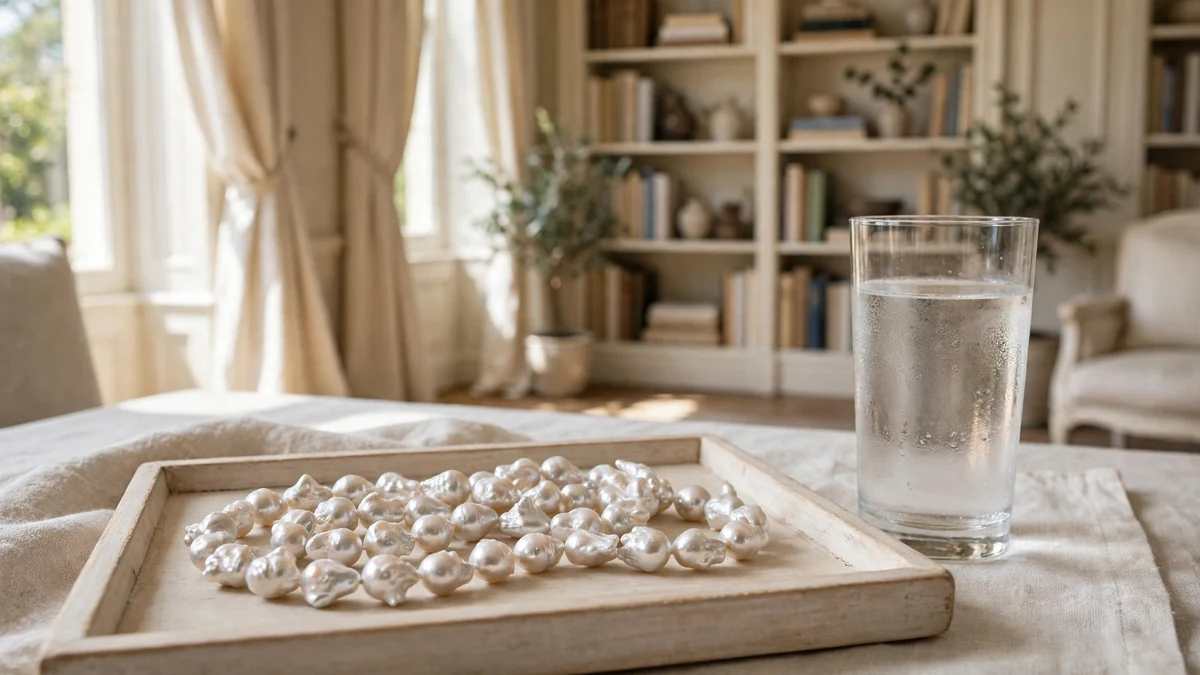
There is a kind of day that asks for nothing special: the kettle is put on without hurry, the curtains are drawn back to a pale sky, and the rooms settle into their ordinary order.
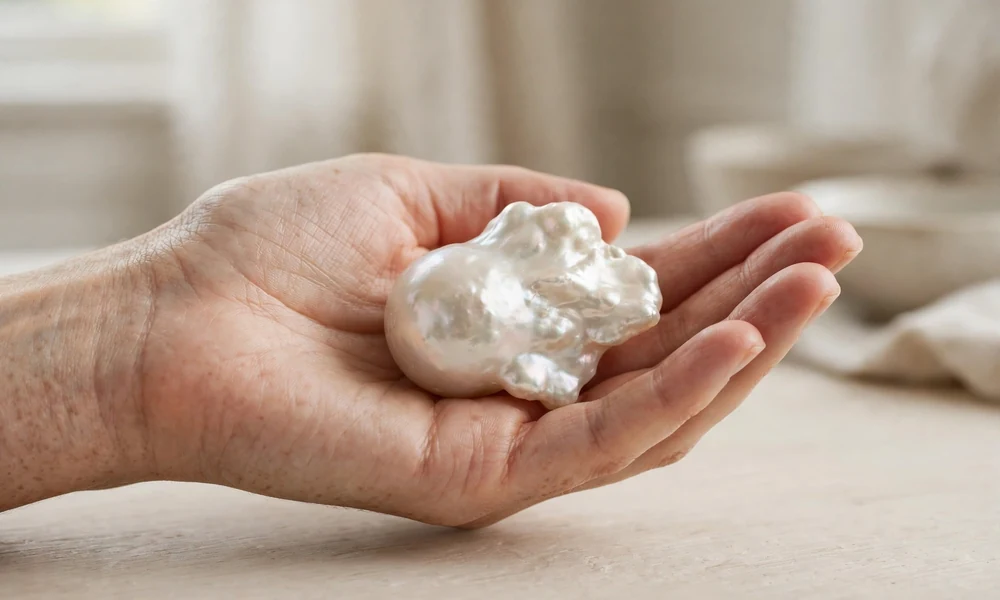
A baroque pearl belongs on such a day. No two beads match: one bulges on one side, the next dips and rises like a small hill, as if the sea shaped each pearl by hand, then changed its mind. The shine stays quiet, a pale glow sliding across the bumps as the piece turns.
This guide takes a plain look at the baroque pearl: how its uneven form comes about, what makes it pleasant to live with, and how to choose one without fuss. Everything here is about display and jewellery, the pearl kept beside a glass of water and never dropped into one, and nothing here is a remedy.
Key Takeaways
- Baroque pearl never turned round: uneven, bumpy, softly glowing.
- It is the only uneven pearl in this journal, for classic days.
- Its pale colour and quiet shine suit slow mornings, pale wood, clear glass.
- A baroque pearl is jewellery and display only; it cannot heal anything.
- Keep it next to a glass of water, never in it, and never let it soak.
What Baroque Pearl Is
Inside a shelled sea creature, a pearl forms as thin coats of nacre settle one over another across many months. In a round pearl those coats settle evenly, so the bead comes out a neat ball; in a baroque pearl they settle unevenly, so the bead comes out lumpy, ridged, or gently bent.
Pick one up and you feel the difference at once: silky, yet your fingers meet bumps and hollows where a round pearl would be smooth all round. The best pieces keep an even pale colour, white with a whisper of silver, and the glow stays steady across every lump.
Why Soft Shine Suits Classic Days
A classic day runs on small pleasures: a tidy shelf, a slow cup of tea, a window open to the morning air, and time to sit still. A gem that shouts would spoil that mood, while a baroque pearl fits it, its shine gentle and its shape full of small surprises.
A round pearl can feel formal, fit for a wedding rather than a breakfast table. A baroque pearl feels at home in ordinary rooms: its lumps and ridges give it character, and it rests easily on a plain tray next to an everyday glass of water.
Choosing a Baroque Pearl Piece
Choose slowly, in daylight rather than under a shop lamp. Turn the piece in your hand and watch the pale colour stay even from every angle, with no chalky patches and no grey film.
A short strand, drop earrings, or one loose pearl in a plain setting is a good start. Ask whether the pearls are cultured or natural, and walk away from anyone who dodges the question or claims the piece will improve your health.
A Classic Day with Baroque Pearl
Start the day by setting the baroque pearls on their tray and filling a tall glass of water beside them, so morning light falls on both. Sit down, drink the water unhurriedly, and hold one pearl a moment to feel its cool, uneven weight.
Leave the tray out where you can see it all morning, in good light. Lift the piece again after dark, when lamplight warms its pale glow, and let the day wind down as unhurriedly as it began.
Baroque Pearl Beside Water
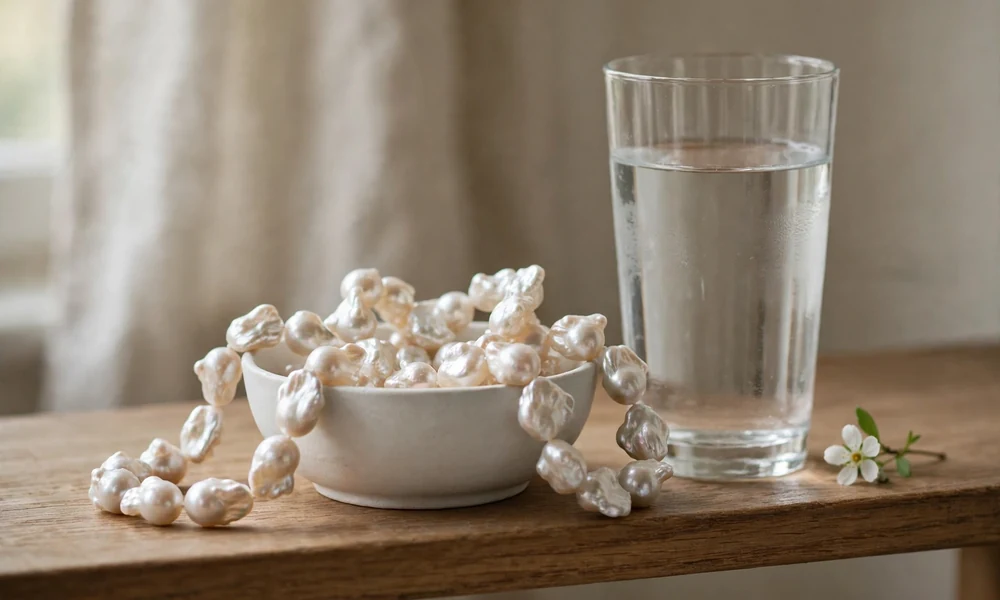
Set a tall glass of cool water on the tray next to the baroque pearls. Tray and glass share the same wood, but pearl and water never share a vessel: the pearl stays dry, out of every drink and out of any soak, which would dim its shine and slacken its stringing.
Handle baroque pearls with clean, dry hands, and mind the ridges, which catch on hard edges more readily than a smooth bead. If the glass should tip, move the pearls aside right away, dry them gently with a soft cloth, and return them only once the tray is dry again.
Baroque Pearl at a Glance
| Pale soft glow | Classic days | Dry display |
|---|---|---|
| Bumpy, lumpy, silky | Tray, shelf, desk | Glass apart |
| Cool, light, uneven | Daylight, lamplight, pause | Soft dry wipe |
| White, silver hint | Morning, midday, evening | Never soak |

Baroque Pearl and White Pearl
White pearl and baroque pearl are the nearest pair in this journal: both grow the same way, coat upon coat of nacre inside a mollusc, and both wear a soft pale colour. White pearl is the neat one, a smooth ball, evenly round, with a calm lustre, kept for classic mornings in pale light. Pearl for classic mornings covers that round white gem; this guide covers an uneven one.
The colour is shared, but the shape changes everything. A round pearl reads as tidy and formal, while a baroque pearl reads as natural and relaxed, closer to a beach pebble than to a bead from a jeweller's tray. One is a perfect sphere, the other a lumpy treasure with a shape all its own.
Baroque Pearl and Mother of Pearl
Mother of pearl is the pale lining inside certain shells, smooth and flat, washed with faint rainbow colours that drift as you move it, and it is usually kept as a dish, a shell piece, or a tray. A baroque pearl is a whole gem, pale white through and through, full of bumps and ridges, with no rainbow in it at all. Mother of pearl for classic days covers that flat lining; this guide covers a lumpy gem.
Both come from the sea, yet they are used differently. A shell lining lies flat to be looked at, while a baroque pearl is worn, held, and turned over in the hand, feeling each ridge as it rolls.
Baroque Pearl and Abalone
Abalone is the bright lining of a sea snail shell, polished until it flashes blue, green and violet, like a wave held in glass, and it belongs to fresh days, open windows and bright mornings. Abalone for fresh days covers that vivid shell; this guide covers a pale uneven gem for classic days.
Abalone changes colour quickly as you tilt it, while a baroque pearl keeps one soft white from every side, glowing steadily instead of flashing. Abalone is a shell for a bright shelf, while a baroque pearl is a gem for a quiet day, and side by side the two could hardly look more different.
Baroque Pearl and Golden, Black and Pink Pearl
Three more pearls belong to this family, each with its own colour and round form. Golden pearl glows warm gold, like late sun, for classic days. Black pearl is dark and shadowy, with a cool gleam for bold evenings. Pink pearl blushes soft and pale, with a tender tint for gentle days.
Baroque pearl stands apart from all three through shape rather than colour. Golden, black and pink pearls are all smooth and round, while baroque pearl is lumpy and uneven, pale white with a hint of silver, and no two beads ever match.
Caring for Baroque Pearl
Baroque pearls need little looking after, but what they need matters. Rest them on a small tray or in a soft pouch in a bright room, away from radiators, steamy bathrooms and cleaning sprays. One gentle pass with a dry cloth each week keeps the glow fresh.
Pearls are far softer than most gems, so a hard knock against a table edge can mark a bead or take its shine, and the ridges of a baroque pearl catch such knocks more easily than a round one. Dry them at once if splashed, and keep them away from keys and coins.
Stones That Must Never Touch Water
A few stones are best kept dry at all times, and worth learning by name. Malachite is one: it should never be placed in water or stirred into a drink, because it can give off harmful matter. Hematite is another: it should never sit in drinking water either.
The same warning covers apatite and lepidolite, the last of which holds lithium, along with pyrite, angelite and amber, none of which should be dropped into a drink or left in a soak. A baroque pearl follows the same rule: it rests beside the glass, never in it, and every stone on the dry list stays well away from taps, jugs and glasses.
Your Classic Days Checklist
- Set the baroque pearls on a tray, a full glass next to them.
- Sip fresh water slowly as the classic day begins.
- Hold one baroque pearl in your palm for a few breaths.
- Buy from a seller you trust, and keep the receipt.
- Keep the pearls beside drinks and soaks, never inside them.
- A pearl cures nothing; take health worries to a doctor.

Frequently Asked Questions
What is a baroque pearl?
A baroque pearl is a pearl that grew unevenly inside a shelled sea creature, coat upon coat of smooth nacre until it came out lumpy and non-round, glowing softly from within, never sparkling. It is not pearl powder, a fine powder ground from pearls for skincare, not a whole gem you can wear.
How is baroque pearl different from white pearl?
White pearl is smooth, even and perfectly round, kept for classic mornings. Baroque pearl is uneven and lumpy, full of bumps and gentle ridges, and it fits whole classic days from morning to evening.
Is baroque pearl the same as mother of pearl?
No. Mother of pearl is a thin, flat layer from the inside of a shell, shimmering faintly with rainbow colours. Baroque pearl is a whole gem, pale white through and through, lumpy and uneven, meant to be worn and held.
Is baroque pearl safe beside water?
Yes, while the two stay apart. Keep the glass on the tray next to the pearls, and never slip a pearl into a drink or leave it in a soak.
Will a baroque pearl heal anything?
No. It is a fine gem to wear and to look at, and any calm you notice comes from the quiet minutes you spend with it, not from the pearl.
Where should I buy baroque pearls?
Buy from a seller you trust, one who answers plainly when you ask whether the pearls are cultured or natural, and who gives you a receipt unasked.
The Bottom Line
Baroque pearl brings a soft shine to classic days: an uneven, lumpy gem with a gentle glow, resting on its tray, a glass of fresh water close by, never touching.
A Note for Classic Days
Let the shine stay soft, the pearl stay dry, and the day stay unhurried. One uneven strand, one glass of water, and a few quiet minutes are enough.


