
A calm day rarely announces itself. It arrives as a softening of the light, a kitchen that stays tidy a little longer, and an afternoon with no errands pressing at the door. The hours feel wide, and the smallest things — a glass of water, a stone on a tray — are enough.
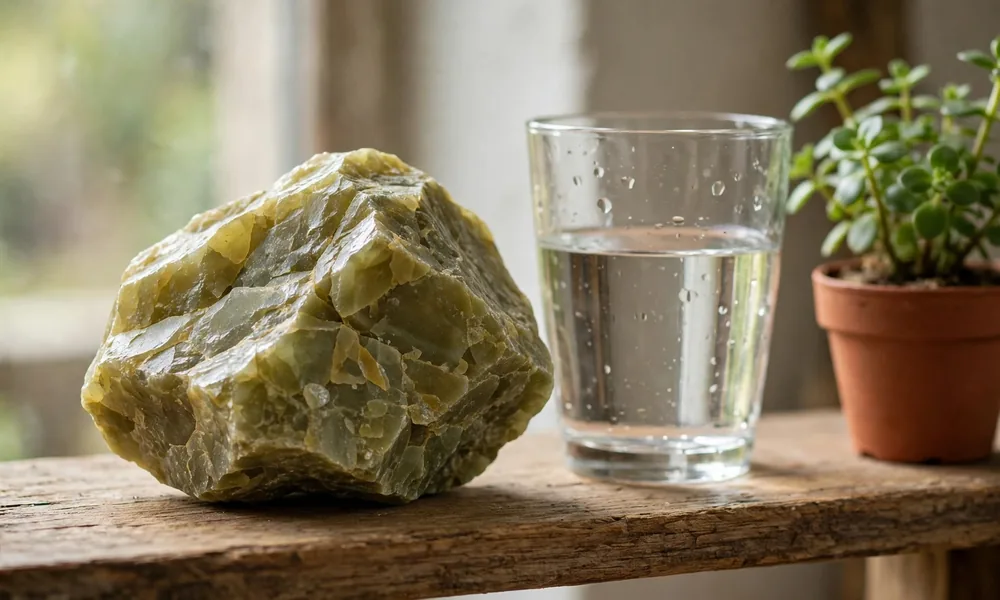
Olive jade suits that kind of day. Its colour is a muted yellow-green, the grey-green of olive leaves in late afternoon sun, neither bright like spring grass nor deep like a forest. A polished piece has a gentle, waxy glow, and rests on a wooden tray next to a glass of cool water.
This guide looks at olive jade in plain words: what the stone is, how its muted green differs from its brighter green cousin, and how to choose a piece you will enjoy keeping close. The stone is an object for looking at and holding, nothing more. It will not heal anything.
Key Takeaways
- Olive jade is a muted yellow-green jade, duskier than green jade and greyer than yellow jade.
- Olive is a new jade colour here, the only olive jade, made for calm days.
- Its soft grey-green suits unhurried hours, pale light, a tray and a glass.
- Olive jade is an object to display and hold; it will not heal anything.
- The stone stays beside the glass, never in a drink and never in a soak.
What Olive Jade Is
Think of an olive grove in late light, and you have the colour of this stone. Olive jade is jade in its grey-green form, a hard, close-grained mineral that takes a smooth polish. Its shades move from pale sage to deeper olive, with cloudy grey-green patches drifting through the stone. Pick it up and it feels cool at first, then warms slowly in your palm, while the polished face holds a soft, waxy glow instead of a bright sparkle.
The jade in most shops is nephrite, a stone made of fine fibres pressed tight, which is why it is strong and polishes so evenly. A little iron inside the mineral gives olive jade its yellow-green tint, and the nicest pieces carry it evenly, free of brown marks and chalky streaks. A small tumbled pebble is the easiest place to begin, and a rounded cabochon shows the muted colour at its best.
Why Soft Green Suits Calm Days
Soft green is a colour that lowers the volume of a room. It sits between the freshness of a leaf and the quiet of grey, and in its muted form it feels like shade under an olive tree, cool and unhurried. On a calm day, with the house still and the hours stretching gently, that shade lets your gaze settle, instead of demanding attention the way a bright yellow would.
In daylight, the olive tones warm a little, and the greyer patches show up more clearly. It pairs well with the ordinary things of a slow day: a wooden tray, a clear glass of water, a paperback left open.
Choosing an Olive Jade Stone
Take your time choosing, and look at the stone in daylight before you buy. Turn it slowly in your hand and watch the yellow-green: it should stay muted and even, lifting a little in the sun, with no muddy brown patches and no streaks that look dyed.
Run a fingertip over the polish — a good piece feels like glass, with no chips along the edge of a faceted cut. It should feel cool and a little weighty at first lift, and a small pebble should sit neatly in a closed fist. Begin with a single smooth tumbled stone, and only add a faceted oval once the colour has grown on you. Leave the shop if the seller promises the stone will change your health.

A Calm Day with Olive Jade
Put the stone on its tray first thing, and fill a glass to stand next to it where the window light falls. Take a seat, sip the water slowly, and lift the olive jade to turn it in the daylight, watching the muted green shift.
Then put it back and let the morning go on, the tray resting on a desk or shelf. Lift the stone again after lunch, and again as evening comes on, when the lamplight turns its olive tones deeper and greyer.
Olive Jade Beside Water
Pour fresh drinking water into a clear glass and set the glass on the tray beside the olive jade. Tray-mates only: the stone must not enter the glass, and it must never be left soaking, since soaking would dull its shine and could carry dust into the water.
Should the glass tip over, lift the stone clear right away, dab it dry with a soft cloth, and wait until the tray is fully dry before putting it back. For everyday care, a dry cloth wiped over it once a week is plenty, and wash your hands when you are done.
Olive Jade at a Glance
| Muted yellow-green | Calm days | Beside water |
|---|---|---|
| Sage tones, gentle glow | Soft light, slow hours | Stone stays dry |
| Smooth, cool, waxy | Tray, shelf, windowsill | Glass stands apart |
| Duskier than green jade | Morning, afternoon, dusk | Wipe, then wash hands |

Olive Jade and Green Jade
Olive jade and green jade are the closest pair in this journal, since both are green stones for slow, calm hours. Green jade is the clearer sister: a soft, fresh green, the colour of new leaves after rain, kept for slow mornings. Green jade for slow mornings is about that bright green stone; this guide is about a duskier one.
Olive jade is greyer and warmer, a yellow-green that reads like an olive grove rather than a garden leaf. Side by side, green jade looks like spring and olive jade looks like late summer, muted and mellow. If fresh, clear greens please you, choose green jade; if you want a green that stays quiet across the room at dusk, choose olive.
Olive Jade and the Other Jades
Seven other jades already live in this journal, and each one keeps its own mood. The white one is creamy and pale, a stone for the first quiet minutes of a morning. White jade for calm mornings looks at that pale stone; this guide looks at a grey-green stone for a whole calm day.
The lavender one is lilac-pale, a violet stone for quiet days in soft light. Lavender jade for quiet days looks at that lilac stone; this guide looks at a stone the colour of shade under a tree. Then there is black jade, dark as night; yellow jade, sunny and steady; red jade, warm and bold; blue jade, the colour of a pale sky; and purple jade, deep violet for quiet days. Olive takes its place among them as the muted green, greyer than the green jade and softer than the yellow.
Olive Jade and the Other Green Stones
Olive jade is not the only green stone here. Green aventurine is a soft green quartz with a gentle sparkle, kept for dull skin days, and it glitters where jade glows softly. Chrysocolla is a blue-green stone with swirling colour, kept for stressful weeks, and its swirls set it apart from the even tone of jade.
Prehnite is a pale green stone with a glassy shine, kept for quiet afternoons, and it looks lighter and clearer than olive jade. Each is a different mineral from jade, with its own colour and its own feel in the hand.
Caring for Olive Jade
Olive jade asks for almost no upkeep, though a little care goes a long way. Give it a dish or tray with plenty of light, far from heaters, sunny car dashboards and household cleaners. A single weekly wipe with a dry, soft cloth keeps it clean.
Jade stands up to scratches well, but a hard knock against a table edge can still nick a facet or chip the rim of a tumbled stone. Give it a spot of its own, away from keys, coins and harder gems, and dab it dry straight away if it ever gets wet.
Stones That Must Never Touch Water
A few stones must never come near water at all, so their names are worth knowing by heart. Malachite must never go in water or in elixirs, since it can release harmful substances. Hematite must never go in drinking water, and neither must apatite, lepidolite, which contains lithium, pyrite, angelite or amber, whether in a drink or a soak.
The same rule holds for olive jade: beside the water, never in it, and never left to soak. Keep every stone from the never-touch-water list well away from glasses, jugs and sinks, and wash your hands once you have handled one.
Your Calm Days Checklist
- Put the olive jade on a small dish, with a full glass of water next to it.
- Sip a glass of fresh water slowly while the calm day begins.
- Hold the olive jade in your palm and breathe slowly a few times.
- Keep every drink and every soak free of the stone; it belongs beside the glass.
- Give the olive jade a wipe with a dry cloth once a week, and wash your hands after.
- The stone is only an object; for health worries, see a doctor.

Frequently Asked Questions
What is olive jade?
Olive jade is jade in a muted yellow-green, a hard stone with a smooth waxy polish, kept on display for calm days.
How is olive jade different from green jade?
Green jade is a soft, clear green, like new leaves after rain. Olive jade runs greyer and warmer, a yellow-green like an olive grove, and it is the only olive jade here.
Is olive jade the same as green aventurine?
No. Green aventurine is a sparkling green quartz for dull skin days. Olive jade is hard, dense jade with a gentle waxy shine, and holding the two feels quite different.
Is olive jade safe beside water?
Yes, if they stay apart. Keep the glass beside the stone on the tray, and never put the stone into a drink or leave it in water.
Will olive jade heal anything?
No. It is a pleasing object to hold and look at; any calm comes from the quiet minute itself, not from the stone.
Where should I keep my olive jade?
On a tray in good light, with a glass of water standing nearby, where sun or lamplight can fall on them both.
The Bottom Line
Olive jade brings muted yellow-green to calm days: a soft grey-green stone with a gentle waxy glow, resting on its tray while fresh water stands close by, never touching it.
A Note for Calm Days
Keep the green muted, the stone dry, and the hours unhurried. One small olive jade and a glass of water are enough for a slow, calm day.


