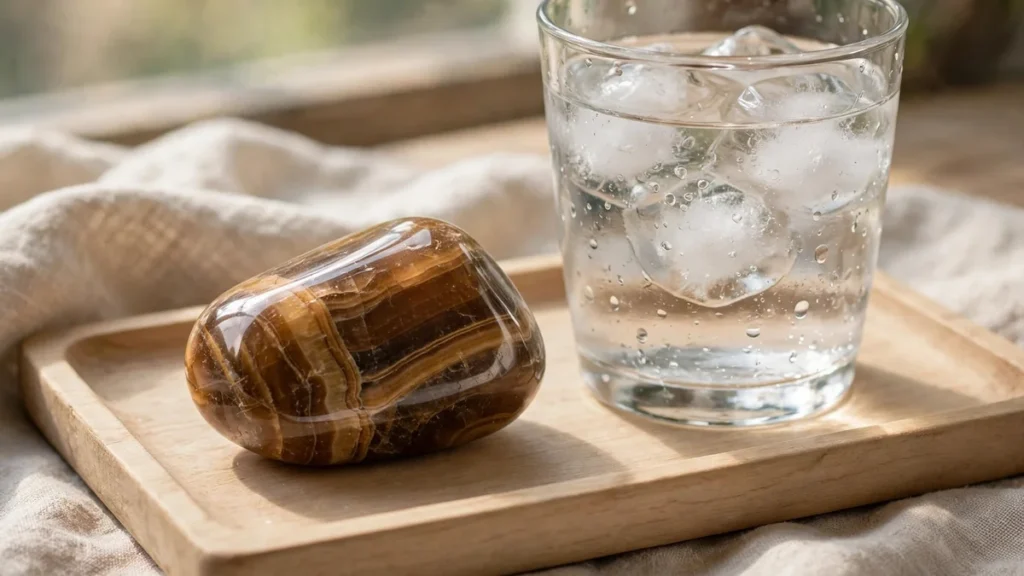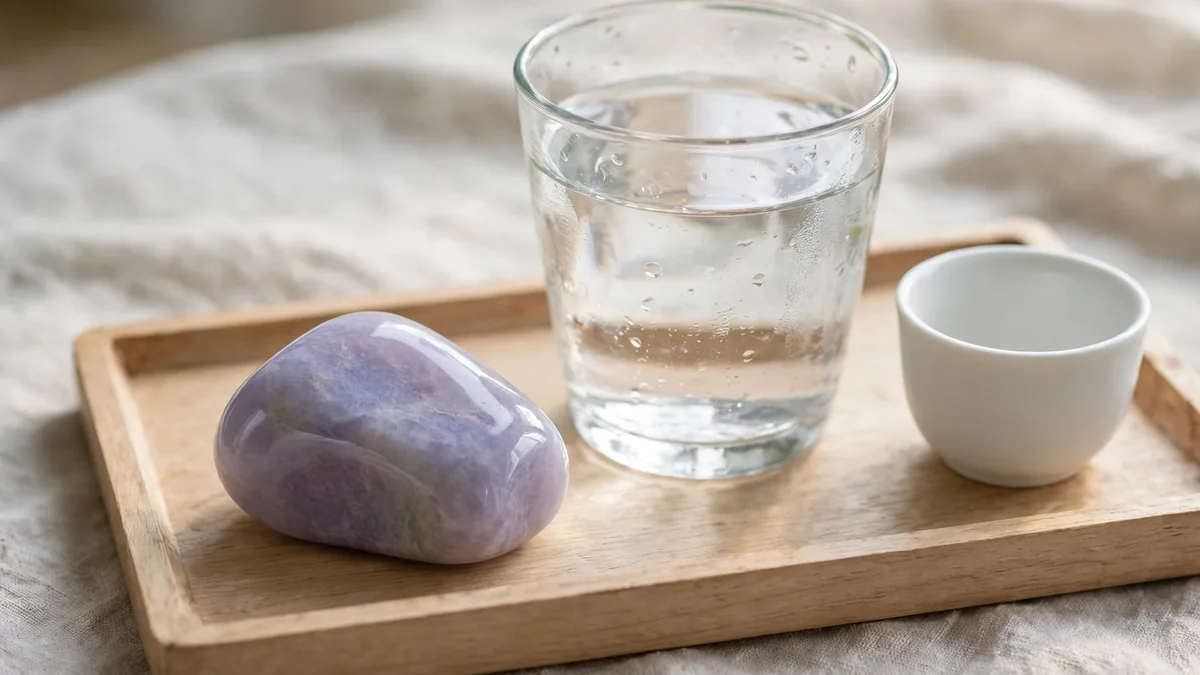
Some days ask for very little. No big plans, no loud rooms, no long list of things to finish: on a quiet day, the best hours are the slow ones, when the light is soft and the house is still.
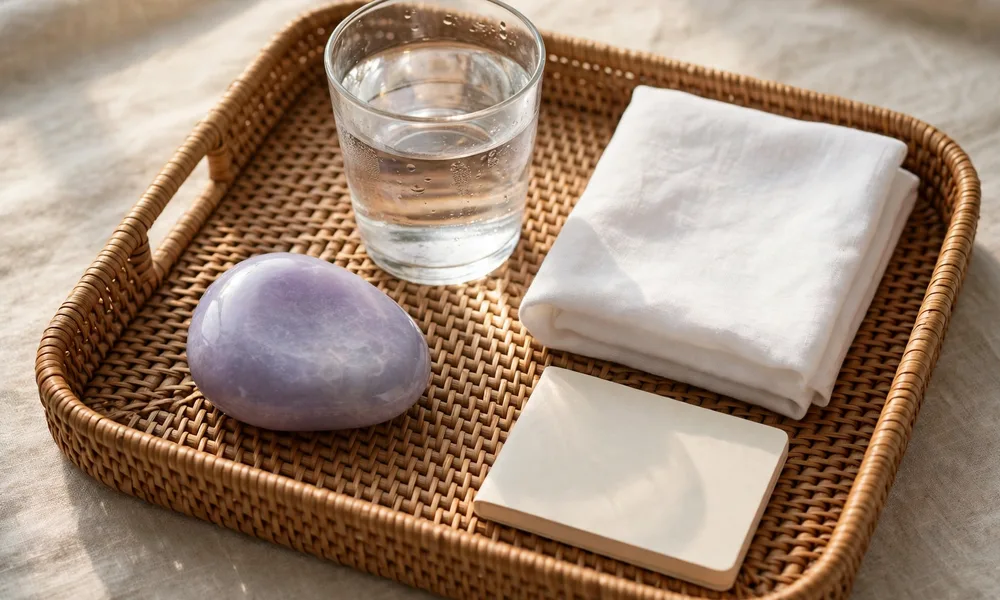
Lavender jade is a stone for days like these: a soft violet jade, the colour of pale lilac in morning shade, smooth and cool in the hand, with a gentle waxy shine. Set it on a tray beside a glass of fresh water, and it looks like a small piece of quiet, kept where you can see it.
This guide explains what lavender jade is, how to choose a piece, how to keep it safely beside water, and how to build a short, quiet-day routine around it. The stone is for display and handling only, never a treatment, and it will not heal anything.
Key Takeaways
- Lavender jade is a soft violet jade, pale lilac, smooth and cool.
- Its soft violet colour suits quiet days, slow hours and rest.
- Lavender jade differs from green jade, white jade and violet amethyst.
- The stone is for display and handling only; it will not heal anything.
- The stone stays beside drinking water, never in it, and stays dry and dusted.
What Lavender Jade Is
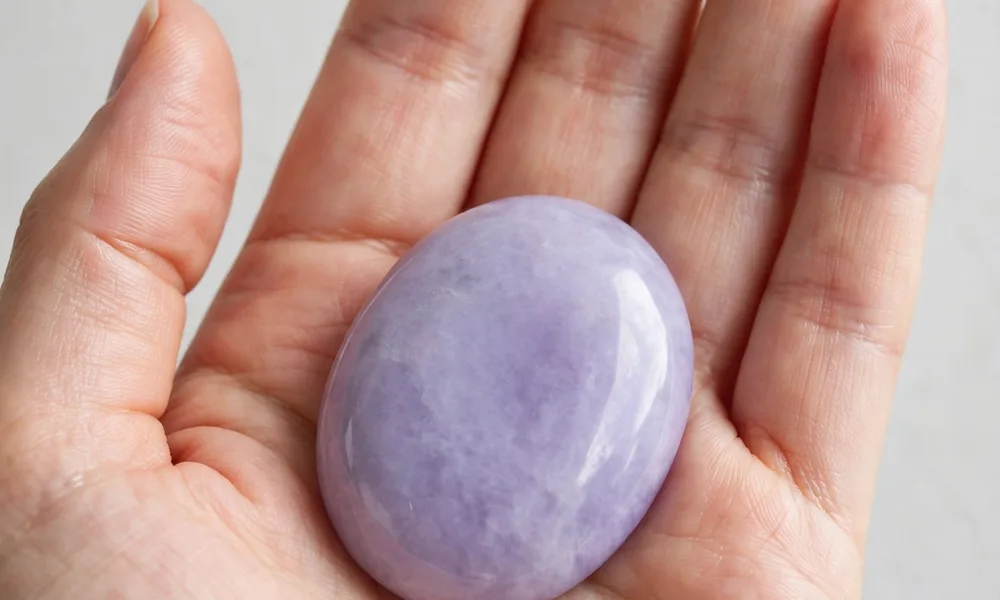
Lavender jade is jade in its soft violet form, a dense, tough stone that takes a smooth polish and feels cool to the touch. Most jade is nephrite, a mineral made of fine, tightly packed fibres, and that tight structure is what gives the stone its strength and its soft, even surface. The violet colour comes from tiny traces of iron and manganese inside the stone, so the best pieces are a pale, even lilac, like lavender flowers in soft shade.
Hold a polished piece in your palm and it feels cool, solid and a little heavy for its size, with a soft waxy shine rather than a bright glassy one. A stone that looks even and pale violet in daylight, with no grey patches or dark stains, is a good sign that the colour is true.
Why Soft Violet Suits Quiet Days
Soft violet suits quiet days because it asks nothing of the eye. Violet sits between calm blue and gentle pink, and in its palest form it feels like dusk light, soft and low, the colour of a room just before the lamps come on. On a quiet day, that colour gives the eye a restful place to land while the hours pass slowly.
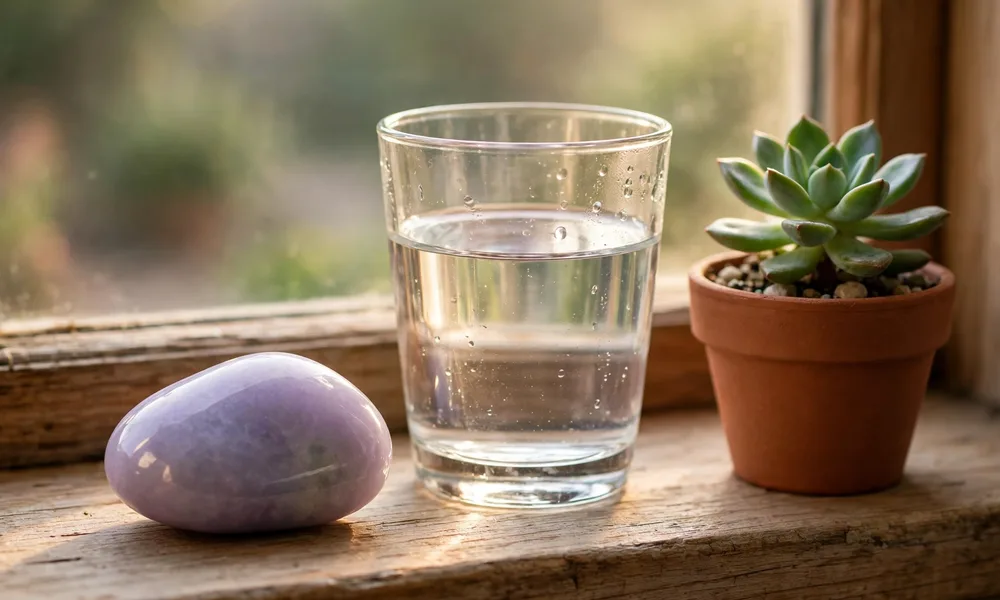
A quiet day also suits lavender jade because the stone is simple: no preparation, no long ceremony, simply there when you sit down, catching the soft light from the window.
Choosing a Lavender Jade Stone
Choosing a lavender jade is mostly a matter of looking closely and trusting your eye. A good piece shows a clear, soft violet colour, not a muddy grey-violet or a harsh bright purple, and it should be pale and even all the way through, with no cloudy patches or dark spots. Look for a smooth polish with no sharp chips.
A palm-sized tumbled stone is enough for a quiet-day tray, and it is easy to hold, dust and move. Hold it in daylight and turn it slowly to see how the soft violet changes. If a piece feels pleasant in your hand and its pale colour makes you feel calmer, it is the right one. Buy from a trusted seller, never one who promises it will change your health.
A Quiet Day Routine
A quiet day routine takes only a few minutes, and it starts the night before: place the stone on a small tray beside a clear glass, where the morning light will find it. When you wake, fill the glass with fresh water and drink it slowly, in small sips. Then pick up the stone and look at its soft violet colour for a few breaths.
Put the stone back on the tray, open the curtains, and let the quiet day begin. The routine is simply water, light, one soft violet stone, and a short pause — and on a quiet day that small pause is enough to steady you.
Lavender Jade Beside Water
Water belongs beside the stone, never around it: set a clear glass of fresh drinking water next to the stone on the tray. They share a tray, not a glass. Never place the stone inside drinking water, and never soak it, because a stone in water can chip, dull or carry dust into the glass.
If the glass spills, lift the stone away, dry it with a soft cloth, and set it back once the tray is dry. Keep them apart, and both stay clean and bright for the quiet day ahead.
Keeping the Stone Dry and Clean
Lavender jade is a dense, tough stone, so it is easy to care for, but it still deserves gentle, dry care. Jade is hard enough to resist scratches well, yet it can still chip if dropped on a hard floor. Dust it weekly with a soft, dry cloth, never soap or polish, and never scrub it.
Keep the stone away from damp windowsills, steamy bathrooms and kitchen sinks. If it ever gets wet, dry it at once and leave it in open air for an hour. Handle it with clean, dry hands, and store it alone so harder stones cannot scratch it.
Lavender Jade at a Glance
| Soft violet stone | Quiet days | Keep it dry |
|---|---|---|
| Pale lilac colour | Slow hours, rest | Beside water only |
| Smooth cool feel | Water, light, pause | Dust with dry cloth |
| Tough, waxy shine | One stone, one tray | Never soak it |
A Quiet Corner for the Stone
A quiet corner gives the stone a home, and a home makes the quiet-day routine easier to keep. Choose a small, clear surface near a window: a bedside table, a shelf, or a corner of a desk. Set down a small tray, the stone on it, a clear glass beside it, and little else.
Keep the corner the same from day to day, so the quiet pause becomes a habit instead of a decision.
Lavender Jade and Green Jade
Lavender jade and green jade are the same stone in different colours. Green jade is a soft, calm green, the colour of new leaves after rain, and it suits slow mornings when the day needs a gentle start. Lavender jade is a soft violet, the colour of pale lilac in shade, and it suits quiet days when the whole day needs rest.
Where green jade calm green mornings keeps a soft green stone for slow mornings, this guide keeps a soft violet stone for quiet days — same tough jade, different colour, different kind of calm.
Lavender Jade and White Jade
Lavender jade and white jade are close cousins, both pale and gentle, but they feel different in the hand and in the eye. White jade is a soft, creamy white, plain and pale, the colour of fresh linen and pale morning light. Lavender jade is a soft violet, with a hint of colour that makes it feel a little warmer and a little more tender.
Where white jade soft white calm mornings keeps a soft white stone for calm mornings, this guide keeps a soft violet stone for quiet days. Another soft violet stone, vera cruz amethyst soft violet nights, keeps a pale violet amethyst for quiet nights — lavender jade is its daytime cousin, a tough jade for quiet days.
Stones That Must Never Touch Water
Not every stone is safe beside water, and some must never touch water at all. Malachite must never go in water or in elixirs, because it can release harmful substances. Hematite must never go in drinking water, and apatite, lepidolite — which contains lithium — pyrite, angelite and amber must never go in drinking water or in soaks either.
Lavender jade is different: a dense, stable stone, safe to hold and display, but it still stays beside water, never in it.
When a Stone Is Not the Answer
A stone is not the answer to a health problem, and lavender jade is no exception: it will not heal anything, and it will not replace rest, food, water or a doctor. If you feel unwell or worried about your health, please see a doctor, and enjoy the stone for what it is: soft violet earth with a gentle waxy shine.

Your Quiet Days Checklist
- Place the stone on a small tray beside a clear glass of water.
- Drink a glass of fresh water slowly when you wake.
- Hold the stone for a few breaths and look at its soft violet colour.
- Keep the stone beside water, never inside drinking water.
- Dust the stone weekly with a soft, dry cloth, never soap.
- Remember the stone will not heal anything; see a doctor for health problems.
Frequently Asked Questions
What is lavender jade?
Lavender jade is jade in its soft violet form, a dense, tough stone with a pale lilac colour. Its violet colour comes from tiny traces of iron and manganese inside the stone.
Is lavender jade safe beside water?
Yes, it is safe to keep beside a glass of drinking water, on the same tray. It must never be placed inside drinking water or soaked.
Will lavender jade heal anything?
No. Lavender jade will not heal anything. It is a beautiful object for display and handling, and the calm comes from the pause, the water and the quiet start.
How do I clean lavender jade?
Dust it once a week with a soft, dry cloth, never soap, polish or cleaners, and never scrub it. If it gets wet, dry it at once.
How is lavender jade different from green jade?
Lavender jade is soft violet, the colour of pale lilac, for quiet days. Green jade is soft green, the colour of new leaves, for slow mornings. They are the same tough stone in different colours, for different days.
Where should I keep my lavender jade?
Keep it on a small tray in a dry room, with a clear glass of water beside it — a bedside table or a quiet shelf near a window works well, as long as the spot stays dry.
The Bottom Line
Lavender jade brings soft violet to quiet days: a pale lilac stone, held beside a glass of fresh water in soft morning light. Keep it beside water, never in it, and dust it dry.
A Note for Quiet Days
Keep it soft, keep it dry, keep it quiet. A small violet stone, a glass of water, and a few slow minutes can begin a quiet day well.