
Some mornings the skin looks dusty before the day has even begun. Tiny pale flakes sit on the cheeks, forehead, or arms, and a sleeve brushed across them leaves a faint white trace. The skin does not hurt, but it looks tired.
Flaky skin is skin shedding its top layer a little too fast, in visible pieces. It is common in cold air, dry rooms, and after long hot washes, and it answers best to lukewarm water, a soft touch, and plain moisture.
This guide explains what flaky skin is, how plain water should be used, and how to build a simple gentle routine for morning and night. It is general information only, not medical advice.
Key Takeaways
- Flaky skin means visible flakes shedding from the top layer of the skin.
- Lukewarm plain water suits flaky skin better than hot water or scrubbing.
- Loosen flakes softly with water and a damp cloth, never by picking.
- A plain fragrance-free moisturiser on slightly damp skin holds moisture in.
- Patch-test new products first, and see a doctor for cracked, bleeding or painful skin.
What Flaky Skin Means
Flaky skin means the outer layer is shedding in small, visible pieces. The skin renews itself, and old cells usually fall away too small to see. When the air is dry, the heating is on, or washing has been too hot or harsh, the top layer dries and lifts in pale flakes instead.
Flakes often appear on the face, the shins, the arms and the hands. The skin underneath may feel tight or rough, and it can itch a little, but flaky skin is usually a surface problem: the flakes sit on top, and the skin below is dry.
That is why the routine matters more than any single product: gentle washing, a soft pat dry, and moisture on damp skin, done the same way every day, gives the skin a chance to settle.
Why Gentle Water Helps
Gentle water softens the flakes without stripping the skin. Lukewarm water loosens the dry top layer softly, so flakes lift away with a damp cloth instead of being pulled off. Hot water does the opposite: it washes away the natural oils that seal the skin, leaving the surface drier and flakier.
A short lukewarm wash leaves the skin clean and slightly damp, the best moment to add moisture. Plain water is enough for many mornings. If a cleanser is used, let it be gentle and fragrance-free, in small amounts, rinsed away fully. No scrubbing, no rough cloths, no strong foaming washes: flaky skin needs a soft hand.
The Safety Rule First: Gentle Only
This routine is gentle general information only. It will not cure eczema, psoriasis, or any other skin condition, and it is no replacement for medical care. Never apply strong acids, lemon or vinegar remedies, or any new active product to cracked or broken skin.
Patch-test every new product first: put a small amount on the inside of your wrist or behind your ear, wait a full day, and watch for redness, itching or swelling. If any appear, stop using it. Keep stones, crystals and bath salts away from broken skin. If your skin is cracked, bleeding, very painful, or not improving after a few weeks of gentle care, see a doctor.
Your Gentle Flaky Skin Routine
A gentle routine takes only a few minutes, morning and night. Start with lukewarm water: splash the skin softly, or press a damp cloth against it for a minute, to soften the flakes. Wash with your fingertips only, using a little gentle fragrance-free cleanser, and rinse fully.
Pat the skin dry with a soft towel, very gently, and do not rub: rubbing lifts flakes roughly and leaves the skin sore. While the skin is still slightly damp, smooth on a plain fragrance-free moisturiser. That is the whole routine: water, a soft touch, and moisture.

Drinking Water Through the Day
Water also helps from the inside. Skin short of water flakes more easily, and drinking plain water slowly through the day replaces what the body loses. Keep a glass of fresh water on the desk or table, and sip it in small amounts rather than gulping a large glass at once.
A glass when you wake, one with each meal, and one in the evening is a simple rhythm most people can keep. The water should be plain and fresh, at room temperature or cool, and never carry stones, crystals or bath salts. Water on the skin and water in the glass work quietly together.
Flaky Skin at a Glance
| Flaky skin | Gentle water | Soft moisture |
|---|---|---|
| Visible loose flakes | Lukewarm, short wash | Damp skin, plain cream |
| Face, arms, legs | Pat dry, never rub | Patch-test first |
| Slow, steady care | Drink water slowly | See a doctor |
Flaky Skin and Dry Skin
Flaky skin and dry skin are close cousins, yet they are not quite the same thing. Dry skin means the outer layer holds less water than it should, and it most often feels tight or rough, especially after washing.
Flaky skin is what you can see: the dry top layer lifting in pale flakes. Every flaky patch is dry underneath, but not every dry patch flakes. Water and dry skin: a gentle routine keeps a gentle routine for tight, dry skin; this guide keeps one for visibly flaking skin — same water-first care, different focus.
Flaky Skin and Sunburn
Flaky skin and sunburn can both end in peeling, so they are easy to confuse, yet they need different care. Sunburn is skin that has had too much sun: it turns pink, feels hot, and hurts a little when clothes press against it. The first need is gentle cooling, not moisturising.
Flaky skin is not burned and not hot. It is a dry top layer lifting in pale flakes, and the first need is softening with lukewarm water, then moisture. Water and sunburn: a gentle cooling routine keeps a cooling routine for already-burned skin; this guide keeps a softening routine for flaking skin — same gentle water, different first step.
Flaky Skin and the Skin Barrier
The skin barrier is the outer layer that keeps water in and irritation out, and flaky skin often means it is struggling. When the barrier is weak, water escapes, the top layer dries, and flakes lift away. Harsh soaps, hot water and rough scrubbing weaken it further.
A gentle routine protects the barrier while it recovers: lukewarm water, a soft touch, and plain moisture on damp skin. Water and skin barrier gentle repair keeps a gentle repair routine for the barrier itself; this guide keeps a gentle routine for the flakes you can see — same care, different focus.
Loosening Flakes Softly
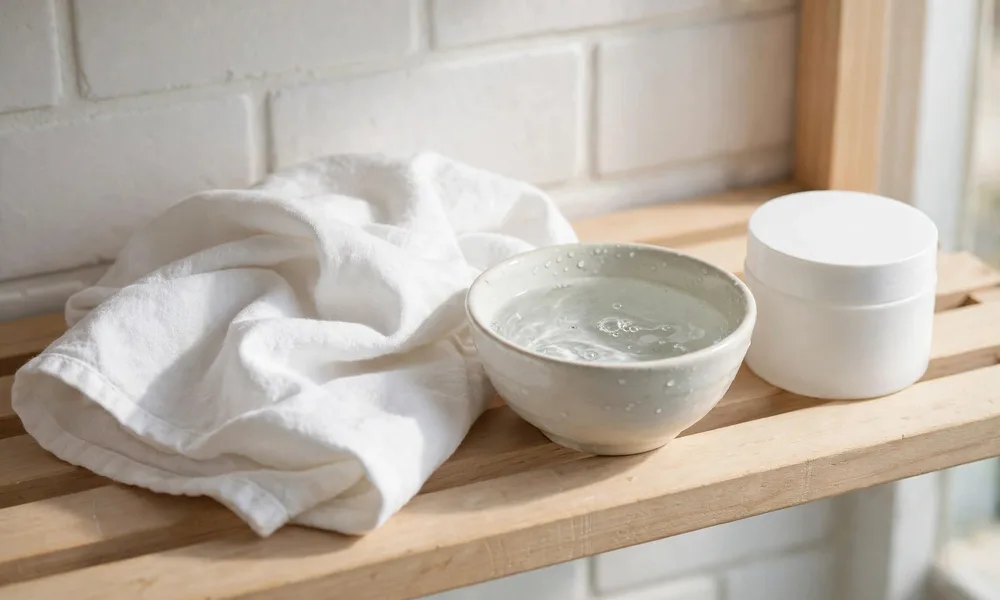
Loosening flakes is the heart of this routine, and it must be soft. Fill a clean bowl with lukewarm water, dip a soft white cotton cloth in it, and wring it out lightly, damp, not dripping. Lay it gently over the flaky skin for a few minutes, so the water can soften the flakes.
Then wipe very lightly, in one soft direction, and let the flakes come away on the cloth. Never pick at flakes with your nails, never peel them, never scrub them off: pulling flakes tears the skin underneath and leaves it sore. If a flake will not lift softly, leave it for tomorrow.
Moisturising After Water
Moisturiser works best on slightly damp skin, holding the water in place. After the gentle wash, pat the skin dry very lightly, leaving it just a little damp, and smooth on a plain fragrance-free moisturiser. Use a small amount and spread it evenly, with light fingertips, not a hard rub.
Choose a plain cream with few ingredients and no added scent. A simple jar on the bathroom shelf, used morning and night, beats a shelf of fancy products. If the skin feels tight by midday, a little more moisturiser on damp skin is fine.

What to Leave Out
Some habits make flaky skin worse, and leaving them out matters as much as the routine. Leave out hot showers and long hot baths, which strip the skin's natural oils, and harsh soaps, strong foaming washes, and any scrub or rough cloth promising to smooth the skin fast.
Leave out home remedies with lemon, vinegar or baking soda, which can sting and damage the skin. Leave out new active products, strong acids and retinoids until the flakes have settled. A short, plain routine, repeated daily, does more than a crowded shelf ever will.
Your Flaky Skin Checklist
- Wash with lukewarm water only, and keep it short and soft.
- Loosen flakes with a damp cloth, never by picking or peeling.
- Pat the skin dry gently, and never rub it with a towel.
- Smooth plain fragrance-free moisturiser on while the skin is damp.
- Drink plain water slowly through the day.
- Patch-test new products, and see a doctor if the skin cracks, bleeds or stays painful.

Frequently Asked Questions
What is flaky skin?
Flaky skin is skin whose dry top layer lifts in small pale flakes. It is common in cold air, dry rooms and after hot washing, and it usually settles with gentle water and plain moisture.
Is flaky skin the same as dry skin?
Not quite. Dry skin feels tight or rough because it holds too little water. Flaky skin is the visible part: the dry top layer lifting in flakes. Every flaky patch is dry, but not every dry patch flakes.
Should I scrub flakes off?
No. Scrubbing tears the skin underneath and leaves it sore. Soften flakes with lukewarm water and a damp cloth, wipe very lightly, and leave any flake that will not lift softly.
How often should I wash flaky skin?
Twice a day is enough: a short gentle wash in the morning and one at night, both with lukewarm water. Washing more often dries the skin further and makes the flakes worse.
What moisturiser should I use?
A plain fragrance-free cream with few ingredients, on slightly damp skin. Patch-test it first on the inside of your wrist, and use it morning and night.
When should I see a doctor?
See a doctor if the skin cracks, bleeds, feels very painful, or does not improve after a few weeks of gentle care. This is general information only, not medical advice.
The Bottom Line
Flaky skin needs gentle water and plain moisture: lukewarm washes, flakes loosened softly, and moisturiser on damp skin. Patch-test first, and see a doctor for cracked or painful skin.
A Note for Calm Skin
Keep it lukewarm, keep it soft, keep it steady. A glass of water, a damp cloth, and a few gentle minutes can carry flaky skin to calm.


