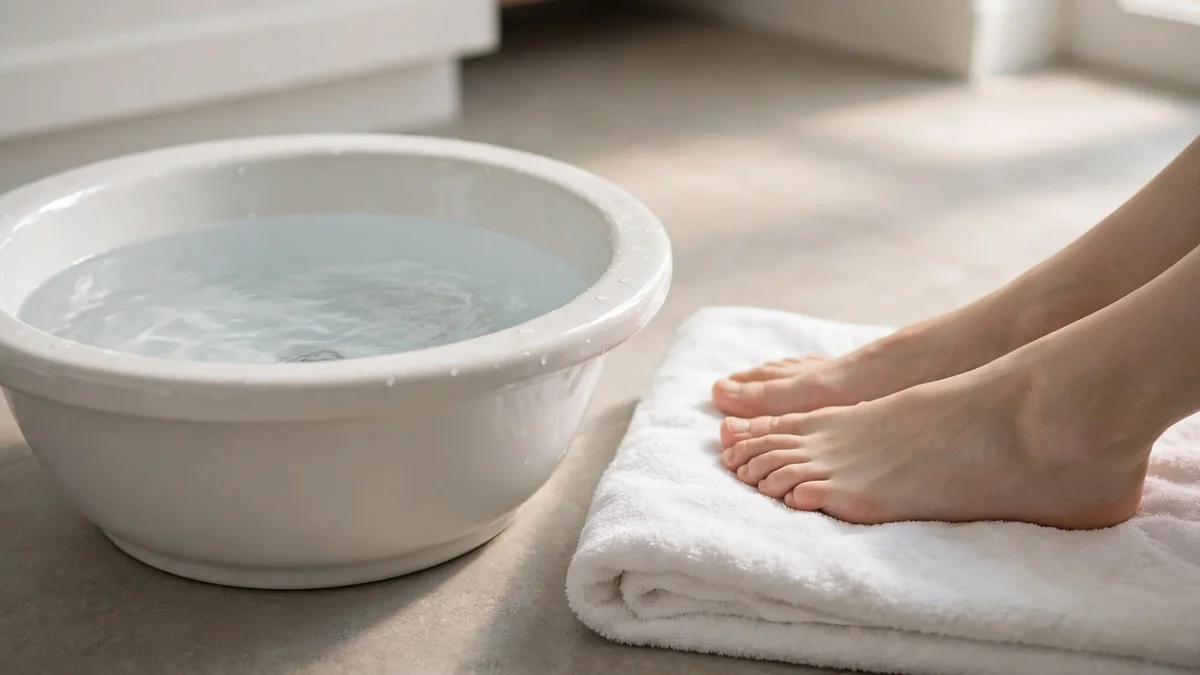
Your heels carry you through every day, and they rarely get thanked for it. They press into hard floors, rub against the backs of shoes, and spend long hours inside socks that dry them out. By evening the skin on them can feel tight and rough, and sometimes it splits into small dry cracks.
Water and cracked heels is one of the simplest comforts there is. A basin of lukewarm water, a soft towel, a little plain moisturiser and a pair of clean cotton socks are the whole list, and fifteen quiet minutes are all it takes.
This article is a gentle guide to water and cracked heels: how to rinse and soak them well, how to dry and moisturise them, and how to build a short evening routine around water. It is general information only, not a treatment, and it will not heal anything on its own.
Key Takeaways
- Cracked heels are dry heel skin that has split into small cracks.
- Always use lukewarm water, never hot, and test it with your hand first.
- A short soak of ten to fifteen minutes is enough for dry heels.
- Pat heels dry gently, moisturise lightly, and wear clean cotton socks.
- Skip the routine if the skin is broken or sore, and see a doctor for persistent problems.
What Cracked Heels Are
Cracked heels are heels where the skin has grown dry, thick and rough, and then split into small lines and cracks. The heel is the hardest-working skin on the foot: it takes your whole weight with every step, and it has no oil glands of its own to keep it soft. When the air is dry, or shoes rub the same spot again and again, the skin loses moisture and hardens.
At first the heel simply looks pale and feels rough. If the dryness goes on, small cracks open along the edge of the heel, and they can feel sore when you walk.
Why Heels Crack
Heels crack because dry skin cannot stretch the way soft skin can. Every step presses the heel flat and spreads it wide, and skin that is dry and thick cannot bend with that pressure, so it splits instead. Standing for long hours on hard floors makes it worse, and so do open-backed shoes that let the heel slide and rub.
Cold dry air, hot showers and harsh soaps all strip moisture from the skin, and walking barefoot on rough floors wears the heel down further. A gentle routine, done regularly, can keep dry heels much softer.
The First Step: A Gentle Rinse
The first water your heels meet in the evening should be a simple rinse. Stand at the basin or the shower and run lukewarm water over your feet for a minute or two, washing away the dust and sweat of the day. Use plain water and a little gentle soap, and rinse it all away, because soap left on dry skin only dries it further.
A rinse is not a soak: it is a quick wash, and it sets the evening up well. Clean heels feel lighter at once, and the water washes the day off before the rest begins. Dry them with a soft towel, pressing rather than rubbing, and dry carefully between each toe.
A Lukewarm Soak, Step by Step
A good soak starts before the water does. Gather everything first, so that once your feet are in the basin you do not have to get up again: a basin large enough for both feet, lukewarm water, a clean towel, and a little plain moisturiser. A towel under the basin protects the floor from splashes.
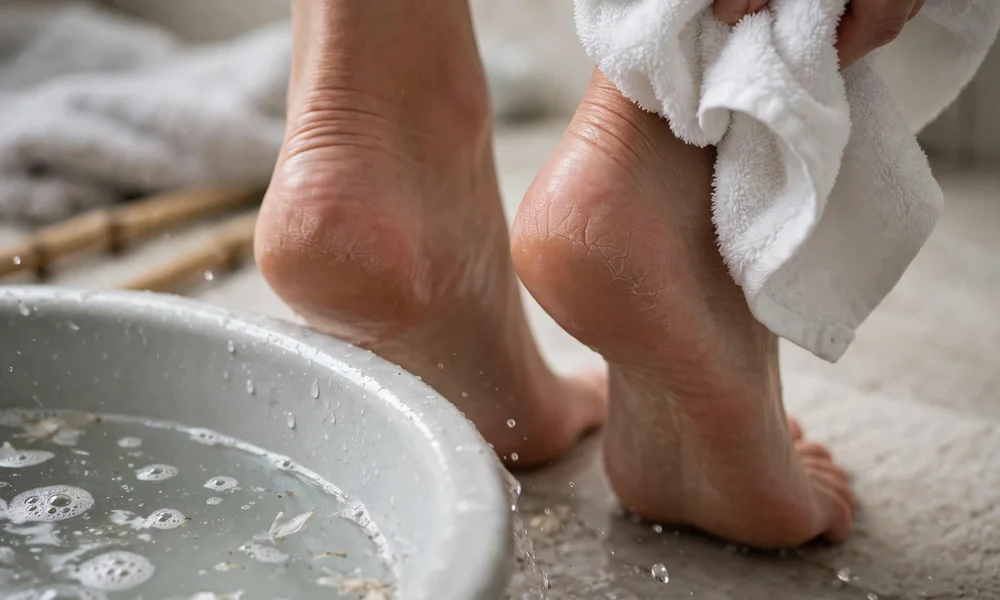
Fill the basin with lukewarm water, never hot, and test it with your hand first: comfortably warm, not sharp or stinging. The water should reach just above the ankles. Sit down and lower your feet in slowly, letting them adjust to the warmth for a few seconds before settling them flat on the bottom of the basin.
How Long to Soak, and When to Stop
Stay in for ten to fifteen minutes: long enough for dry heels to soften properly, and short enough that the skin does not go soft and wrinkly. If the water cools, lift your feet out, add a little more warm water, and settle back in. If your feet feel uncomfortably warm, lift them out for a minute: a soak should feel soothing, never scorching.
There is no benefit in staying in for half an hour, and long soaks leave the skin soft, pale and wrinkly.
Drying Gently and Moisturising
Lift your feet out of the basin and pat them dry with a soft towel, pressing rather than rubbing, and take extra care around the heels and between the toes. Rubbing dry skin only roughens it further.
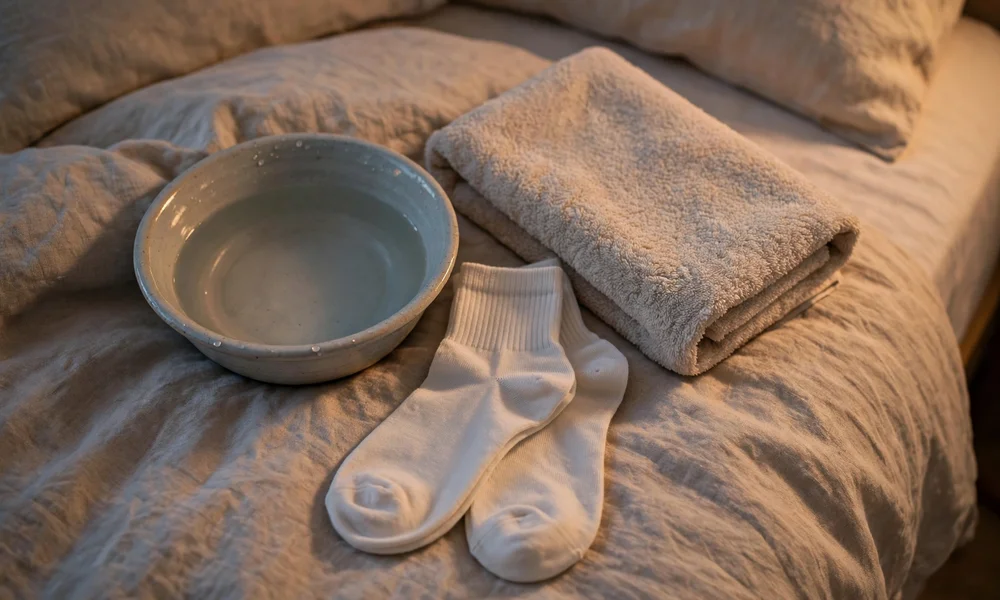
While the skin is still slightly damp, smooth on a little plain, unscented moisturiser, and work it gently into the heels. Then put on clean cotton socks, which hold the moisture in and protect the heels while you rest.
Resting and Lifting Your Feet
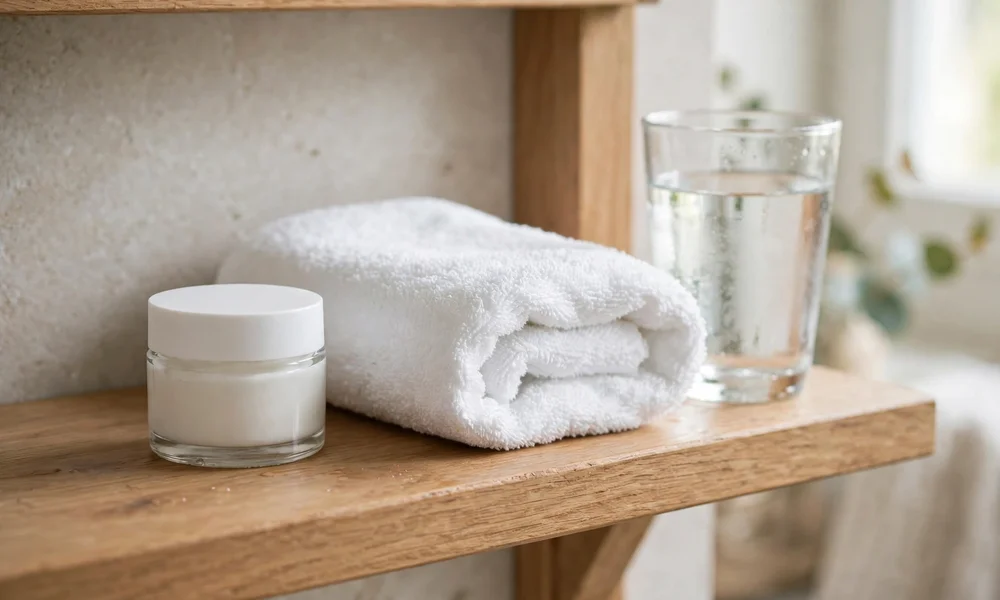
After the soak, give your feet a proper rest. Sit down with your feet raised on a cushion or a folded towel, so the weight comes off them completely. Ten quiet minutes like this, with a glass of water beside you, is a small kindness that tired heels notice.
Raised feet also help the moisturiser sink in, because you are not walking it off at once.
Shoes and Daily Habits
A gentle routine works best when the days support it too. Shoes that fit well, with a closed heel and a little cushioning, protect the heel from rubbing and pressure, while open-backed shoes let the heel slide and dry out. Socks matter as well: clean cotton socks breathe, while damp or tight socks trap moisture and rub. For general skin care, water and dry brushing for a gentle body is a useful habit, but skip it on cracked heels.
Drink water through the day, because skin that is hydrated from inside stays softer for longer. Avoid very hot showers and harsh soaps, and try not to walk barefoot on rough floors. Small habits, kept every day, do more for dry heels than any single long soak.
Cracked Heels at a Glance
| Lukewarm water | Dry heels | Gentle routine |
|---|---|---|
| Ten to fifteen minutes | Pat dry softly | Moisturise lightly |
| Never hot water | Clean cotton socks | Patch test first |
| Rest and lift | Skip broken skin | See a doctor |

Cracked Heels and Tired Feet
Cracked heels and tired feet are often found together, but they are not the same problem, and they need different care. Tired feet feel heavy, warm and aching after a long day of standing or walking, and the answer is rest: a short soak, a cool compress, and feet raised on a cushion.
Cracked heels are a skin problem, not a tiredness problem: dry heel skin that has split into small cracks, and the answer is gentleness: a short lukewarm soak, patting dry, plain moisturiser and clean cotton socks. Where water for tired feet after long days keeps a comfort routine for heavy, tired feet, this guide keeps a gentle routine for dry, cracked heel skin.
Cracked Heels and Foot Soaks
A foot soak with salt water is a simple comfort for tired feet, and it shares much of this routine: warm water, ten to fifteen minutes, drying gently and moisturising lightly afterwards. The basin, the towel and the quiet minutes are the same, and the two routines sit happily side by side in the same evening.
The difference is the focus. Where foot soaks salt water for tired feet keeps a warm soak with a little dissolved salt for tired feet, this guide keeps a plain lukewarm soak for dry, cracked heels, with no salt and no scrubbing. Salt can sting cracked skin, so plain water is the gentler choice here.
When to See a Doctor
Most dry heels improve with a gentle routine, but some problems need a doctor, and it is important to know the difference. See a doctor promptly if the cracks are deep, bleeding or painful, if the skin around them is red, swollen or warm, or if the heel does not improve after a few weeks of gentle care.
Skip the soak entirely if the skin is broken or sore, and do not use scrubs, strong creams or home remedies on open cracks. If you have diabetes or poor circulation in your feet, ask your doctor before starting any foot soak routine. This guide is general information only, and it is not a substitute for medical advice.
Your Gentle Routine Checklist
- Fill a basin with lukewarm water and test it with your hand first.
- Soak your feet for ten to fifteen minutes, never longer.
- Pat your heels dry gently with a soft towel, never rub.
- Smooth on a little plain moisturiser while the skin is slightly damp.
- Put on clean cotton socks and rest with your feet raised.
- Skip the routine if the skin is broken or sore, and see a doctor for persistent problems.
Frequently Asked Questions
What causes cracked heels?
Cracked heels are caused by dry, thick heel skin that cannot stretch with every step, so it splits into small cracks, often made worse by hard floors, open shoes and dry air.
How long should I soak cracked heels?
Soak for ten to fifteen minutes in lukewarm water, never hot, and never longer, because long soaks leave the skin soft and wrinkly.
Should I use salt in the soak?
No, plain lukewarm water is gentler for cracked heels, because salt can sting cracked skin, so save salt soaks for tired feet without cracks.
Can I scrub cracked heels?
No, do not scrub cracked heels, because scrubbing roughens dry skin further, so pat dry gently and moisturise lightly instead.
What moisturiser should I use?
Use a plain, unscented moisturiser, and patch-test it first on a small area, because scented creams can irritate dry, cracked skin.
When should I see a doctor for cracked heels?
See a doctor if the cracks are deep, bleeding or painful, if the skin is red or swollen, or if the heels do not improve after a few weeks of gentle care.
The Bottom Line
Water and cracked heels need a gentle routine: a short lukewarm soak, patting dry, plain moisturiser and clean cotton socks. Keep it gentle, keep it short, and see a doctor for persistent problems.
A Note for Gentle Evenings
Keep it lukewarm, keep it gentle, keep it slow. A basin of water, a soft towel, and a few quiet minutes can carry dry heels through the evening.


