There is a particular week each year when winter loosens its grip. Mornings are still cool, but the light lasts longer, windows open again, and skin that spent months under cold wind and indoor heating starts to ask for something different: it feels tight after washing and dull by afternoon.
Spring water fits that moment. It is water that rises naturally from underground, filtered slowly through rock and soil, and it arrives cool, clear, and lightly mineral. It is not a treatment: it is simply good water, used well.
This article is a seasonal reset built around spring water: what it is, how skin changes in spring, and how cool rinses, lighter moisture, and steadier drinking help skin feel soft again. Take what fits, and leave the rest.
Key Takeaways
- Spring water is groundwater that reaches the surface naturally; its minerals vary with the rock and soil it passed through.
- A seasonal reset means simplifying: cool rinses, lighter moisture, and more water through the day.
- Wash with lukewarm water: hot water strips the skin's natural oils.
- Moisturise while skin is still slightly damp, so it holds water in.
- A reset supports soft skin; it does not treat, cure, or prevent any skin condition.
What Spring Water Is
Spring water is groundwater that flows naturally to the surface. On its slow journey underground it passes through sand, gravel, and stone, which filter it and add small amounts of minerals such as calcium, magnesium, and bicarbonate — which is why spring water tastes different from place to place.
It differs from tap water, which is treated and piped to your home, and overlaps with mineral water, which is defined by a stable mineral content. Bottled spring water comes from a named underground source, and the label names the source and the main minerals.
For skin, its appeal is simple: it is clean, cool, and soft in feel. Hard tap water can leave a slight residue and make cleansers harder to rinse away, while spring water is often softer, and a cool splash feels fresh without any sting. None of this makes it medicine — only pleasant water, well used.
Why Skin Changes in Spring
Winter is hard on skin. Cold air holds little moisture, indoor heating dries the air further, and hot showers quietly strip the skin's natural oils. The barrier — the thin outer layer that keeps water in and irritants out — arrives in spring a little tired, losing water more easily, a process dermatologists call transepidermal water loss, and skin can feel tight, flaky, or dull.
Spring changes the conditions: warmer, more humid air means skin loses less water, days lengthen, sunlight strengthens, and pollen and dust return, which can irritate sensitive skin. Sweat returns too, and with it the need for lighter products.
That is why a reset works better than adding products. Skin needs less friction, cooler water, lighter moisture, and a little patience while it adjusts to the season.
The Spring Reset, Step by Step
A seasonal reset is a short, gentle pause from a crowded routine, not a harsh treatment. Give it one week, morning and evening, and judge it by how your skin feels.
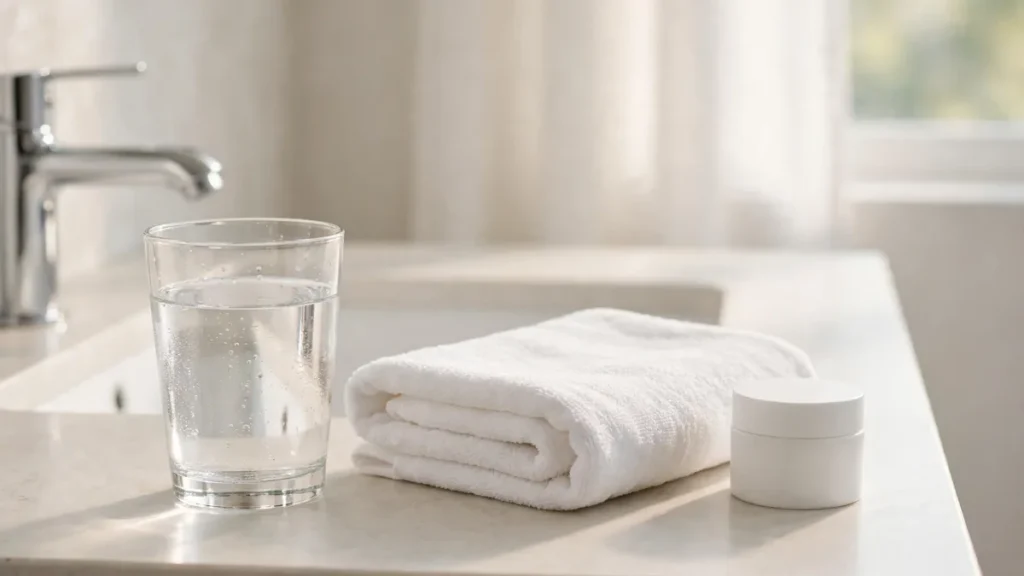
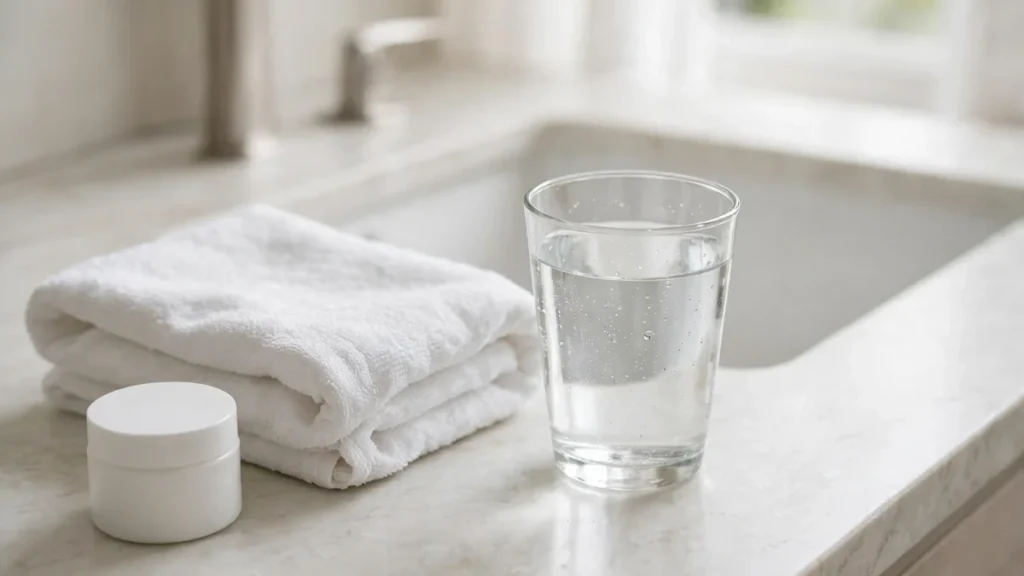
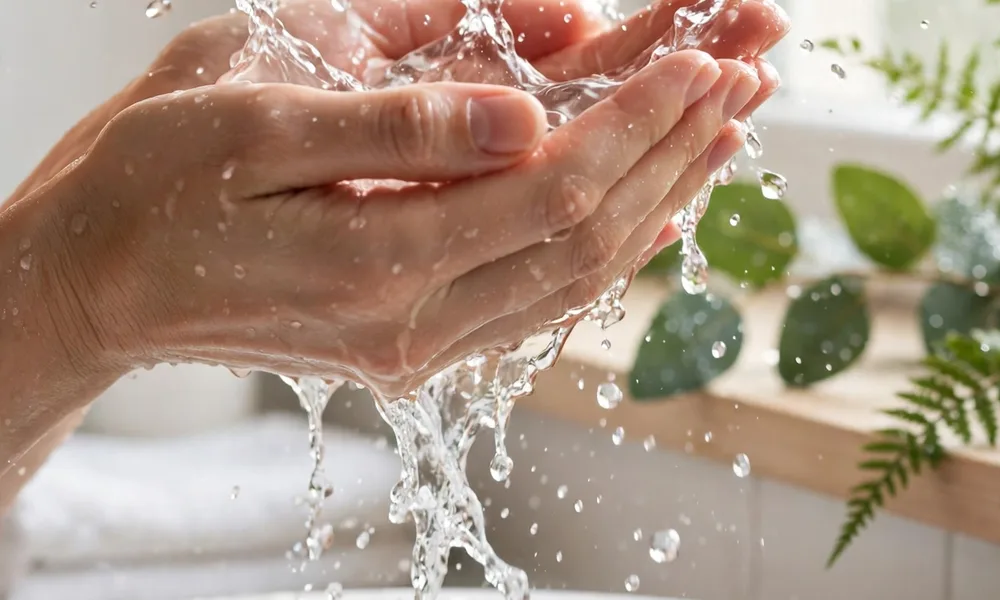
Start the morning with a cool rinse: splash your face three or four times with cool spring water, or cool tap water if that is what you have. Pat dry with a clean, soft towel, pressing lightly instead of rubbing. If your skin feels calm, that rinse can be enough; if it feels oily, wash gently with a mild cleanser and lukewarm water first.
Follow with light moisture on slightly damp skin, then sun protection: spring sun is stronger than it feels. In the evening, cleanse gently, rinse cool, moisturise lightly, and stop. That is the whole reset: rinse, moisturise, protect, repeat.
If your skin prefers lukewarm water in the morning, that is a good instinct: why lukewarm water works better for morning skin explains the case for it. The reset is not about cold water for its own sake; it is about water that feels kind.
Drinking Water Through the Day
Steady drinking through the day is the simplest habit in this reset. There is no magic number of glasses: the old eight-glasses rule is a rough guide, not a prescription. European guidance puts adequate total intake at around two litres a day for women and two and a half for men, from drinks and food together, and thirst, weather, and activity move that number up or down.
Keep a glass or bottle where you can see it, and sip little and often. A glass with breakfast, one with lunch, one in the afternoon, and one with dinner covers most of the day. Herbal tea and water-rich foods such as cucumber, melon, and oranges count too.
If plain water bores you, cucumber slices or mint leaves in a jug make it pleasant without sugar. What matters is the habit, repeated daily. Skin supported from the inside tends to feel less tight, and the rest of the reset works better on top of it.
Light Moisture for Warmer Days
Winter creams are rich and heavy, made to protect skin from cold wind. In spring they can feel too much: greasy by midday and heavy under sunscreen. Swap to something lighter as the weather warms.
Look for a simple, fragrance-free moisturiser with humectants — glycerin or hyaluronic acid — that draw water into the skin's outer layer. Apply a small amount to slightly damp skin after your cool rinse, and let it settle before sunscreen. If skin feels dry by afternoon, a light mist followed by a tiny amount of moisturiser is kinder than more cream.
Keep it short: a cleanser, a moisturiser, and sun protection are enough for most faces in spring. If you like a weekly soak to unwind, a warm salt soak is a different kind of pleasure: Himalayan salt water soaks for soft, glowing skin describes one well. For the reset itself, light and simple wins.
Sun, Pollen and the Outdoors
Spring brings you outside again, and the outdoors brings stronger sun and airborne pollen. Ultraviolet light strengthens quickly as days lengthen, and it is easy to burn on a mild, cloudy day because the air still feels cool. Use sun protection every morning, even when the sky is grey, and reapply if you spend hours outside.
Pollen and dust settle on skin during the day, and for sensitive faces they can mean itching or redness by evening. A gentle evening wash matters more in spring: cleanse with lukewarm water, rinse cool, moisturise lightly. Rinsing your face after a walk or gardening costs a minute.
Open windows help the home too: aired rooms feel lighter and smell of spring. Outdoors, keep it gentle: shade at midday, a hat on bright days, and water within reach.
What a Seasonal Reset Will Not Do
Say plainly what a seasonal reset will not do: it will not erase fine lines, shrink pores, clear acne, fade dark spots, or give glowing skin in a week. It will not cure dryness, eczema, redness, or any skin condition, and it will not replace a cleanser, a moisturiser, or sun protection.
What it can do is simpler: it can make skin feel fresh, cool, and lightly cared for, and turn a crowded routine into a calm one. Skin washed gently, moisturised lightly, and protected from the sun tends to feel softer over a few weeks.
If a skin concern is persistent, changing, painful, or worrying, please speak to a qualified health professional or dermatologist. A reset is a habit, not a diagnosis.
Choosing Spring Water Well
Not all spring water is equal, and the label is your best guide. Choose a bottled spring water from a named source, and read the mineral list: calcium and magnesium are common, and a total under a few hundred milligrams per litre tastes light and feels soft. Very high-mineral waters are better as an occasional drink.
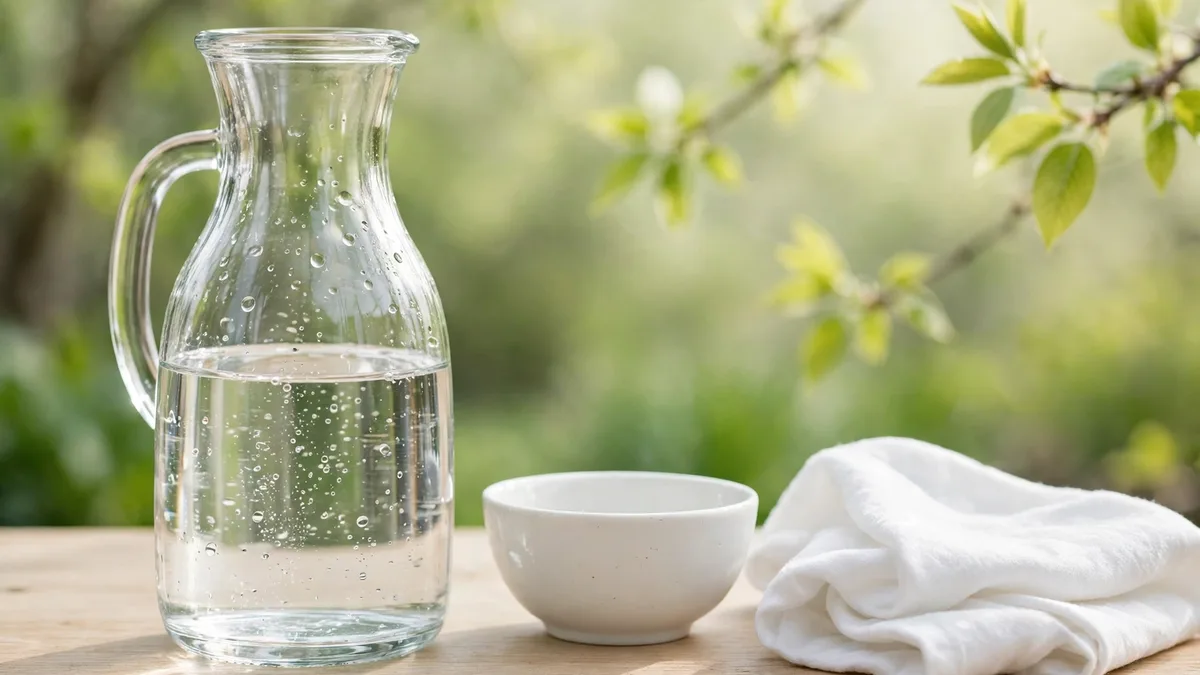
At home, the water you already have is usually fine for rinsing. If your tap water is very hard, a final cool rinse with bottled spring water is a small luxury worth trying for a week. Keep it in the fridge and use it within a few days of opening.
| Water | Best for | Keep |
|---|---|---|
| Bottled spring water | Drinking and cool rinses | Fridge; use within a few days |
| Tap water | Everyday washing | Run cool or lukewarm |
| High-mineral water | An occasional drink | Fridge; not for every day |
A short reset with sea salt and rose water is a gentle companion to this one: sea salt and rose water: a fresh skin reset walks through it step by step. Both share the same idea: fewer steps, done slowly, with water at the centre.
Your Spring Water Checklist
- Rinse with cool water in the morning, three or four splashes, then pat dry.
- Wash with lukewarm water, never hot; mild cleanser only when needed.
- Moisturise lightly on slightly damp skin, and keep the routine short.
- Drink steadily: a glass with each meal and one in the afternoon.
- Use sun protection every morning, even on grey spring days.
- Rinse your face in the evening after time outdoors.
Frequently Asked Questions
Is spring water better than tap water for skin? It can feel nicer: spring water is often softer and cooler and leaves less residue. But tap water is fine for most faces, and how gently you wash matters more than the source.
Can I wash my face with cold water in spring? Cool water is refreshing, but very cold water can feel harsh. Cool or lukewarm water is kinder for most people.
How much water should I drink each day? There is no single number: around two litres a day from drinks and food is adequate for most women, two and a half for most men, per European guidance — but thirst, weather, and activity move it up or down.
Should I change my moisturiser in spring? Usually yes: swap a heavy winter cream for a lighter one with humectants such as glycerin, applied to slightly damp skin. If skin still feels dry, add a light mist rather than heavier cream.
Does drinking more water clear my skin? No. Drinking water supports the body and can help skin feel less tight, but it does not clear acne, fade spots, or cure any skin condition.
Can I put a crystal in my spring water? No. Stones never belong in drinking water or in water you put on your face. Keep stones on a shelf or in a dish, beside water, never in it.
The Bottom Line
A spring reset is small on purpose: cool rinses, lukewarm washing, light moisture, steady drinking, and sun protection each morning. It costs little and takes minutes a day.
Begin tomorrow with one glass of cool spring water and one gentle rinse. Let the season do the rest, slowly. That is the whole habit.
A Note for Spring Days
Keep it cool, keep it light, keep it yours. Spring asks for very little: a little water, a little patience, and a routine short enough to keep as days grow warm. Stay curious. Stay clear.