Water feels like the obvious way to clean a crystal. For some stones, a quick rinse is exactly right. For others, it is the fastest way to damage them: it can dissolve a soft stone, dull a polished surface, rust a metal inclusion, or loosen a setting.
The difference is the stone itself. Hard, non-porous crystals such as clear quartz and amethyst usually tolerate a brief rinse. Soft, porous, or metal-bearing stones do not. This guide explains how to tell the two groups apart, how to rinse the safe ones, and what to do instead for the rest.
One rule comes first: never put stones in drinking water. Cleansing a crystal and preparing a drink are two different things, and they should never be mixed.
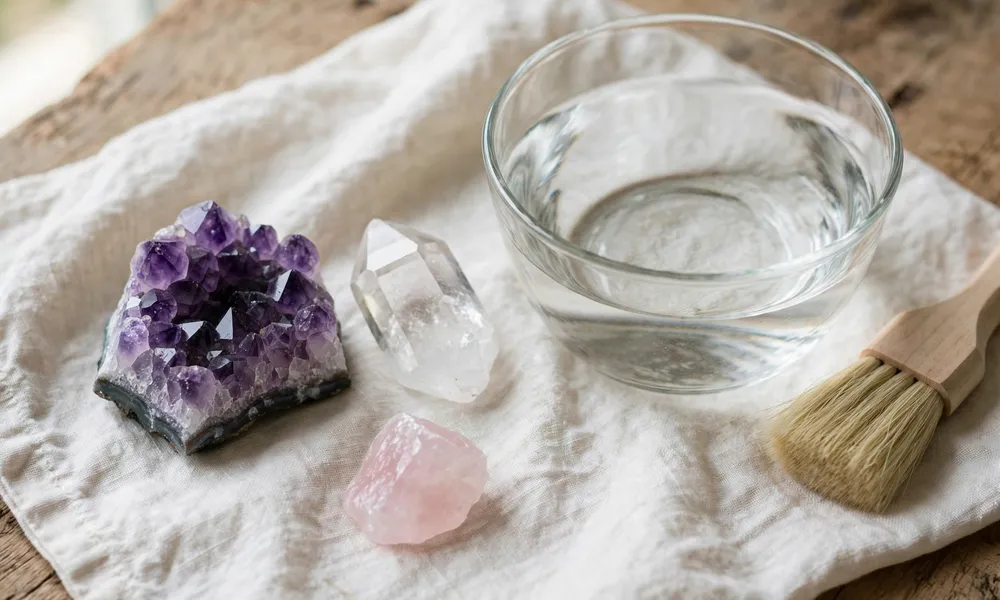
Key Takeaways
- Only hard, non-porous stones such as clear quartz and amethyst should be rinsed, briefly.
- Selenite, malachite, pyrite, hematite, lapis lazuli and turquoise must never be soaked or rinsed in water.
- Never put any stone in drinking water, and never drink water a stone has touched.
- The indirect method — a sealed jar inside a bowl of water — gives the water ritual without wetting the stone.
- Dry the stone fully with a soft cloth after any rinse.
What Cleansing a Crystal Means Here
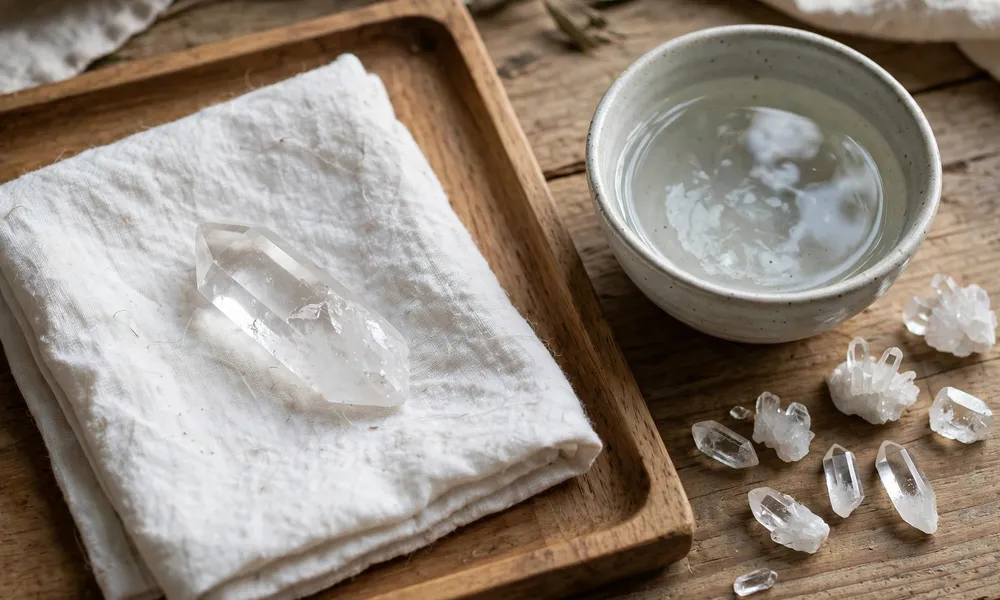
Cleansing, in this guide, means cleaning the stone: removing dust, fingerprints, and the marks of everyday handling. It is a practical habit, like washing a glass. It is not a medical treatment, and it does not change what the stone is.
That distinction matters, because the word cleansing is used in many ways. This article treats the physical stone first: a ritual that damages the object it honours is not a good ritual. At Crystal by Ayesha, we approach crystals as materials, decorative objects, and sources of visual inspiration, not as medical treatments. Water will not charge a stone with healing power. What it can do, for the right stones, is leave them clean and bright.
Know what your stone is before you wet it. If you are unsure, treat it as a stone that must stay dry. That single habit prevents most damage.
Which Stones Can Be Rinsed
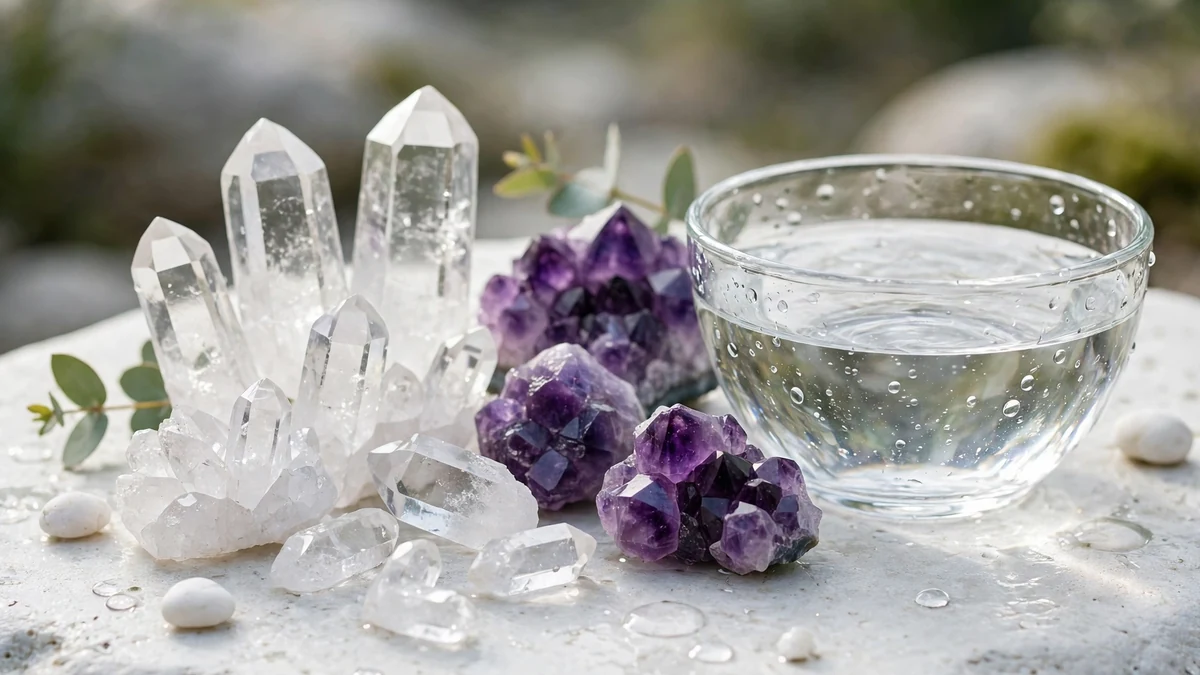
The stones that tolerate water are the hard, glassy ones: clear quartz, amethyst, citrine, smoky quartz, and most polished agates and jaspers. They are dense, non-porous, and free of soft coatings or metal inclusions. A brief rinse under plain running water, followed by careful drying, is usually safe.
Check the stone first for cracks, chips, or a setting. A cracked stone can trap water inside, and a set stone can loosen if water reaches the glue or metalwork. If it is set in jewellery, wipe it instead of rinsing it. If it has a soft coating, paint, or dye, keep it dry, because water can lift the finish.
Water itself has a visual language: the way it runs over a smooth surface, the way a wet stone looks darker and brighter. The rinse should take seconds, not minutes. Hold the stone under cool, plain running water and turn it once. Do not use hot water, and do not add soap, salt, or cleaning products. Plain water and a soft cloth are enough.
Stones That Must Never Go in Water
Some stones must never be rinsed or soaked. Read this section before you rinse anything you have not checked. If your stone is on this list, keep it dry.
Selenite is water-soluble: it can dissolve, pit, and lose its silky surface. Malachite contains copper and can release harmful substances when wet. Pyrite contains iron and sulphur; water can cause rust, dullness, and a stale smell. Hematite can rust too, and stain skin and cloth when wet. Lapis lazuli is soft and porous, and its colour can fade with soaking. Turquoise is porous and often treated, and water can damage both the stone and its treatment.
Also keep dry: calcite, soft or untreated fluorite, opal, which is porous and can crack, and any stone that feels soft, chalky, or crumbly. Clusters, geodes with fragile points, and stones with metal inclusions or glued parts belong on the dry list too. When in doubt, do not wet it: a dry stone can always be cleaned another way; a dissolved or rusted one cannot be undone.
| Stone | Water? | Why |
|---|---|---|
| Clear quartz | Brief rinse | Hard, non-porous, no soft coating |
| Amethyst | Brief rinse | Hard quartz, tolerates plain water |
| Selenite | Never | Water-soluble, dissolves and pits |
| Malachite | Never | Copper-bearing, can release harmful substances |
| Pyrite | Never | Iron and sulphur, rusts and dulls |
| Hematite | Never | Can rust and stain when wet |
| Lapis lazuli | Never | Soft and porous, colour and surface can fade |
| Turquoise | Never | Porous and often treated, water damages it |
How to Rinse a Safe Stone, Step by Step
Rinse only a stone you have identified as water-safe, with no cracks, no setting, and no coating. Work over a sink, with clean hands. A rinse is a cleaning, not a soak.
First, brush off loose dust with a soft, dry brush or cloth, so grit does not scratch the surface. Then hold the stone under cool, plain running water for a few seconds, turning it once. Do not leave it standing in water, and do not use hot water. If it is only lightly dusty, a damp cloth may be all it needs.
Dry it at once. Pat it gently with a soft, lint-free cloth, then leave it on a dry cloth in the open air until it is completely dry, including any crevices. Do not use a hair dryer, and do not put a wet stone away in a closed box, where trapped moisture can dull it. A stone that looks dry can still hold water in a crack, so give it time.
Learning to look closely at a crystal in natural light is a good final check: hold the dry stone up to a window and look for dull patches or water marks. If the surface has changed, do not rinse it again; switch to dry cleaning.
The Indirect Method: Water Without Wetting the Stone
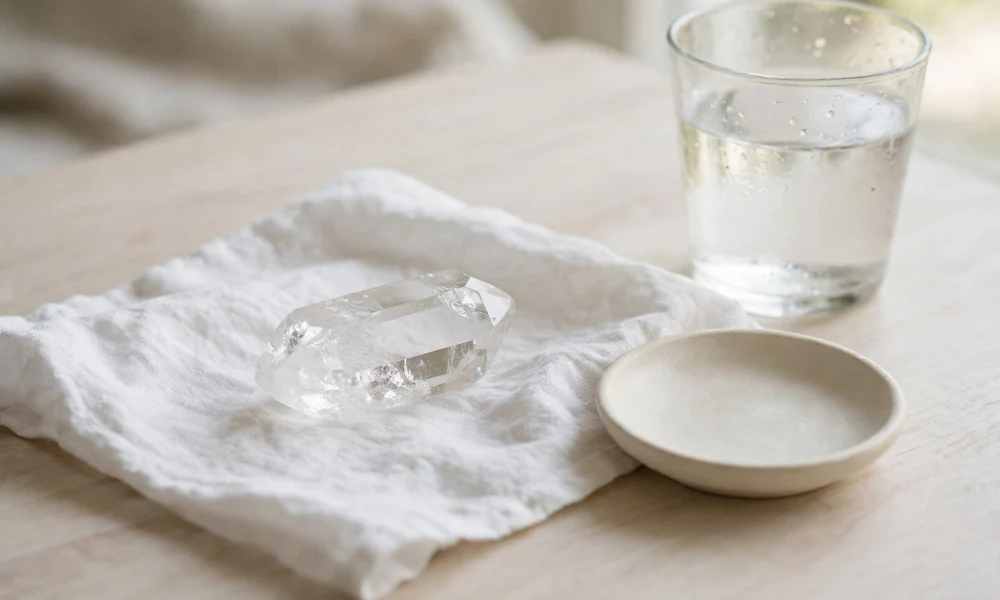
The indirect method is the safe way to bring water and crystals together when the stone must stay dry. It should be stated exactly: place the dry stone inside a small, clean, sealed glass jar with a tight lid. Place that jar inside a larger bowl of clean water, so the water surrounds the jar but never touches the stone.
This method works for any stone, including selenite, malachite, and turquoise, because the water never reaches them. The water in the bowl is not for drinking, and the stone never enters any water you drink. Never put a stone directly into drinking water, and never drink water that a stone has touched, even a hard stone such as quartz. Natural stones can carry dust and substances you cannot see.
Afterwards, lift the jar out, dry the outside, and remove the stone. Empty the bowl, wash it, and let it dry. The indirect method gives you the sight of water and stone together, the calm of the ritual, and none of the damage. If you only remember one method from this guide, remember this one.
Drying, Storing, and Everyday Care
Good care after cleansing is as important as the rinse itself. A stone that is put away wet can dull, stain its pouch, or develop a musty smell. A stone that is stored well will stay bright for years with very little effort.
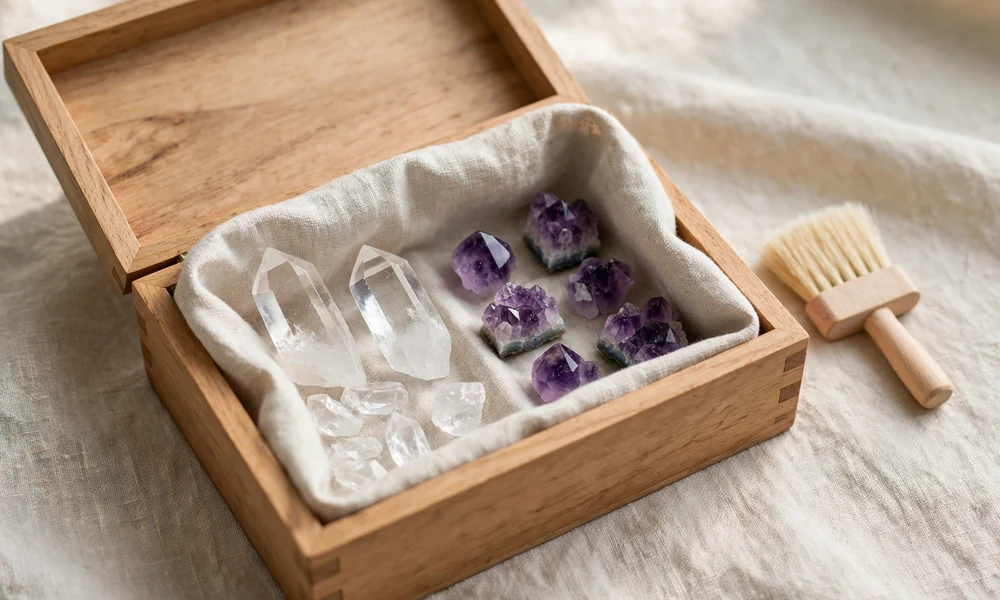
Dry every stone fully before storing it, with a soft cloth, then let it air-dry. Store stones separately where possible, or wrap softer ones in cloth, so harder stones do not scratch them. A lined wooden box, a fabric pouch, or a small dish all work, as long as the place is dry, cool, and out of long direct sunlight, which can fade stones such as amethyst and fluorite.
Handle stones with clean, dry hands, and keep them away from perfumes, hairspray, and cleaning products. If a stone is set in jewellery, wipe it with a dry cloth after wearing. Check your collection every few months for chips, dull patches, and loose settings. A calm, unhurried approach to staying hydrated is a useful reminder: small, regular habits are easier to keep than occasional grand gestures, and the same is true of stone care.
What Cleansing with Water Will Not Do
Rinsing a crystal will not heal you, calm you, or change your health. It will not remove toxins, and it will not charge a stone with medical power. A clean stone is simply a clean stone.
That is enough. A cared-for collection is a pleasure in itself. If you are struggling with your health, please speak to a qualified health professional. A crystal can be a beautiful object in your home, but it cannot replace care.
Your Cleansing Checklist
- Identify the stone before any water touches it; if unsure, keep it dry.
- Never put any stone in drinking water, and never drink water a stone has touched.
- Rinse only hard, non-porous stones, briefly, under cool plain running water.
- Use the indirect method — sealed jar in a bowl of water — for stones that must stay dry.
- Dry the stone fully with a soft cloth and air-dry it before storing.
- Store stones dry, separate, and out of long direct sunlight.
Frequently Asked Questions
Can I rinse clear quartz under the tap? Yes, if it is a plain, uncracked piece with no setting or coating. Rinse it briefly under cool running water, then dry it fully.
Why must selenite never go in water? Selenite is water-soluble. Water can dissolve its surface, leaving pits and a dull finish. Clean it with a soft, dry cloth only.
Is it safe to put crystals in my drinking water? No. Never put any stone in drinking water, and never drink water a stone has touched. Use the indirect method instead: a sealed jar holding the stone, placed inside a bowl of water.
How do I cleanse malachite or pyrite safely? Keep both dry. Wipe them gently with a soft, dry cloth, and use the indirect method for a water ritual. Never rinse or soak them.
How often should I cleanse my crystals? When they look dusty or dull. For most collections, a dry wipe every few weeks and a rinse of water-safe stones every month or two is enough.
Can I use salt water or soap to cleanse crystals? No, unless you know the stone tolerates it. Salt water and soap can damage many stones, coatings, and settings. Plain water for safe stones only, and a soft dry cloth for the rest, is safest.
The Bottom Line
First identify the stone. Rinse only hard, non-porous stones such as clear quartz and amethyst, briefly, under cool plain water, and dry them fully. Never rinse selenite, malachite, pyrite, hematite, lapis lazuli, or turquoise. Never put any stone in drinking water. For stones that must stay dry, use the indirect method: a sealed jar inside a bowl of water.
A Quiet Word Before You Put Them Away
Keep it simple, keep it dry where it needs to be dry, and keep the stone you love in good condition. Check first, wet only what can be wet, and put each piece away clean and dry. Stay curious. Stay clear. Handle your stones with care.